When Do Puppies Start Teething and Biting Everything?
One day your puppy is napping in your lap. The next day, those tiny teeth are on your hands, your shoes, and the corner of the coffee table.
If you are wondering when puppies start teething, you are asking about a normal stage of puppy development. This guide explains the timing, the signs, and what helps.
The good news is simple. Teething is temporary, and it follows a pattern you can learn. Once you know the pattern, you can plan relief and training with less stress.
Key Takeaways
- Baby teeth usually begin to come in at 3 to 4 weeks, and a full set of 28 baby teeth is usually in place by 6 to 8 weeks.
- The second stage, when baby teeth fall out and adult teeth come in, usually starts at 12 to 16 weeks and finishes by 6 to 7 months.
- Biting and chewing often peak at 12 to 16 weeks, when sore gums meet new adult teeth.
- Chewing during teething is a need, not disobedience. Offer safe chews and redirect, and never punish biting.
- Use cold items, suitable puppy chews, and short, calm training sessions to get through the sore weeks.
- See a vet for retained baby teeth, bleeding that will not stop, refusal to eat, or a sudden behavior change.
When Puppies Start Teething: The Direct Answer
When puppies start teething, the first baby teeth usually appear at 3 to 4 weeks of age.
Most owners notice teething later, though. That is because the second stage starts at 12 to 16 weeks, when baby teeth loosen and adult teeth push through.
So the short answer has two parts. Early teething starts in the first month, and the mouthy, bitey stage most owners ask about starts at about 3 to 4 months.
The Puppy Teething Timeline
The table below gives the usual pattern. Every puppy is a little different, so treat these ages as a guide, not a strict deadline.
| Stage | What usually happens |
|---|---|
| 2 to 4 weeks | Baby teeth begin to emerge, starting with the front teeth. |
| 5 to 8 weeks | A full set of 28 baby teeth is usually in place. |
| 12 to 16 weeks | Baby teeth start to fall out, and adult teeth begin to come in. |
| 4 to 6 months | Most adult teeth come in, and chewing may start to ease. |
| 6 to 7 months | A full set of 42 adult teeth is usually complete. |
Knowing when puppies start teething helps you prepare before the sore weeks arrive.
Signs a Puppy Is Teething
Sore gums can change how your puppy acts. Look for the whole pattern, not one sign on its own.
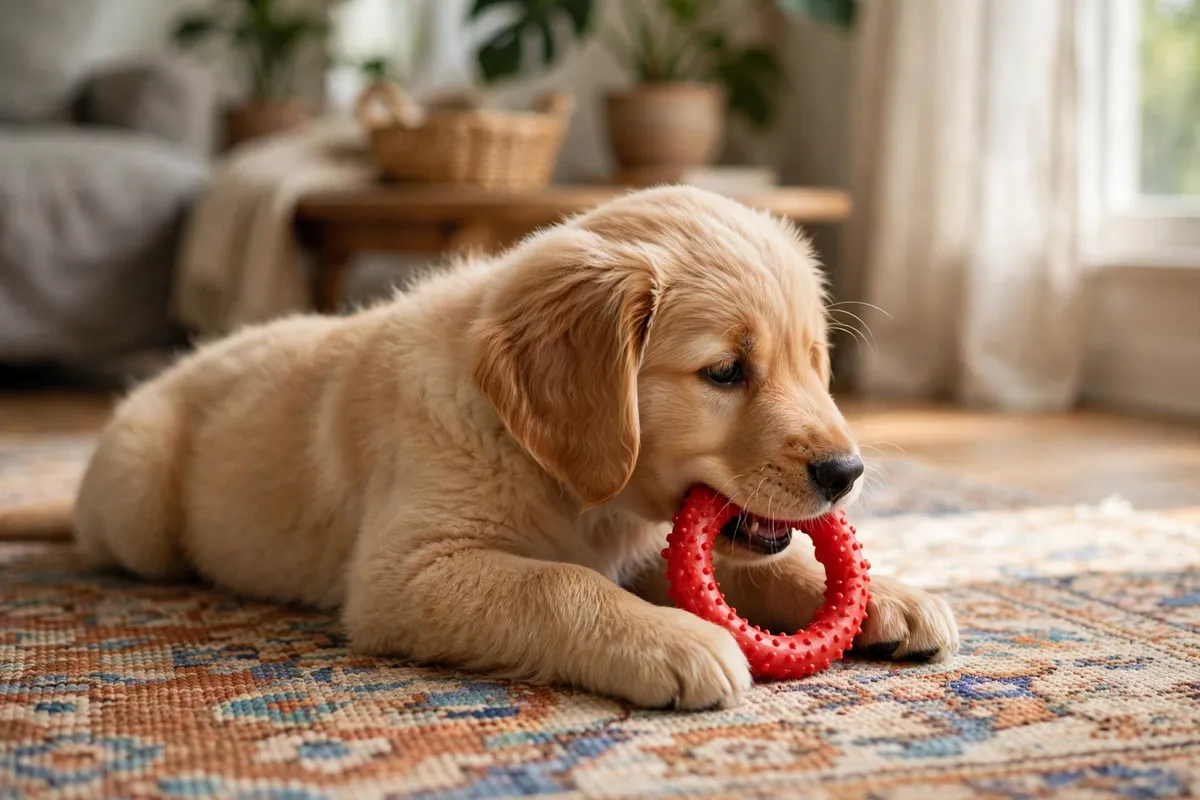
- Drooling more than usual, or small spots of blood on a chew toy.
- Chewing hands, shoes, furniture, and anything within reach.
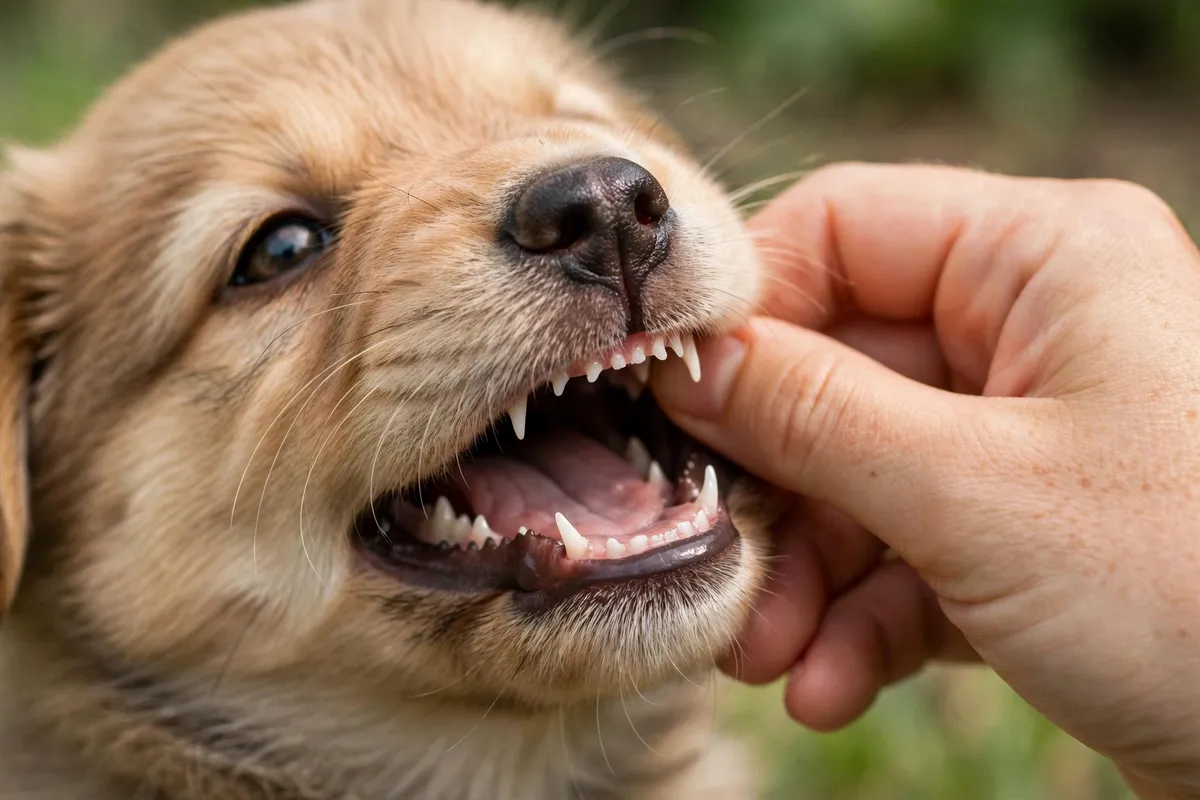
- Gums that look red, puffy, or tender.
- Eating more slowly, or preferring soft food for a short time.
- Finding a tiny tooth on the floor or in a toy.
- Being fussier, clingier, or less settled than usual.
Some puppies show only mild signs. Others chew a lot for a few days, then settle again. That up-and-down pattern is common while teeth are moving.
If signs look severe, or your puppy seems in real pain, ask your vet for advice. Do not guess about pain relief, and never give human pain relief to a dog.
Why Teething Puppies Bite Everything
Teething puppies bite for reasons that make sense to them. Pain, curiosity, and play all push in the same direction.
First, chewing can soothe sore gums. Pressure on the gums can feel better than leaving them alone, so a puppy seeks out things to chew.
Second, puppies explore with their mouths. Mouthing is how they learn about texture, taste, and shape, long before they learn words for those things.
Third, play teaches mouth control. Puppies learn from littermates and people how much pressure is too much, and teething is a good time to teach that lesson kindly.
None of this means your puppy is being naughty or aggressive. It means your puppy needs guidance, suitable chews, and patience.
What to Offer for Chewing Relief
You cannot stop teething, but you can make sore days easier. Keep relief simple, safe, and supervised.
- A damp washcloth, twisted and frozen, offered under supervision.
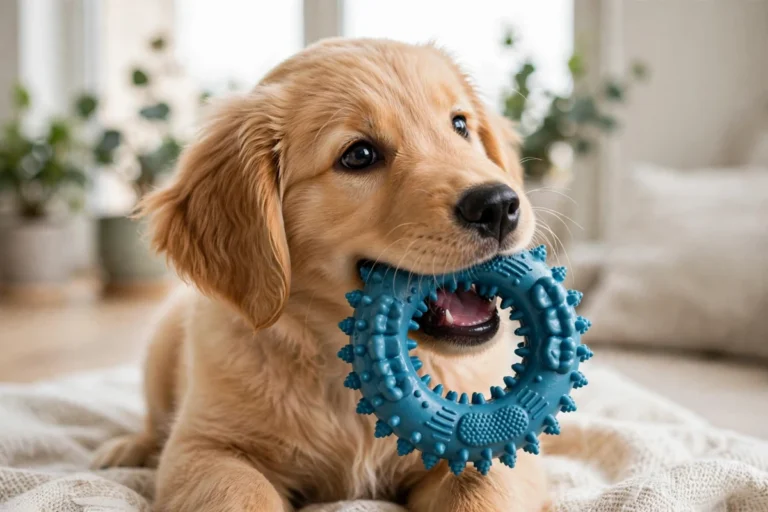
- A rubber puppy teething toy, sized for your puppy.
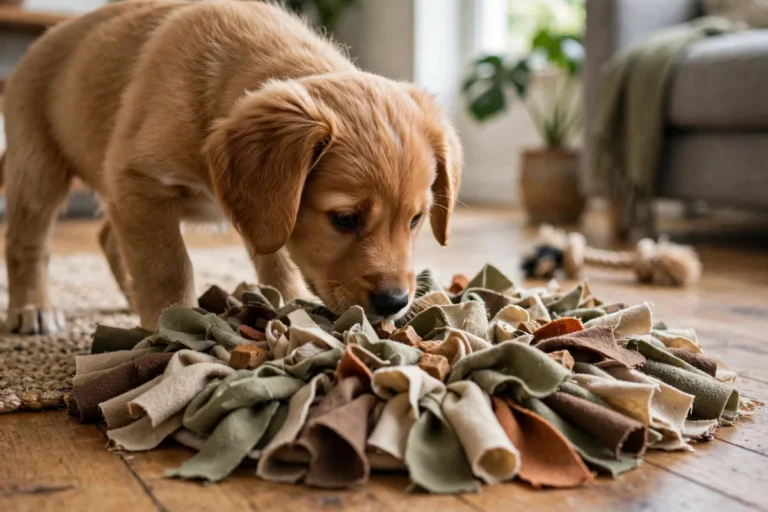
- A stuffed toy or feeder, frozen, if your puppy already likes it.
- Short, calm play breaks, so a tired puppy is not pushed too far.
Check toys often. Throw away a toy that is cracked, torn, or shedding pieces, and always match the size to your puppy.
Keep a toy close by during play. When teeth touch skin, calmly offer the toy instead, and praise gentle mouthing.
What NOT to Do During Teething
What you avoid matters as much as what you offer. These rules protect your puppy and your trust with them.
- Never punish biting. Do not yell, tap the nose, hold the muzzle shut, or use spray bottles.
- Never use dominance or alpha framing, and never use shock or prong collars.
- Do not offer hard bones or antlers that can break teeth, or very hard ice for a strong chewer.
- Do not give human pain relief, and do not use gels or medicines made for people.
- Do not let a puppy chew unsupervised on cords, fabric, or small objects they could swallow.
Positive reinforcement is the only approach used in this guide. Reward the behavior you want, redirect the behavior you do not want, and keep sessions short and calm.
Teaching Gentle Mouths During Teething
Teething is a useful time to teach bite inhibition. Your puppy is already learning how their mouth feels to others.
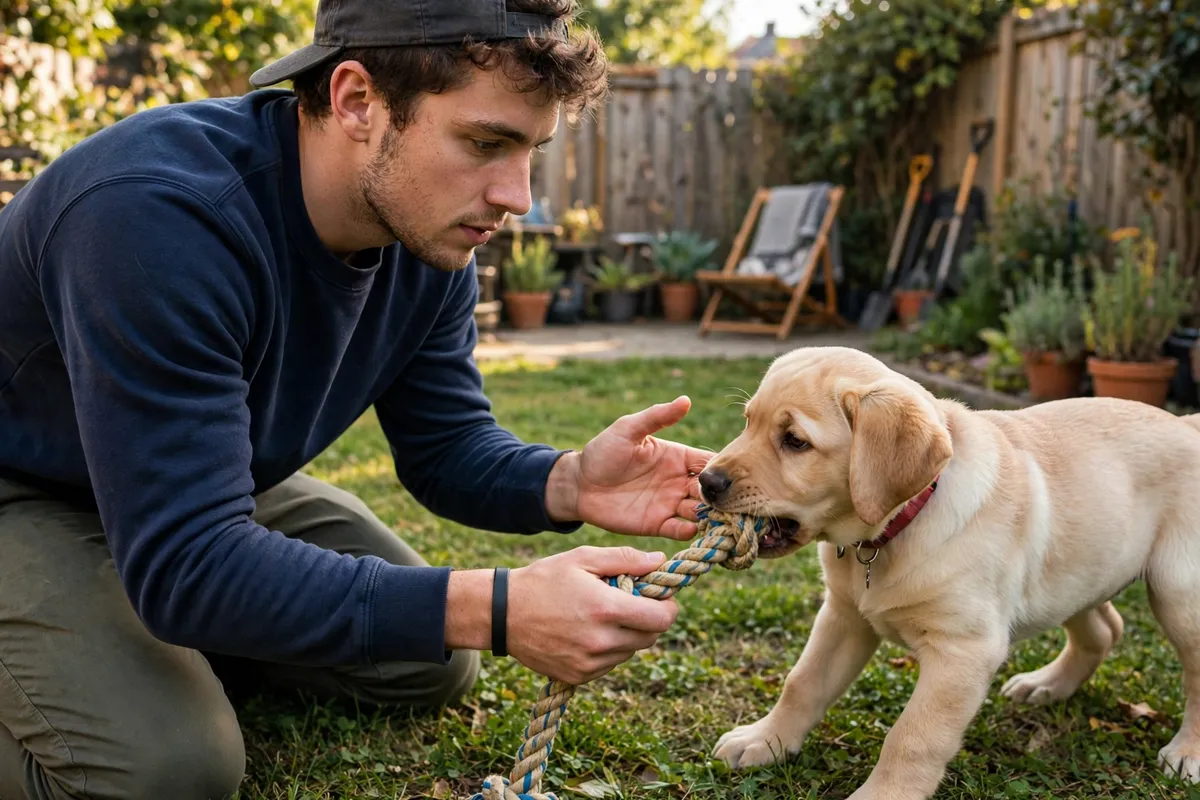
- Go still and calmly pause play when teeth press too hard on skin.
- Offer a toy right away, so your puppy learns what to chew instead.
- Praise and resume play when your puppy mouths gently or licks.
- End the session calmly if hard biting repeats, and try again later.
Everyone in the home should respond the same way. Mixed rules confuse a puppy, while steady rules help them learn faster.
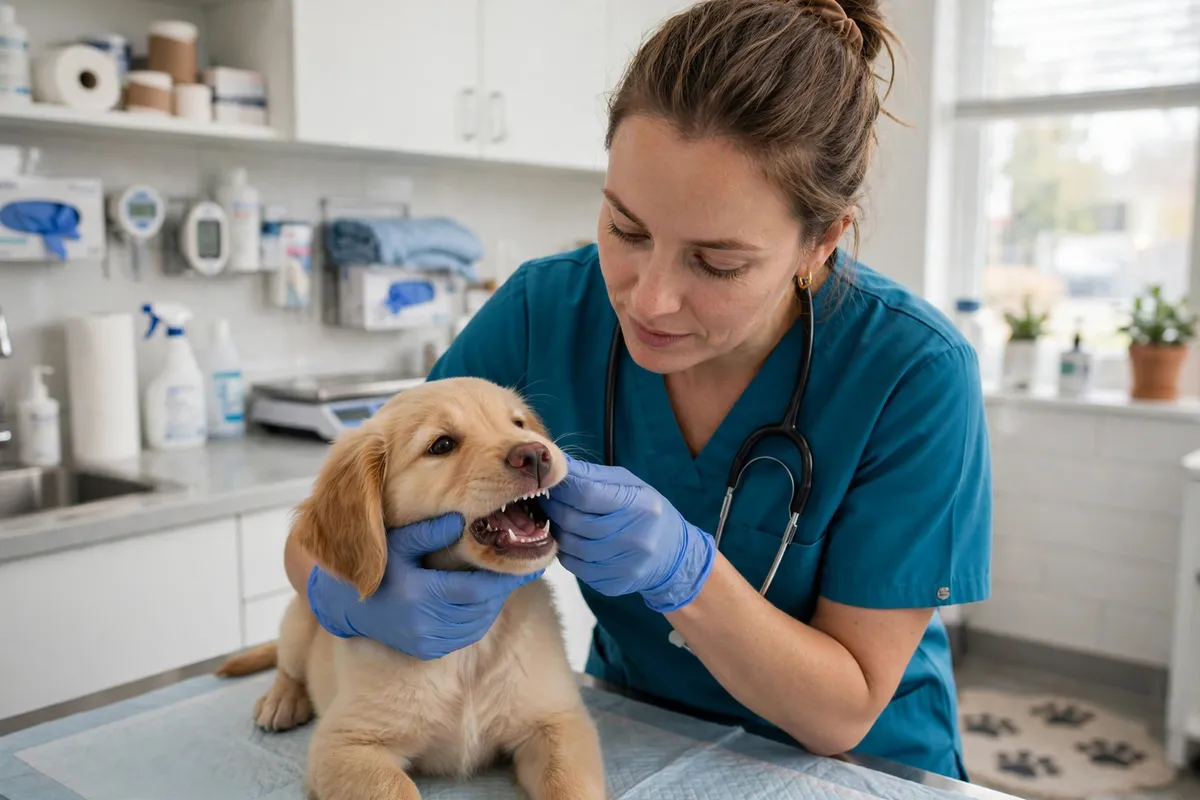
When Teething Signs Need Vet Attention
Most teething passes without a vet visit. Still, some signs should not wait.
- Baby teeth still present at 7 months, especially a baby canine sitting beside an adult tooth.
- Bleeding that will not stop, or more than a few drops on a toy.
- Refusal to eat, or eating much less than usual for more than a day.
- A swollen face, bad mouth odor, or a tooth that looks broken.
- A sudden behavior change, or signs of pain that do not ease.
For pain, sudden changes, aggression, or a possible medical cause, see a vet first. A vet can then refer you to a qualified behavior professional if training help is needed.
Frequently Asked Questions
How can I tell when puppies start teething?
Watch for extra drooling, red or tender gums, more chewing, and tiny teeth found on the floor. Baby teeth usually begin at 3 to 4 weeks, and the second stage usually starts at 12 to 16 weeks.
How long does teething last?
For most puppies, the second stage runs from about 12 to 16 weeks to about 6 to 7 months. Chewing habits can last longer, so keep offering suitable chews and calm training after the teeth are in.
Should I let my teething puppy chew on my hands?
Gentle mouthing can be part of learning, but hard biting should pause play. Go still, offer a toy, and praise gentle mouthing when it returns.
What can I give my teething puppy for sore gums?
Cold, safe items help most, such as a frozen washcloth under supervision or a rubber puppy teething toy. Never give human pain relief, and ask your vet if pain seems severe.
My puppy swallowed a lost tooth. Is that a problem?
Usually not. Puppies often swallow tiny baby teeth, and the teeth usually pass through without harm. Contact your vet if your puppy vomits, stops eating, or seems unwell.
When should I worry about teething?
Contact your vet for retained baby teeth, bleeding that will not stop, refusal to eat, a swollen face, bad mouth odor, or a sudden behavior change.
Once you know when puppies start teething, you can meet the sore weeks with a plan: safe chews, cold relief, calm redirection, and a vet check when something looks wrong.
For related BreedFix guidance, see our guides to teaching a dog to come when called off leash, crate training an adult rescue dog, and leash training a stubborn puppy that sits down.
Reference
American Kennel Club, A Timeline of Puppy Teething.
Still stuck? Get a plan built for your dog.
Answer a few quick questions and get a personalized, force-free training plan in minutes.
Try the Free Dog Tools