How to Teach a Dog to Come When Called Off Leash
Off-leash freedom feels wonderful, until your dog hears a squirrel, a bike, or another dog and stops listening. That moment is why recall matters more than any trick.
This guide shows how to teach dog come when called off leash step by step, in safe places first. You will move slowly, reward generously, and only remove the line when success is steady.
Key Takeaways
- Never punish a slow return. Calmly go and get your dog instead.
- Say the recall word once, then help your dog succeed.
- Reward every recall while training, with bigger rewards for hard recalls.
- Use a long line outdoors until recall holds around distractions.
- Work indoors, then in the garden, then in a safe enclosed field.
- Step back a stage whenever recall starts to fail.
Teach Dog Come When Called Off Leash: The Direct Answer
Start indoors with a short distance and a happy voice. Add distance, then move to the garden, then to a long line outdoors.
Only try a safe enclosed field when your dog comes quickly on the long line, even with mild distractions nearby. Keep sessions short, calm, and rewarding.
What Off-Leash Recall Really Means
Off-leash recall does not mean your dog never notices anything else. It means your dog can turn away from an interesting sight, sound, or smell and return to you.
When you teach dog come when called off leash, you are building that choice in harder and harder places. A kitchen recall is a start, not the finished skill.
Your dog also needs a safe finish. Ask for a sit on arrival, hold the collar gently, reward, and then let play continue when you can.
The Recall Word and Reward Rules
Pick one recall word and use it the same way every time. Most owners use “come”. A whistle also works well, because it sounds the same and carries farther.
If “come” has already stopped working, choose a fresh word and rebuild it from the start. Do not keep repeating a word your dog has learned to ignore.
Say the word once, in a warm and upbeat voice. Then move backwards a little, so coming toward you feels natural and fun.
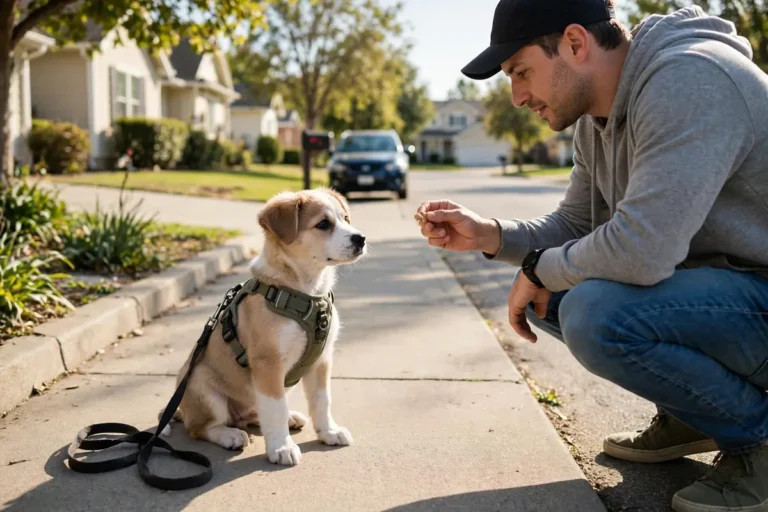
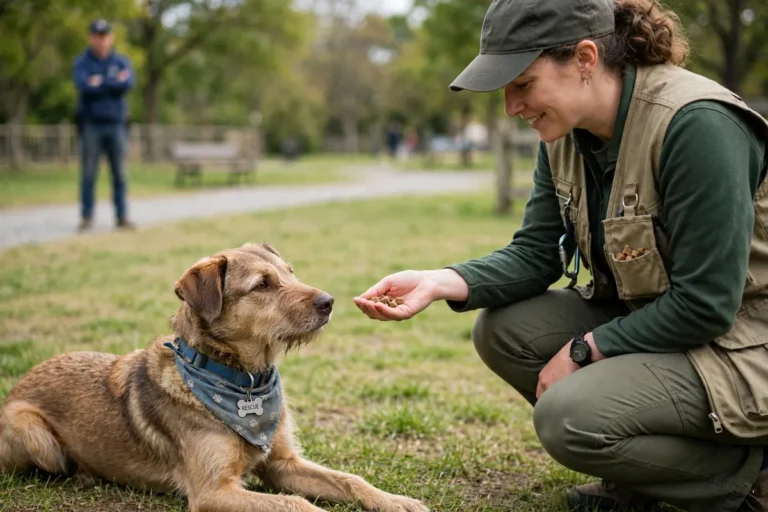
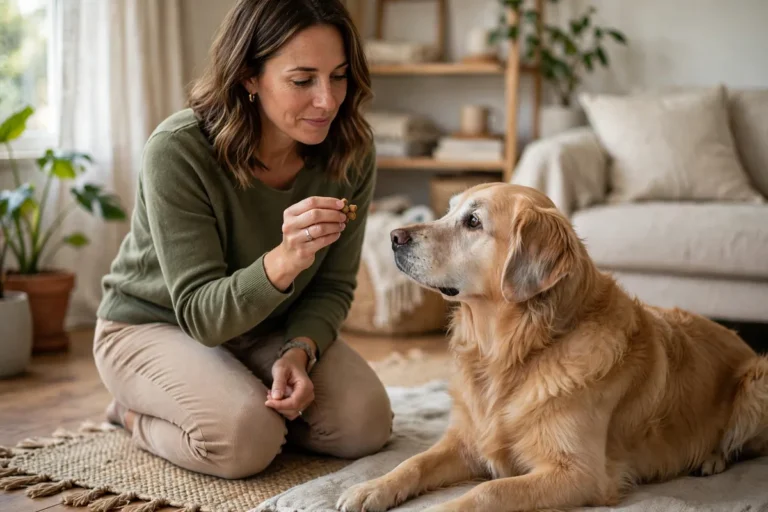
Mark the moment your dog turns toward you with “yes” or a click, then reward at once. During training, pay every recall, even an easy one.
- Use small, soft treats your dog loves, plus praise and play.
- Give a jackpot, several treats in a row, for a hard recall.
- Sometimes reward and release your dog back to play, so recall does not always end the fun.
- Fade visible treats slowly, but keep surprise rewards in place.
What You Will Need
- A short leash for indoor work and the first garden steps.
- A long line, 15 to 30 feet, for outdoor training. Do not use a retractable lead for recall work.
- High-value treats such as small pieces of chicken or cheese, plus a toy if your dog loves play.
- A safe enclosed area such as a fenced garden, a secure field, or a fenced dog area away from roads.
The Step-by-Step Plan
Train where success is easy, then make one thing harder at a time. Change only distance, distraction, or place in a single step, never all three together.
This staged plan is how you teach dog come when called off leash without asking for too much too soon. If a step feels hard, you are ready to slow down, not push on.
Phase 1: Indoors, on leash
Stand a few feet from your dog in a quiet room. Say your dog’s name, then “come”, in a happy voice.
When your dog moves toward you, mark the moment, reward, and ask for a sit. Keep the mood light and end while your dog still wants more.
Phase 2: Add distance indoors
Move across the room, then into another room, as long as recall stays quick. Call once, then wait calmly and let your dog find you.
If your dog hesitates, go back to a shorter distance. Success at a short distance builds the confidence for a longer one.
Phase 3: Off leash in the house
Drop the leash in a quiet room and try short recalls with no line attached. Move backwards as you call, so your dog has a clear path to you.
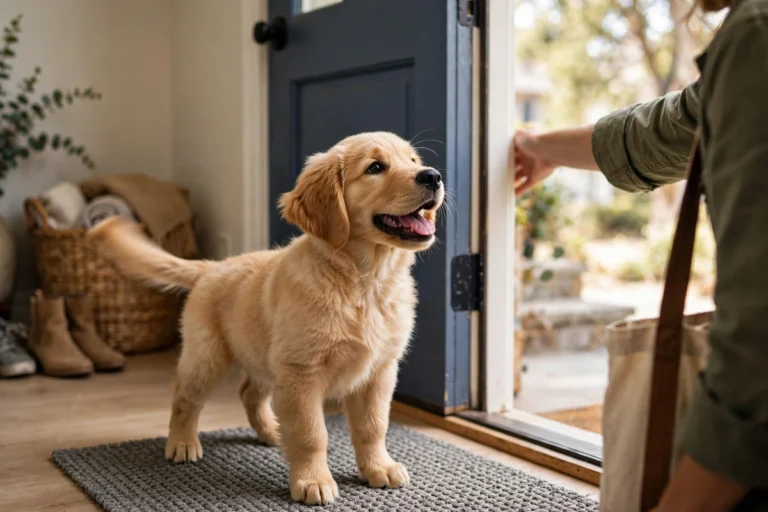
Ask for a sit on arrival and reward before you reach for the collar. This teaches your dog that arriving leads to good things, not to being grabbed.
Phase 4: Garden, then outdoors on a long line
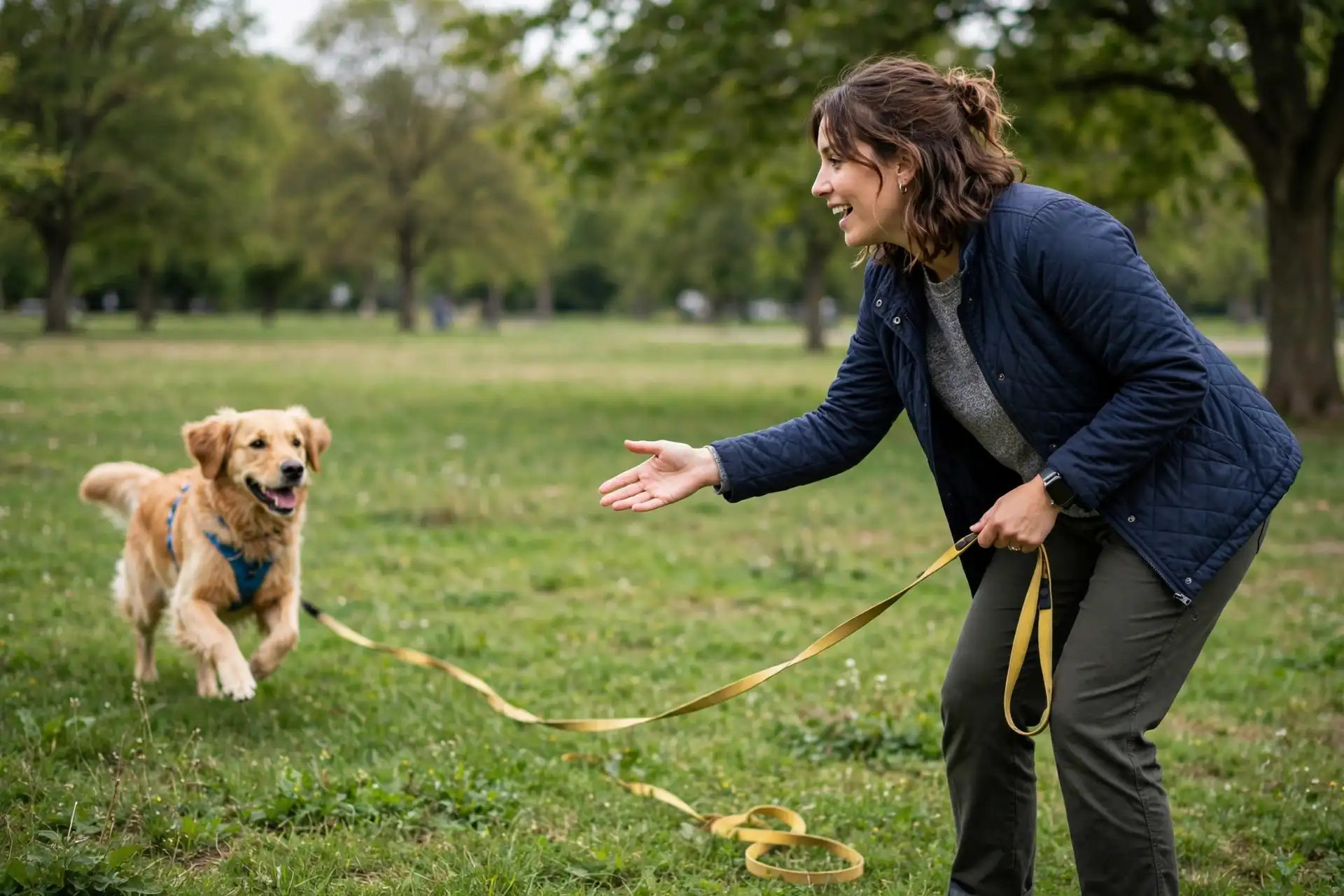
Start in the garden on the long line, in the quietest part of the day. Let your dog wander a little, then call once and reward a prompt return.
Hold the line loosely and never use it to drag your dog toward you. If your dog ignores the call, calmly walk in along the line and try again closer.
Phase 5: Safe enclosed fields
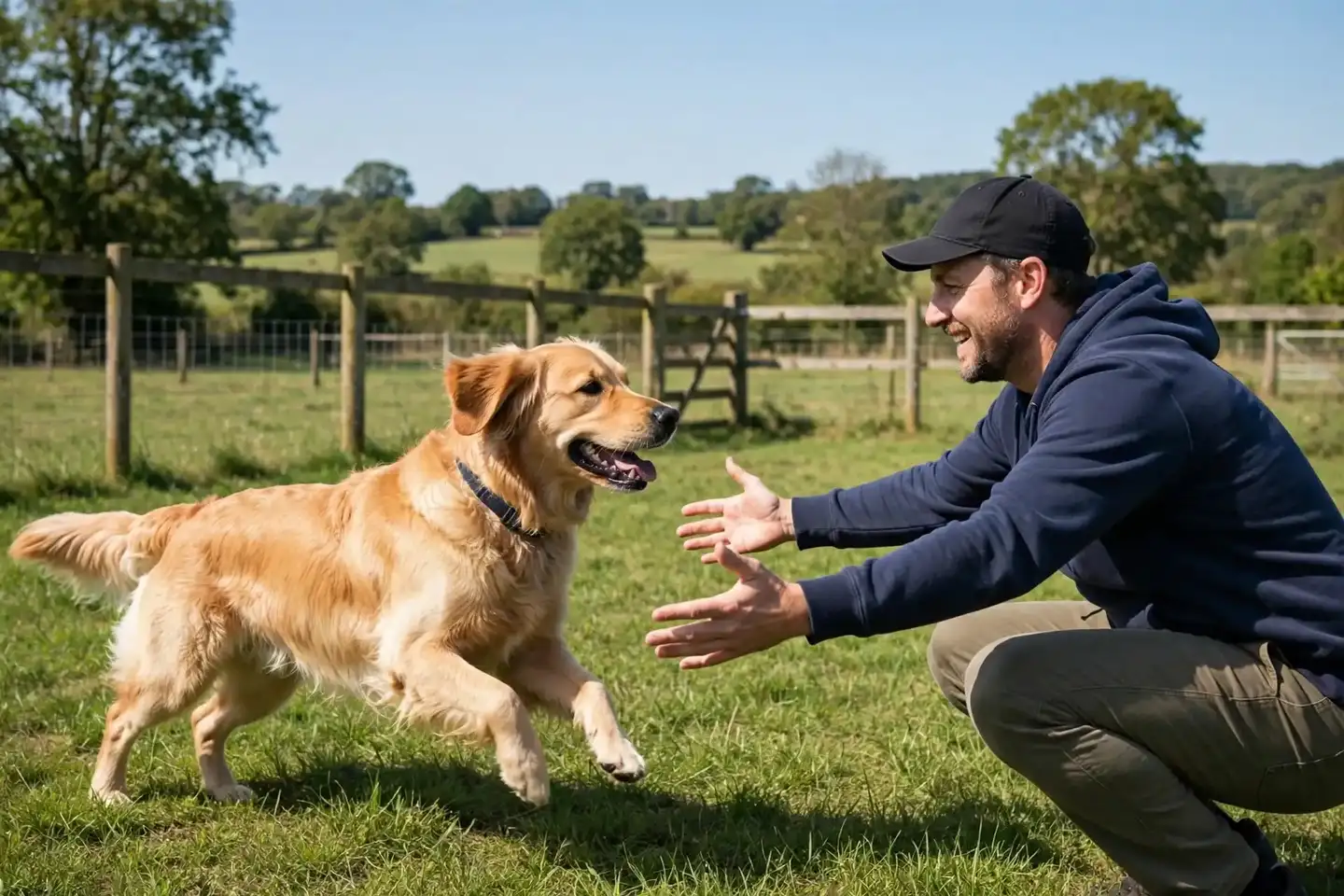
Choose a fully fenced field with no gaps, no road access, and a gate you can close. Start with short off-leash recalls, close to you, with no other dogs present.
Build distance slowly, and keep the first sessions short. End with a reward and a calm walk back to the gate, so leaving also feels good.
Games That Build Speed
Training builds the habit, and games build speed. Try a two-person game, with each person taking turns to call the dog and reward.
Hide-and-seek works indoors too. Call your dog from another room, reward warmly, and keep the game easy enough that your dog wins often.
Jackpot Rewards for Hard Recalls
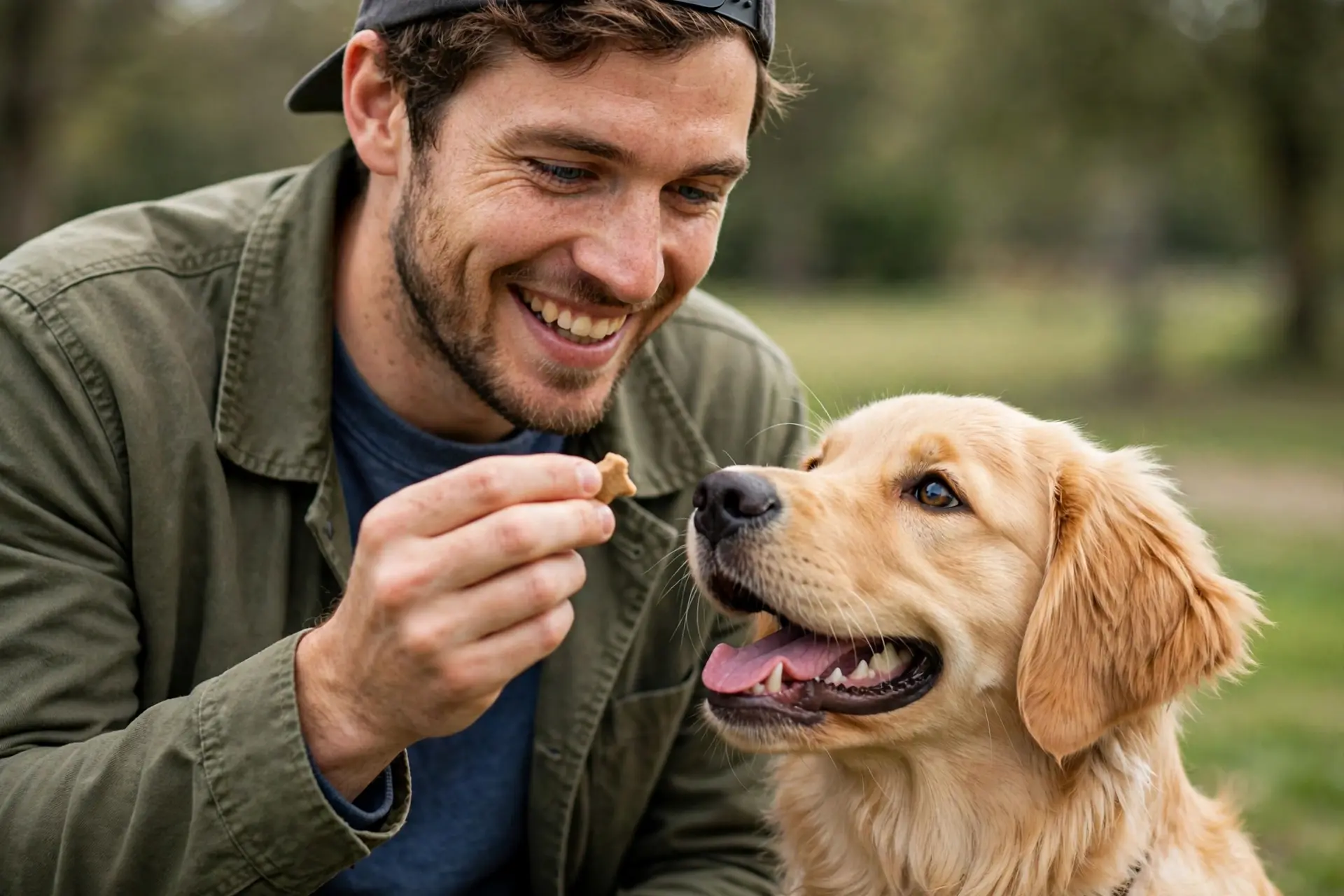
Normal recalls earn a normal reward. A recall away from a distraction, a scent, or another dog earns a jackpot.
Give several treats one after another, plus praise and a short game. Your dog should learn that the hardest choice pays the best.
Distraction-Proofing, One Step at a Time
Distractions are not one level. A quiet garden, a passing person, and a running dog are very different tests, so train them separately.
When you teach dog come when called off leash around other dogs, start at a distance where your dog can still think and respond. Move closer only when recalls stay quick.
| Distraction level | Where to practice | Move on when |
|---|---|---|
| Low | Quiet room and garden | Your dog turns at once, every time |
| Medium | Calm street or quiet park on a long line | Your dog comes past mild sights and sounds |
| High | Enclosed field with people or dogs at a distance | Your dog comes before reaching the distraction |
Call early, before your dog is fully focused on the distraction. A recall called too late is much harder, even for a well trained dog.
What NOT to Do
- Never punish a slow return. If your dog finally comes and meets anger, coming will feel unsafe next time.
- Never chase your dog. Chasing turns recall into a game of keep-away and teaches your dog to run farther.
- Never call your dog only for unpleasant things, such as a bath, nail care, or the end of every walk.
- Never repeat the cue over and over. Say it once, then help your dog succeed at an easier distance.
- Never use shock, prong, or e-collars for recall. These tools add fear and pain to a cue that must feel safe.
- Never use dominance or alpha framing. Your dog needs clear rewards and calm guidance, not a contest for control.
Safety Rules for Off-Leash Areas
Use off-leash freedom only in safe enclosed areas until recall is reliable. Never work off leash near roads, car parks, livestock, or unfenced water.
When you teach dog come when called off leash safely, check the fence, gate, and ground first. Remove any risk you can see before you unclip the line.
Keep your dog on a long line in any new place, even if recall was strong at home. New smells and sights can change everything.
Check local leash rules before you visit a park or field. If a place requires a leash, keep your dog leashed and practice recall on the long line instead.
When to Go Back a Stage
Going back is not failure. It is how recall stays strong, because your dog gets more wins at a level they can handle.
Step back if your dog ignores two calls in a row, runs past you, or only comes when treats are visible. Shorten the distance, lower the distraction, or return to the long line.
Return to the earlier stage for several short sessions before trying the harder step again. Progress often looks like two steps forward and one step back.
When Professional Help Is Needed
Ask a qualified, force-free trainer or behavior professional if recall is not improving, if your dog panics outdoors, or if your dog chases people, dogs, or traffic.
See your vet first for pain, a sudden change in behavior, aggression, or any medical cause that could explain a change. Training cannot fix pain, fear from illness, or a sudden loss of hearing.
Bring notes about when the problem happens, what distractions are present, and what you have already tried. Clear notes help a professional build a safer plan.
Troubleshooting: When Your Dog Ignores You
Your dog runs straight past you. Ask for a sit on arrival in every phase, and reward at your side, not in front of you at speed.
Your dog only comes when treats are visible. Call with empty hands sometimes, then reward from a pocket or pouch after your dog arrives.
Your dog ignores you completely outside. The place is too hard, not the dog. Go back to the garden or the long line, shorten the distance, and rebuild.
Frequently Asked Questions
How long does it take to teach dog come when called off leash?
It takes steady practice over time, not one good weekend. Dogs learn at different speeds, so judge progress by steady success, not by a calendar.
Can I skip the long line and just practice off leash?
Do not skip it. The long line keeps every recall safe while your dog learns, and it stops your dog from practicing ignoring you.
Should I use “come” or a whistle?
Either works if you use it the same way every time. A whistle carries farther and always sounds the same, which helps in open fields.
Why does my dog come indoors but ignore me at the park?
To your dog, those are different skills. The park has stronger smells, sights, and movement, so go back to the long line and build up slowly.
What if my dog runs up to other dogs or people?
Keep your dog on the long line until recall holds around those distractions. Call early, before your dog starts to run, and reward a quick turn.
Is my dog too old to learn recall?
No. Adult and senior dogs learn the same way, one phase at a time, with generous rewards and short, calm sessions.
What Success Looks Like
Success is a dog who turns toward you in a safe enclosed field, even when something interesting is nearby, and arrives happily for a reward.
Start this week in a quiet room, with short sessions and treats your dog loves. Small, steady wins are what build a recall you can trust.
For related BreedFix guidance, see our guides to crate training an adult rescue dog, leash training a stubborn puppy that sits down, and homemade food for a Labrador with a sensitive stomach.
Reference
American Kennel Club, How to Train Your Dog to Come When Called: Step-by-Step Recall.
Still stuck? Get a plan built for your dog.
Answer a few quick questions and get a personalized, force-free training plan in minutes.