Why Is My Dog Crying? 8 Reasons and How to Help
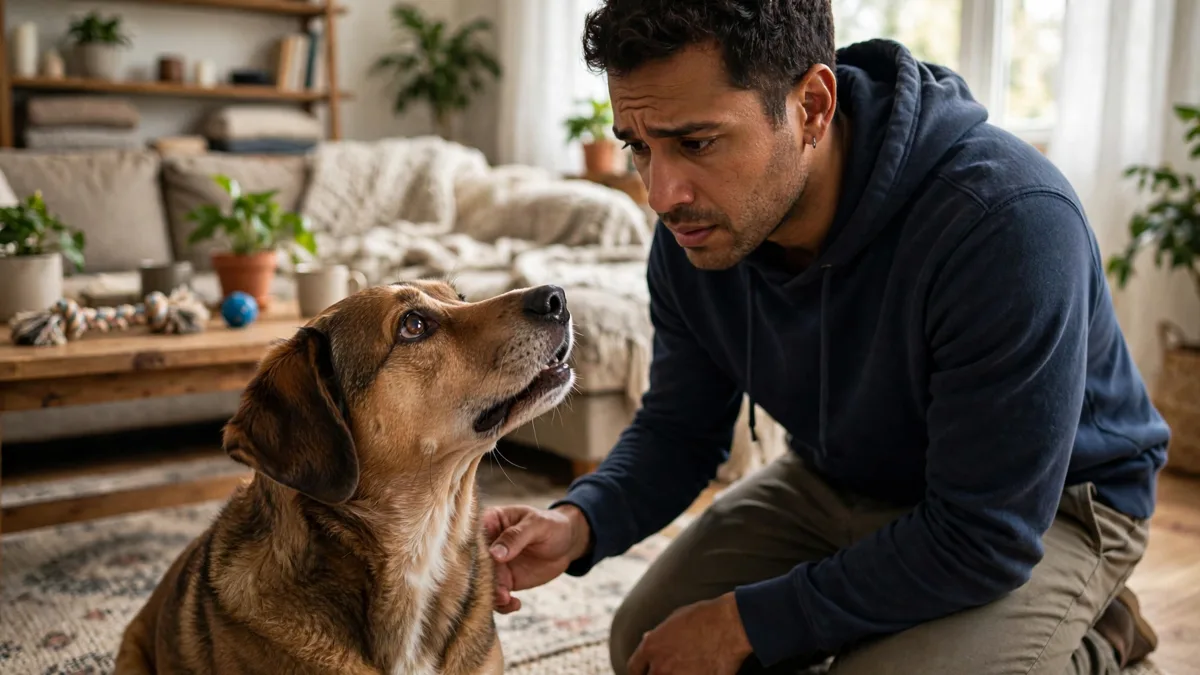
Why is my dog crying? That high whine can be hard to hear, and it is meant to get your attention.
When owners say crying, they usually mean whining or whimpering. Dogs do not shed tears from sadness the way people do.
This guide covers eight common reasons, how to tell them apart, and what to do for each one. It also covers when crying needs a vet, and what never to do.
Why Is My Dog Crying? The Direct Answer
If you are asking why is my dog crying, start by checking for pain, a simple need, fear, or boredom. Look at what changed, what your dog can see, and how the body looks with the sound.
Sudden crying, crying with pain signs, or crying that will not settle needs a vet check. Do not wait it out if the change is sudden or your dog seems unwell.
Key Takeaways
- Rule out pain first, especially for sudden or new crying.
- Read the context: body language, timing, and what your dog wants or fears.
- Meet simple needs calmly, then reward quiet and settled behavior.
- Use only positive reinforcement. Never punish crying, and never use fear-based tools.
- See a vet for sudden crying, pain signs, or crying that keeps coming back.
- Puppies, seniors, and dreaming dogs need a different check, not punishment.
Do Dogs Cry Tears Like Humans?
Dogs make tears to keep their eyes moist and clean. That is not the same as crying from sadness.
In this guide, crying means the sound: whines, whimpers, and soft yelps. Watery, red, or sore eyes are a separate issue.
If eyes are red, squinting, or have discharge, or your dog paws at the face, book a vet visit. Eye problems can be painful and can get worse fast.
The 8 Reasons Dogs Cry
Use the eight reasons below as a checklist. More than one reason can apply at once, so check the most urgent one first.
Reason 1: Pain or Discomfort
Pain is the first reason to rule out. Crying may be the only clear sign that something hurts.
Look for new or worse crying, crying when moving, jumping, or being touched, limping, restlessness, or eating less.
Hidden pain can also cause crying, such as a sore mouth, sore ears, or an upset stomach. If pain is possible, see a vet first and do not try training first.
Reason 2: Fear or Anxiety
A frightened dog may whine, pace, pant, tremble, hide, or stay close to you. The sound often comes with a tense body.
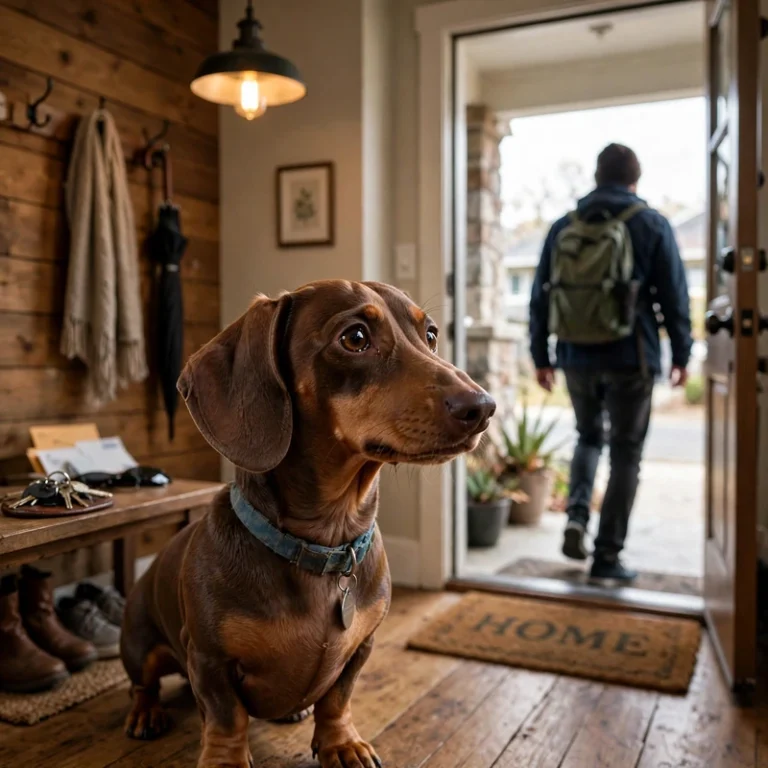
Common triggers are storms, fireworks, new visitors, car rides, vet visits, and changes at home. Crying when you leave can also be part of this pattern.
Comfort a frightened dog calmly. Reassurance does not spoil a dog that is truly scared, and fear needs a gentle plan, not pressure.
For repeated fear, keep routines steady, build up slowly to the trigger, and ask a vet or behavior professional for help if it is severe.
Reason 3: Attention-Seeking
Dogs learn what works. If whining has brought looks, talk, play, or food, your dog will try it again.
Attention whining often looks relaxed. Your dog may stare at you, pause when you respond, and start again when you stop.
The kind answer is to reward quiet moments. Give attention, play, and treats when your dog is calm, not only when the whining starts.
Reason 4: Boredom
A dog with too little play, walks, or mental work may whine from boredom. The sound may come with restlessness or pacing.
Build in daily walks, play, sniffing time, and simple training games. A tired mind and body often means a quieter dog.
Rotate toys, offer food puzzles, and keep sessions short and fun. Reward calm settling after play, not frantic demand.
Reason 5: Excitement and Greeting
Not all crying is distress. Some dogs whine when you come home, when the leash appears, or when a favorite person arrives.
Excitement whining often comes with a loose, wiggly body and a wagging tail. Your dog may bring a toy to greet you.
Keep greetings calm and reward four paws on the floor. Young dogs often settle with age and steady practice.
Reason 6: Frustration
Frustration crying happens when a dog can see what it wants but cannot reach it. A toy under furniture is a classic example.
On walks, some dogs whine and pull toward other dogs. They may want to greet, not fight, but they still need distance and help.
Help by removing the block when you can, adding distance, and teaching wait and leave it with generous rewards. Build patience in small steps.
Reason 7: A Simple Need
Sometimes crying is a plain request. Your dog may need the toilet, water, food, warmth, or to get through a door.
Puppies and older dogs often need the toilet most urgently. A dog at the door at night should get a calm, boring trip outside.
Watch where your dog goes. Standing by a bowl, a door, or a leash is a clue. Meet the need promptly and keep the fuss low.
Reason 8: Age-Related Change
Age changes how dogs cry. Puppies cry to call for care, and older dogs may cry when their body or mind changes.
For older dogs, new crying can point to pain, hearing or vision loss, or changes in thinking. A vet check should come first.
Keep routines steady for older dogs. A nightlight, easy toilet access, and a calm evening can help, but they do not replace vet care.
How to Tell the Reasons Apart
Use what you see, not the sound alone. The table below gives a simple starting point.
| What you see | What it may mean | Try first |
|---|---|---|
| New crying, limping, or crying when touched | Pain | See a vet first |
| Pacing, panting, trembling, or hiding | Fear or anxiety | Comfort calmly and reduce the trigger |
| Relaxed, staring at you, stops when you respond | Attention | Reward quiet moments |
| Restless after little play or walks | Boredom | Add play, walks, and enrichment |
| Wiggly body at greetings | Excitement | Keep greetings calm and reward settling |
| Fixed stare at a toy or another dog | Frustration | Add distance and teach patience |
| Standing by door, bowl, or leash | Simple need | Meet the need calmly |
| New night crying in an older dog | Age-related change | See a vet first |
What to Do When Crying Starts
- Check toilet, water, food, heat, and cold.
- Look for pain, injury, or a sudden change.
- Check for a scary sound, visitor, or change at home.
- Offer calm comfort and a quiet place to settle.
- Note the time, trigger, and body language, and film it if you can.
- If the cause is unclear and crying continues, call your vet or a behavior professional.
Work through the list in order. Pain and sudden change come first, and training comes after a vet check if pain is possible.
Puppies, Night Crying, and Sleep
When you wonder why is my dog crying at night, check toilet, pain, and fear first. Puppies, seniors, and sleeping dogs cry for different reasons, so the right help depends on the dog.
Why Puppies Cry at Night
A new puppy has lost familiar smells, sounds, and company. Crying at night can be a call for warmth, food, company, or the toilet.
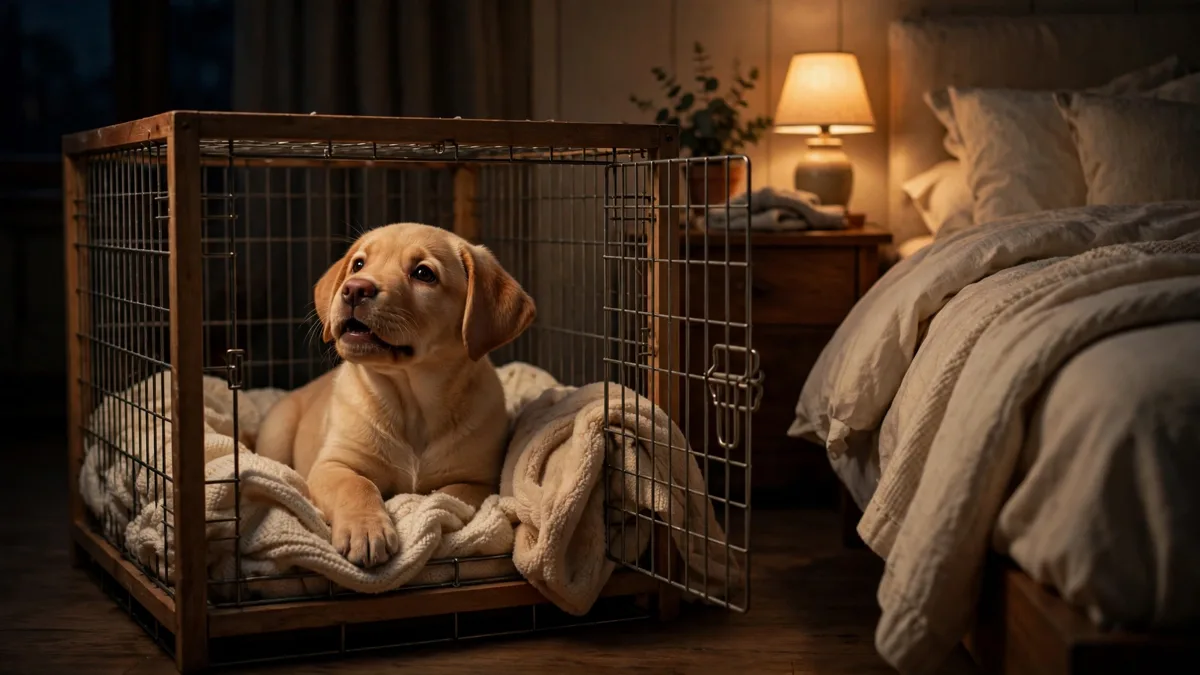
Keep the sleeping place near you at first, so your puppy can hear and smell you. Offer calm toilet trips and a warm, safe bed.
Do not leave a young puppy to cry alone for long stretches. Build alone time slowly during the day, with short, positive steps.
Why Senior Dogs Cry at Night
New night crying in an older dog deserves a vet visit. Pain often feels worse during long, still nights.
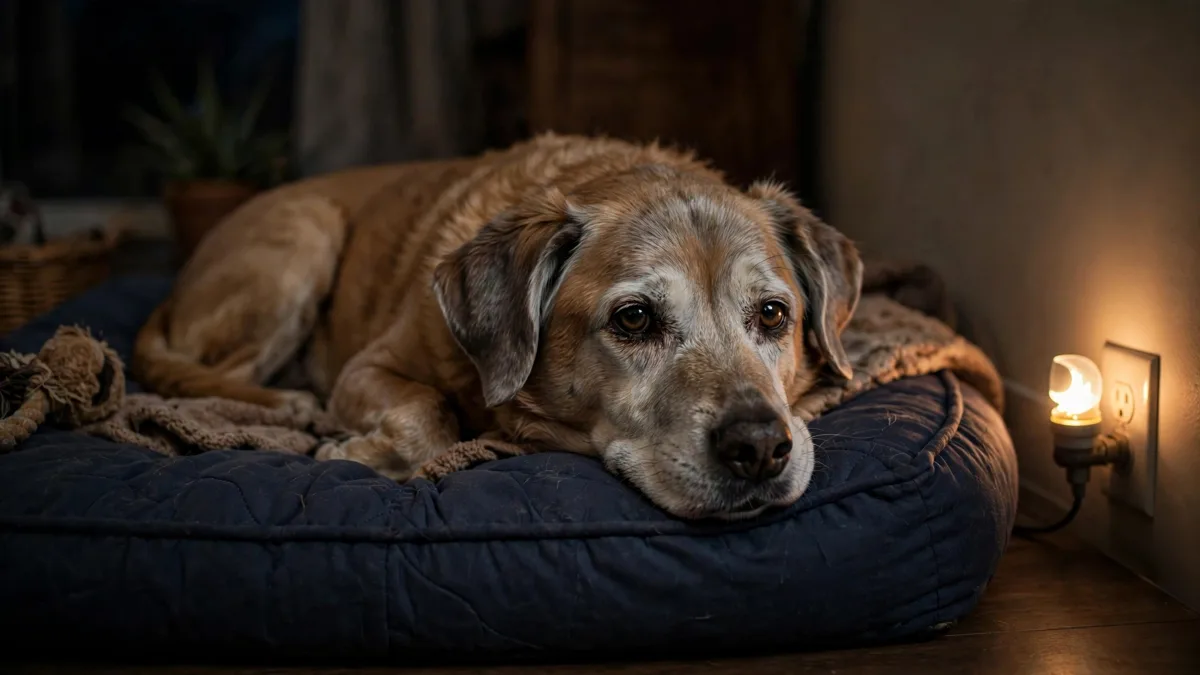
Hearing or vision loss can also make nights confusing. Your dog may call out because the house feels less familiar in the dark.
A vet check comes first. After that, a steady evening routine, a nightlight, and easy toilet access can help your dog settle.
Crying in Sleep
Soft whimpers, twitching paws, and muffled barks in sleep are often normal dreaming. Dogs dream, just as people do.
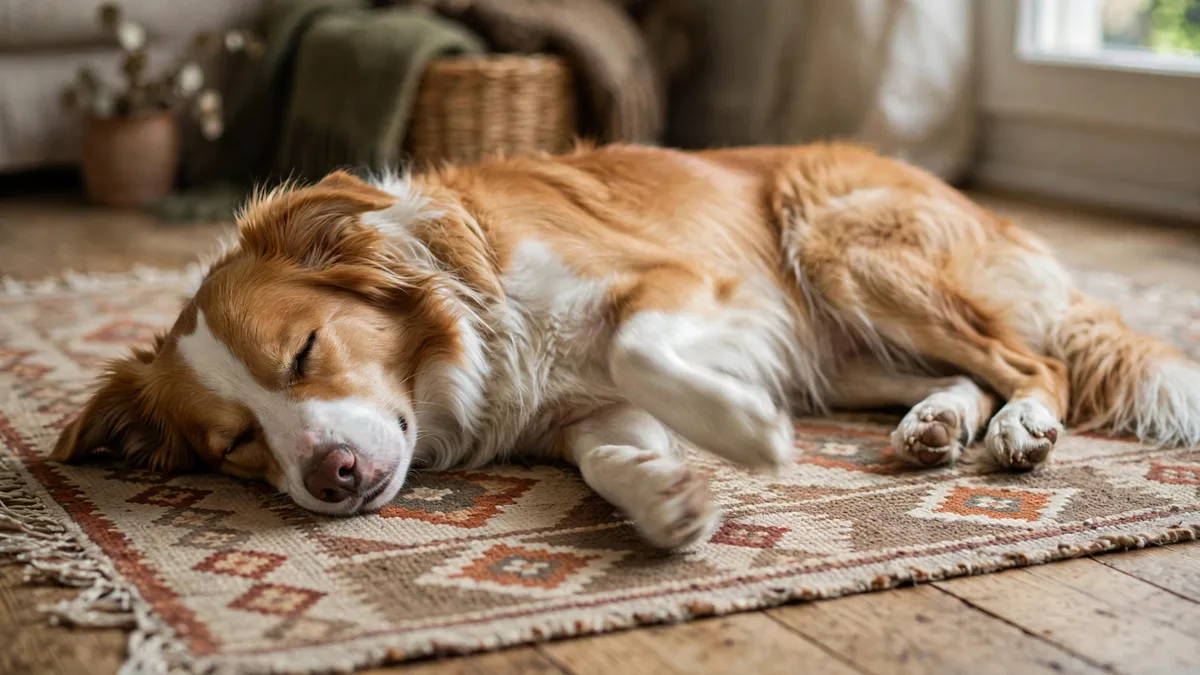
If your dog wakes bright and normal, no action is needed. Wake a sleeping dog gently, by voice first, if you must wake it.
Call a vet if sleep crying comes with stiffening, paddling, unresponsiveness, or a dazed time after waking. A video can help the vet.
What NOT to Do
- Never punish crying, shout, shake, spray, or use shock or prong collars.
- Never use dominance or alpha framing. Fear and pain need help, not a contest.
- Never ignore sudden crying. Sudden change is a reason to check, not to wait.
- Never give human medicine or guess about a medical cause.
- Never leave a frightened or pained dog to cry it out alone.
Punishing crying can hide pain and add fear. It can also teach a dog to suffer quietly, which helps no one.
When Crying Needs Vet Attention Urgently
Book a vet visit promptly for crying that is sudden, worse than usual, or out of character. Change is a strong warning sign.
- Crying with limping, trouble breathing, vomiting, diarrhea, or a swollen belly.
- Crying when touched or moving, or eating much less for more than a day.
- Red, squinting, or watery eyes, discharge, or pawing at the face.
- Crying with aggression, confusion, pacing at night in an older dog, or a possible seizure.
- Crying that will not settle, even after needs are met and comfort is offered.
If you are unsure, call your vet and describe what you saw. Trust your knowledge of your own dog, and seek help early.
Frequently Asked Questions
Why does my dog whine so much compared to other dogs?
Breed, age, personality, and learning history all play a part. Some dogs are more vocal, and whining that has worked before will be used more.
Why is my dog crying at night?
At night, check toilet, pain, and fear first. Puppies may need company and a toilet trip, while older dogs need a vet check for new night crying.
Should I ignore my dog crying at night?
No, not as a first step. Check toilet, pain, and fear first, especially for puppies and seniors. Only a known attention habit needs a different plan, and even then, build in exercise and routine.
Does comforting a crying dog reinforce the crying?
Comforting a frightened or pained dog does not create a behavior problem. You cannot reinforce an emotion with calm reassurance. Save reward for quiet behavior for relaxed, attention-seeking whining.
Why does my dog cry when I leave the house?
Crying when you leave often points to distress about being alone. It may start as you pick up keys or shoes. Build alone time slowly, and ask a vet or behavior professional if it is severe.
Can dogs cry when they are happy?
Yes, in voice. Excitement whining at greetings and play is joyful overflow, and it often comes with a loose, wiggly body. Dogs do not shed emotional tears the way people do.
The Bottom Line
So why is my dog crying? In most cases, your dog is telling you something clear. It may hurt, feel scared, need something, feel bored, or feel very happy.
Rule out pain, read the context and body language, and answer the need or soothe the feeling. For related BreedFix guidance, see our guides to when puppies start teething and biting, teach a dog to come when called off leash, and crate train an adult rescue dog.
Reference
ASPCA, Whining.
Still stuck? Get a plan built for your dog.
Answer a few quick questions and get a personalized, force-free training plan in minutes.
Try the Free Dog Tools