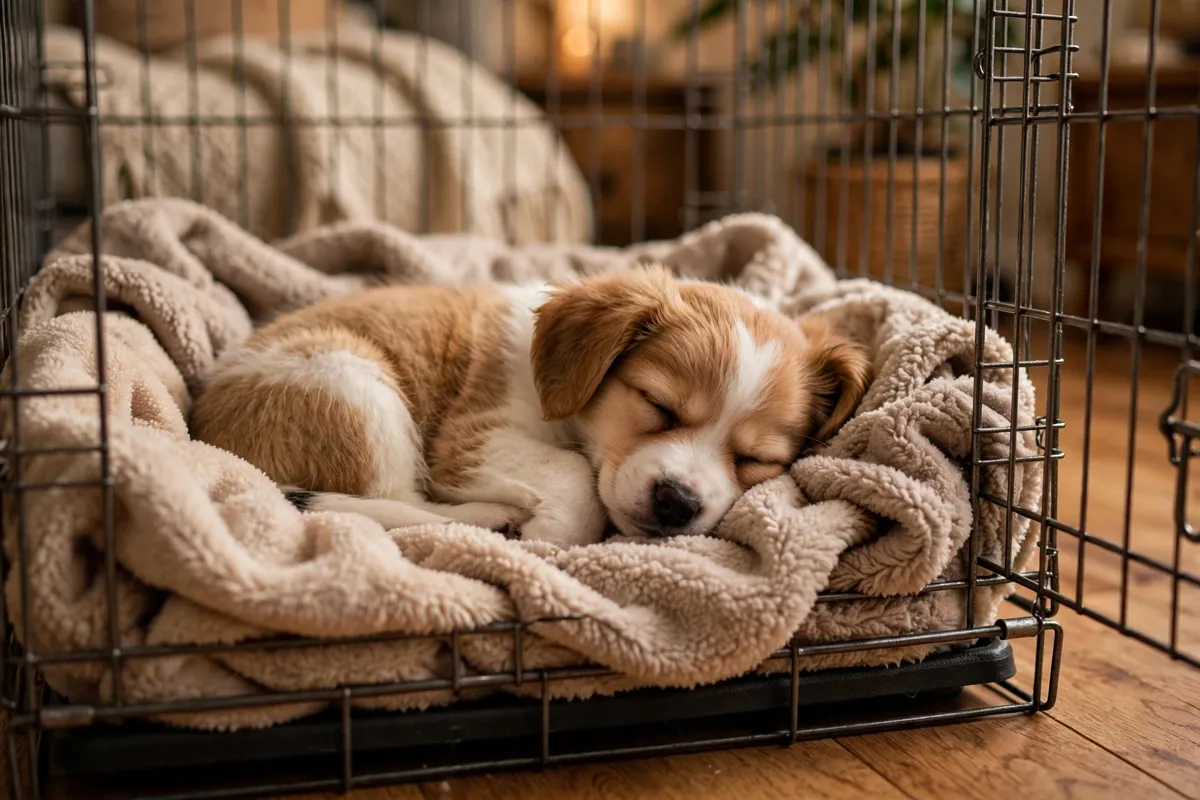
How to Keep a Puppy Warm at Night Without a Heater
Puppies feel the cold more than adult dogs. They have less body fat, thinner coats, and smaller bodies that lose heat fast.
You can keep puppy warm at night without heater with bedding, room setup, and a few safe warming choices. This guide shows how to put those pieces together.
Key Takeaways
- Layered blankets, an insulated bed, and a draft-free spot do most of the work.
- Raise the bed off cold floors and block drafts around doors and windows.
- Use a covered hot water bottle or a puppy-safe self-warming mat, never an uncovered heat source.
- Watch for shivering, tight curling, cold ears, panting, and restlessness.
- Never leave an electric blanket or heating pad on and unsupervised near a puppy.
- Call your vet if shivering will not stop, or if your puppy seems limp, lethargic, or refuses food.
How to Keep Puppy Warm at Night Without Heater
To keep puppy warm at night without heater, start with the sleeping spot, then layer the bed, then add one safe warming option. Check your puppy once before bed and once during the night.
The goal is steady, gentle warmth. Your puppy should be able to move toward warmth or away from it, and should never be trapped under heavy bedding or against a hot surface.
Why Puppies Get Cold at Night
Very young puppies cannot control their body temperature well. They depend on a warm nest, littermates, and a warm room.
Even after puppies go to new homes, they chill more easily than adult dogs. Small puppies, short-coated puppies, and puppies that are unwell tend to feel the cold most.
Night is harder because the house cools, activity stops, and no one is watching. A setup that feels fine in the evening can feel cold by the early hours.
Choose a Warm, Draft-Free Sleeping Spot
Pick an interior corner of a room, away from exterior walls, windows, and doors. The spot should feel still, not breezy, when you stand in it.
Raise the crate or bed a few inches off the floor. A low platform, a thick rug, or an insulating mat underneath helps, because floors are often the coldest surface in the room.
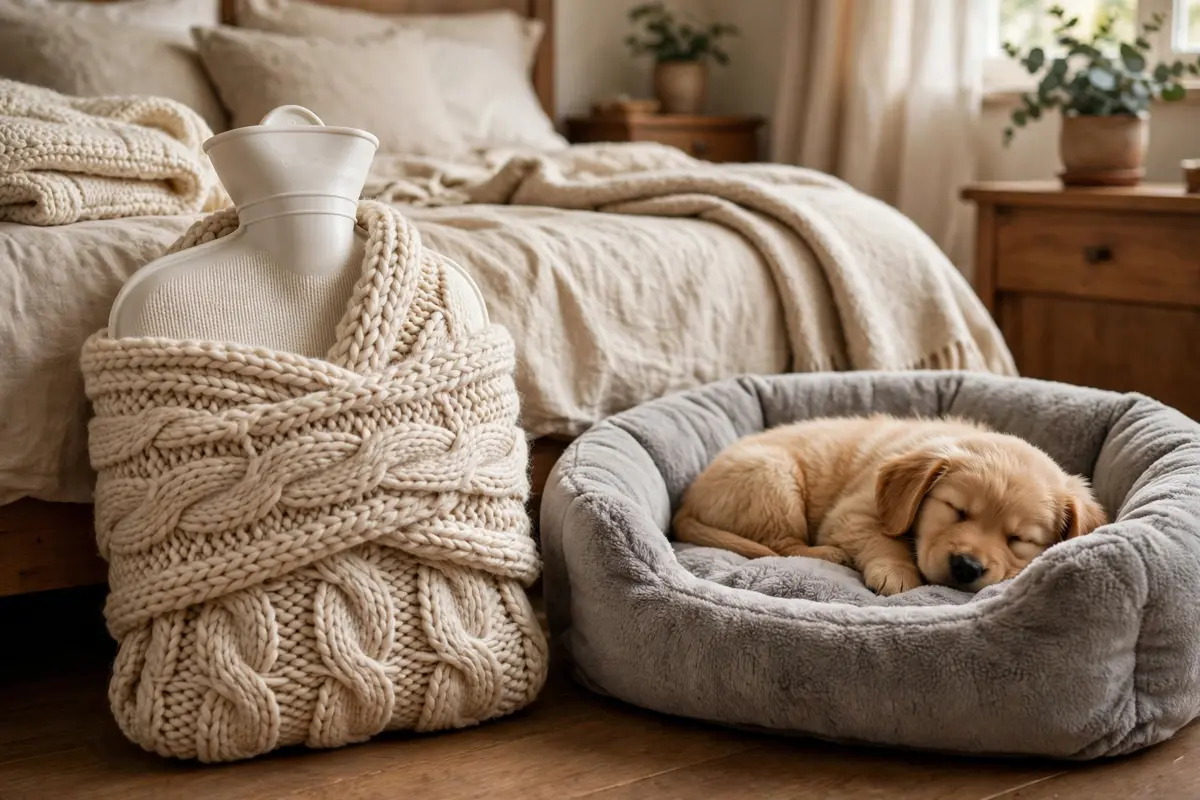
Block drafts before bed. Put a rolled towel or draft stopper along the bottom of the door, and close curtains or blinds over nearby windows.
For a wire crate, drape a breathable blanket over the top and sides only. Leave the front open for airflow, and never seal the crate airtight.
Layer the Bed for Warmth
Start with a raised or well-padded bed, not a thin mat on a bare floor. A bed with raised sides can help hold body heat close.
Add two or three fleece blankets or clean towels. Fleece traps warm air, washes well, and lets your puppy nest and shape the bedding.
Let your puppy arrange the layers. Puppies often curl up and pull bedding around themselves, which creates a warm pocket of air.
Wash bedding often. Damp or dirty blankets lose insulating power and can irritate skin, so keep a clean spare set ready.
For a very young puppy, avoid loose, heavy blankets that could tangle or trap the puppy. Use snug, fitted bedding the puppy can move on, and check that the puppy can move freely.
Use Safe Warming Options Without a Heater
A hot water bottle can help on a cold night, but only with care. Fill it with warm water, never boiling water, and test it on your inner wrist first.
Always cover the bottle with a thick towel or a pillowcase. Place it at one side of the bed, not under your puppy, so your puppy can move away from it.
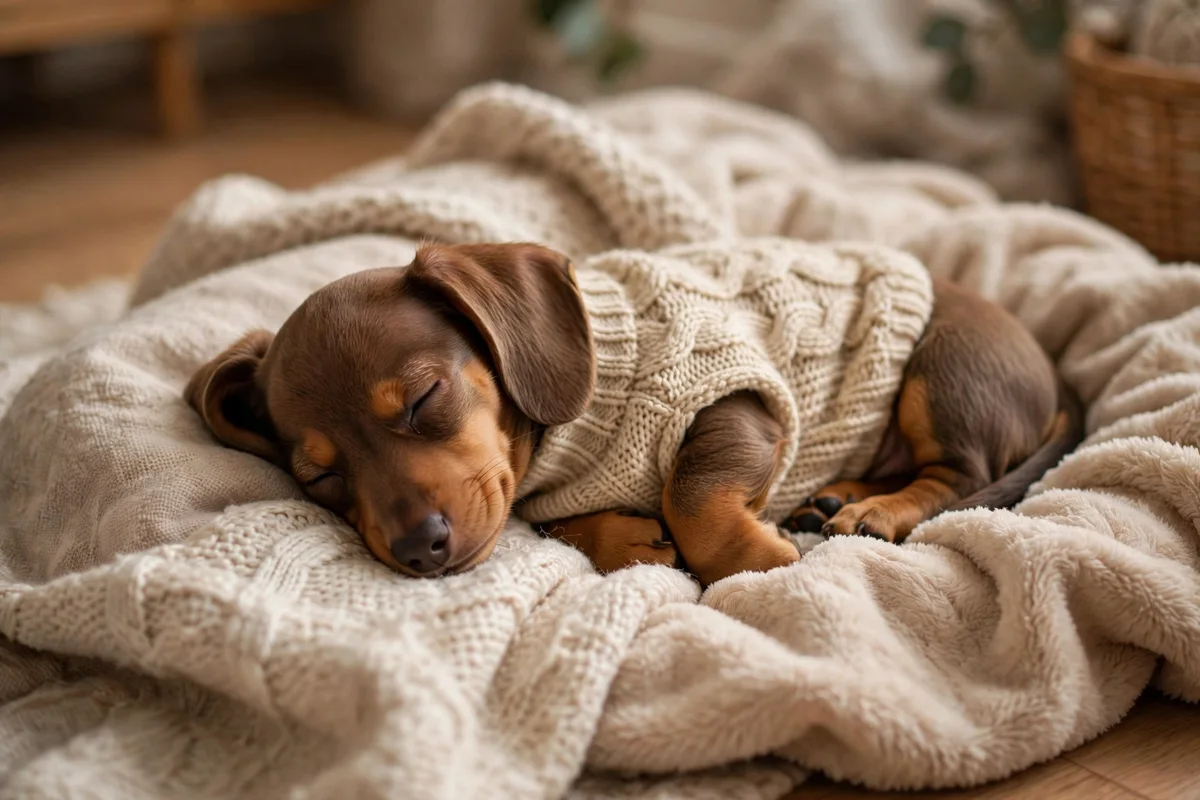
Check the bottle for leaks before bed, and expect it to cool during the night. A soaked puppy in a cold room is worse off than a puppy with no bottle at all.
A puppy-safe self-warming mat is another option. It reflects body heat back to the puppy and needs no cord, plug, or switched-on heat.
A soft sweater or fleece jacket can add a layer for a short-coated or tiny puppy. Choose soft fabric with no dangling strings, buttons, or loose parts a puppy could chew off.
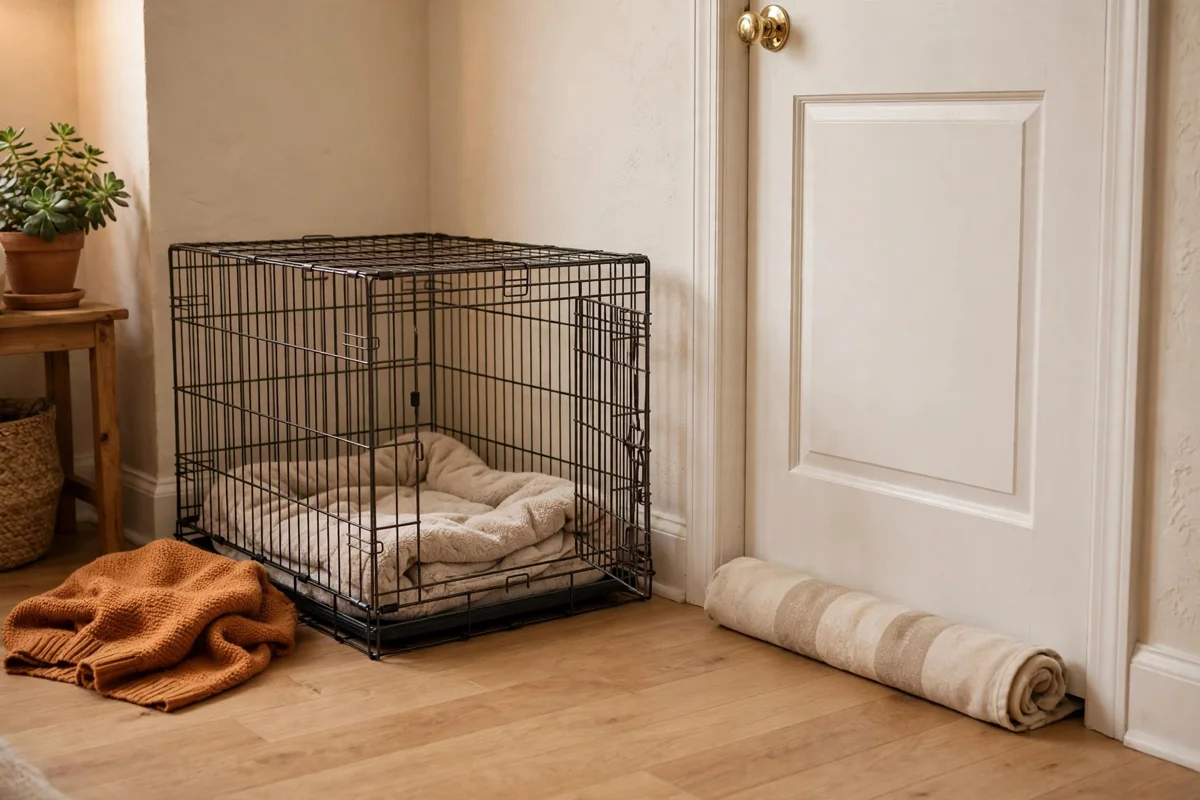
Check the fit in the morning. The sweater should be snug but not tight, and it should not rub the armpits or restrict movement. Take it off if your puppy chews it.
Build a Calm Bedtime Routine
Feed the evening meal at the usual time, then allow a calm wind-down. Digestion gives a little body heat, but the meal itself is not a warming method.
Keep the last part of the evening quiet. A short, gentle play session, a toilet break, and a calm settle on the bed help your puppy relax.
Use praise and small treats to reward calm settling. Positive reinforcement builds a bedtime habit without fear, scolding, or force.
A short evening care check can fit into the routine. If your puppy will not accept a toothbrush, see our guide on how to clean puppy teeth without a toothbrush.
For one common evening-food question, see our guide on whether puppies can eat scrambled eggs daily.
Short, patient learning games earlier in the evening can also help a dog settle. The same calm approach helps older dogs, as shown in our guide to teach an old dog new tricks.
Bedtime Checklist
Use this checklist to keep puppy warm at night without heater each night.
| Check | What to do |
|---|---|
| Bed | Layer clean, dry fleece blankets over a padded, raised bed. |
| Spot | Move the bed away from drafts, windows, and cold exterior walls. |
| Floor | Put a rug or insulating mat under the crate or bed. |
| Warmth | Add a covered hot water bottle at one side, or a self-warming mat. |
| Cover | Drape a breathable blanket over a wire crate, leaving the front open. |
| Night check | Feel the ears and paws, and look for shivering or panting. |
What NOT to Do
- Do not leave an electric blanket or heating pad on and unsupervised. Chewing cords or lying on a faulty pad can cause burns or electric shock.
- Do not place a space heater near the crate. It can burn a puppy, dry the air, and overheat a small room fast.
- Do not use an uncovered hot water bottle. Always use a thick cover, and never use boiling water.
- Do not overdress or over-cover your puppy. A panting puppy is too warm and needs room to cool down.
- Do not use loose, heavy blankets for a very young puppy that cannot move out from under them.
- Do not assume a shivering puppy will get used to the cold. Persistent shivering means the setup is not working.
Signs Your Puppy Is Too Cold or Too Hot
| What you see | What it may mean | What to do |
|---|---|---|
| Loose curl, slow even breathing, warm ears and paws | Comfortable | Leave the setup as it is. |
| Shivering, tight ball, tucked nose, cold ears and paw pads | Too cold | Add a dry layer, block a draft, and check again soon. |
| Panting, sprawled flat away from bedding, restless | Too warm | Remove a layer or the sweater, and open airflow. |
| Whining, seeking you out, restless all night | Unsettled or cold | Check warmth, bedding, and the need for a toilet break. |
When to Call Your Vet
Most cold nights can be fixed with better bedding and a warmer spot. Some signs need prompt vet advice, not another blanket.
- Shivering that will not stop after you warm the bed and block drafts.
- Lethargy, weakness, or a puppy that goes limp and cold.
- Refusal to eat, or a sudden change in appetite, behavior, or toilet habits.
- Pain, sudden aggression, or a sudden change that you cannot explain.
- A very young puppy that feels cold, seems weak, or has pale gums.
Warm a very cold puppy gently against your skin or with dry blankets, and call your vet right away. Do not use a hot bath, a heater, or an uncovered heat source.
If your puppy has pain, a medical worry, or a sudden change, ask your vet or a qualified behavior professional first. Home warming cannot replace vet care.
Frequently Asked Questions
Can I keep puppy warm at night without heater with blankets alone?
Often, yes. Layered dry blankets over a raised, padded bed in a draft-free spot are enough for many puppies in a normal indoor room.
Add a covered hot water bottle or a self-warming mat on colder nights, and check for shivering before you settle for the night.
Is a blanket safe for a very young puppy?
Light, snug bedding is safer than loose, heavy blankets for a very young puppy. The puppy must be able to move freely and breathe easily.
Keep bedding flat and fitted where you can, remove anything with loose strings, and check the puppy often during the night.
Should my puppy wear a sweater all night?
Not always. Most puppies in a warm room with good bedding do fine without clothing, and a sweater helps most when the house is chilly.
Use a sweater for a tiny, short-coated, or unwell puppy, check for rubbing in the morning, and remove it if your puppy chews it.
Why does my puppy sleep on the cold floor?
Some puppies, especially thick-coated puppies, run warm and prefer a cool surface. If your puppy seems comfortable and shows no signs of cold, let the puppy choose.
Forcing extra warmth on a puppy that does not need it can cause restlessness, not comfort, so watch the signs rather than the spot alone.
What if my puppy must sleep outside?
Young puppies should sleep indoors. An older puppy that must sleep outside needs an insulated, draft-free, raised shelter with deep dry bedding and unfrozen water.
In freezing weather, bring the puppy inside. No outdoor setup fully replaces indoor warmth for a young puppy.
How do I check my puppy during the night?
Check once before bed and once if you wake during the night. Feel the ears and paws, and look at how your puppy is lying.
A loosely curled, calm puppy is a good sign. Shivering, panting, or restlessness means you should adjust the bedding or the room setup.
Layer the bedding, block the drafts, and check once before bed to keep puppy warm at night without heater. If your puppy stays cold despite a good setup, call your vet.
Reference
American Kennel Club, How to Keep Your Dog Warm Without Power.
Still stuck? Get a plan built for your dog.
Answer a few quick questions and get a personalized, force-free training plan in minutes.