How to Crate Train an Adult Rescue Dog: Step-by-Step Guide
Bringing home an adult rescue dog is exciting, and it can also feel uncertain. Your new dog does not know your home, your routine, or whether this place is safe. A calm crate can help, if you build it as a safe choice.
To crate train adult rescue dog step by step, go at your dog’s pace. Trust comes first, then short crate time, then longer rest. This guide shows that gentle order.
Crate Train Adult Rescue Dog: The Direct Answer
To crate train adult rescue dog habits, let your dog decompress first. Then make the crate inviting, feed meals inside it, and close the door only for seconds at first.
Build time slowly, end every session on a calm note, and never force entry. If your dog panics, stop and ask your vet or a qualified behavior professional for help.
Key Takeaways
- Give your rescue dog several quiet days to decompress before you start crate training.
- Never force a rescue dog into a crate. Every step happens at your dog’s pace.
- Feed meals and offer chews inside the crate, so the crate means good things.
- Follow four phases: introduce the crate, teach entering on cue, close the door briefly, then practice short absences.
- Learn the difference between mild protest and real panic. Panic means stop and get professional help.
- Remove collars and harnesses before crating, and keep daytime crating reasonable.
Why Rescue Adults Need a Slower Start
Many rescue adults arrive tired, unsure, or shut down. They may have lived in a shelter, a kennel, or a home that changed. That history can make a closed space feel scary, even if the dog is friendly.
A new home also brings new sounds, smells, people, and rules. Your dog must learn all of that while learning to trust you. A slow start protects that trust.
Going slow does not mean going nowhere. Short, happy crate visits build confidence step by step. Rushing often creates fear, and fear takes much longer to undo.
Let Your Rescue Dog Decompress First
Do not start crate training on day one. Give your dog several quiet days to settle in first. Keep life calm and predictable, with the same feeding times and the same walking route.
Hold off on visitors and big outings for now. Let your dog explore at their own pace, rest when they need rest, and choose when to come close to you.
Look for signs of settling, such as eager eating, play, relaxed sleep, and interest in you. A confident dog may settle in a few days. A shut-down dog may need longer, and that is normal.
Choosing the Right Crate and Setting It Up
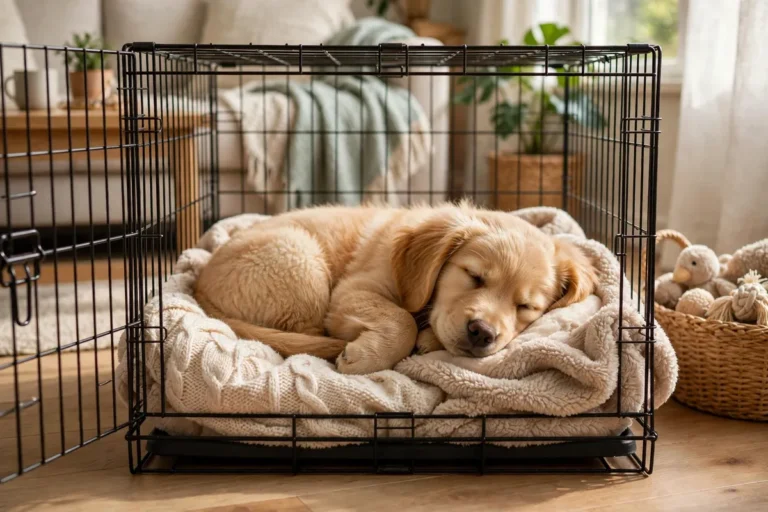
Your dog should be able to stand fully, turn around, and lie down stretched out. A crate that is much larger can invite your dog to sleep at one end and soil the other end.
A wire crate feels open and airy, which suits many nervous dogs. A plastic airline-style crate feels more den-like. Skip soft fabric crates, since a stressed dog can chew through them.
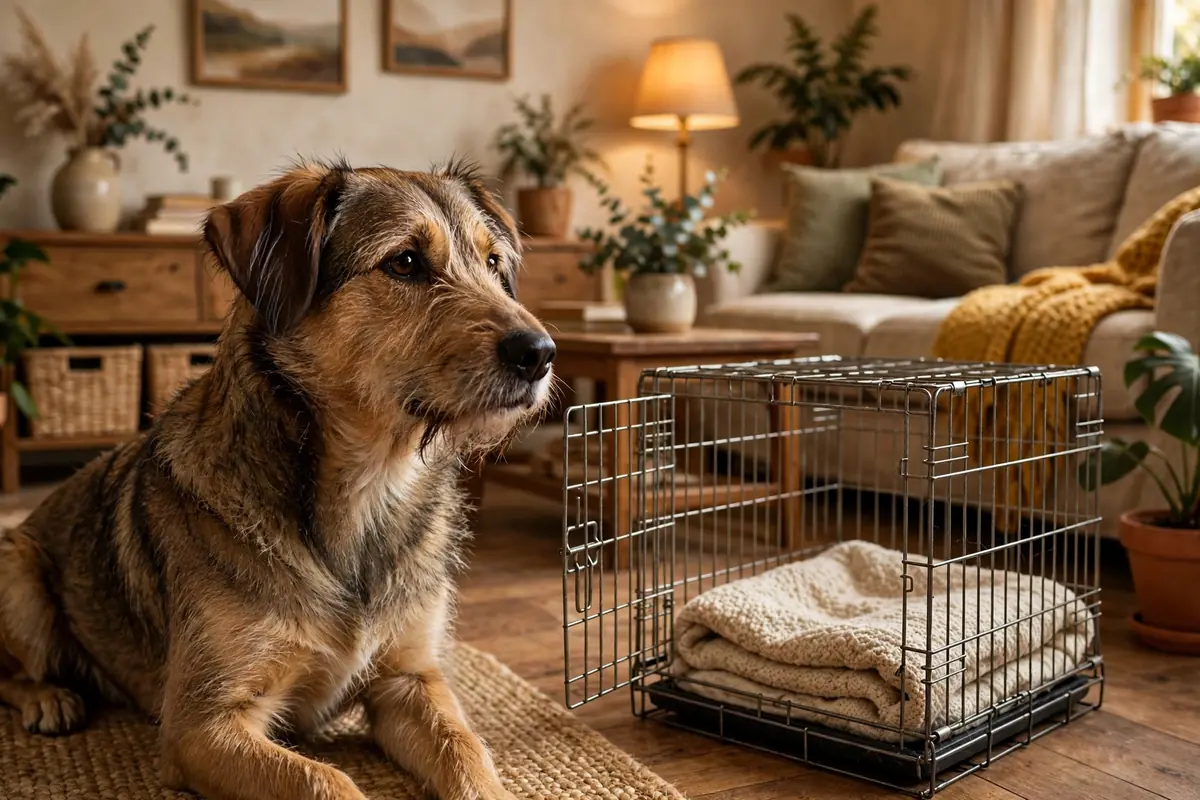
Place the crate in a corner of the family living area, where your dog can see and hear you. Add soft bedding and a safe chew toy. Take the door off, or tie it open, for the first phase.
One hard safety rule: always remove your dog’s collar and harness before crating. Collars can snag on bars or latches. Check this every single time.
| Choice | What to pick | Why it helps |
|---|---|---|
| Size | Room to stand, turn, and stretch out | Supports comfort and housetraining |
| Type | Wire or plastic, not soft fabric | Feels safer and resists chewing |
| Location | Family living area, in a corner | Your dog can see and hear you |
Making the Crate a Safe Choice
The crate must never be a punishment. Never send your dog there when you are angry, and never use it to manage a problem you have not trained for yet.
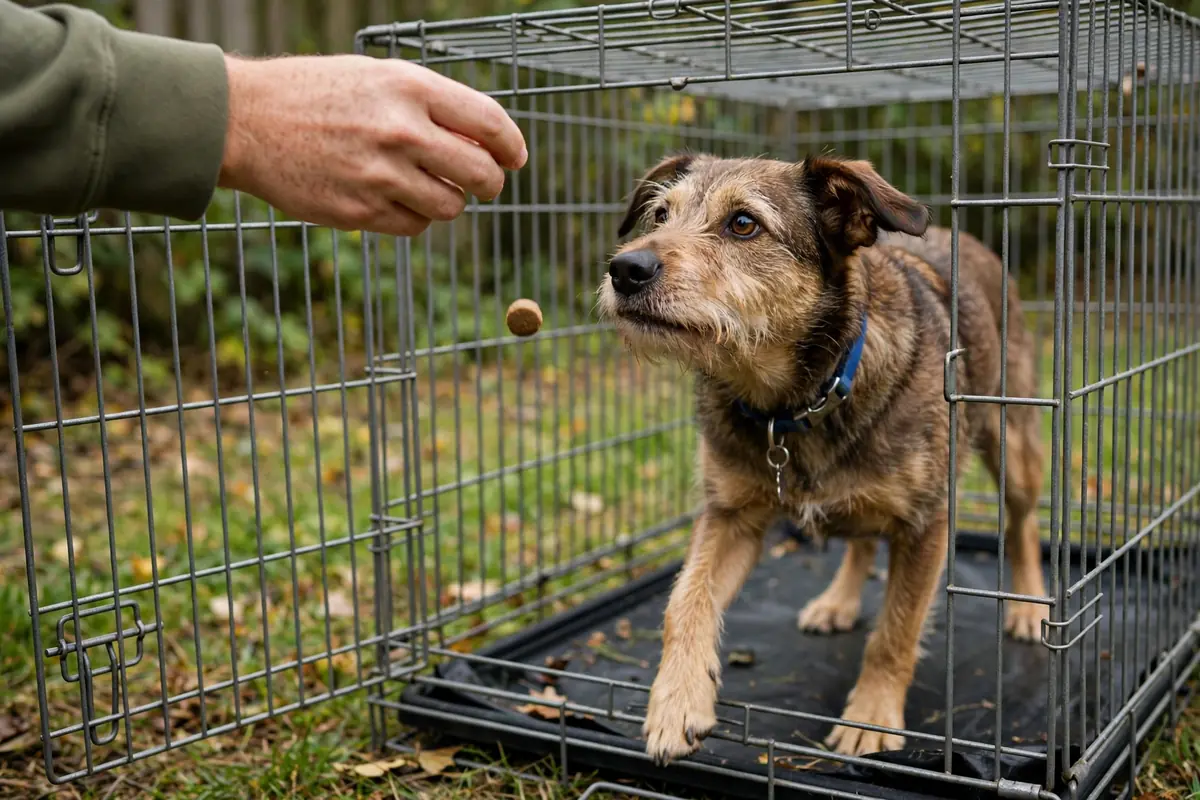
Keep the door open at first, and let your dog choose to enter. Scatter treats near the crate, then just inside it. Praise calm interest, and let your dog walk out freely.
Put your dog’s best treats and chews in the crate only. That simple rule helps your dog see the crate as the best spot in the house.
How to Crate Train an Adult Rescue Dog Step by Step
When you crate train adult rescue dog routines, work through these phases in order. Do not move on until your dog passes each phase’s exit test. With a rescue dog, expect each phase to take days, not hours.
Phase 1: Introduce the Crate
Set the crate up with the door open or removed. Scatter high-value treats around and just inside the entrance, then walk away. Let your dog investigate on their own terms.
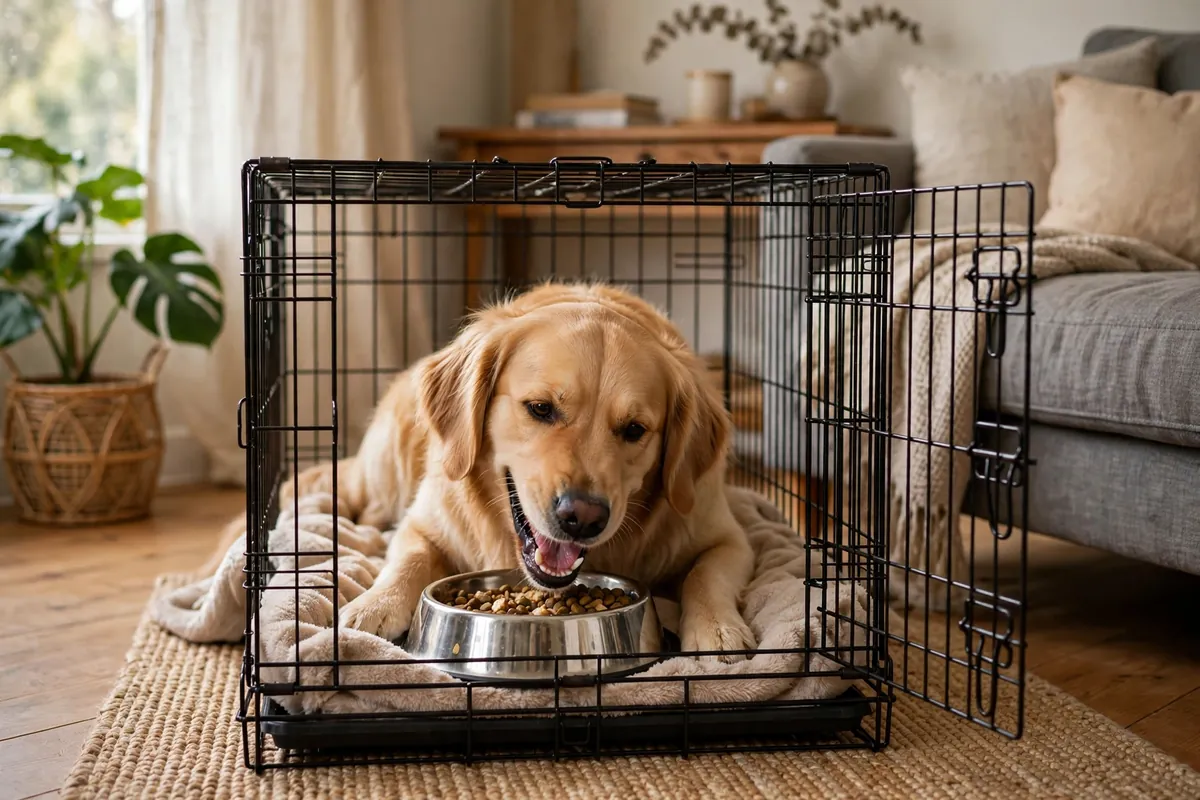
Over several short sessions, move treats further inside. Then feed part of a meal near the crate, inside the door, and finally at the back of the crate.
Exit test: your dog walks in voluntarily to eat. If not after several days, try higher-value food or a different crate style. Never force it.
Phase 2: Teach Entering on Cue
Pick a cue like ‘kennel’. Say it, toss a treat inside, and praise when your dog goes in. Then flip the order: say the cue first and wait.
The moment your dog steps toward or into the crate, say ‘yes’ and deliver several treats inside. Keep sessions around five minutes, and gradually ask for all four paws inside before the reward.
Exit test: you say the cue and your dog walks in eagerly.
Phase 3: Close the Door Briefly
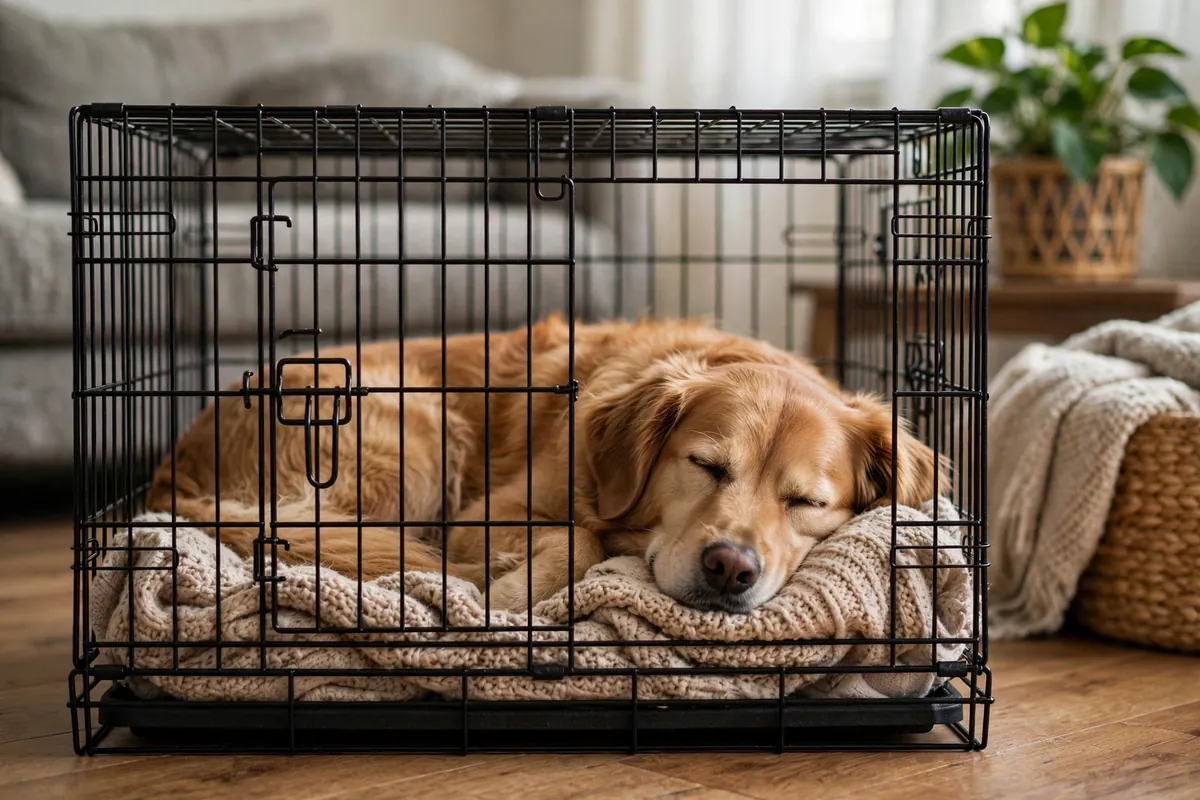
Cue your dog in and reward them. Close the door for a few seconds, feed a treat through the bars, and open it again while your dog is still calm.
Stretch the time gradually while you stay in the room and act normal. Offer a stuffed chew toy, so the crate stays a place where good things happen.
If your dog whines, wait for a brief pause before opening the door. If whining grows into barking or distress, you moved too fast, so drop back to shorter times.
Exit test: your dog lies down calmly with the door closed for 10 to 15 minutes while you move around the room.
Phase 4: Practice Real Absences
Start with micro-absences. Crate your dog, step outside for ten seconds, come back in calmly, and release them. Keep departures and arrivals boring.
Mix durations in an unpredictable order: short, then a bit longer, then short again. Build over days from minutes to an hour or more, with a special chew each time.
Exit test: you can leave for an hour and return to a calm, resting dog. Only then use the crate for longer real-life stretches.
| Phase | Goal | Move on when |
|---|---|---|
| 1. Introduce | Dog chooses to enter | Dog walks in to eat |
| 2. Cue | Dog enters on cue | Dog walks in eagerly |
| 3. Door closed | Calm with door closed | Dog rests for 10 to 15 minutes |
| 4. Absences | Calm while you leave | Dog rests for an hour |
Feeding and Rest in the Crate
Meals are a gentle way to crate train adult rescue dog habits, because food builds a happy link with the crate. Start with meals near the crate, then move the bowl inside step by step.
Once your dog eats happily inside, add short rest time after meals. Offer a safe chew, keep the door open at first, and let your dog settle on their own.
For short sessions, most dogs are fine without water if they drink before and after. For longer rest, use a spill-proof bowl or an attached bottle, never a large bowl that can tip.
What NOT to Do
If you crate train adult rescue dog routines with patience, the rules below protect trust and keep the crate a safe place.
- Never force a fearful dog into a crate, push them in, or shut the door on a panicking dog.
- Never use the crate as punishment, and never leave a panicking dog confined to ‘cry it out’.
- Never punish crate anxiety, whining, or accidents in the crate. Punishment adds fear, and fear slows learning.
- Never use dominance or alpha framing, and never use shock or prong collars. Use positive reinforcement only.
- Never leave your dog crated for a full workday with no break, and never crate a dog with a collar or harness on.
Panic or Normal Protest?
Some early whining is normal protest. It is brief, it fades with training, and your dog settles again. Reward quiet moments, and make sure your dog has had exercise, a potty break, and water first.
Confinement panic looks very different. Watch for heavy drooling, frantic escape attempts, bent bars, bloody paws, or soiling despite housetraining. If you see panic, stop crate training at once.
| What you see | What it may mean | What to do |
|---|---|---|
| Brief whining that fades | Normal protest | Reward quiet moments |
| Pawing, then settling | Learning the routine | Keep sessions short |
| Heavy drooling or escape attempts | Panic | Stop and get professional help |
Troubleshooting Common Problems
My dog whines in the crate
Check the basics first: exercise, a potty break, and water. Reward quiet moments, and do not let your dog out while they are actively whining, or noise becomes the key that opens the door.
If whining is not improving after several days, you are moving too fast. Drop back to an earlier phase, shorten the time, and rebuild slowly.
My rescue dog will not go near the crate
Respect that fear. Your dog may have a bad history with confinement. Start further back by rewarding your dog for looking at the crate from across the room, then for one step toward it.
Try a different crate style too. If fear does not improve, ask a professional for help rather than improvising.
We made progress, then regressed
Regression is normal. A vet visit, a storm, or a busy week can undo progress. Do not scold your dog. Drop back to an earlier comfortable phase and rebuild, which usually goes faster the second time.
How Long Is Too Long in the Crate?
The crate is for reasonable stretches, not entire days. Most healthy adult dogs do fine for a few hours at a time. Avoid a full workday with no break, and arrange a midday walker or a larger confinement area for long stretches.
Watch for signs you are asking too much: restlessness, gulping water when released, accidents in the crate, or avoiding a crate your dog used to like. The crate should always stay a good place in your dog’s mind.
When Crate Anxiety Needs Professional Help
Stop crate training and ask for help if your dog panics, injures themselves, shuts down completely, or shows aggression when you approach the crate. A pen or a dog-proofed room may suit your dog better.
See your vet first for pain, a sudden behavior change, or a medical cause, such as repeated soiling or a change in appetite or energy. Then ask your vet to refer you to a certified professional trainer or veterinary behaviorist.
Frequently Asked Questions
Is it too late to crate train an adult dog?
No. You can crate train adult rescue dog skills at any adult age, if you go slowly and watch for fear. Many adults learn faster than puppies, thanks to better bladder control and longer attention spans.
What if my rescue dog panics in the crate?
Stop training at once. Signs include frantic escape attempts, heavy drooling, bent bars, and self-injury. Contact your vet and a certified professional trainer or behaviorist, and consider a pen or a dog-proofed room.
Should I crate my rescue dog at night right away?
Not on the first night. Let your dog sleep near you while they decompress, then move toward nights in the crate only once they enter it happily. Many owners keep the crate in the bedroom.
Can I leave my rescue dog crated while I am at work?
Only once training is complete and your dog is genuinely settled, and even then not for a full workday without a break. Arrange a midday walk for long absences.
What if my dog has never been in a crate before?
That is good news, because there are no bad associations to undo. Start from Phase 1, keep sessions short and positive, and let your dog set the pace.
Should I put water in the crate?
For short sessions, most dogs are fine without water if they drink before and after. For longer rest, use a spill-proof bowl or an attached bottle.
How long will crate training take?
It varies by dog. Some dogs settle in days, while others need weeks of short, positive sessions. Progress at your dog’s pace matters more than speed.
What Success Looks Like
Crate training a rescue dog is really trust training. Every treat tossed into that crate, every meal served inside it, and every calm minute with the door closed teaches your dog that this new life is safe.
Go at your dog’s pace and celebrate small wins. The real finish line is a dog who chooses to nap in their crate with the door wide open.
For related BreedFix guidance, see our guides to leash training a stubborn puppy that sits down, homemade food for a Labrador with a sensitive stomach, and German Shepherd puppy ear taping.
Reference
American Kennel Club, A Beginner’s Guide to Crate Training.
Still stuck? Get a plan built for your dog.
Answer a few quick questions and get a personalized, force-free training plan in minutes.