How to Leash Train a Stubborn Puppy That Sits Down (Step-by-Step)
Ten paces into a walk, your puppy plants their bottom on the pavement and refuses to move. It can feel frustrating, especially when other dogs trot past without a pause.
Your puppy is almost certainly not being stubborn. If you need to leash train stubborn puppy sits down habits, start by finding the cause, not by fighting the sit.
Key Takeaways
- Sitting down is usually fear, overwhelm, tiredness, gear discomfort, pain, or a learned habit.
- Rule out pain first if the refusal is sudden or your puppy limps.
- Use a well-fitted harness, start indoors, and keep sessions to a few minutes.
- Reward each step with a lure, play, or praise, then fade the lure over time.
- Never drag, pull, or punish a puppy that sits down.
- See a vet for sudden refusal, limping, or signs of pain.
Leash Train Stubborn Puppy Sits Down: The Direct Answer
To leash train stubborn puppy sits down behavior, wait calmly, then restart with a small lure and a short, easy step. Reward movement at once, and end the session while your puppy is still keen.
Start indoors, move to a quiet street only when indoor walking feels easy, and keep each session to a few minutes. Short, happy practice builds confidence faster than one long, tense walk.
Why Puppies Sit Down on Walks
Puppies sit down for reasons that make sense to them. Once you spot the reason, you can change the plan instead of repeating a method that is not working.
Fear or Anxiety About the Outside World
First walks are full of traffic, bicycles, barking dogs, and strange smells. A nervous puppy may sit still because staying still feels safer than moving forward.
Watch for a tucked tail, flattened ears, trembling, yawning, or lip licking. These are stress signals, not attitude, and they call for distance and calm, not pressure.
Overwhelm and Shutdown
Some puppies are not scared of one thing. They are flooded by too much at once, so their brain stalls and they stop. These puppies often walk fine on a quiet street but freeze near a busy park.
When overwhelm is the cause, the fix is a quieter place, a shorter session, and more sniff breaks. Sniffing helps puppies decompress, so let them sniff before you ask for more steps.
Tiredness
Puppies need a lot of sleep. A tired puppy runs out of steam and sits down, often in the evening or near the end of a walk. If sitting grows worse as the walk goes on, tiredness is likely.
Shorten the walk, keep the pace slow, and plan training earlier in the day when your puppy is rested. A rested puppy learns faster than an exhausted one.
Harness and Gear Discomfort
A collar that tightens or jerks can make walking unpleasant. A harness that rubs, slips, or pinches can have the same effect, and a puppy may sit to escape the discomfort.
Check the fit before every session. Straps should sit flat, nothing should rub behind the legs, and your puppy should move freely in the harness indoors before you go out.
Pain or a Medical Problem
Sore paws, growing joints, or an upset stomach can make walking miserable. No training method fixes pain, so a sudden change in walking always deserves a vet check first.
If your puppy limps, yelps, holds up a paw, or will not walk at all, stop training and book a vet visit. Ask a qualified behavior professional for help only after pain has been ruled out.
A Learned Habit That Keeps Working
Sometimes sitting is simply what has worked before. If sitting earns attention, a treat, a long sniff break, or a trip back home, your puppy will sit more often.
This is basic learning, not manipulation. Change what sitting earns, and start paying for moving instead. Reward the first step, not the sit.
How to Tell Fear From Stubbornness
True stubbornness is rare in puppies. Fear, tiredness, and pain explain most sits, and each one looks different once you know what to watch for.
| What you see | What it may mean | What to do |
|---|---|---|
| Tucked tail, trembling, ears flat | Fear or anxiety | Add distance and keep it calm |
| Sits, then walks for a treat | Learned habit or low motivation | Reward movement and fade the lure |
| Sits at the same spot each walk | Fear of that place | Give a wide berth and reward passing it |
| Sits and limps, yelps, or holds a paw up | Possible pain | Stop and see a vet |
| Sits near the end of a walk | Tiredness | Shorten walks and train earlier |
Gear Check: Use a Harness, Not a Collar
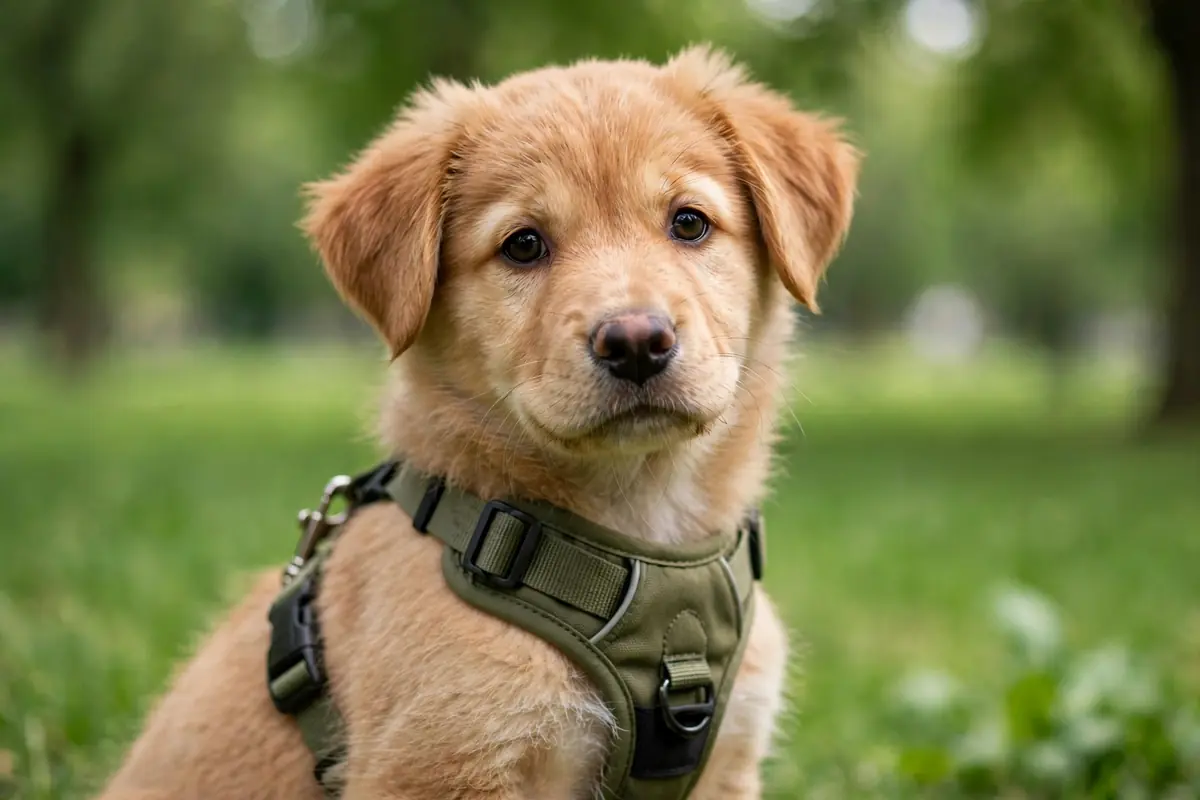
Clip the leash to a well-fitted harness instead of a collar. A harness spreads pressure across the chest, so a small pull does not press on the throat.
Pick an adjustable harness with a sturdy D-ring. Fit it so two fingers slide snugly under each strap, with no chafing and no slipping over the shoulders.
- Let your puppy wear the harness indoors for short, treat-filled sessions first.
- Attach the leash only when your puppy moves happily in the harness.
- Recheck the fit often, because puppies grow fast.
- Choose a light leash that does not drag on the ground.
Start Indoors Where Nothing Competes With You
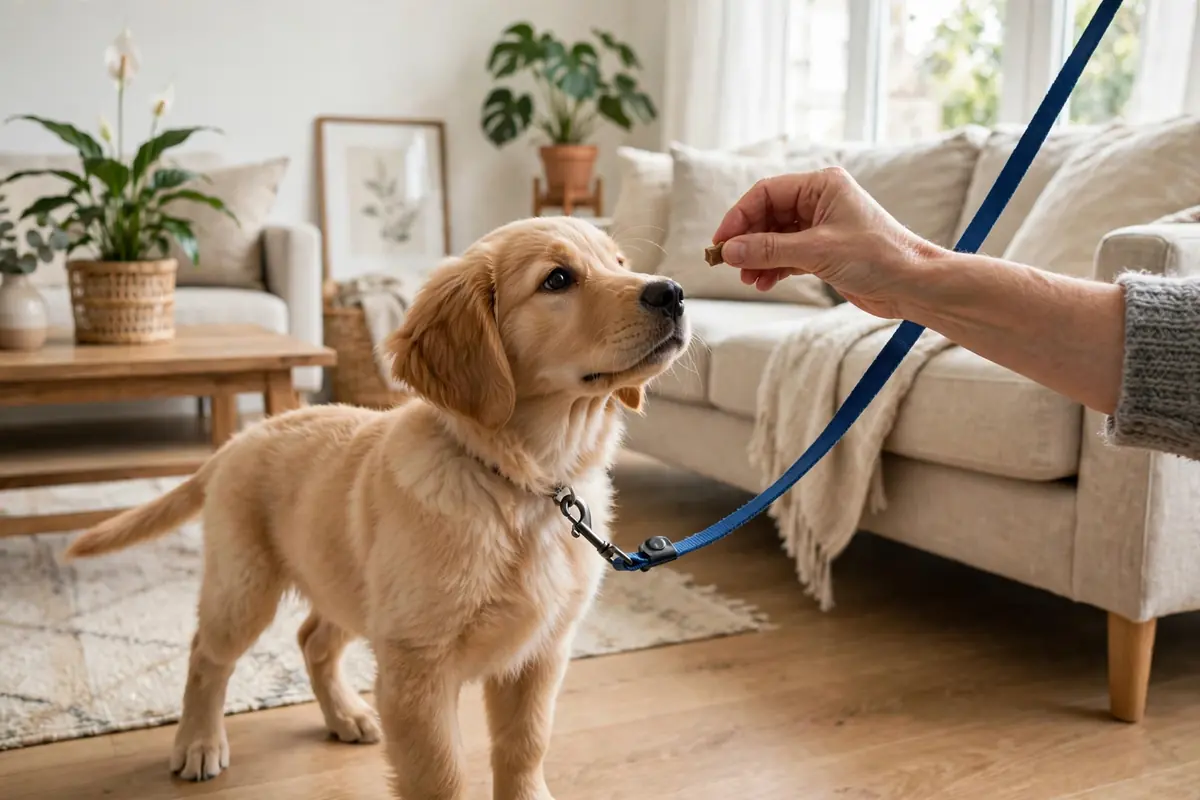
Start in the most boring room of your house, where no distraction outranks a treat. A quiet room lets your puppy focus on you and on moving.
Clip on the leash, let your puppy drag it under supervision for a minute, then pick up the end. Walk a few steps, and reward your puppy at your leg while they are still moving.
Keep sessions to a few minutes. Three to five minutes is plenty. End while it is still fun, so your puppy wants the next session.
The Gentle Restart Routine
Use this routine to leash train stubborn puppy sits down moments without force. It works best when you stay calm and keep each step small.
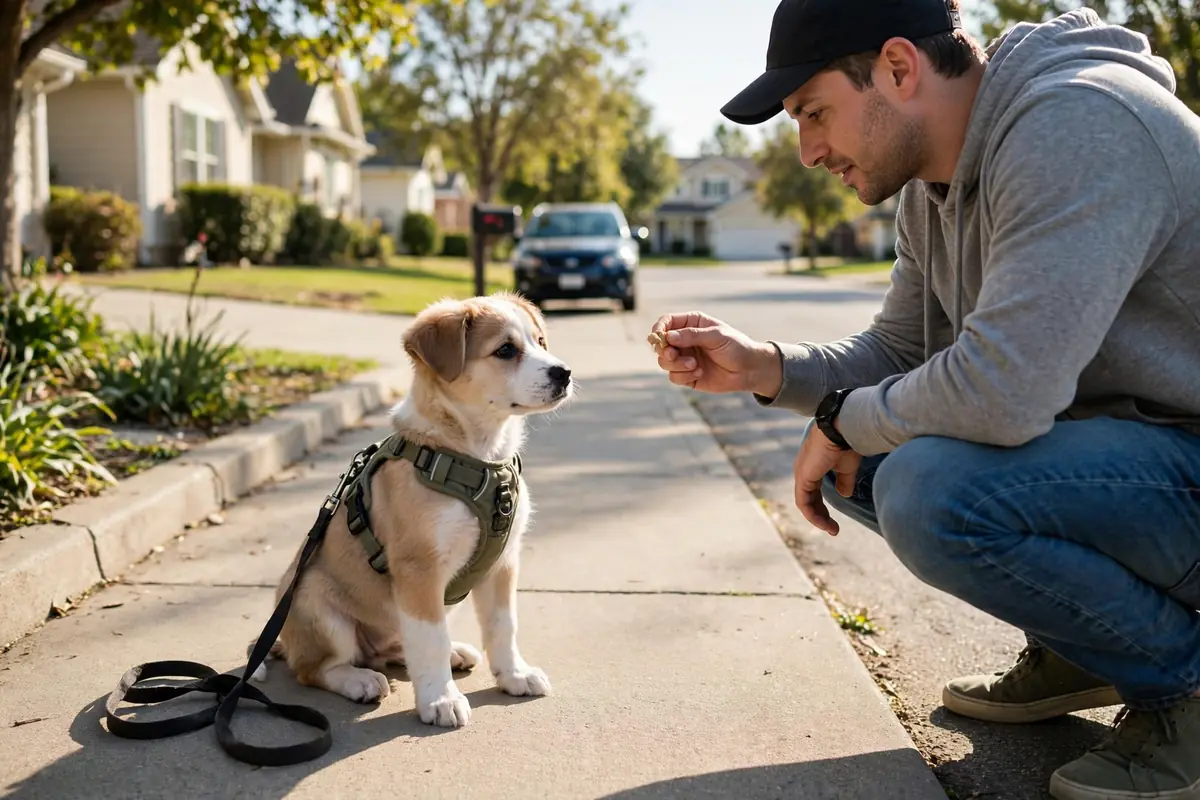
- Pause and wait. Stand still, keep the leash loose, and give your puppy a moment to look around.
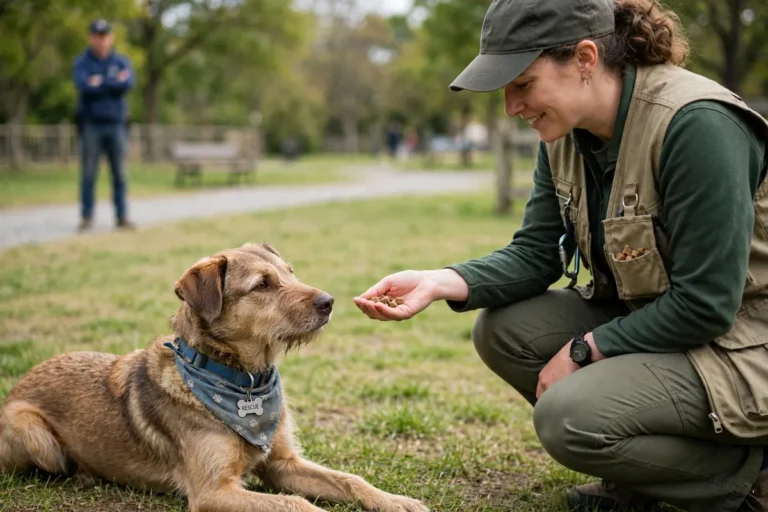
- Offer a lure. Hold a tiny, soft treat at your puppy’s nose height, where they can see and smell it.
- Turn slightly away. Face away from your puppy and hold the treat at your hip. Many puppies step toward you to follow it.
- Reward the first step. The moment your puppy moves, walk slowly and deliver the treat at your leg while they are still moving.
- Repeat in short bursts. Do a handful of short sequences, then take a play break or end the session.
- Fade the lure. Over several sessions, lure with an empty hand more often and reward from your pocket after your puppy moves.
- Move outdoors slowly. Graduate to a quiet street only when indoor walking feels easy and relaxed.
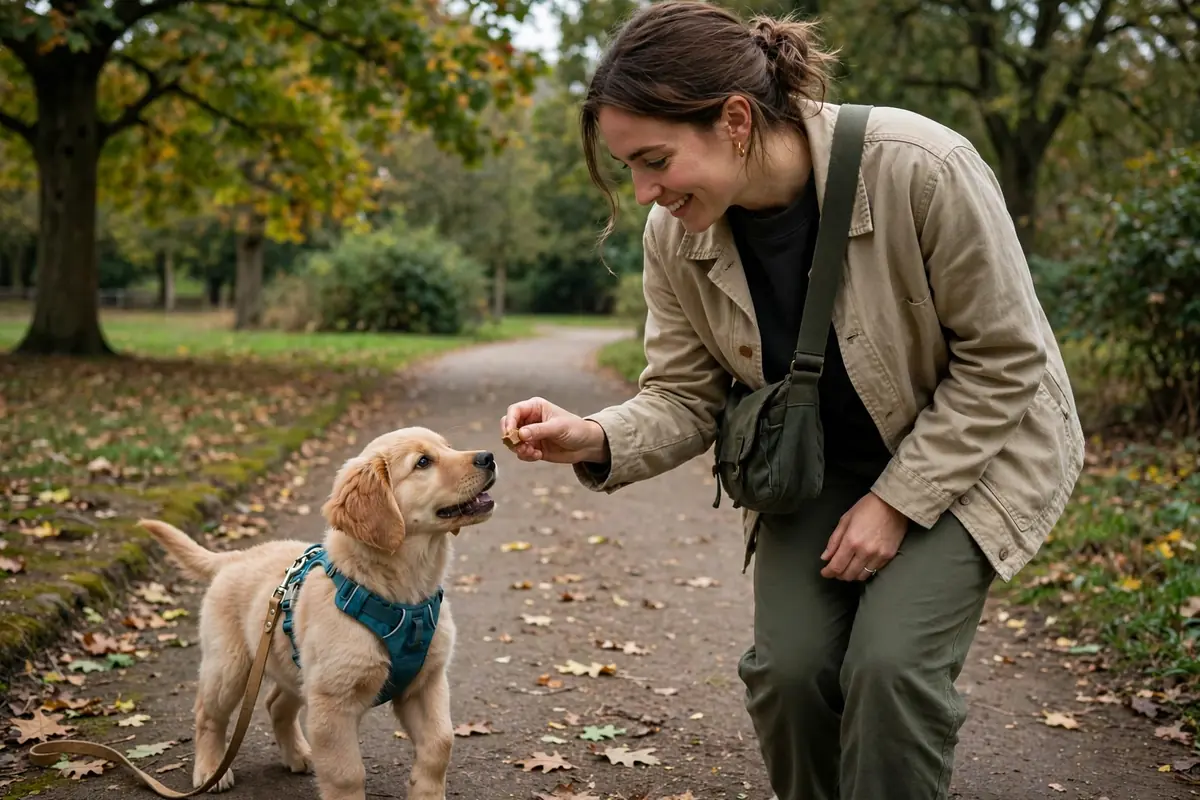
Once your puppy walks willingly indoors, try a quiet outdoor spot, such as a residential street, not a busy road. Keep the first outdoor sessions very short, and let your puppy sniff.
Treat, Lure, and Play Techniques
Treats restart movement, but play can restart it too. Use whichever reward your puppy loves most, and switch rewards so training stays fresh.
- Use pea-sized, soft treats that your puppy only gets for training.
- Try a short game of tug or a tossed toy after a few good steps.
- Use a happy voice and a simple cue, such as “let’s go”, before you move.
- Reward at your leg, so walking beside you is what pays.
- If treats stop working, your puppy may be full, tired, or stressed, so take a break.
Play also helps you leash train stubborn puppy sits down habits in a low-pressure way. A quick game can break a freeze, lift your puppy’s mood, and make the next step easier.
Short Sessions That Build Real Walks
Think in sessions, not single outings. Two or three short sessions a day beat one long, frustrating walk every time.
| Stage | Where to practice | Session focus |
|---|---|---|
| Starting out | Indoors | Harness, lure, and a few steps |
| Building confidence | Quiet garden or street | Short walks with sniff breaks |
| Longer walks | Calm neighborhood routes | Steady steps and fading the lure |
Add a little distance every few days, not every walk, and build sniff breaks into each session. Consistency matters more than perfection, and steady practice helps many puppies improve.
Troubleshooting: If Your Puppy Still Sits Down
Sits Down at the Same Spot Every Walk
That is usually a scary object or a bad memory tied to one place. Give it a wide berth, reward your puppy for moving past it, and shrink the distance gradually.
Lies Down Flat and Will Not Get Up at All
Full-body shutdown usually means overtiredness or total overwhelm. The session is over, so end the walk calmly and head home, carrying your puppy if they are small enough.
Next time, make the walk shorter, quieter, and earlier in the day. A fresh start beats pushing through a shutdown.
Walks Fine Toward Home but Sits Going Out
Home feels safe, and the world beyond it does not yet. Train the away-from-home direction as its own skill, with short outings and a reward every few steps going out.
Sits Every Few Steps No Matter What
When nothing specific triggers it, your puppy is usually too young, too tired, or overfaced. Shorten the session, upgrade the treats, and go back to indoor practice for a few days if needed.
What NOT to Do
What you avoid matters as much as what you do. Force may move a puppy once, but it teaches them that walks are stressful.
- Never drag or pull your puppy forward. Force increases resistance and anxiety, and a hauled puppy sits harder next time.
- No leash pops or collar corrections. Jerking the leash punishes a puppy for feeling unsure, and on a collar it can hurt the throat.
- Do not punish or scold the sitting. Scolding a frightened or tired puppy teaches them that walks come with angry humans.
- Drop the big coaxing performance. If pleading has never worked, stop doing it. Calmly wait or re-lure with a treat instead.
- Never use shock or prong collars for this. These tools work by adding pain or fear, which makes anxiety, overwhelm, or tiredness worse.
- Do not use dominance or alpha framing. Your puppy needs guidance and rewards, not a battle for control.
When Refusal to Walk Needs Vet Attention
See a vet promptly if you notice any of these signs. Training can wait until your puppy has been checked.
- Sudden refusal after weeks of normal walks.
- Limping, yelping, holding up a paw, or refusing to walk at all.
- Pain when touched, swelling, or a sore paw.
- Growling, snapping, or panic when you encourage movement.
- Sudden behavior change, weakness, or loss of appetite.
For pain, sudden changes, or aggression, see a vet first, then a qualified behavior professional if nothing physical is found. Do not push through these signs with training alone.
Frequently Asked Questions
Is my puppy sitting down because they are stubborn?
Almost never. Sitting on walks is almost always fear, overwhelm, tiredness, uncomfortable gear, pain, or a habit that kept working.
Should I drag my puppy forward when they sit?
No. Dragging or pulling increases resistance and anxiety, and it can hurt them. Wait calmly, re-lure with a treat at hip height, and reward the moment they move.
How long should leash training sessions be for a puppy?
A few minutes. Three to five minutes per session is plenty, two or three times a day. End while your puppy is still engaged.
When should I see a vet about my puppy refusing to walk?
If the refusal is sudden, if your puppy limps, yelps, or holds up a paw, or if they will not walk at all. Rule out pain before you treat it as a training problem.
Can I use a prong or shock collar to stop the sitting?
No. Prong and shock collars work by adding pain or fear, which is the wrong approach for a puppy that sits because they are anxious, overwhelmed, or tired.
How long until my puppy walks normally on the leash?
Every puppy is different. With short, consistent, positive sessions, many puppies improve over a few weeks, but if progress stalls, talk to your vet or a qualified positive-methods trainer.
When you leash train stubborn puppy sits down habits with patience, walking stops being a standoff and starts becoming a habit your puppy enjoys.
For related BreedFix guidance, see our guides to feeding a 3-month-old German Shepherd, German Shepherd puppy ear taping, and homemade food for a Labrador with a sensitive stomach.
Reference
American Kennel Club, Why Does My Puppy Refuse to Go on Walks?.
Still stuck? Get a plan built for your dog.
Answer a few quick questions and get a personalized, force-free training plan in minutes.