Best Indoor Games to Tire Out an Energetic Puppy
An energetic puppy indoors can turn a quiet living room into a busy play zone in minutes.
Running back and forth is not the only answer. The best indoor games tire energetic puppy minds first, then bodies, so play ends with rest, not more wildness.
Key Takeaways
- Short, focused play tires a puppy faster than long, wild play.
- Sniffing, thinking, and problem solving count as real exercise.
- Keep sessions short, and use safe toys on non-slip floors.
- Rotate games so your puppy stays interested.
- End active play with a calm game.
- Stop if your puppy gets frustrated, tired, or overexcited.
Indoor Games Tire Energetic Puppy: The Direct Answer
Start with a scent game, add one short active game, and finish with a calm game.
In short, indoor games tire energetic puppy energy best when they mix sniffing, thinking, and gentle movement. Keep each game short, reward calm choices, and stop before your puppy gets overtired.
Why Indoor Games Tire Puppies
Puppies use a lot of focus when they sniff, search, and solve small problems. That focus is tiring, even when the body has not run far.
Physical play still matters. It builds coordination and burns off bursts of energy. The best mix pairs movement with thinking, so neither one runs too long.
That is why indoor games tire energetic puppy bodies without long runs or risky jumps. Short games, clear steps, and frequent rests protect growing joints while still meeting a busy puppy’s needs.
The Games at a Glance
| Game type | What it uses | Best for |
|---|---|---|
| Scent games | Nose and focus | Rainy days and calm starts |
| Puzzle games | Thinking and paws | Mealtimes and quiet play |
| Active games | Movement and recall | Short energy bursts |
| Calm games | Licking, chewing, and settling | Evenings and wind-down time |
Scent Games
Sniffing is slow, focused work. A puppy that sniffs with care must pay attention, remember clues, and make choices.
Scent work is a strong start, because indoor games tire energetic puppy brains through sniffing before active play begins.
1. Treat hunt
- Put your puppy in another room for a moment.
- Hide a few small treats in easy, open spots.
- Let your puppy search, and praise each find calmly.
- Make hides harder only when easy finds are quick.
Keep treats small so your puppy can eat fast and keep searching. End the game while your puppy still wants more.
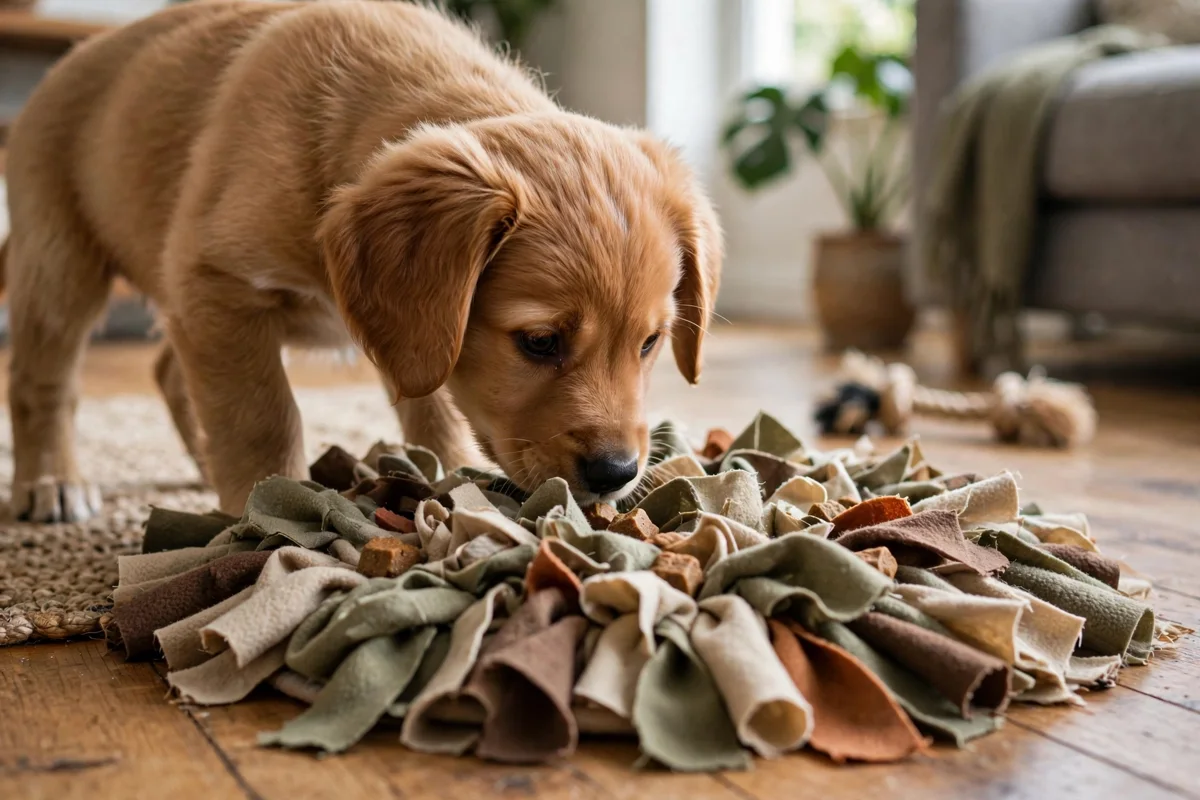
2. Snuffle mat
Scatter kibble or small treats into the folds of a snuffle mat. Let your puppy forage at their own pace, and supervise the whole session.
If your puppy starts to chew the mat itself, lift it away and try again later. The goal is searching, not shredding.
3. Which hand
Hide a treat in one closed fist and show both fists. Reward your puppy for nosing the correct hand, and switch hands often.
This game is short, simple, and easy in a small room. It also teaches your puppy to think before pawing.
4. Scent trails
Drag a smelly treat along the floor to make a short trail that ends in a reward. Start with straight trails, then add one gentle turn.
Keep trails short at first. A quick win builds confidence and keeps the game fun.
Puzzle and Problem-Solving Games
Puzzle games ask your puppy to work for food or a toy. That effort builds patience and focus, and it can turn a meal into a game.
5. Muffin tin game
Put a treat in each cup of a muffin tin. Cover each cup with a ball or scrunched paper, and let your puppy uncover the treats.
Start with only a few covered cups. Add more covers as your puppy learns the task.
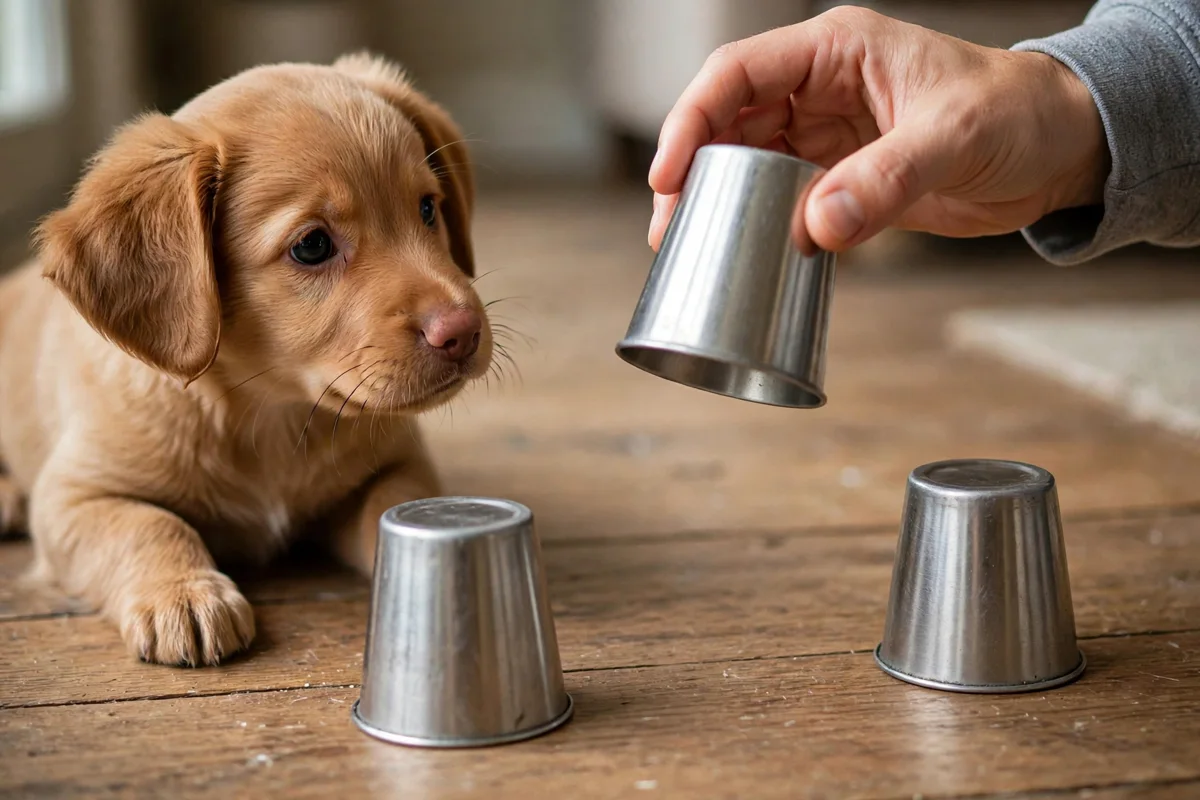
6. Shell game
Hide a treat under one of three cups while your puppy watches. Shuffle slowly, then let your puppy point to the right cup with their nose or paw.
Reward the correct choice at once. If your puppy guesses wrong, show the treat and try an easier round.
7. Rolled towel
Scatter treats on a towel, roll it up, and let your puppy unroll it. Tie a loose knot only when the simple roll is easy.
Use a towel you can wash, and supervise so your puppy does not eat fabric. Stop if chewing replaces searching.
8. Puzzle feeder
Serve part of a meal in a puppy-safe puzzle feeder or treat ball instead of a bowl. Your puppy must nudge, roll, or paw to release food.
Choose a feeder rated for puppies and sized for your puppy’s mouth. Remove it if parts loosen or your puppy chews hard on it.
Active Indoor Games
For bursts of movement, indoor games tire energetic puppy legs in short, safe bursts that do not need a large room.
Keep the floor non-slip, clear away sharp corners, and use soft toys. Short rounds with rests beat one long, frantic session.
9. Hallway fetch
Roll or toss a soft toy down a clear hallway. Ask for a drop, reward the return, and keep throws low and short.
Stop after a few rounds. Fetch can excite puppies fast, so calm returns matter more than long throws.
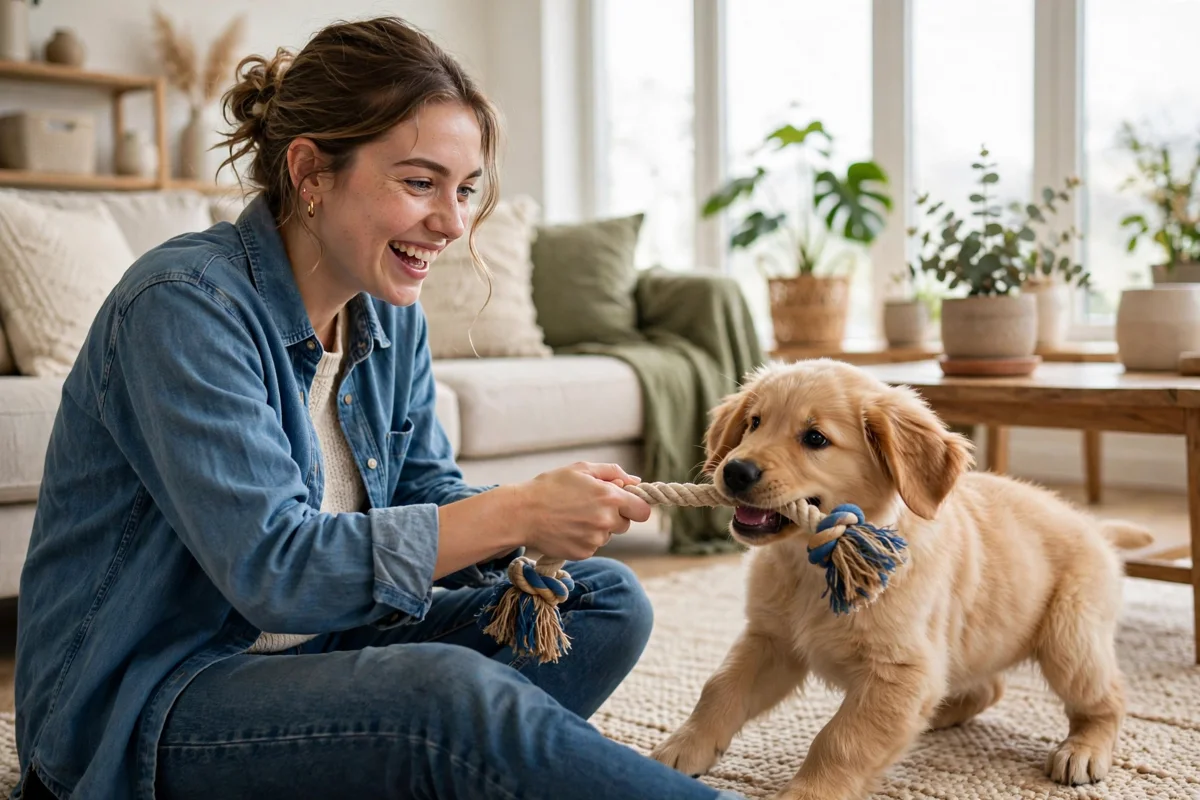
10. Tug of war
Use a long rope toy and keep your hands away from your puppy’s mouth. Teach a drop it cue by trading the toy for a treat.
Pause the game if teeth touch skin. Resume only when your puppy is calm, and keep sessions brief.
11. Flirt pole
Tie a soft toy to a rope on a pole, then drag it in slow circles for your puppy to chase. Keep movements low and controlled.
Do not use fast, sharp turns or high jumps. Stop often, ask for a wait or drop, and reward calm pauses.
12. Indoor obstacle course
Set out cushions to weave around, a blanket over chairs for a tunnel, and a low pole to step over. Guide your puppy through slowly.
Reward each step, not just the finish. Keep jumps low or skip them, and rebuild the course when your puppy loses focus.
13. Hide and seek
Ask someone to hold your puppy while you hide in an easy spot. Call your puppy once, then reward a happy, calm find.
Start with very easy hides in the same room. Harder hides come only after easy finds are reliable.
Calming Evening Games
Evening play should lower energy, not raise it. Calm games help a busy puppy settle for rest.
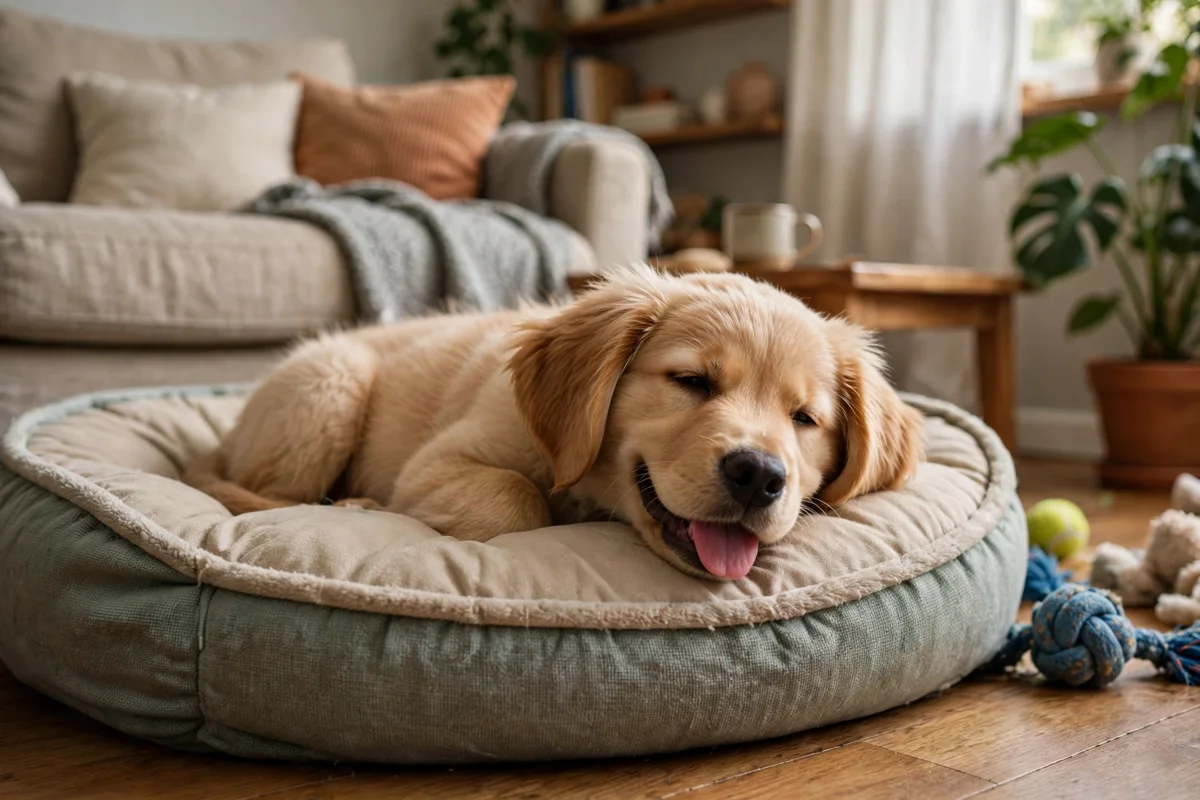
14. Lick mat
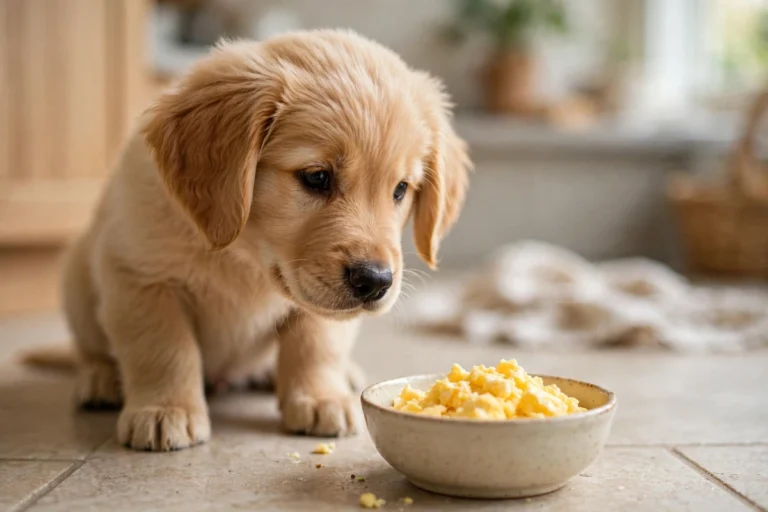
Spread a thin layer of puppy-safe food on a lick mat, such as mashed banana, plain yogurt, or softened kibble. Supervise, and remove the mat when it is clean.
Licking is slow and rhythmic. It suits the last game of the day, after active play has ended.
15. Scatter feeding
Scatter a small handful of kibble across a mat or a clean floor area. Let your puppy search slowly, without rushing or competing.
Scatter feeding also works for a calm midday break. Keep the area clear so your puppy can move without slipping.
16. Gentle chew time
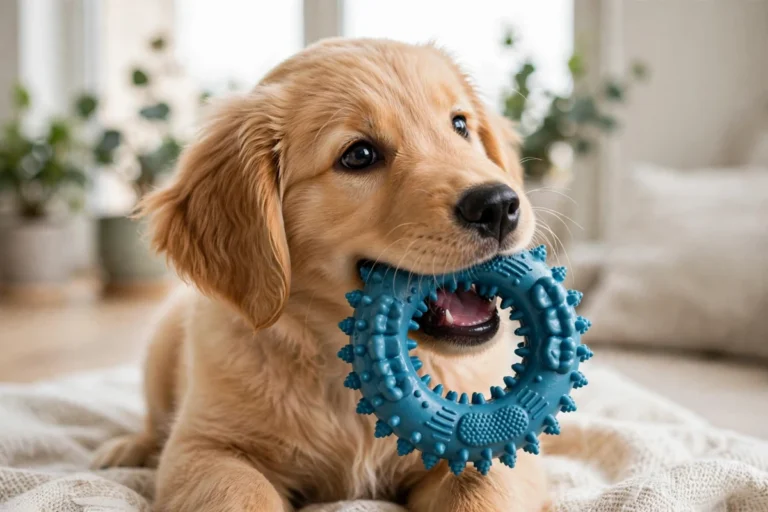
Offer a puppy-safe chew and let your puppy work on it near you. Choose a size that fits your puppy, and take it away if pieces break off.
Chew time is quiet time, not a race. Sit nearby, stay calm, and let your puppy settle into the rhythm.
17. Massage and handling
Use slow ear strokes and gentle chest rubs while your puppy rests. Pair each touch with a calm word and a small treat.
Short handling sessions also help vet visits later. Stop if your puppy moves away, and try again another day.
Rainy-Day and Small-Space Options
Rain, heat, and small rooms do not need to stop play. They just change which games fit best.
- Use scent and puzzle games in one room, with short breaks between rounds.
- Rotate two or three toys, so old toys feel new again.
- Use a hallway, a kitchen, or a clear corner for fetch and recall games.
- Mix a training game into play, such as sit, touch, or wait, for a few minutes.
- End with a lick mat or scatter feed, even on busy days.
Small spaces reward slow games. A puppy that must think, sniff, and wait will tire faster than one that just runs in circles.
Safety Rules for Puppies
Growing puppies need guardrails. Their bones and joints are still developing, so more play is not always better play.
- Keep structured sessions short, and use the 5-minute guideline: about 5 minutes per month of age, twice daily.
- Use toys sized for puppies, with no loose parts, and supervise every game.
- Play on rugs or mats, not slick floors, and keep jumps low.
- Offer water, and give rest breaks before your puppy asks for them.
- Stop if your puppy pants hard, loses focus, or starts to bite harder.
Watch for overtired signs, such as frantic zoomies, hard nipping, and an inability to settle. Those signs mean rest, not another game.
What NOT to Do
- Do not use hands as toys. Hand wrestling teaches puppies that hands are for mouthing.
- Do not chase your puppy. Being chased can teach your puppy to run away from you.
- Do not repeat stair games or high jumping. Both can stress growing joints.
- Do not use shock or prong collars. Use rewards, clear cues, and short breaks instead.
- Do not scold, frighten, or force your puppy into a position. Calm, reward-based play teaches faster.
- Do not play through limping, pain, fear, or tiredness. Rest first, and seek advice if signs continue.
Building a Daily Indoor Play Routine
A simple routine helps your puppy know what comes next. It also spreads energy use across the day.
- Morning: Short active play after a potty break, then a calm settle.
- Midday: A puzzle feeder meal or a snuffle mat session.
- Afternoon: A scent game or a short training game.
- Evening: Active play first, then a lick mat or scatter feed to wind down.
A steady mix means indoor games tire energetic puppy energy across the day, not all at once.
Always end on a win, with an easy success and a calm reward. Short, happy sessions build a puppy that wants to play again tomorrow.
When Over-Energy Needs Vet or Professional Attention
Most busy puppies just need play, rest, and clear routines. Some signs need a closer look, and early help is better than waiting.
- Pain, limping, stiffness, or trouble eating or moving.
- A sudden change in a normally calm or friendly puppy.
- Aggression, such as stiff growling, snapping, or guarding food, toys, or resting places.
- Fear that does not ease with easier games and more distance.
- Energy that stays frantic despite rest, routine, and steady play.
See your vet first for pain, sudden changes, or possible medical causes. Then talk to a qualified, reward-based behavior professional for a training plan.
Frequently Asked Questions
How long should indoor play sessions last for a puppy?
Use the 5-minute guideline for structured exercise, about 5 minutes per month of age, twice daily. Mental games can sit alongside that, in short rounds with rest breaks.
My puppy gets more hyper after playing. What am I doing wrong?
Probably nothing. Many puppies get wilder when they are overtired. End play sooner, add a calm game, and protect nap time.
Are puzzle toys safe for young puppies?
Yes, with supervision. Choose puzzles rated for puppies, check for loose parts, and remove a toy if your puppy chews it hard.
Can indoor games replace walks?
They help a lot, but they do not fully replace walks. Walks add new sights, sounds, and smells, plus toilet breaks and social learning.
What if my puppy loses interest in games quickly?
Make the game easier, use a better reward, and shorten the session. A quick win often brings interest back.
Is tug of war bad for puppies?
No, when it has rules. Use a long toy, teach drop it, pause if teeth touch skin, and keep sessions short and calm.
The tired puppy is not always the one that ran farthest. Often, it is the one that sniffed, thought, and settled well.
If play still ends with teeth on hands, read the Golden Retriever puppy nipping guide and the German Shepherd puppy biting guide for calm, reward-based next steps, and try tricks to teach your dog for short focus games.
Reference
American Kennel Club, Fun Indoor Games to Play With Your Dog.
Still stuck? Get a plan built for your dog.
Answer a few quick questions and get a personalized, force-free training plan in minutes.