How to Introduce a New Puppy to an Older Cat
Your older cat has ruled the house for years, and now a bouncy new puppy is about to move in.
If you want to introduce new puppy to older cat without turning your home into a battleground, slow down and work in stages.
Cats are territorial, and older cats often feel change more keenly than a young puppy does.
Your cat needs to feel safe, in control, and able to leave at any time.
A puppy, by contrast, is still learning how the world works, and you can shape calm habits from day one.
Key Takeaways
- Go in stages: scent first, then sight through a barrier, then short supervised meetings.
- Give your cat escape routes, high perches, and a puppy-free safe room.
- Never let the puppy chase the cat, even as play.
- Reward calm behavior from both animals with treats and praise.
- Keep them apart when you cannot supervise, until calm behavior is steady.
- Ask your vet or a qualified behavior professional for help with pain, sudden change, or aggression.
How to Introduce New Puppy to Older Cat: The Direct Answer
To introduce new puppy to older cat, keep them fully apart at first, then swap scents for a few days.
Next, let them see each other through a baby gate, and reward calm looks and quiet settling.
Move to short, leashed meetings only when both animals stay relaxed through the barrier.
End each meeting before excitement builds, and keep the cat free to walk away.
Before the Puppy Comes Home: Set Up for Success
Preparation done before day one makes the first week far easier for everyone.
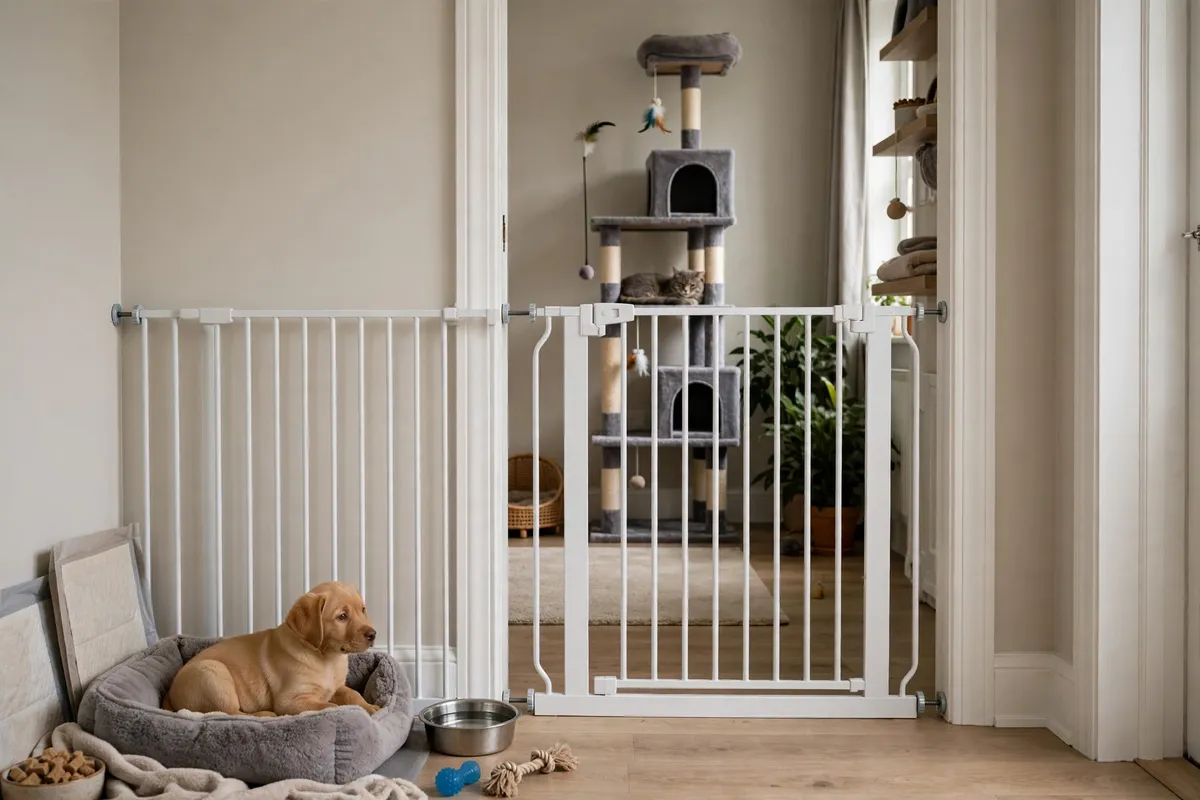
Choose a cat sanctuary: a quiet room with food, water, a litter box, and a comfortable resting spot.
Add vertical space, such as a sturdy cat tree or cleared shelves, so your cat can look down on the puppy.
Place the cat’s food and litter box where the puppy cannot reach them, behind a baby gate or in the sanctuary.
Gather a baby gate, a puppy crate, a leash, small soft treats for both animals, and a spare blanket for scent swapping.
Ask your vet about a check for your older cat before the puppy arrives, especially if the cat moves stiffly or hides more than usual.

Stage 1: Scent Swapping
For the first few days, the puppy and cat should not see each other at all.
Scent swapping is the first step when you introduce new puppy to older cat, because smell feels safer than sight.
Swap bedding between their resting areas, and let each animal sniff at its own pace.
Swap rooms for short periods while the other animal is safely elsewhere, so each can explore the other’s scent.
Feed them on opposite sides of a closed door, starting far from the door and moving bowls closer only if both eat calmly.
Move on only when both animals eat normally, play, and rest without long periods of hiding or pacing.
Stage 2: Visual Contact Through a Barrier
Now they can see each other, but they still cannot touch.
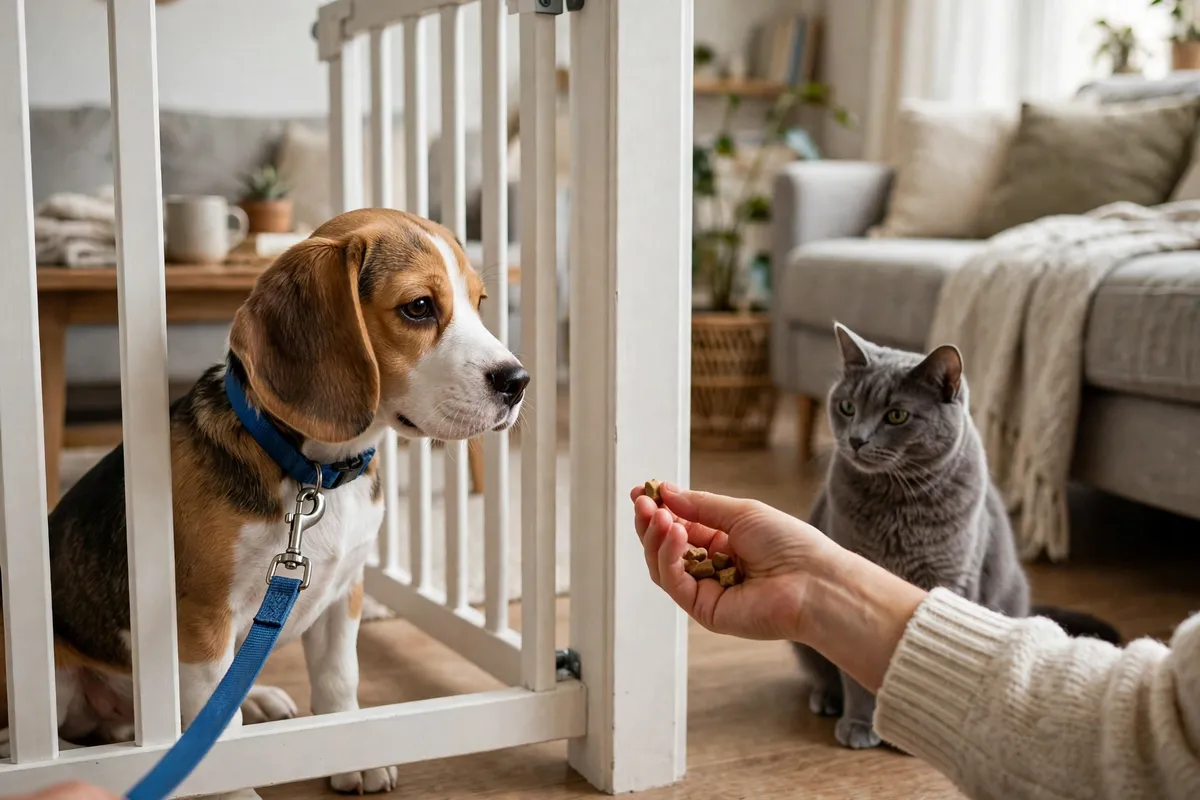
Use a sturdy baby gate, with the puppy on a loose leash on one side and the cat free to approach or leave.
Reward the puppy for looking at the cat and then looking away, and reward the cat for staying relaxed nearby.
A single hiss, a stare, and a walk away is communication, not failure, so stay calm and do not scold either animal.
If the puppy fixates, whines, lunges, or cannot take treats, add distance and end the session on a calm note.
Stay at this stage for as long as needed, even if that means more than a week of barrier meetings.

Reading Cat and Puppy Body Language
Body language tells you when to move forward, pause, or add distance.
Watch both animals, not just the puppy, because a relaxed cat is the best sign that the pace is right.
| State | Cat signs | Puppy signs | What to do |
|---|---|---|---|
| Relaxed | Loose body, slow blinks, normal appetite | Loose body, soft eyes, takes treats easily | Continue, then end while calm |
| Worried or tense | Flattened ears, crouching, hiding, hissing | Tucked tail, yawning, turning away, refusing treats | Add distance and take a break |
| Overexcited or fixated | Staring back, swatting, running to escape | Hard staring, whining, lunging, crouching to stalk | End calmly and return to barrier only |
The Stages at a Glance
Use this simple plan as a guide, and let your animals set the real timeline.
| Stage | Focus | Move on when |
|---|---|---|
| 1. Scent | Separate rooms, bedding swaps, door feeding | Both eat and rest calmly |
| 2. Barrier | Gate meetings and rewards for calm | Both stay relaxed and can disengage |
| 3. Supervised | Short leashed meetings with escape routes | Calm meetings repeat over several days |
| 4. Shared routine | Same-room feeding, training, and longer time | Calm behavior holds without constant help |
Stage 3: Supervised Meetings
When both animals stay calm through the barrier, try short face-to-face meetings.
During supervised meetings, introduce new puppy to older cat in a room where the cat has clear escape routes.
- Tire the puppy first with play and a potty break, so the puppy starts calmer.
- Keep the puppy on a loose leash, and let the cat roam free.
- Keep the first meetings to about five minutes, and end before excitement rises.
- Reward calm looks, settling, and turning away from the cat.
- If the puppy fixates, calmly lead the puppy away and try again another day.
Never punish a hiss or a swat, because those warnings help you learn what the cat can handle.
Managing Chasing
Chasing feels like a game to a puppy, but it frightens a cat and can quickly become a habit.
Never allow the puppy to chase the cat, not even once, and not even if the cat seems unbothered at first.
Interrupt early signs of chasing, such as hard staring or crouching, by calling the puppy and rewarding a turn toward you.
If you cannot interrupt the puppy calmly, add distance, use the leash, and return to barrier meetings.
Teach the puppy that looking at the cat and then looking back at you earns a treat, and practice that skill away from the cat first.
Short training games help, and you can start with these tricks to teach your dog, including touch and leave it, in a quiet room.
Feeding and Litter-Box Safety
Keep feeding areas separate for now, so neither animal feels rushed or guarded around food.
Feed the cat in the sanctuary or on a high surface, and feed the puppy in a different room or behind the gate.
Protect the litter box, because many puppies will eat litter or cat food if they can reach it.
Use a baby gate, a cat door, or a raised spot the puppy cannot reach, and scoop the box often.
If the puppy does eat litter, remove access at once and ask your vet for advice if the puppy seems unwell or stops eating normally.
Stage 4: Building a Routine Together
As meetings go well, increase shared time slowly, one small change at a time.
Feed them in the same room at a comfortable distance, and give each animal a chew or puzzle toy nearby.
Practice sit, down, and leave it with the cat in the room, but only at a distance where the puppy can still succeed.
Allow brief off-leash time only when you are actively supervising and the puppy can disengage from the cat on cue.
Keep the cat sanctuary available long term, even after good days, because every cat needs a safe retreat.
If greetings get bouncy at the door, keep the energy low and use the calm greeting steps in this guide to puppy excited peeing when meeting new people.
What Not to Do
- Never force the cat and puppy together, and never hold either animal in place for a greeting.
- Never punish fear, hissing, growling, or avoidance, because punishment adds fear to fear.
- Never use shock or prong collars, and never use pain or fear to stop chasing.
- Never leave the puppy and cat unsupervised until calm behavior has held for weeks.
- Never let the cat get cornered, and always keep an escape route open.
Setbacks Are Normal
Setbacks are normal, especially after a move, a vet visit, or a noisy day at home.
If progress stalls, go back one stage, shorten sessions, and rebuild calm behavior before you try again.
A shy puppy may need extra distance and slower steps, and this guide to socialize a shy puppy with other dogs explains how to build confidence in small steps.
Watch for a cat that hides for long periods, stops eating, or avoids the litter box, and ask your vet promptly if those signs appear.
Prey Drive and Breed Differences
Some puppies have a stronger urge to chase moving animals than others, and that urge needs extra care around cats.
That does not mean those puppies can never live with a cat, but it does mean slower stages and stricter supervision.
If chasing stays intense despite distance and rewards, ask a qualified, reward-based behavior professional for a plan.
When Introductions Need Vet or Professional Help
Most introductions improve with slow steps, but some signs need help sooner rather than later.
- Pain, limping, stiffness, or a sudden change in behavior.
- Aggression, such as sustained growling, lunging, or biting.
- A cat that stops eating, hides for a full day or more, or avoids the litter box.
- A puppy that cannot disengage from the cat, even with distance and rewards.
- Any injury to either animal.
See your vet first for pain, sudden changes, or possible medical causes, then talk to a qualified, reward-based behavior professional.
Signs It Is Working
- Both animals move through shared rooms without tension.
- The cat chooses to enter a room where the puppy is present.
- The puppy notices the cat and then looks away on its own.
- Both animals eat, play, and rest normally after meetings.
- The cat and puppy rest near each other, without crowding or chasing.
Timelines vary. Some pairs feel comfortable within a few weeks, while others need a couple of months, and older cats that lived alone may need the longest.
Frequently Asked Questions
How do you introduce new puppy to older cat?
To introduce new puppy to older cat, start with scent swapping, then barrier meetings, then short supervised meetings.
Move on only when both animals stay relaxed at each stage, and go back a stage if tension returns.
How long does it take for a cat to accept a new puppy?
Many pairs show clear progress within a few weeks, but full comfort can take one to two months.
Older cats that have lived alone for years may need more time, and that slower pace is normal.
Is it normal for my cat to hiss at the new puppy?
Yes, hissing is a normal way for a cat to set a boundary and ask for more space.
Stay calm, add distance if needed, and never punish the cat for warning you.
Should I let my puppy chase the cat if the cat seems okay with it?
No, because chasing teaches the puppy that cats are for chasing, even when the cat tolerates it once.
Stop the chase before it starts, reward calm disengagement, and return to barrier meetings if needed.
Can a puppy and an older cat ever become friends?
Yes, many puppies and older cats become calm companions who rest near each other and share a home peacefully.
Friendship is not required, though, and peaceful coexistence is a good outcome on its own.
What if my cat hides or stops eating after the puppy arrives?
Give the cat a quiet sanctuary, keep the puppy away, and ask your vet promptly if eating stops or hiding lasts.
Sudden changes can have medical causes, so do not wait for the cat to simply adjust on its own.
The Bottom Line
Patience matters more than speed, and a calm plan protects both animals while they learn to share a home.
When you introduce new puppy to older cat slowly, with safe rooms, scent swapping, and short supervised meetings, you give both pets the best chance to live calmly together.
Reference
American Kennel Club, Like Cats and Dogs? Teach Your Pets to Live in Harmony.
Still stuck? Get a plan built for your dog.
Answer a few quick questions and get a personalized, force-free training plan in minutes.
Try the Free Dog Tools