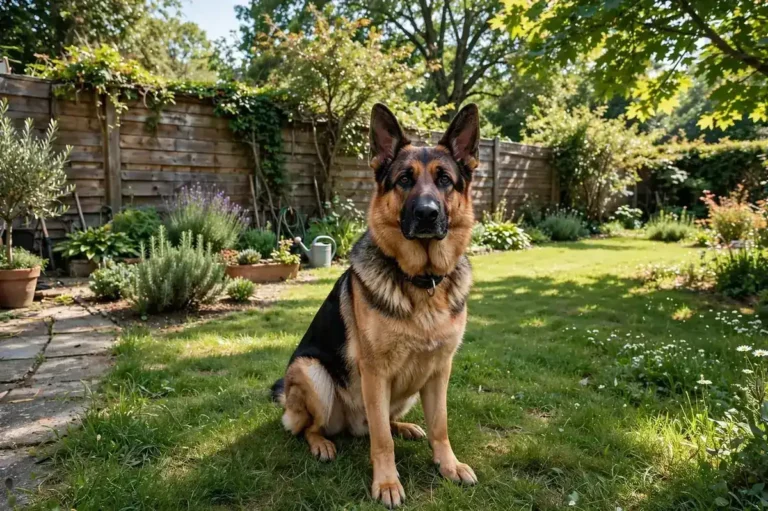
How to Stop Your German Shepherd From Digging Up the Yard
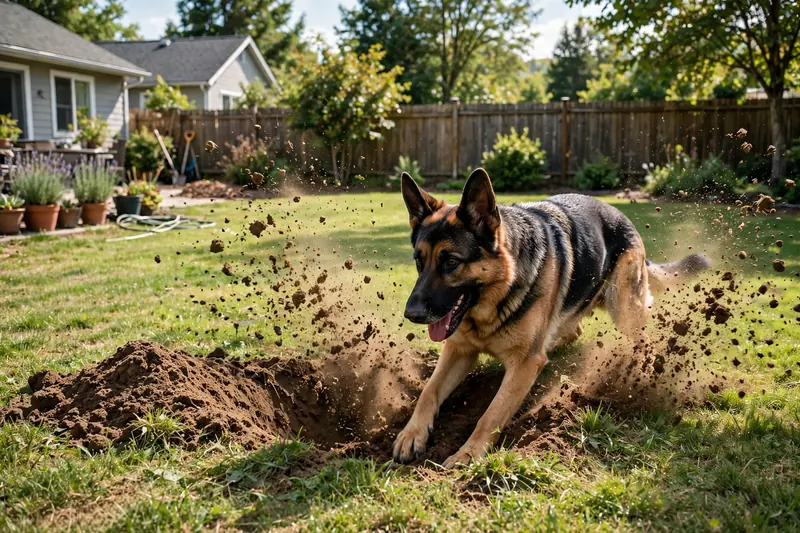
You walk out with your morning coffee, and there it is: a fresh crater in the middle of the lawn, dirt flung halfway to the fence.
Your German Shepherd stands in the middle of it, looking pleased with herself. She is not being spiteful. Digging feels good, and it makes sense to her.
Our job is simpler than a daily battle: find out why she digs, give her a better outlet, and teach her where digging is allowed.
Key Takeaways
- Digging is natural and self-rewarding, so scolding after the fact rarely helps.
- Most digging comes from boredom, heat, prey smells, burying treasure, fun, or escape.
- A legal dig pit protects the lawn while it meets the digging need.
- Exercise, training, and nose work drain the working-dog energy behind much digging.
- Redirect calmly to the pit and reward the right choice, every time.
- Sudden, frantic, or fence-line digging deserves a vet check first.
Direct Answer: german shepherd digging
To stop german shepherd digging, give your dog a legal place to dig, meet the need behind it, and redirect calmly every time.
Punishment after the fact does not teach a new habit. A clear outlet, a fuller day, and a steady routine do the work instead.
Why German Shepherds Dig
Watch when and where digging happens for a few days. The pattern usually points to the motive, and the motive points to the fix.
| Reason | What you see | First step |
|---|---|---|
| Boredom or no job | Random holes, often when left alone | More exercise, training, and company |
| Prey drive and scent | Intense digging at one spot, nose down | Supervise, redirect to the pit, check the area |
| Cooling off | Shallow hollow, dog lies in it on hot days | Shade, water, and cool indoor rest |
| Burying treasure | Holes near chew and toy spots | Offer the pit for hiding finds |
| Fun and self-reward | Digging anywhere, again and again | Make the pit more rewarding than the lawn |
| Escape or stress | Digging along the fence line | Fence safety, supervision, and professional advice |
Boredom and a working dog with no job
German Shepherds were bred to work all day. A Shepherd with a short walk and long, empty hours in the yard may invent a job, and excavation pays well.
Digging that happens mainly when she is left alone often signals under-stimulation. It can sit beside other alone-time trouble, not spite.
Prey drive and underground smells
A Shepherd may lock onto a smell underground and dig with total focus. Moles and other small animals, garden scents, and buried food can all pull her nose down.
This is not the same as a terrier bred to follow prey into tunnels. Still, a strong nose and a determined mind can make one spot very hard to leave alone.
Cooling off in heat
Dogs dig to reach cooler earth below the surface. If your Shepherd scrapes a shallow hollow and lies in it on hot afternoons, she may be cooling down.
A thick double coat makes heat harder to handle. Shade, fresh water, and indoor rest during the hottest part of the day help more than scolding.
Burying treasure
Some dogs stash bones, chews, and favorite toys, then dig them up later. Holes near chew spots often point to a dog hiding treasure for later.
Give that habit a legal home in the dig pit. Bury toys there instead, so the hiding game stays in one place.
Fun, because digging rewards itself
Digging feels good, so every successful dig makes the next one more likely. That is why hoping a dog simply grows out of it rarely works on its own.
That mix of drive and energy is why german shepherd digging can look so determined, even when your dog seems happy and relaxed.
Escape or stress
Digging along a fence line is different from a random lawn crater. It may be an escape attempt, or a sign that your dog is stressed when left alone.
Take it seriously and act fast. A large dog under a fence can reach a road, a neighbor dog, or a lost-dog search.
How this digging differs from other digging
Many breeds dig, but size and work drive change the result. A Shepherd can move a lot of soil fast, and a habit can grow into a yard project in days.
Digging indoors is a different habit, with nesting and comfort often behind it. For that pattern, see our guide to why dogs dig in the couch.
Exercise and Mental Work First
A tired body and a busy brain lower the urge behind german shepherd digging more reliably than simply leaving your dog outside longer.
Start with real walks, not just yard access. Add one active game she loves, such as fetch or tug, in short, happy bursts.
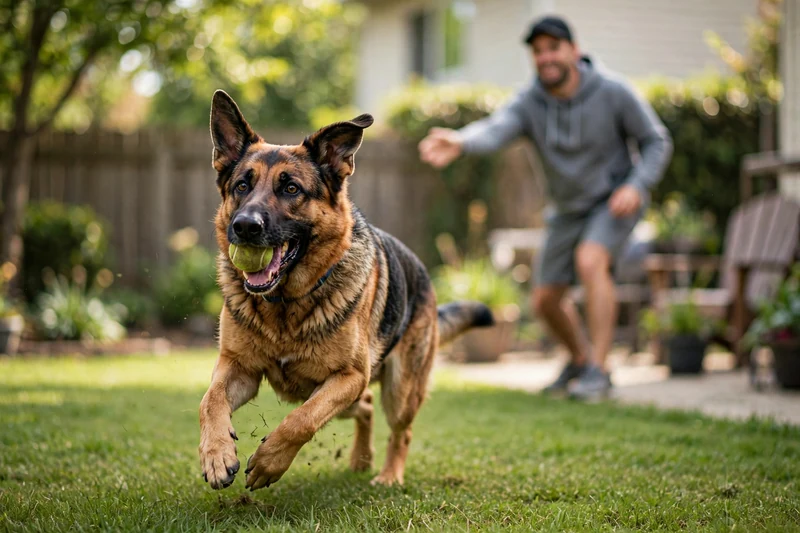
Then add brain work. Short training sessions, scatter feeding, puzzle feeders, and scent games give that seeking nose a job that spares your flower beds.
Keep training sessions to about five to ten minutes, a few times a day. Short, successful sessions beat one long, frustrated session.
Loose-leash walks also help, because a walk that stays calm is easier to repeat. See our guide to stopping a German Shepherd pulling on the leash.
Build a Legal Digging Spot
Make the pit the best digging deal in the yard, and german shepherd digging has somewhere legal to go instead of your lawn.
Pick a partly shaded corner. Frame a pit with low boards, or use a rigid plastic sandpit shell, and fill it with clean play sand.
Keep the soil slightly moist, not muddy, so it stays cool and pleasant to dig. Cover the pit when it is not in use, so cats do not adopt it.
- Let your Shepherd watch you bury a toy or a few treats in the sand.
- Invite her to dig in the pit, and praise every find with warmth and a treat.
- Rotate buried finds often, so the pit stays more interesting than the lawn.
- Supervise early sessions, and keep them short and fun.
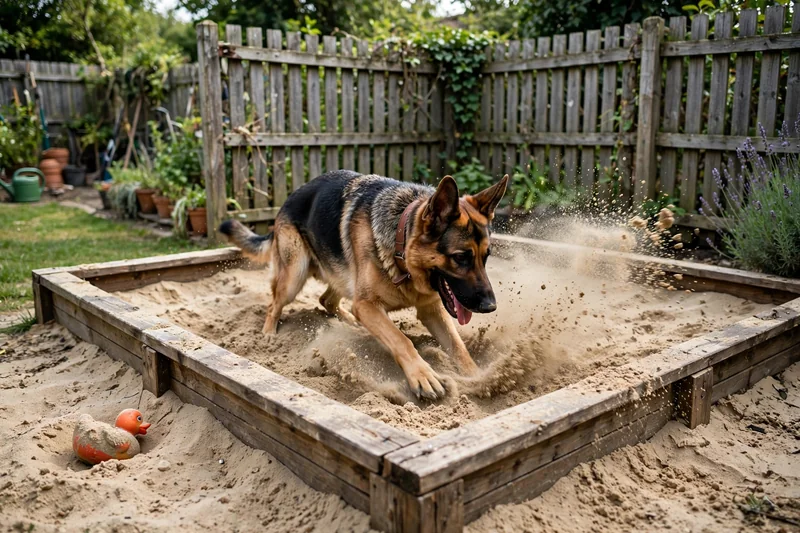
The same pit idea works for other keen diggers. Compare it with our guide to stopping Golden Retriever digging for another breed example.
Teach the New Habit, Calmly
Choose a simple cue, such as dig dig, and use it only in the pit. Reward digging there, so the pit clearly pays better than the lawn.
When she digs somewhere else, stay calm. Walk over, call her cheerfully, lead her to the pit, use the cue, and reward digging in the right place.
Do not scold her hours later for a hole you just found. She cannot link that reaction to digging done earlier, and it may raise anxiety instead.
Supervise yard time while the new habit forms. You cannot redirect digging you do not see, so short, watched visits work best at first.
Make the Wrong Spots Less Appealing
Management buys time while training takes hold. Use it beside the pit, never instead of meeting the need behind the digging.
- Supervise yard time, and bring your dog inside before digging starts.
- Fence off prized beds with low decorative fencing or garden edging.
- Lay flat pavers or large river rocks over favorite craters for a time.
- Fill old holes with soil, and keep the lawn surface less inviting to dig.
- For heat diggers, add deep shade, fresh water, and cool indoor rest.
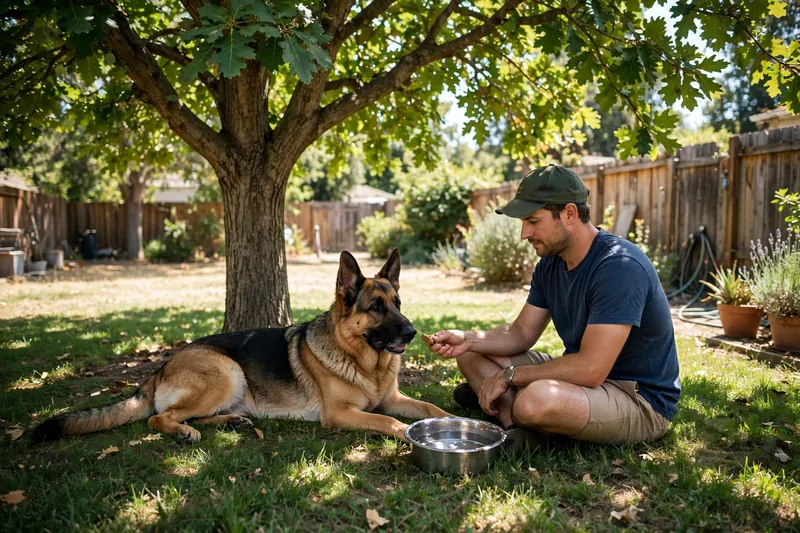
For a calmer daily rhythm, see how digging fits the wider picture in our German Shepherd behavior problems guide.
Fence and Escape Safety
Fence-line german shepherd digging deserves fast action, because a dog under a fence can reach a road.
Walk the whole fence line, and check every panel, gate, hinge, and latch. Dogs often find the one soft spot where soil is loose or a panel has shifted.
- Bury a mesh apron or lay pavers tight along the fence base at hot spots.
- Roll all sharp wire edges under, and check the barrier often for gaps.
- Move bins and garden furniture away from the fence, so they cannot help a climber.
- Keep ID tags current, and keep microchip details up to date as a safety net.
For a detailed fence-line plan, see our guide to beagle digging under a fence, which covers barriers and supervision step by step.
Set a Routine She Can Count On
Dogs relax when the day is predictable. A steady rhythm of walk, training or play, rest, afternoon outing, and evening wind-down leaves fewer empty hours.
Keep departures and arrivals low-key, and give her a comfortable resting spot indoors. A calm routine helps a Shepherd settle between active parts of the day.
What NOT to Do
Positive reinforcement only is the rule here. These steps protect trust, and they teach your dog what to do instead of digging in the wrong place.
- Do not punish digging after the fact, and do not use fear to stop it.
- Skip shock and prong collars. They use discomfort, and they teach no legal outlet.
- Do not turn a redirect into a chase game, which can reward the digging.
- Do not rely on scent deterrents alone. They wash away, and they do not meet the need behind digging.
- Do not leave a determined fence digger unsupervised while you hope the habit fades.
When Digging Signals Distress or a Medical Problem
Most digging is a management and enrichment problem. Get professional help promptly when the pattern changes or comes with distress.
- Digging starts suddenly in a dog who never dug before.
- Digging is frantic, hard to interrupt, or paired with pacing, panting, drooling, or howling.
- Digging comes with limping, paw or nail injury, appetite change, lethargy, or restlessness.
- Digging happens mainly when your dog is left alone, with destruction near doors or windows.
- Your dog shows aggression, such as growling or snapping, around people or other dogs.
Book a vet check first when pain or a medical cause is possible. Then ask your vet to refer you to a qualified, force-free behavior professional.
A behavior plan works far better once medical causes are ruled out. There is no shame in calling for backup early.
Frequently Asked Questions
Will my German Shepherd grow out of digging?
Probably not on her own. Because digging rewards itself, the habit usually strengthens with practice, not time alone.
Management, a dig pit, and calm redirection give an adult dog a new habit to replace the old one.
How big should the dig pit be?
Big enough for an adult Shepherd to stand, turn, and dig comfortably. A rigid sandpit shell works, or a framed pit in a shady corner.
What matters most is a clear boundary, clean sand, and buried finds that make the pit the most interesting digging spot.
Can I put cayenne pepper or citrus peels in the holes?
They are unreliable. Scent deterrents wash away in rain, some dogs ignore them, and strong irritants can bother eyes and noses.
Use the boring-spot steps above, plus a dig pit, instead of relying on a smell to do the training.
Should I fill the holes with my dog’s poop?
It is better not to rely on this old folk remedy. It may put a dog off one hole, but it does nothing for the habit behind digging.
Fill holes with soil, protect the spot for a time, and work the real plan: exercise, enrichment, a dig pit, and calm redirection.
My Shepherd only digs along the fence. What should I do?
Treat it as a priority, because it is likely an escape attempt. Supervise yard time, add a buried barrier at the fence base, and increase exercise and mental work.
If she keeps trying despite barriers and enrichment, talk to your vet and a qualified behavior professional.
Is digging a sign of separation anxiety?
It can be one piece of the puzzle. Digging mainly when left alone, with pacing, vocalizing, or destruction, deserves a closer look.
Your vet is the right first call if you suspect anxiety rather than boredom, so medical causes can be ruled out first.
Can I stop digging completely?
For most dogs, redirection is the honest goal. Digging is a natural behavior, and trying to ban it outright often just moves it elsewhere.
A legal outlet lets your dog dig safely, while the rest of the yard stays protected. That is a win for both of you.
A Yard You Can Both Enjoy
Give her a legal pit, a fuller day, and a calm redirect, and german shepherd digging usually fades from a daily crater to an occasional, welcome dig in the right place.
Your lawn will thank you, and your Shepherd will still get to do what dogs love to do, in the place you chose together.
Reference
American Kennel Club, “Why Do Dogs Dig? Common Reasons and How to Manage the Behavior”: https://www.akc.org/expert-advice/training/why-is-my-dog-digging/
Still stuck? Get a plan built for your dog.
Answer a few quick questions and get a personalized, force-free training plan in minutes.