How to Stop a German Shepherd Pulling on the Leash
A German Shepherd that pulls can turn a simple walk into a tug-of-war. This large, strong breed was made to move, watch, and work, so excitement quickly becomes forward pressure on the leash.
The good news is that pulling is a learned habit, not a fixed trait. When pulling stops working and walking beside you starts paying, most dogs change faster than their owners expect.
This guide gives you a reward-based plan for a strong, smart breed: the right equipment, a heel foundation taught indoors, the stop-and-go method, and a staged plan for distractions.
Key Takeaways
- Pulling works, so change the payoff. A tight leash should buy no forward movement.
- Reward the spot beside you, not only the stop. Your dog needs a clear alternative to pulling.
- Stop when the leash tightens, and turn when a surge builds. Both methods teach your dog to watch you.
- A well-fitted front-clip harness can help while you train. It does not replace training.
- Skip punishment collars. Use rewards, patience, and short sessions.
- Sudden pulling, pain signs, or aggression need a vet or behavior professional first.
Direct Answer: german shepherd pulling on leash
To stop german shepherd pulling on leash, make pulling stop the walk and make walking beside you pay. Stop the moment the leash goes tight, wait for slack, then move on and reward your dog at your side.
Train first indoors, then in quiet places, then around mild distractions. Keep sessions short, keep the rules the same for every walker, and let sniff breaks be part of the walk.
Why German Shepherds Pull on the Leash
German Shepherds were bred to herd, guard, and cover ground all day. That history leaves them alert, energetic, and eager to reach interesting sights, smells, and other dogs.
Pulling is also simple learning. Your dog surges forward, you follow, and the walk continues. After many repeats, pulling feels like the normal way to get where he wants to go.
That is why german shepherd pulling on leash is so common in this strong, watchful breed. It is not spite, and it is not a character flaw. It is a habit that has been rewarded again and again.
| Common cause | What you see | First fix |
|---|---|---|
| Excitement | Pulling hardest at the start of the walk | Let your dog sniff first, then train |
| Unmet energy needs | Restless, fast, hard to focus | Add play and mental work before training walks |
| No taught alternative | Pulling, with no check-ins | Teach the reward position indoors first |
| Trigger pulling | Pulling only near dogs, people, or wildlife | Add distance and reward calm looking |
Pulling often sits beside other breed patterns, such as barking, jumping, and restlessness. For the wider picture, see our German Shepherd behavior problems guide.
One warning sign matters more than the rest. If a calm walker suddenly starts pulling, seems stiff, limps, or avoids moving, book a vet visit before you increase training.
Equipment That Helps vs. Equipment That Harms
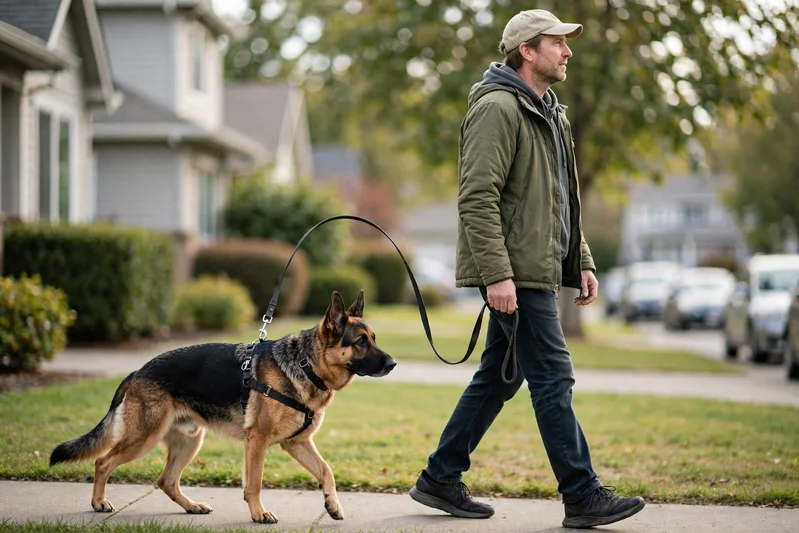
Gear will not train your dog, but the wrong gear makes training harder. Choose tools that keep your dog comfortable and give you gentle control while the skill grows.
| Equipment | Verdict | Why |
|---|---|---|
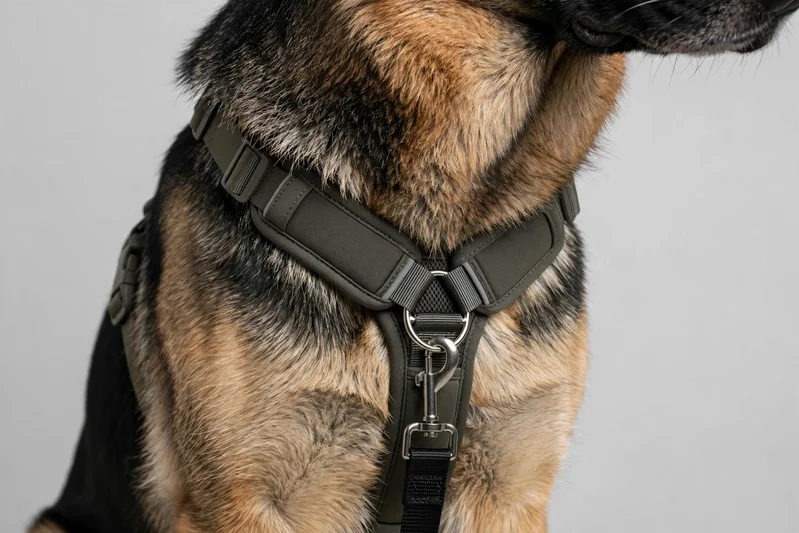
| Front-clip harness | Helps | The chest attachment turns a surge back toward you |
| Flat leash, four to six feet | Helps | Gives clear, steady feedback about leash tension |
| Treat pouch and small, soft treats | Helps | Lets you reward fast, at your leg, where you want your dog |
| Back-clip harness | Mixed | Comfortable, but it can give strong pullers more leverage |
| Retractable leash | Skip | It teaches constant tension and rewards pulling for more range |
| Prong, choke, or shock collars | Skip | They use pain or fear, and they teach no alternative behavior |
Fit matters. A harness should sit clear of the throat, lie flat, and allow two fingers under each strap without sliding sideways. Recheck the fit as your dog gains or loses weight.
Head halters can suit some very strong dogs, but they need slow, treat-based conditioning first. If your dog paws, freezes, or panics in one, pause and get in-person help.
Heel Foundations: Reward the Position Before You Ask for the Walk
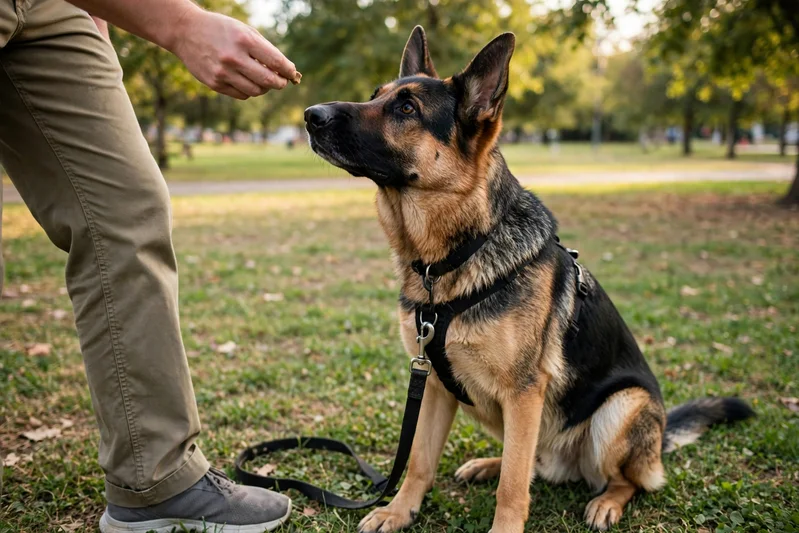
Dogs repeat what pays, so teach the paying spot before you test it outside. Start in a hallway with treats ready in the hand on the side your dog will walk.
- Take a few steps, and the moment your dog is beside you on a loose leash, say yes.
- Feed the treat right at your leg, where you want your dog to be.
- Build slowly. Reward every two or three steps first, then five steps, then ten.
- Once your dog eagerly finds the spot, say let’s go before you move off.
Reward check-ins too. When your dog looks up at you on a walk, mark it with yes and treat at your leg. That look is the skill that later beats distractions.
Keep early sessions to about five minutes, two or three times a day. End while your dog still wants more, and add steps slowly as the position becomes easy.
Stop-and-Go: The Core Method for Real Walks
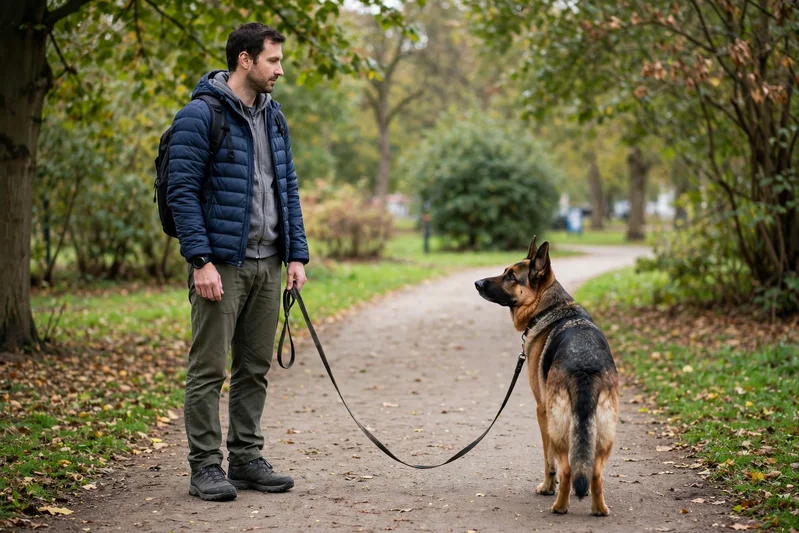
The heart of fixing german shepherd pulling on leash is a simple rule: a tight leash buys no forward movement. A loose leash keeps the walk going.
- Walk normally with treats ready.
- The instant the leash goes tight, stop and stand still. Do not yank the leash back.
- The moment the leash goes slack, or your dog glances back, say yes and reward at your side.
- If he is stuck, say his name, encourage him back, and reward the return.
This can feel slow at first, and that is normal. Covering a short distance well matters more than covering a long distance while your dog practices pulling.
Use the leash-end look-back as a bonus skill. When your dog reaches the end of the leash, say his name. The moment he turns, mark, reward, and move on.
Change Direction When the Leash Tightens
Direction changes teach your dog to watch you, which can stop a pull before it starts. They work well beside stop-and-go, not instead of it.
When the leash starts to tighten, turn cheerfully and walk the other way, saying this way. When your dog catches up beside you, mark and reward, then carry on.
Mix the methods by feel. Use a stop for a full pull, and a quick turn when you see a surge building. Never yank the leash back to correct your dog.
Distraction Proofing: The Staged Ladder
Most cases of german shepherd pulling on leash get worse around other dogs, people, bikes, and wildlife. That is not a new problem. It is the same skill under harder conditions.
| Level | Where to practice | Move on when |
|---|---|---|
| 1 | Indoors and garden | Your dog finds the position easily |
| 2 | Quiet street at a quiet time | The leash stays loose for short stretches |
| 3 | Normal street route | Check-ins happen without prompting |
| 4 | Busier street, with distance from triggers | Your dog can still take treats and look at you |
| 5 | Park edge at a quiet time | Pulling stays mild and recovers fast |
Work at a distance where your dog can still think and take treats. If he cannot, you are too close. Add distance, reward calm looking, and try again.
A dog who checks in readily is easier to redirect near triggers. If recall is weak, build it beside this plan with our German Shepherd recall training guide.
For dogs who surge after cats or squirrels, keep distance first and reward calm choices. Our guide to stopping a Golden Retriever chasing cats uses the same distance and reward ideas.
The same stop-and-go rule works for other breeds, with size and drive changing the details. Compare our Golden Retriever pulling guide and our Dachshund pulling guide if you walk more than one breed.
Your Two-Week Loose-Leash Plan
| Days | Focus | Goal |
|---|---|---|
| 1 to 3 | Indoors | Reward position, five minutes, two or three times a day |
| 4 to 7 | Garden or a very quiet street | Stop-and-go in short sessions, with generous check-in rewards |
| 8 to 10 | Normal street route | Add direction changes and ask for a few more steps between treats |
| 11 to 14 | Mild distractions, at a distance | Keep the leash loose, and fade treats slowly, never to zero |
Keep training walks and exercise walks separate when you need to. A dog who has had play and sniff time is easier to train than a dog who is bursting with stored energy.
Common Mistakes That Keep Pulling Alive
- Inconsistent rules. If pulling sometimes works, your dog will keep trying it.
- Starting too hard. A busy park is a poor first classroom. Build the skill in easy places first.
- Skipping treats too early. Fading rewards is a week-two job, not a day-two job.
- Long, frustrating sessions. A tired, frustrated dog cannot learn. Five good minutes beat thirty cranky ones.
- Only training the stop. Stopping teaches what not to do. Rewarding the position teaches what to do instead.
- Letting one walker bend the rules. Everyone who walks your dog must follow the same rule.
When to Get Professional Help
This plan handles ordinary, habit-based pulling. Get help promptly if any of the following apply:
- Your dog lunges, barks, or growls at people or dogs on walks. That is reactivity layered on top of pulling.
- The pulling started suddenly, or it comes with pain, stiffness, limping, or reluctance to move. See your vet first.
- Your dog panics, shuts down, or cannot take treats on walks. A qualified force-free trainer or veterinary behaviorist can assess what is happening.
- You feel unsafe or outmatched physically. There is no shame in that with a large, strong dog.
- Your dog has bitten, or you worry he might. Get professional help before the next walk, not after.
Look for a trainer who uses reward-based methods and avoids aversive tools. Ask how they handle setbacks, and avoid anyone who suggests pain-based tools.
Frequently Asked Questions
How long does it take to stop a German Shepherd pulling on the leash?
Many owners see clear improvement within one to two weeks of consistent daily practice. Progress depends on age, how long pulling has been rehearsed, and how distracting the route is.
Are prong collars bad for German Shepherds?
Yes, avoid them in this plan. Prong collars pinch the neck when the dog pulls, so they rely on discomfort. They also teach nothing about where to walk.
Should I use a retractable leash for my German Shepherd?
No. A retractable leash rewards pulling, because pulling out more line is how the dog gets more range. Use a fixed leash of four to six feet.
What age should I start loose-leash training?
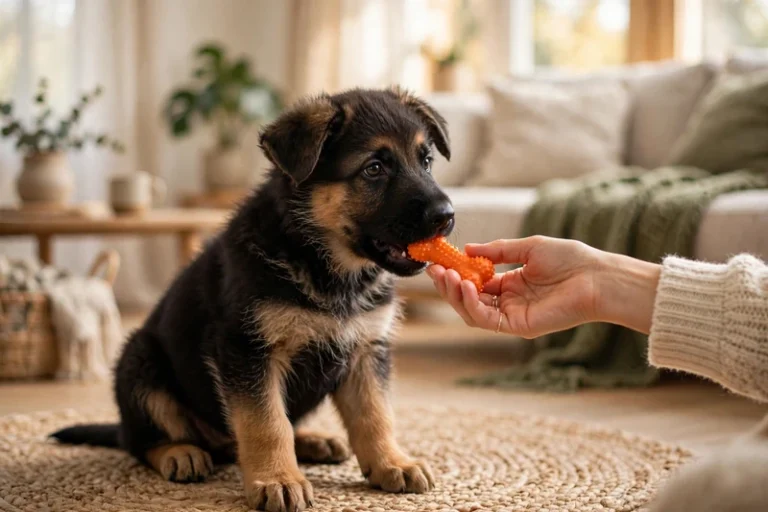
You can start the day your puppy comes home. The indoor reward-position game is short, fun, and low pressure. Keep sessions to a few minutes and celebrate small wins.
My German Shepherd only pulls when he sees other dogs or strangers. What helps?
Pulling with a trigger is usually excitement or reactivity, not a simple leash gap. Create distance before your dog goes over threshold, and reward calm behavior from far away.
Do I need a front-clip harness, or is training alone enough?
Training alone is enough in the long run, and that is the goal. The harness is a management tool that makes the training period safer and more pleasant.
Why does my German Shepherd pull hardest at the start of the walk?
The first minutes carry the most excitement and the best smells. Let your dog sniff and settle for a few minutes first, then start the training walk.
The Walk You Want Is Closer Than You Think
With steady practice, german shepherd pulling on leash usually turns into a calmer habit: slack leash, frequent check-ins, and a dog who watches you before surging ahead.
Fit the harness, load the treat pouch, teach the position indoors, and hold the same rule on every walk, and the loose curve in the leash will become your normal walk.
Reference
American Kennel Club, “How to Teach a Puppy to Walk on a Leash”: https://www.akc.org/expert-advice/training/teach-puppy-walk-leash/
Still stuck? Get a plan built for your dog.
Answer a few quick questions and get a personalized, force-free training plan in minutes.