Dachshund Food Aggression: What to Do
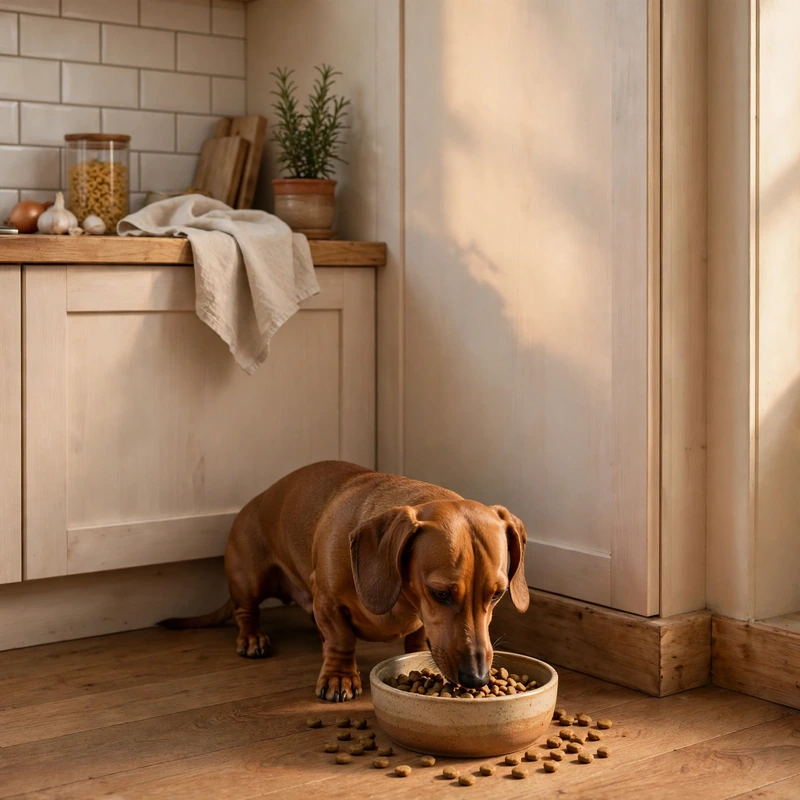
The growl freezes you mid-step. You’re walking past your Dachshund’s food bowl and your ten-kilo hunter-dog has gone rigid over their dinner: body stiff, eyes fixed, a low rumble rolling out of a body that was wagging five seconds ago.
If you’re dealing with Dachshund food aggression, the most important thing to understand is this: your dog isn’t being “bad,” spiteful, or dominant. This is resource guarding, an ancient survival behavior, and it responds to management and trust-building, never to punishment or “showing them who’s boss.”
Key Takeaways
- Dachshund food aggression is resource guarding: the dog believes something valuable will be taken, so they warn you off. It’s driven by anxiety, not dominance.
- Never punish a growl. The growl is communication; removing the warning doesn’t remove the feeling, it just removes your early notice.
- Do not “dominate” your dog around food, take the bowl away to prove a point, or alpha-roll them. The ASPCA warns this is dangerous and can make guarding worse.
- Management keeps everyone safe right now: feed separately, keep children away from the bowl, and never pry a guarded item out of your dog’s mouth.
- Trading up and gradual desensitization can rebuild trust, but if your dog has bitten, snaps easily, or guards from children, get professional help before trying behavior work yourself.
Understanding Dachshund Food Aggression
Resource guarding means your dog uses threats to keep control of something they value: food, a chew, a stolen sock, a favorite spot, sometimes even a person.
Food is the most common trigger, and the behavior follows a ladder. Most dogs start low and only climb if the lower warnings were ignored:
- Stiffening and staring — the body goes still over the bowl, eyes hard. This is the earliest warning, and many owners miss it.
- Growling — the classic “back off.” This is communication, and it’s the most valuable signal your dog gives you.
- Snapping or lunging — the dog has learned that lower warnings didn’t work, so they’re trying harder.
- Biting — the last resort of a dog whose warnings were ignored.
Every dog can guard resources, but Dachshunds bring breed-specific intensity. They were bred to work alone underground, making independent decisions, and they’re famously tenacious: once a Dachshund decides something is theirs, they commit.
Add the breed’s legendary food motivation and you get a dog who takes dinner very seriously. This doesn’t make them “aggressive dogs.” It makes them committed guarders, and the fix is convincing them that your approach means gain, never loss.
One rule first: if guarding appeared suddenly in an adult who never guarded before, book a vet check. Pain, dental problems, and other medical issues can make a dog newly defensive around food, and no training plan fixes a medical cause.
What NOT to Do: The Mistakes That Make It Worse
- Do not punish the dog around food. No yelling, no leash corrections, no “tssst,” no pushing them away from the bowl. Punishment teaches your dog that people near food are even more dangerous, which is exactly what makes a guarder guard harder.
- Do not “dominate” your dog or take the food away to prove a point. No alpha-rolls, no pinning, no staring contests. The ASPCA warns that dominating a food-guarding dog is dangerous and can make guarding worse: your dog’s fear is that you’ll take the food, and proving it correct confirms it.
- Do not reach into the bowl or pry items out of their mouth. Every reach-in teaches the dog that hands near food steal food. If you need something your dog has, trade for it (see below), don’t wrestle it away.
- Do not punish the growl. This deserves repeating: if you punish growling, many dogs stop growling and go straight to biting next time. A growl is a gift. It tells you exactly how the dog feels so you can manage the situation.
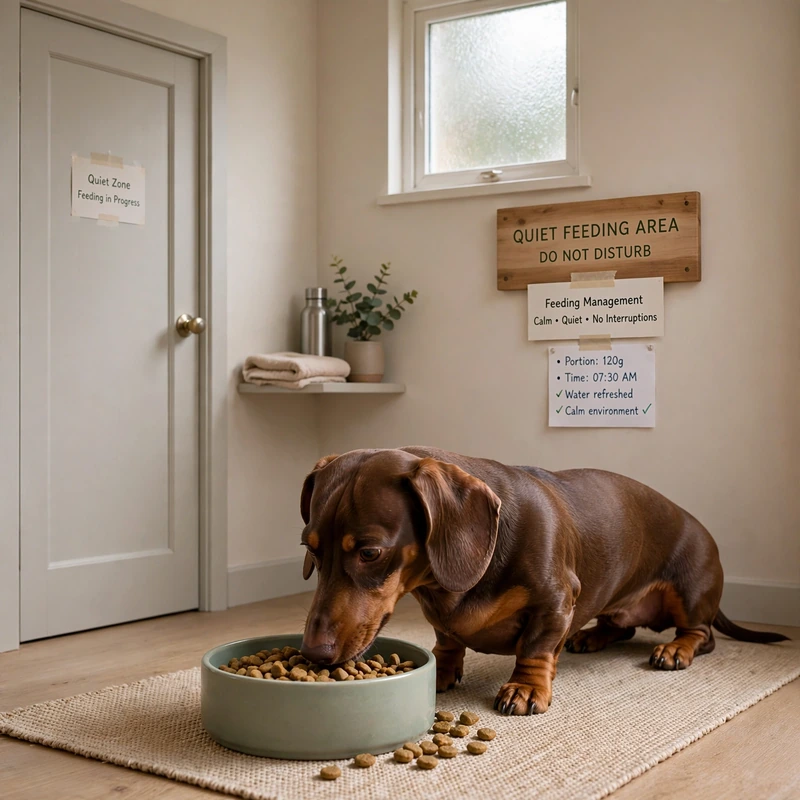
Step 1: Management — Make Mealtimes Safe Right Now
Management won’t cure guarding on its own, but it prevents rehearsals and bites while you work on the deeper fix. Start today.
Feed separately and undisturbed. Other pets: feed the Dachshund in a separate room behind a closed door or baby gate.
Guarding from people: feed in a quiet spot and leave them alone until the bowl is empty. There’s no training value in hovering over a dog who wants privacy with dinner.
Children and food bowls never mix. Kids are the highest-risk group around guarding dogs: they move unpredictably and don’t read warning signals.
Until a professional has assessed your dog, no child approaches or touches your Dachshund while they eat or chew. No “good dog” exceptions. For more on dogs and kids, see our guide to nipping at children.
Pick up high-value items. Bones, long-lasting chews, and guarded treasures go away for now. The dog only gets them in controlled situations (alone, in their safe feeding spot) until trust builds.
Confine the dog when guests eat nearby. The ASPCA recommends exactly this. Don’t try to socialize a guarder through mealtimes.
If your dog already has something and won’t give it up, don’t chase or corner them. Toss a few extremely tasty treats a few feet away, and pick up the item once they’ve moved toward the treats. No confrontation, just a calm swap.
Step 2: The Trade-Up Game — Building Trust Away From the Bowl
The trade-up game teaches your dog the core lesson that fixes dachshund food aggression: human hands approaching your stuff means you get something better, not something worse. Start with low-value items, far from mealtimes, with a dog who is relaxed.
- Offer your Dachshund something boring: a dry biscuit, an old toy they barely care about.
- Once they have it, produce something amazing from behind your back: a chunk of cheese, a piece of chicken, a favorite treat.
- Trade: they get the amazing thing, you pick up the boring thing.
- Give the boring thing back, or give them the amazing thing again. The point is that the exchange always profits the dog.
Repeat a few times per session, a few sessions a week. Over time, work up to slightly more valued items, but do not rush this ladder.
The jump from trading a boring biscuit to trading a full dinner bowl is enormous, and most dogs need many successful easy trades first. Patience is the whole game.
If your dog stiffens, growls, or won’t engage during trade-up practice, stop. You’ve found your dog’s threshold, and pushing past it without a professional is how people get bitten. That’s not a failure; it’s information. Take it to your vet or a qualified behavior professional.
The same idea, applied to mealtimes. For mild cases, you can extend this logic to actual meals: while your Dachshund eats, stand far across the room where they stay relaxed, toss a high-value treat toward (not into) their area, then step back.
Over many sessions, gradually decrease the distance, always staying below the threshold where the dog stiffens or stares. If they show any guarding signal, return to the last relaxed distance.
But be honest about whether this is for you: treating resource guarding can be difficult and even dangerous. If you’re at all worried your dog might bite, don’t proceed on your own. Ask your vet for a referral to a behavior professional. That’s the safe, correct call, especially with children in the home or a dog who has already bitten.

When Dachshund Food Aggression Needs Professional Help
Management and gentle trade-up work suit many mild cases of dachshund food aggression. Call your vet and a qualified behavior professional (a certified behaviorist or guarding-experienced trainer, found through your vet’s referral) if:
- Your dog has bitten, broken skin, or snapped at a person, especially a child
- The guarding is escalating: warnings getting shorter, or the dog guarding more things (toys, bed, locations, people)
- The dog guards from children who live in or visit the home regularly
- Guarding appeared suddenly in an adult dog (see your vet first; rule out pain and medical causes)
- You’re afraid of your dog, even a little. Trust that feeling. It’s information, not disloyalty
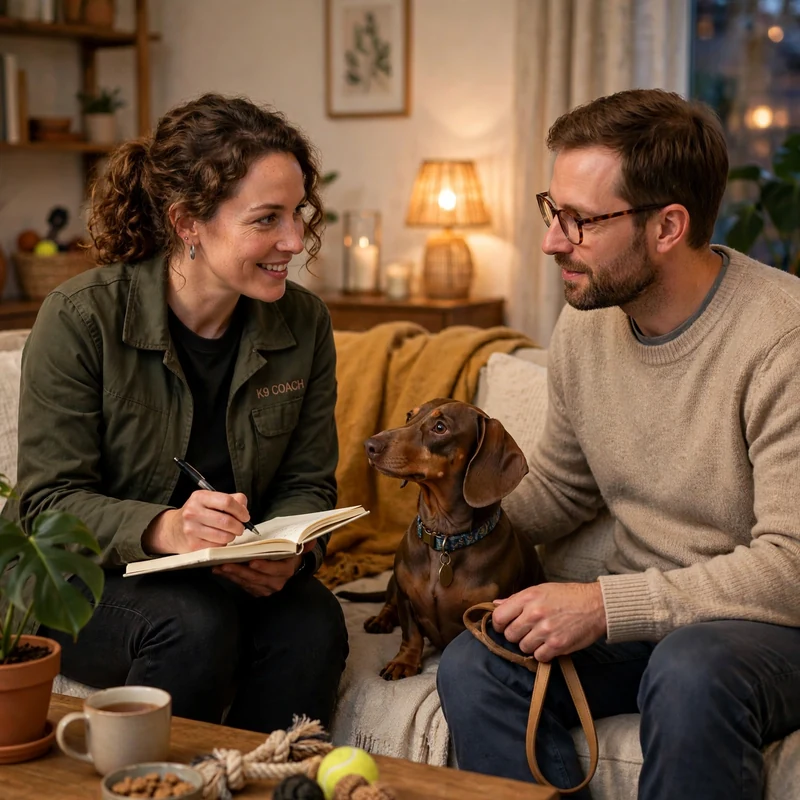
A professional will assess the severity, design a plan matched to your dog, and tell you honestly what realistic progress looks like. Some guarding decreases substantially with work; some dogs will always need management around food, and that’s a perfectly fine outcome.
Frequently Asked Questions
Can Dachshund food aggression be fully cured?
Often, dachshund food aggression can be reduced substantially, especially in mild cases caught early. But some dogs improve hugely yet still prefer to eat undisturbed, and that’s a fine outcome. A professional can tell you what’s realistic for your dog.
Should I take my Dachshund’s food away during meals to show I’m in charge?
No. Your dog’s fear is that you take their food; demonstrating that the fear is true confirms it and usually makes guarding worse. The ASPCA specifically warns against dominating a food-guarding dog.
My Dachshund growls when my child walks near the bowl. What should I do?
Separate children from the food bowl completely, every meal, no exceptions. Do not punish the growl; it’s the warning that keeps everyone safe.
And get professional help, because guarding from children is the highest-risk category. See also stopping Dachshund biting and bites when picked up.
Should I punish my Dachshund for growling over food?
Never. In dachshund food aggression cases, punishing a growl doesn’t remove the feeling behind it; it removes your early warning. Dogs punished for growling are the ones who seem to “bite without warning.”
Does food aggression mean my Dachshund is a bad or dangerous dog?
No. Resource guarding is normal canine behavior, driven by anxiety about losing something valuable, not malice or bad temperament. A well-managed guarder can live a completely normal, happy life.
Is rehoming the answer for a food-aggressive Dachshund?
Rehoming is never the first option, and never done casually or without professional assessment. Most cases are workable with management and guidance.
If, after professional assessment, a dog poses a genuine safety risk the household cannot manage, a behaviorist can advise on responsible options. That decision is made with a professional, never alone and never in a hurry.
—
Dachshund food aggression is one of the most fixable behavior problems when it’s handled with patience instead of confrontation. For the full breed picture, read the complete Dachshund behavior guide, and browse all Dachshund guides.