How to Stop a German Shepherd Barking at the Door
The doorbell rings, and your German Shepherd races to the door, barking hard while you try to greet a guest. It feels chaotic, and it can feel embarrassing.
Learning to handle german shepherd barking at door starts with a kinder goal. You do not need a silent dog. You need a dog who alerts once, then settles.
Direct Answer: german shepherd barking at door
To reduce german shepherd barking at door, teach a short alert, a quiet cue, and a place to go. Practice each part separately, then join them together slowly.
Keep sessions short, reward calm choices at once, and manage real arrivals while you train. With steady practice, most dogs learn a calmer door routine.
Key Takeaways
- Door barking is normal alert behavior, not bad manners.
- Teach quiet away from the door first.
- Desensitize knocks and the doorbell separately, at low volume.
- Give your dog a clear job, such as going to a mat.
- Shouting and aversive tools tend to make barking worse.
- Expect steady progress over weeks, not overnight.
Why German Shepherds Bark at the Door
German Shepherds were bred to watch, guard, and warn their people. At the front door, that instinct meets sudden sounds, movement, and strangers.
That mix explains why german shepherd barking at door can feel so intense. Several triggers arrive at once, and your dog has rehearsed the same loud response many times.
For the wider breed picture, read our German Shepherd behavior problems guide, which covers common patterns and their drivers.
Alert Barking
Alert barking says, something changed, and you should know. One or two barks are useful. The goal is to thank your dog, then guide them to settle.
Territorial Barking
Territorial barking guards the home boundary. Your dog may bark hardest when a stranger steps close, pauses, or reaches for the door.
Excitement Barking
Excitement barking comes from joy and anticipation. Your dog may bark, spin, or jump because a visitor could mean attention, play, or a walk.
Fear Barking
Fear barking comes from worry, not confidence. A fearful dog may bark, retreat, or stiffen when a stranger feels too close or moves suddenly.
Door Barking vs Barking on Walks vs Night Barking
Door barking is not the same as barking on walks or at night. The trigger, the setting, and the best first step can all differ, so match your plan to the pattern.
| Pattern | Main trigger | Best first step |
|---|---|---|
| At the door | Knock, bell, and a stranger at the boundary | Quiet cue plus place on a mat |
| On walks | Strangers seen at a distance | Distance plus rewards for calm looking |
| At night | Sounds and movement in the dark | Mask sounds and check basic needs |
If walks are the main problem, see our guide to barking at strangers on walks. If nights are worse, see our night barking guide.
A Calm Door Routine in Four Steps
This routine works for german shepherd barking at door because it replaces rushing with a job. Your dog learns what to do, not just what to stop.
Work in short sessions of a few minutes, a few times a day. End while your dog is still succeeding, and keep treats close at hand.
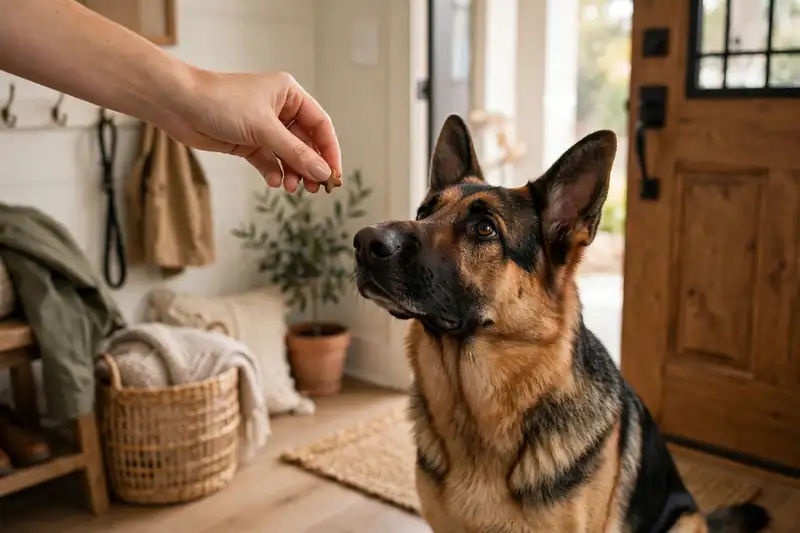
Step 1: Teach the Quiet Cue Away From the Door
Start in a calm room, far from the front door. When your dog is quiet and relaxed, say quiet once, then give a treat.
Build the pause slowly, from one second to a few seconds. If your dog barks again, wait for a pause before you reward.
Step 2: Desensitize Knocks and the Doorbell
Find a recording of a knock or doorbell. Play it so quietly that your dog notices it, but does not bark.
Each time the sound plays, give a treat. When the sound stops, treats stop. Raise the volume only while your dog stays calm.
For a doorbell-only plan, see our guide to stopping dog barking at the doorbell, which breaks the sound work into smaller steps.
Step 3: Teach Go to Place
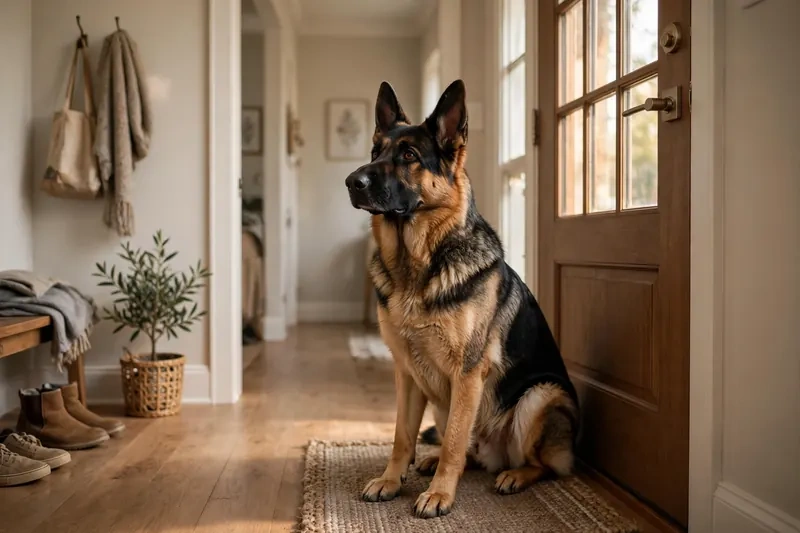
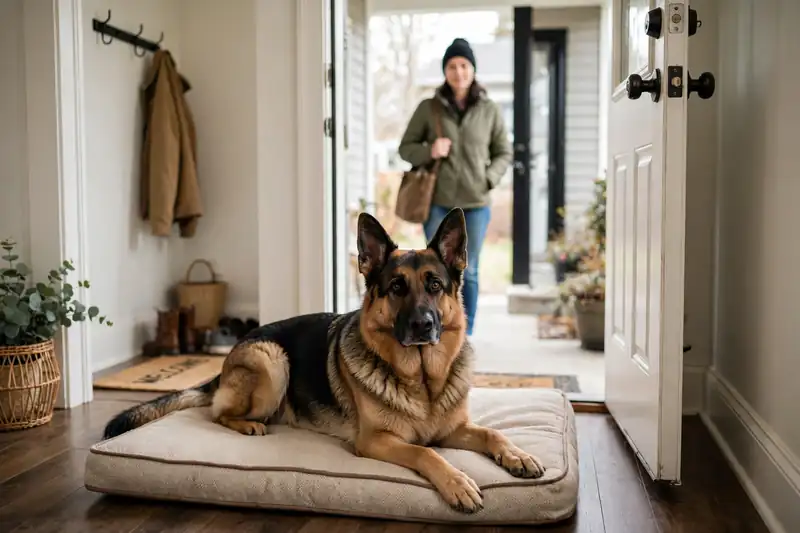
Put a mat where your dog can see the door, but not block it. Lure your dog onto the mat, say place, and reward all four paws on the mat.
Reward settling on the mat, then add distance and time in small steps. Keep early sessions easy, so place feels like a good job.
Step 4: Put It Together With a Helper
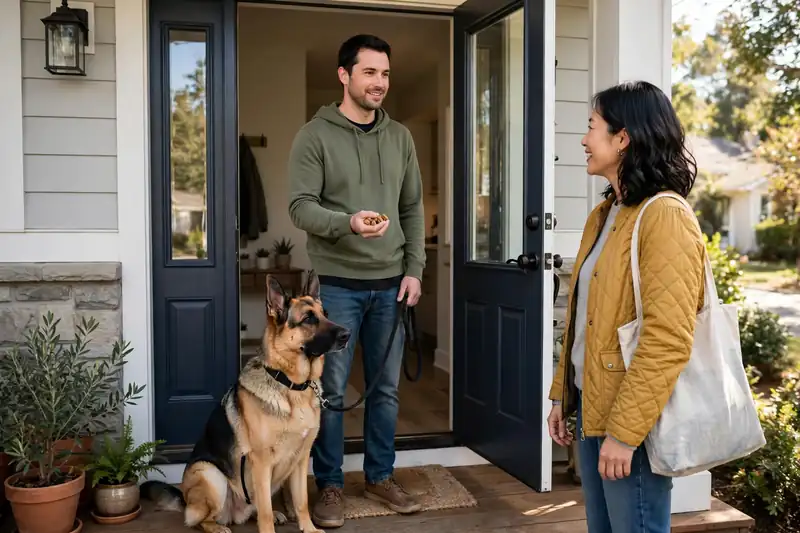
Ask a helper to knock, then leave, while you cue quiet and place. Reward the pause and the mat, before you open the door.
Build in stages: knock with the door closed, then open it a few inches, then greet briefly. If barking returns, go back one stage.
Management That Buys You Peace Between Sessions
Training takes time. Management stops your dog rehearsing the old routine while the new one is still forming.
- Close curtains or use frosted film, so your dog sees less movement outside.
- Use a baby gate to keep distance from the door during real arrivals.
- Keep a treat jar by the door, so rewards are ready at once.
- Use soft background sound to soften footsteps and car doors.
- Stay calm and move slowly, so the door does not feel like an emergency.
Lower the Baseline: Exercise and Mental Work
A dog with unspent energy barks more easily at everything. Give daily walks, sniffing time, play, and short training games.
Mental work matters as much as movement. Food puzzles, scent games, and new cues tire the brain and help your dog settle.
Guest Safety at the Door
Keep guests safe with a leash or barrier until your dog is calm. Ask visitors to ignore your dog at first, and avoid reaching over the dog.
Give children and nervous guests extra space. A large, excited dog can knock a small child over, even when the dog means no harm.
For calm greetings after the barking stops, see our guide to stopping German Shepherd jumping on guests.
What NOT to Do
- Do not shout quiet again and again. Say it once, calmly.
- Do not use shock, prong, spray, or bark collars. They can raise fear without teaching a calm choice.
- Do not open the door while your dog is barking. Wait for a pause, even a brief one.
- Do not rush from calm practice to a delivery driver. Build difficulty in small stages.
- Do not train only when you are frustrated. Practice at calm times with a helper.
A Simple Two-Week Practice Schedule
Use two or three short sessions a day. If a stage is not solid, repeat it before you move on.
| Days | Focus | Goal |
|---|---|---|
| 1-3 | Quiet cue in a calm room | Dog pauses on cue for treats |
| 4-6 | Doorbell recording, low volume plus treats | Dog hears it and looks at you |
| 7-9 | Place on the mat, then mat plus recordings | Dog goes to mat during the sound |
| 10-12 | Helper knocks, door stays closed | One or two barks, then quiet and place |
| 13-14 | Helper knocks, door opens in stages | Dog holds the mat while door opens |
When Barking Signals Anxiety or a Medical Issue
See your vet first if barking started suddenly, changed sharply, or comes with pain, restlessness, or house soiling. Pain and illness can lower tolerance.
Ask a qualified, reward-based behavior professional for help if your dog lunges, snaps, bites, or keeps escalating despite steady training.
Do not wait if aggression is growing or you feel unsafe. A barrier, a leash, and professional guidance protect both your dog and your guests.
Frequently Asked Questions
Should I stop door barking completely?
No. A short alert is normal. Aim for one or two barks, then quiet, then place, so your dog can still warn you calmly.
Will a bark collar help?
No, it is not a good first step. Collars punish sound without changing the feeling behind it, and they can raise anxiety or fear.
How long does it take?
Many dogs improve within a few weeks of short, daily practice. A reliable routine with real guests often takes longer, so track small wins.
Why does my dog only bark at delivery drivers?
A driver approaches, makes noise, and leaves quickly. From your dog’s view, barking made the stranger leave, so the habit repeats.
What about doorbells on TV?
TV sounds are useful practice. Lower the volume, reward quiet, and cue place, just as you would for a real doorbell.
What if my dog lunges at visitors?
Use a leash or barrier, and do not force greetings. Then contact a qualified behavior professional, and ask your vet to check for pain.
The Bottom Line
With patience and steady practice, german shepherd barking at door becomes a shorter alert, then a calm job on the mat. That is a fair goal for a guarding breed.
For night barking, see our night barking guide, for the wider breed picture, see our German Shepherd behavior guide, and for doorbell-only work, see our doorbell barking guide.
Reference
American Kennel Club, “How to Stop Nuisance Dog Barking”: https://www.akc.org/expert-advice/training/how-to-stop-dog-barking/
Still stuck? Get a plan built for your dog.
Answer a few quick questions and get a personalized, force-free training plan in minutes.
Try the Free Dog Tools