How to Stop a Dachshund Digging Up the Garden
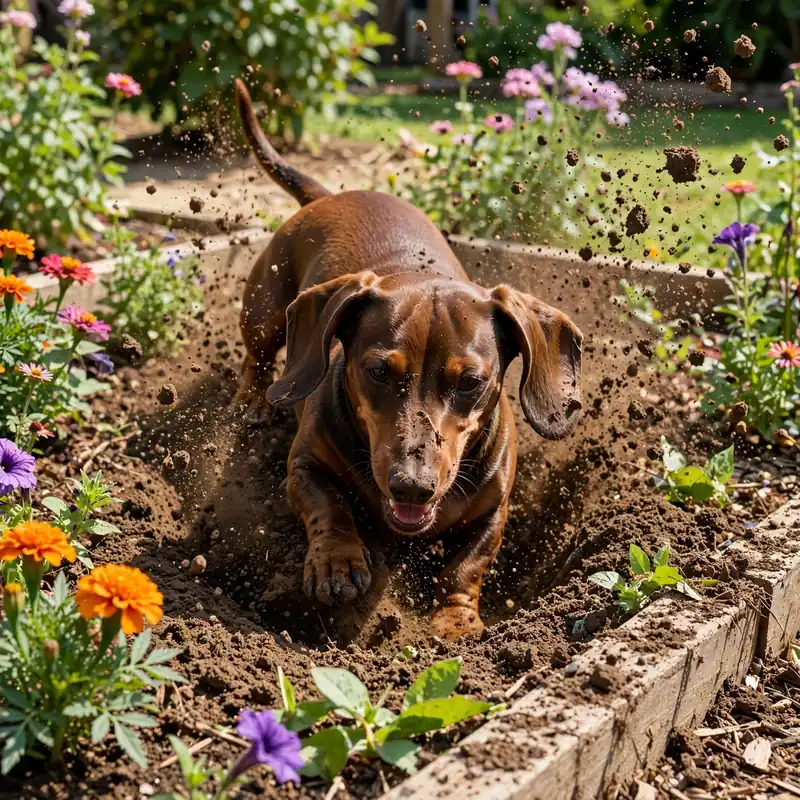
You planted the flower beds on Saturday. By Sunday afternoon they look like a construction site. If you’re wondering how to stop dachshund digging, start with an uncomfortable truth: you chose a dog whose entire breed exists because it was brilliant at digging. Dachshunds were engineered to excavate badgers from underground burrows. Asking one never to dig is like asking a retriever never to fetch.
The good news: you don’t need zero digging. You need digging in the right place. That’s an achievable, even enjoyable project. Here’s how to stop Dachshund digging by working with the instinct, not against it.
Key Takeaways
- Digging is breed instinct, not misbehavior. Dachshunds were literally designed to dig; management plus a legal outlet beats suppression.
- A dedicated dig pit (sand or loose soil, buried treasures) gives the instinct somewhere to go. Most dogs prefer it to your roses within weeks.
- Supervise garden time while training. Every unsupervised dig is practice for the habit you’re trying to change.
- Digging from anxiety or escape attempts is a different problem: fix the underlying cause, not the hole.
Why Dachshunds Dig
It’s the breed’s original job. “Dachshund” means badger dog, and the job description was: go underground, dig, confront the badger. Four hundred years of selection for enthusiastic digging doesn’t evaporate because there’s a patio now. Your dog isn’t being naughty; they’re doing the thing. The American Kennel Club notes this heritage, which is why learning how to stop Dachshund digging means redirecting, not suppressing, the instinct.
Boredom. An under-stimulated Dachshund with a garden and no job will invent one. Digging is self-rewarding: every scrape feels productive, and occasionally something interesting turns up. Boredom digging is scattered, enthusiastic, and usually happens when the dog is left outside alone.
Hunting sounds and smells. Dachshunds hear and smell things you don’t: rodents under the shed, insects in the soil, a neighbor’s cat that crossed the lawn at dawn. Digging at a specific spot, intensely and repeatedly, usually means the dog is after something real, at least in their nose’s opinion.
Comfort. Dogs dig to make cool hollows in hot weather. A Dachshund excavating a shady spot on a summer afternoon is doing canine air-conditioning.
Escape or anxiety. Digging along fence lines, focused and frantic, can mean the dog wants out (boredom, a bitch in season nearby, separation distress) or is anxious. Fence-line digging needs the underlying cause addressed; blocking the hole alone just moves it.
Management: Protect the Garden While You Train
Management buys you time while the new habits form.
Supervise outdoor time. This is the big one. Most garden destruction happens when the dog is outside alone for long stretches. If you’re there, you can redirect the first scrape before it becomes a crater. Dogs don’t dig up gardens they’re never alone in.
Block the hot spots. For favorite digging sites, lay chicken wire flat just under the soil surface, or place large rocks or planters over them. Raised beds are naturally more dig-resistant than ground-level ones. You’re making the wrong spots unrewarding while you build the right one.
Fence lines first. If your dog digs under fences, that’s a safety issue, not just a garden issue. Bury chicken wire in an L-shape along the fence base (down and outward), which defeats digging without harming the dog.
Exercise and enrichment before garden time. A dog who’s had a good sniff walk and a training session is far less likely to excavate. Calm, settled dogs dig less; it’s that simple.
Build a Dig Pit: How to Stop Dachshund Digging the Smart Way
This is the heart of the fix, and it’s the step most guides mention but few explain properly. This is the most effective way to stop Dachshund digging long-term.
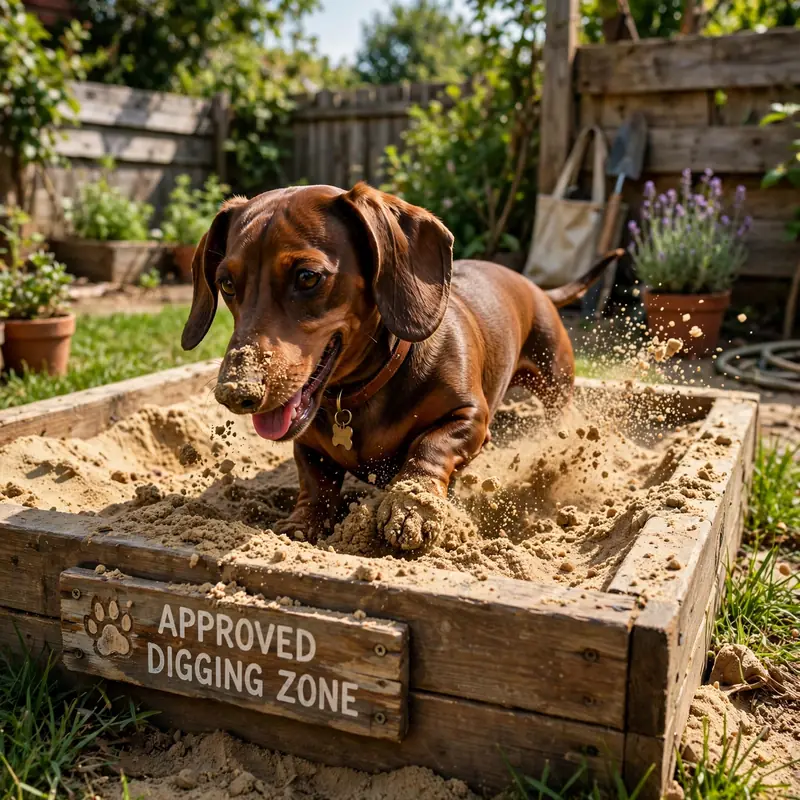
Pick the spot. A corner of the garden you don’t mind sacrificing, ideally with some shade. About a meter square is plenty for a Dachshund.
Build it. Frame it with low wooden boards or stones so it reads as “a place” rather than “the whole garden.” Fill with a mix of play sand and loose soil: sand alone collapses, soil alone goes muddy. About 20–30 cm deep is right.
Stock it. Bury toys, chews, and interesting objects just under the surface. The first sessions should feel like a treasure hunt: the dog digs, amazing things appear. You’ve just made the pit the most rewarding square meter in the garden.
Train it. Take the dog to the pit on leash, encourage digging (“dig dig!” in an excited voice works), and reward enthusiastically when they dig there. If they start digging elsewhere, calmly interrupt and redirect to the pit, then reward. Most dogs develop a clear preference for the pit within a couple of weeks because it’s the only place digging pays off.
Maintain it. Re-bury treasures regularly, keep it clean, and refresh the sand/soil mix occasionally. A stale, empty pit loses to fresh flower beds.

How to Stop Dachshund Digging by Tiring the Nose
Digging is often the nose with nothing better to do. Scent work channels the same instincts into an activity you actually want. A mentally tired Dachshund is the easiest way to stop Dachshund digging.
Beginner nose games. Hide treats around the garden (above ground) and let the dog hunt. Scatter feeding (tossing kibble into grass) turns mealtime into a twenty-minute nose workout.
Scent trails. Drag a treat bag along the ground to lay a trail, then let the dog follow it to a jackpot. This uses the tracking brain the breed was built for.
Burrow beds indoors. For dogs who dig at bedding and sofas, a burrow or cave bed satisfies the dig-and-nest instinct inside the house. Choose one with a low entry suited to short legs and a long back.
A Dachshund with a tired nose is a Dachshund who looks at your petunias with indifference. This is another simple way to stop Dachshund digging.
When Digging Signals Something Else
Anxiety digging is frantic, focused on exit points, and paired with other stress signs (panting, drooling, vocalizing). If your dog only digs when left alone and looks distressed, read our guide to destructive behavior when alone: the hole is a symptom.
Escape digging needs management first (the L-footer wire, supervision) and then the underlying motive addressed: boredom, an intact dog’s urges (discuss timing of neutering with your vet; it’s an individual decision), or something exciting beyond the fence.
Sudden onset digging in a dog who never dug before is worth a vet mention at the next visit, especially if paired with other behavior changes. New compulsive behaviors can have medical contributors. PetMD explains when behavior changes warrant a vet visit, and knowing how to stop Dachshund digging starts with ruling out medical causes.
Common Mistakes
- Punishing after the fact. Dragging the dog to the hole hours later teaches nothing except that you’re unpredictable near holes.
- Filling the hole with the dog’s mess. An old folk remedy with no training value; it just makes the garden disgusting.
- Unsupervised garden access during training. Every solo dig rehearses the habit. Supervise until the pit habit is solid.
- Punishment-based deterrents. Shock mats and similar devices work through fear and can create anxious, unpredictable behavior. Management plus a legal outlet is kinder and more effective.
- Expecting zero digging. You’ll fail, the dog will fail, and everyone will be frustrated. Aim for “digs in the pit,” not “never digs.”

Frequently Asked Questions
Will my Dachshund ever stop digging completely?
Probably not entirely, and that’s okay. The realistic goal is a dog who digs enthusiastically in their pit and leaves the rest of the garden alone. Most owners find the pit satisfies the urge so well that garden digging fades to near zero. The key to stop Dachshund digging is consistency with the pit and management.
My Dachshund digs at the sofa and blankets indoors. Same fix?
Same instinct, different venue. Burrow beds, more daytime mental stimulation, and interrupting/redirecting the indoor digging work well. If it happens when you’re out, it’s likely boredom or anxiety rather than gardening ambition.
Are citrus peels or vinegar deterrents safe?
They’re commonly suggested and generally harmless in the garden, but they’re a weak fix on their own: determined diggers dig through them. Use them as a minor supplement to the pit and supervision, not the plan.
How long does it take to train pit digging?
Most dogs show a clear preference for the pit within two to four weeks of consistent training, faster if you keep it well stocked. Keep redirecting garden digs in the meantime; consistency is what builds the habit.
My dog digs under the fence to escape. What do I do?
Secure the fence line first (buried L-footer wire), then address the motive: more exercise and enrichment, company, or whatever’s driving the escape attempts. An escaping dog is an unhappy dog; the fence fix is safety, the motive fix is welfare.
Is digging a sign my Dachshund is unhappy?
Not usually. For this breed, digging is most often just what they do: instinct plus opportunity. Un unhappy, anxious digger looks different: frantic, fixated, and paired with stress signs. Happy diggers look like they’re having the time of their lives, because they are.
—
If you want to know how to stop Dachshund digging for good, work with the digging instinct instead of against it and the garden survives. For the full breed picture, read the complete Dachshund behavior guide, and for a calmer dog overall, see how to calm a Dachshund down. Browse all Dachshund guides.