Dog Loose Stool and Vomiting: Causes, Home Care and Red Flags
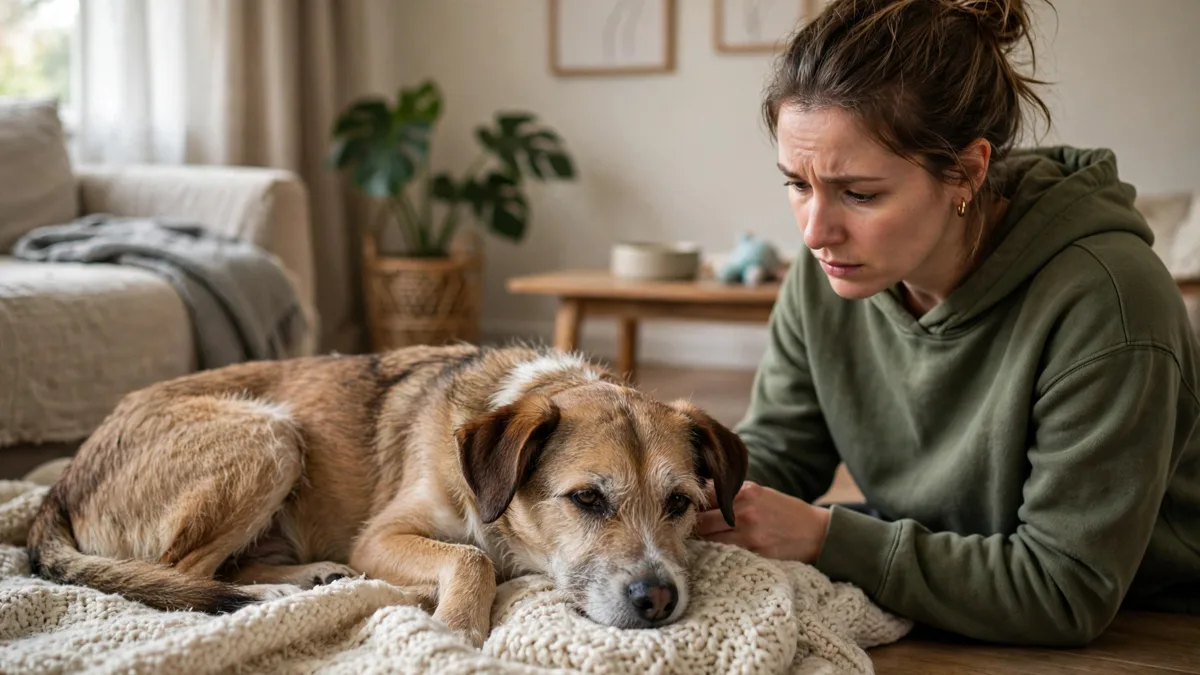
It is worrying to clean up loose stool at one end and vomit at the other. It can happen at night, and it can leave you unsure whether to wait or call your vet.
When dog loose stool and vomiting happen together, the gut is upset at both ends. This guide explains the combination in general terms, and it helps you decide when to seek vet care fast.
Dog Loose Stool and Vomiting: The Direct Answer
In short, dog loose stool and vomiting together often point to a general stomach and gut upset. It does not diagnose a cause on its own. If red-flag signs are present, seek emergency vet care right away.
This guide gives general information only. It does not replace vet advice for your dog. When you are unsure, call your vet and describe what you see.
Key Takeaways
- Loose stool plus vomiting means fluid can be lost at both ends.
- Note timing, food, stool, vomit, drinking, and energy for your vet.
- Never give human medicines, and never force food or water on a vomiting dog.
- Blood, collapse, severe dehydration signs, or vomiting that will not stop need emergency vet care at once.
- Puppies and seniors can worsen fast, so call your vet sooner for them.
- Use calm praise and patience, and ask a vet about pain or sudden change.
What the Combination Can Mean in General Terms
Loose stool means stool that is soft, shapeless, or watery. Vomiting means food, fluid, or foam coming back up. Together, they suggest the digestive tract is irritated, but they do not name one cause.
A mild, short episode can follow something eaten that did not agree with your dog. A severe, repeated, or long episode is different. It can point to a more serious problem, so watch the pattern closely.
Color and form can help your vet, but they do not prove a diagnosis. Yellow foam, for example, can appear when the stomach is empty. Blood or black, tarry stool is a red flag, not a home-care sign.
Common Causes in General Terms
The most common general causes of dog loose stool and vomiting include food-related upsets, infections, and swallowed objects. Stress, a sudden food change, and some health conditions can also play a part.
| Possible group | What owners often notice | What to do |
|---|---|---|
| Food that did not agree | Loose stool and vomiting after scavenging or rich food | Watch closely and call your vet for advice |
| Sudden food change | Upset after a new food or treat | Change foods gradually, with vet advice |
| Parasites or infection | Ongoing loose stool, sometimes with vomiting | Ask your vet about testing, not guessing |
| Swallowed object or toxin | Repeated vomiting, pain, or a swollen belly | Seek urgent vet care |
Some causes are less common, such as inflammation of the pancreas or problems with other organs. These cannot be sorted out at home. Only a vet can assess your dog and plan next steps.
If signs keep returning, keep a simple log. A pattern over days helps your vet more than one bad morning alone.
Puppies, Seniors, and Small Dogs Need Faster Help
Puppies dehydrate faster than healthy adults, because their fluid reserves are small. Seniors and very small dogs can also worsen fast. For these dogs, do not wait and see for a day.
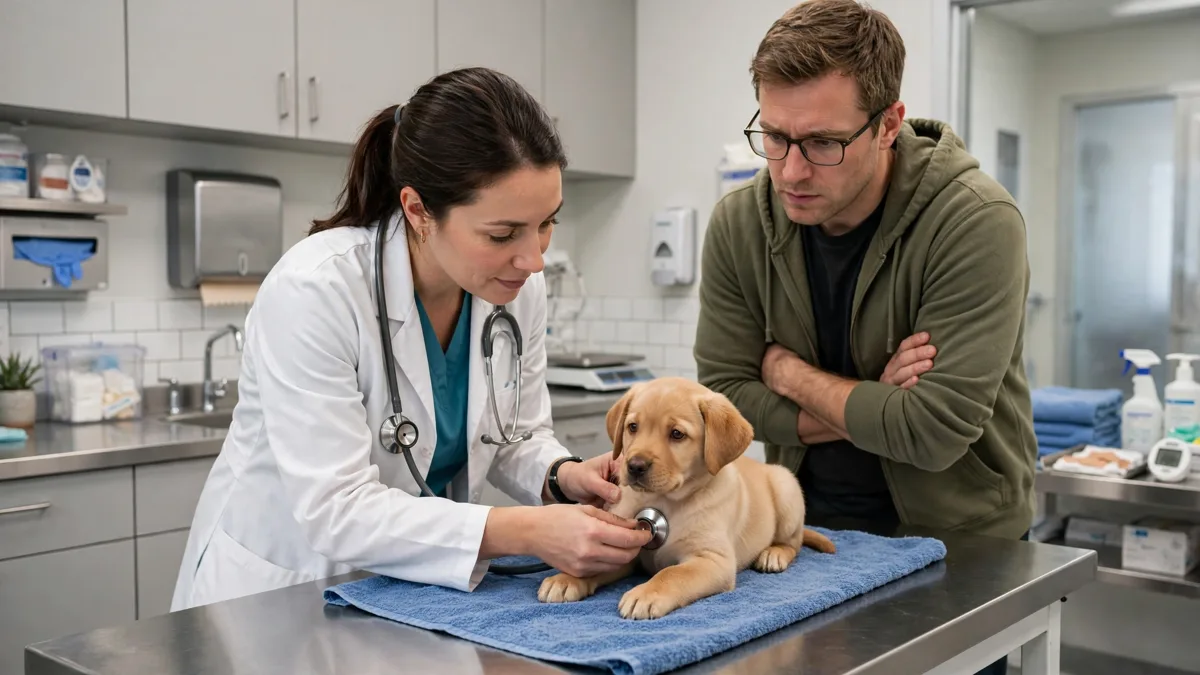
Call your vet promptly if a puppy, senior, or small dog has both signs. Describe age, size, and how fast signs changed. Ask what to do next, and follow that advice.
What to Observe and Note for Your Vet
For dog loose stool and vomiting, clear notes help your vet a lot. You do not need perfect detail. Short, honest notes about timing and change are enough.
- When signs started, and how often they happen
- What your dog ate, including scraps, new food, or items found on a walk
- Stool form and color, and whether you saw blood or black, tarry stool
- Vomit form, color, and whether food, fluid, or foam came up
- Drinking, eating, energy, and toilet habits
- Any pain, weakness, or sudden behavior change
Bring a photo or sample only if your vet asks for one. Do not delay a vet visit to collect it. Your notes and your dog’s current state matter most.
What NOT to Do
- Never give human medicines, or medicine left over from another dog.
- Never force food or water on a dog that is vomiting.
- Never delay vet care when red-flag signs are present.
- Never punish vomiting, accidents, or food refusal. Stay calm and use praise and patience.
- Never use dominance or alpha framing, and never use shock or prong collars.
- Never try a fast or a new diet on your own. Ask your vet first.
If you are unsure about food, water, or medicine, ask your vet first. A short vet call is safer than guessing at home.
When to Seek Emergency Vet Care Immediately
With dog loose stool and vomiting, do not wait if any sign below is present. Call ahead if you can, then go to an emergency vet at once.
- Blood in vomit or stool, or black, tarry stool
- Vomiting that will not stop, or repeated vomiting over a few hours
- Collapse, extreme tiredness, or weakness
- Severe dehydration signs, such as dry, tacky gums, sunken eyes, or very low energy
- A swollen, hard, or painful belly
- Inability to keep water down
- Puppies or seniors that are worsening fast
When in doubt, choose the faster option. A vet would rather hear from you early than late, especially with this combination.
Checking for Dehydration Signs at Home
Dehydration is a key risk when fluid is lost at both ends. Two simple checks can help you describe what you see to your vet. They do not replace a vet assessment.
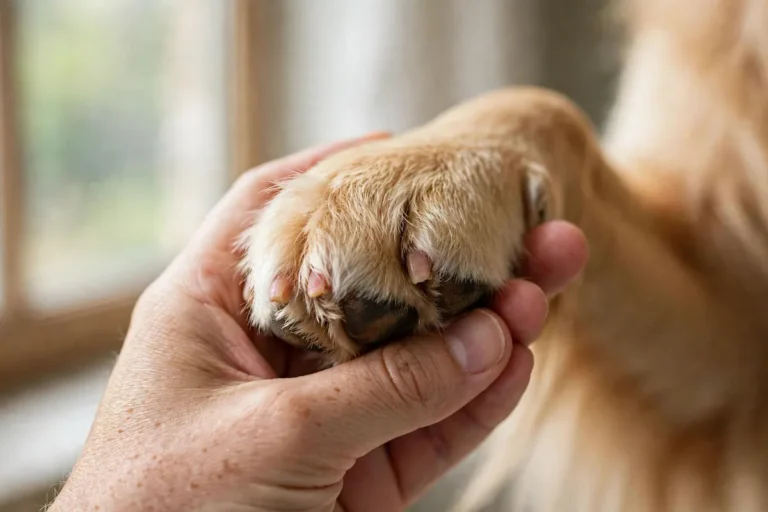
First, look at the gums. They should look pink and moist in most dogs. Dry, tacky gums, or gums that look pale, are a reason to call your vet promptly.
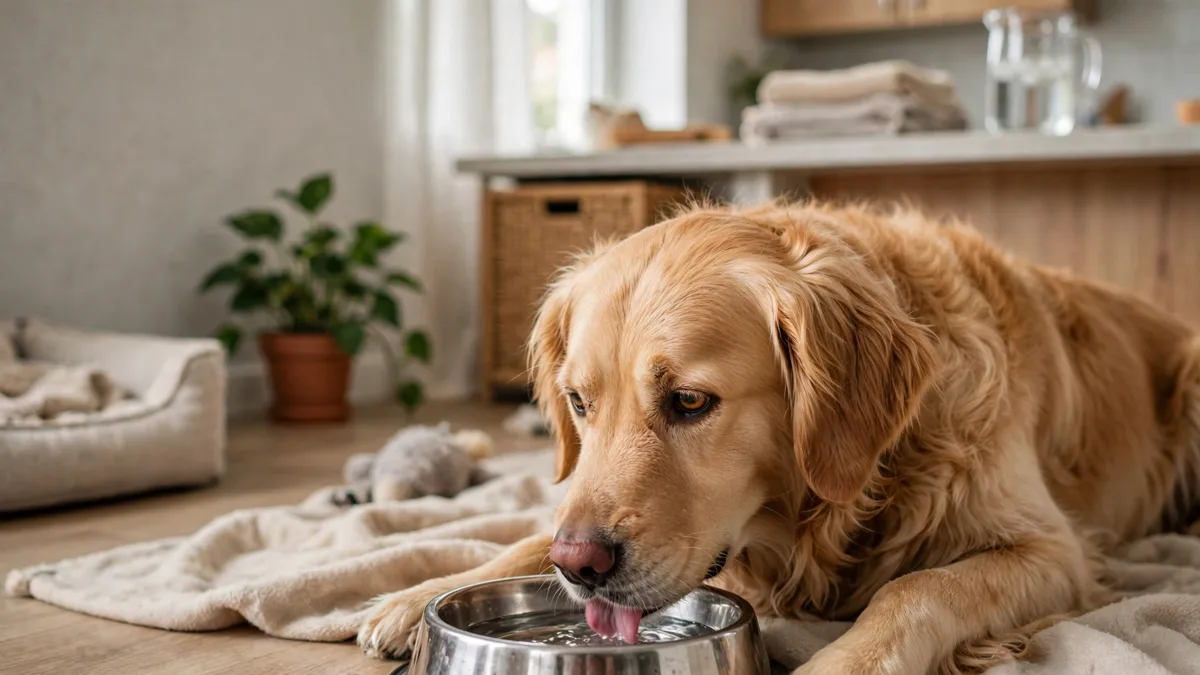
Second, gently pinch skin over the shoulders and let go. In a well-hydrated dog, it usually springs back quickly. Slow return, or much less urine than usual, is worth reporting to your vet.
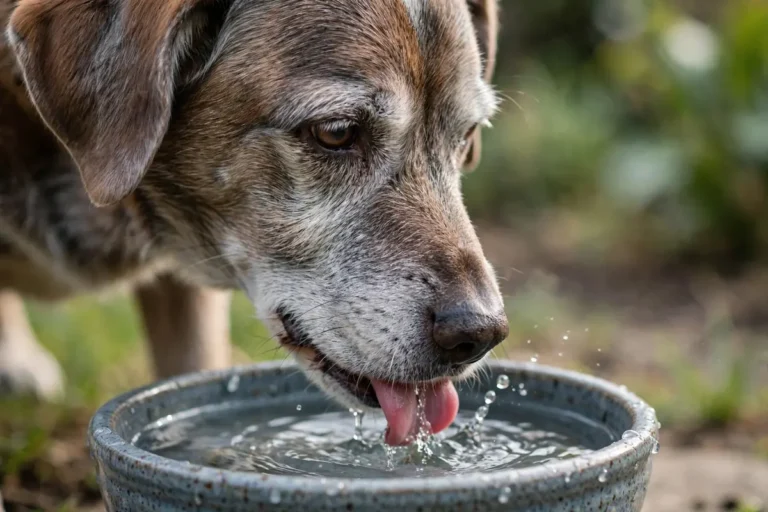
Do not force water if your dog is vomiting. Call your vet for advice on fluids, and follow that advice.
What the Vet May Do in General Terms
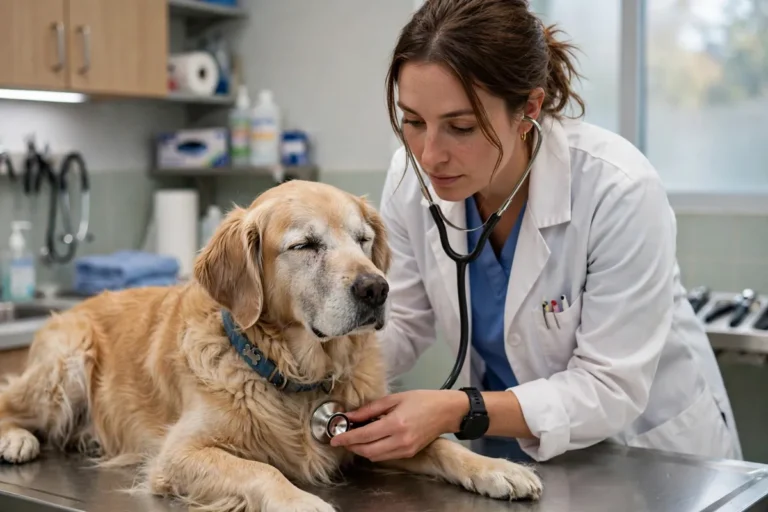
A vet visit often starts with questions and a physical check. Your notes on timing, food, and change help here. The vet may also ask about vaccines and recent walks or scavenging.
Tests may include a stool test, blood tests, or imaging, depending on severity. These checks help the vet narrow the cause. Treatment depends on what the vet finds, so do not expect one fixed plan.
Bland Food, With Vet Guidance
Ask your vet first about bland food. Plain boiled chicken and plain white rice are common examples vets discuss for mild cases. Serve food plain, with no seasoning, onion, or garlic.
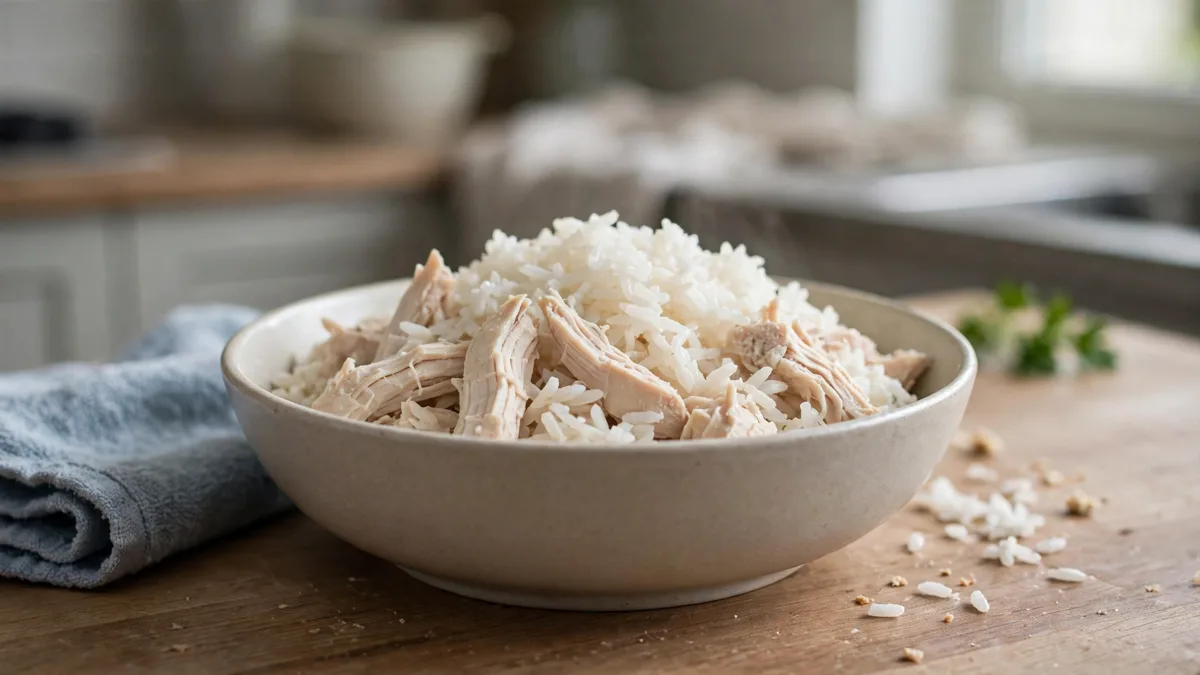
Do not switch to a new diet during an upset unless your vet advises it. Keep meals small and plain, and return to vet advice if vomiting comes back.
Frequently Asked Questions
How long can vomiting and loose stool last?
A mild episode may improve within a day, and it may clear over a few days. Vomiting that will not stop, or signs that worsen, need vet care sooner. Do not wait for a fixed deadline if red flags appear.
Can I offer plain food or broth at home?
Ask your vet first. Some vets suggest plain, bland food for a mild case in a healthy adult dog. Offer only what your vet advises, and stop if vomiting returns.
Should I fast my dog?
Do not fast your dog on your own. Ask your vet first, especially for puppies, seniors, or small dogs. Your vet can advise what is safe for your dog.
What if my dog is acting normal?
Energy and appetite are reassuring signs, but they can change fast. Keep watching closely, and call your vet if signs return, worsen, or last longer than expected.
When can my dog return to normal food?
Ask your vet first. A gradual return to usual food is common once stools firm up. Move slowly, and go back to vet advice if signs return.
Is pumpkin or a probiotic helpful?
Plain pumpkin and probiotics are talked about for gut health, but they are not a diagnosis or a treatment plan. Ask your vet first about what suits your dog.
The Bottom Line
In short, dog loose stool and vomiting can be worrying, but clear notes and prompt vet advice help a lot. Watch for red flags, and do not delay care when they appear.
Stay calm, use praise and patience, and ask a vet about pain, sudden change, or aggression. A vet or a qualified behavior professional can help with sudden behavior change.
For related BreedFix guidance, see our guide to the anal glands of dogs, dogs and Addison’s disease, and the small golden retriever.
Reference
American Kennel Club, Dog Diarrhea: Signs, Symptoms, and Treatments.
Still stuck? Get a plan built for your dog.
Answer a few quick questions and get a personalized, force-free training plan in minutes.
Try the Free Dog Tools