

Can Dogs Eat Raw Eggs? Safety, Risks and How Many Are OK
Few dog-feeding questions start more arguments than this one. Someone cracks a raw egg over kibble, posts it online, and the comments split into two camps.
So, can dogs eat raw eggs? The short answer is: they can, but most veterinarians recommend cooked eggs instead. Raw eggs carry real risks that cooking removes completely.
This guide covers the benefits, the three real risks, eggshells, serving sizes, and the safest way to feed eggs. Every claim here follows guidance from the American Kennel Club and practicing veterinarians.
The Quick Answer: Yes or No?
Can dogs eat raw eggs, yes or no? Technically yes, a healthy adult dog can eat a raw egg without immediate harm in most cases.
But “can” is not the same as “should.” Most vets advise against raw eggs because the nutrition is identical once cooked, while the risks disappear.
Think of it this way: cooked eggs give your dog 100% of the benefit with almost none of the risk. That trade is hard to argue with.
Are Eggs Good for Dogs?
Yes. Eggs are one of the most nutritious foods you can share with a dog. They provide complete, highly digestible protein that supports muscles, skin, and coat.
According to the AKC, eggs contain fatty acids, folate, iron, riboflavin, selenium, and vitamins A and B12. Few single foods pack that much nutrition into 70 calories.
The yolk does most of the heavy lifting. It carries the fat-soluble vitamins A, D, E, and K, healthy fats, and biotin, which supports skin and coat health.
Can Dogs Eat Raw Eggs Safely? The 3 Real Risks
1. Salmonella
Raw eggs can carry salmonella bacteria, on the shell or inside the egg itself. Dogs are not immune, and an infection (salmonellosis) can cause fever, vomiting, diarrhea, and lethargy.
The risk extends to your family too. Owners who handle raw eggs, bowls, and waste can be exposed to the same bacteria.
Puppies, senior dogs, and dogs with weak immune systems face the highest risk. For them, raw eggs are a clear no.
2. Biotin Deficiency From Raw Egg Whites
Raw egg whites contain a protein called avidin. Avidin binds to biotin, a B vitamin dogs need for healthy skin, metabolism, cells, and digestion, and blocks its absorption.
One raw egg will not cause a deficiency. The problem builds when raw whites are fed in large amounts over a long period.
Cooking deactivates avidin completely. It is one more reason the cooked route is simpler and safer.
3. Bacteria in Older Eggs
Eggs do not stay fresh forever. As an egg ages or sits out, harmful bacteria can multiply, and a spoiled egg can make a dog sick.
If you ever do feed raw, freshness and refrigeration are non-negotiable. When in doubt, throw it out and cook a fresh one instead.
Can Dogs Eat Egg Yolk Raw?
The raw yolk is the part owners ask about most, and it is the more nutritious half of the egg. Yolks carry vitamins A, D, E, and K, fatty acids, and biotin.
Feeding a raw yolk avoids the avidin problem, because avidin lives in the white. But the yolk does not escape the salmonella risk.
If you choose to feed raw yolk, use the freshest eggs you can, serve immediately, and wash the bowl and your hands afterwards.
Cracked Raw Egg Over Dog Food: The Trend Explained
Cracking a raw egg over dog food is a popular topper, especially in raw-feeding communities. It boosts protein, adds shine to the coat, and most dogs love the taste.
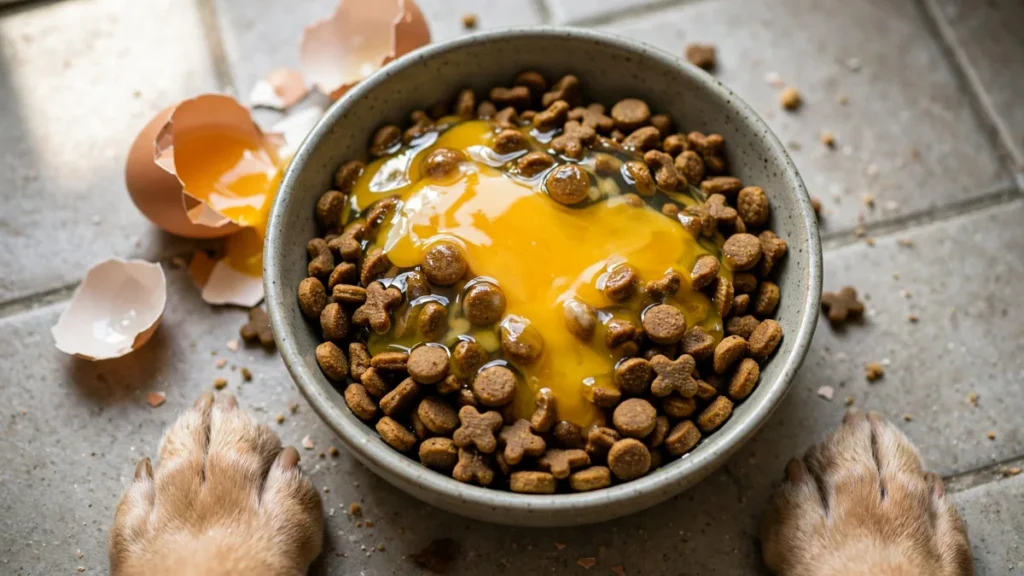
Search “can dogs eat raw eggs Reddit” and you will find hundreds of owners who do it daily with no problems. Those stories are real, but they are anecdotes, not safety data.
Dogs can also carry and shed salmonella without looking sick. That is the part forum threads rarely mention: your dog may cope while the bacteria spreads around your home.
Store Eggs vs Eggs From Your Own Chickens
Can dogs eat raw eggs from my chickens? Backyard eggs feel safer, and they are often fresher. But fresh does not mean sterile, and home flocks can carry salmonella too.
Store-bought eggs carry the same basic risk. Whether your eggs come from a supermarket in the UK, Australia, or the US, the biology does not change.
Wherever your eggs come from, wash your hands after handling shells. And if you buy commercial dog food, our Pet Food Recall Checker helps you check for open FDA recalls.
Can Dogs Eat Raw Eggs Every Day?
No. Even cooked eggs should not be a daily habit for most dogs, and raw eggs every day raise the avidin and bacteria exposure for no extra benefit.
Eggs are a treat or topper, not a staple. A good rule is that extras like eggs stay under 10% of your dog’s daily calories.
One large egg has about 70 calories. For a small dog, that is a big slice of the day’s budget, which is why portion size matters.
How Many Eggs Can a Dog Eat in a Week?
How many eggs can a dog eat in a week depends on size, age, activity level, and overall health. The AKC advises asking your vet if you are unsure.
As a general guide for cooked eggs fed two to three times per week: extra-small dogs do well with a quarter of an egg per serving.
Small dogs can have half an egg per serving. Medium and large dogs can usually have one whole egg, and giant breeds up to two.
Dogs with obesity, pancreatitis, or other health conditions may need to skip eggs or eat far fewer. High-fat foods can aggravate those conditions, so check with your vet first.
Can Dogs Eat Boiled Eggs?
Yes, and this is the option vets recommend most. Can dogs eat boiled eggs safely? Absolutely, as long as they are fully cooked and served plain.

No butter, oil, salt, or seasoning. Peel off the shell (unless you are preparing it separately, below) and chop the egg into bite-size pieces to prevent choking.
Scrambled and poached eggs are fine too, cooked plain and all the way through. Think of boiled eggs as the zero-risk way to give every benefit in this article.
Can Dogs Eat Egg Shells?
Can dogs eat egg shells? Yes, with preparation. Eggshells are a natural source of calcium, which supports bones and teeth, and the inner membrane contains collagen.

Never serve large, sharp shell pieces. They can injure the mouth and throat, irritate the gut, and pose a choking risk.
The safe method: rinse the shells, bake them until dry and brittle, then grind them to a fine powder. A small sprinkle over food is plenty; too much calcium unbalances the diet.
What If My Dog Already Ate a Raw Egg?
Do not panic. Most healthy adult dogs handle a single raw egg with no symptoms at all, especially if it was fresh.
Watch for vomiting, diarrhea, loss of appetite, or unusual tiredness over the next 24 to 48 hours. Those are the signs vets associate with salmonellosis.
Call your vet if symptoms appear, if your dog is a puppy or senior, or if your dog ate a large amount of raw egg white over several days.
Frequently Asked Questions
Can dogs eat raw eggs safely?
Not completely. Raw eggs carry salmonella risk, and raw whites contain avidin, which blocks biotin absorption over time. Cooked eggs deliver the same nutrition without those risks, which is why most vets recommend them.
Can dogs eat raw eggs in their food every day?
No. Eggs should stay under 10% of daily calories and work best as a topper two to three times per week. Daily raw eggs increase bacteria and avidin exposure with no added benefit.
Can dogs eat raw eggs in the UK or Australia?
The answer is the same everywhere. Raw eggs carry salmonella risk in the UK, Australia, and the US alike. Local food-safety agencies in all three countries advise cooking eggs thoroughly for safety.
How many eggs can a small dog eat?
A small dog does well with about half a cooked egg per serving, two to three times a week. Start with a smaller amount the first time and watch for any stomach upset.
Are raw eggs good for a dog’s coat?
Eggs support coat health thanks to protein, fatty acids, and biotin. But cooked eggs provide the same coat benefits, and cooking also protects the biotin in the yolk by deactivating avidin in the white.
The Bottom Line
Can dogs eat raw eggs? They can, but the honest answer is that there is no good reason to. Cooked eggs give the same protein, vitamins, and coat benefits with the risks cooked away.
Boil or scramble them plain, serve the right portion for your dog’s size, and keep eggs as a twice-a-week topper rather than a daily habit.
If your dog has health issues or you are building a homemade diet with eggshells, loop in your vet. And for more everyday guidance on feeding and care, see our guide to the benefits of having pets at home.
For more vet-backed feeding guidance, see the American Kennel Club’s guide to feeding dogs eggs.