Natural Home Remedies for Dog Paw Yeast Infection
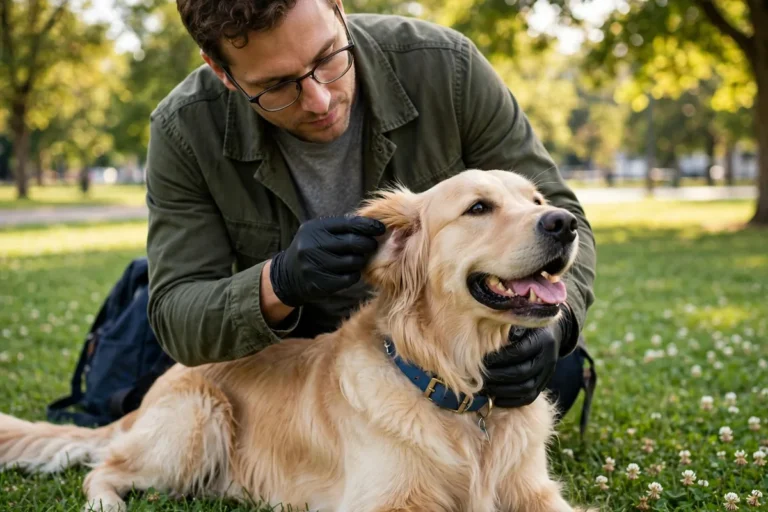
If your dog keeps licking its paws, and the skin between the toes looks red and smells musty, yeast overgrowth may be part of the problem. Only a vet can confirm that diagnosis, so home care works best as gentle support, not as a replacement for vet care.
In this guide, natural home remedies for dog paw yeast infection are described only as comfort care for mild, vet-diagnosed cases. You will learn what to look for, what may help, and when to stop home care and call your vet.
Key Takeaways
- Yeast normally lives on dog skin in small numbers. Problems start when it overgrows in warm, damp paw skin.
- Licking, redness between the toes, a musty smell, and brownish discharge are common signs to watch for.
- Keep paws clean and dry, and use only gentle, well-diluted soaks on intact skin.
- Never use harsh chemicals, and never use a human antifungal product without vet advice.
- Call your vet for sores, swelling, limping, spreading redness, a worsening smell, or no improvement.
Natural Home Remedies for Dog Paw Yeast Infection: The Direct Answer
For a mild, vet-diagnosed case, natural home remedies for dog paw yeast infection may help soothe itchy paws and support comfort. They work best with drying, hygiene, and a vet-guided plan.
They do not guarantee a cure, and they do not replace a vet check. If signs are new, severe, or getting worse, book a vet visit first.
What Paw Yeast Overgrowth Looks Like
A small amount of yeast normally lives on dog skin. When paws stay warm and damp, yeast can overgrow and irritate the skin between the toes.
Licking adds more moisture, so the cycle can keep going. That is why drying matters as much as any soak.
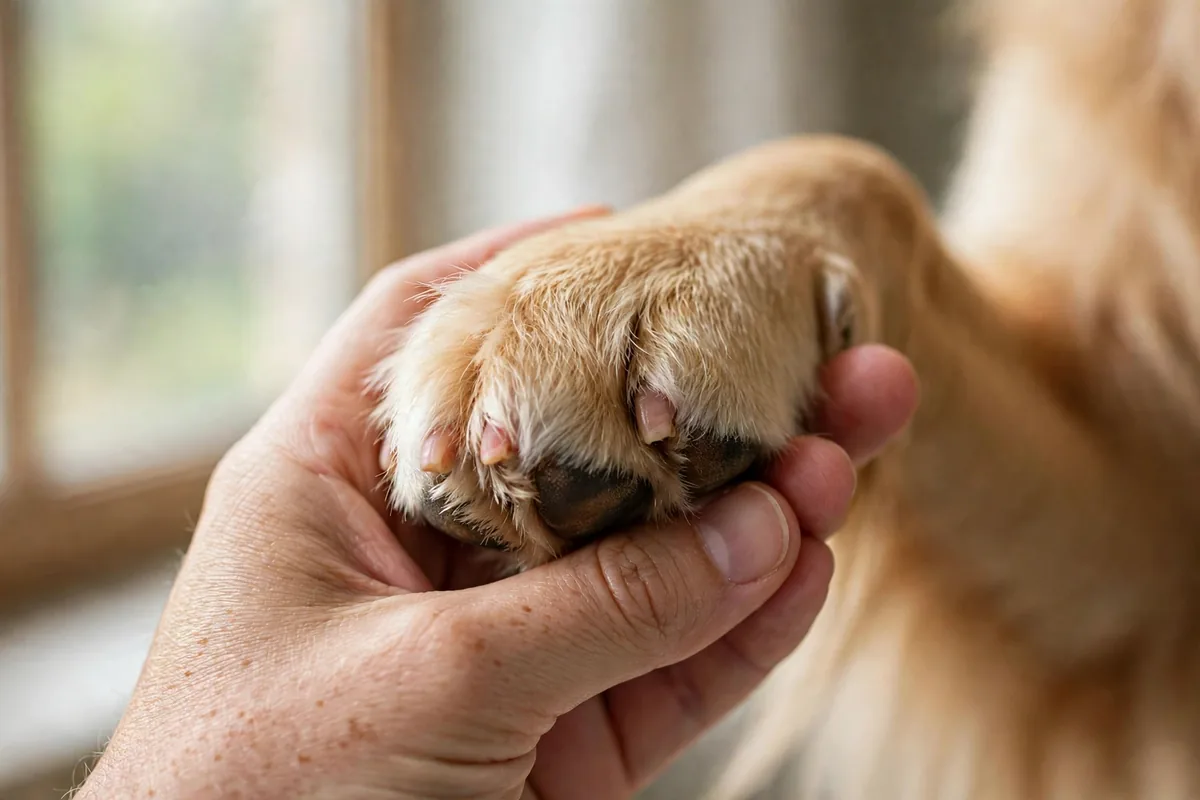
Watch for this combination of signs:
- Persistent licking, chewing, or biting at the paws, often focused between the toes
- Red or pink skin between the toes or on the paw pads
- A musty odor, often described as smelling like corn chips
- Brownish or rust-colored discharge around the nail beds or between toes
- Greasy, flaky, or scaly skin on the feet
- Hair loss around the paws from frequent chewing
- Thickened, darkened skin in long-standing cases
One sign alone may mean something else. Itching plus redness plus a musty smell is a pattern worth showing your vet.
If your dog licks its own paws a lot, our guide to why dogs lick feet can help you spot whether licking is focused, constant, or paired with other changes.
Common Triggers
Yeast rarely overgrows for no reason. A trigger often keeps paws damp, irritated, or slow to heal.
- Moisture. Paws that stay damp after wet grass, swimming, or baths create a welcoming place for yeast.
- Allergies. Environmental or food allergies can inflame skin, and yeast can then overgrow as a second problem.
- Skin folds and coat type. Hairy feet and skin folds can trap moisture and reduce airflow.
- Health and stress. Illness, some medicines, and ongoing stress can make overgrowth more likely.
Treating only the surface, without checking the trigger, is one reason flare-ups return. Ask your vet about the pattern you see.
Get a Vet Diagnosis First
Home care in this guide is for mild cases that a vet has already diagnosed. A vet can check the skin and rule out other causes, such as bacteria, injury, or allergy.
Do not try to diagnose yeast at home from smell alone. Other paw problems can look very similar, and they may need different care.
Gentle Home Care That May Help
For mild cases, natural home remedies for dog paw yeast infection work best as short, gentle routines, not as strong treatments. Use them calmly, watch your dog closely, and stop if irritation grows.
1. Diluted Apple Cider Vinegar Paw Soak
A well-diluted vinegar soak may help soothe mild irritation. Never use undiluted vinegar, and never use it on broken skin.
Soak only intact paws for a short time, then rinse with clean water and dry fully between the toes. Stop at once if your dog shows pain or more redness.
2. A Simple Drying Routine After Walks
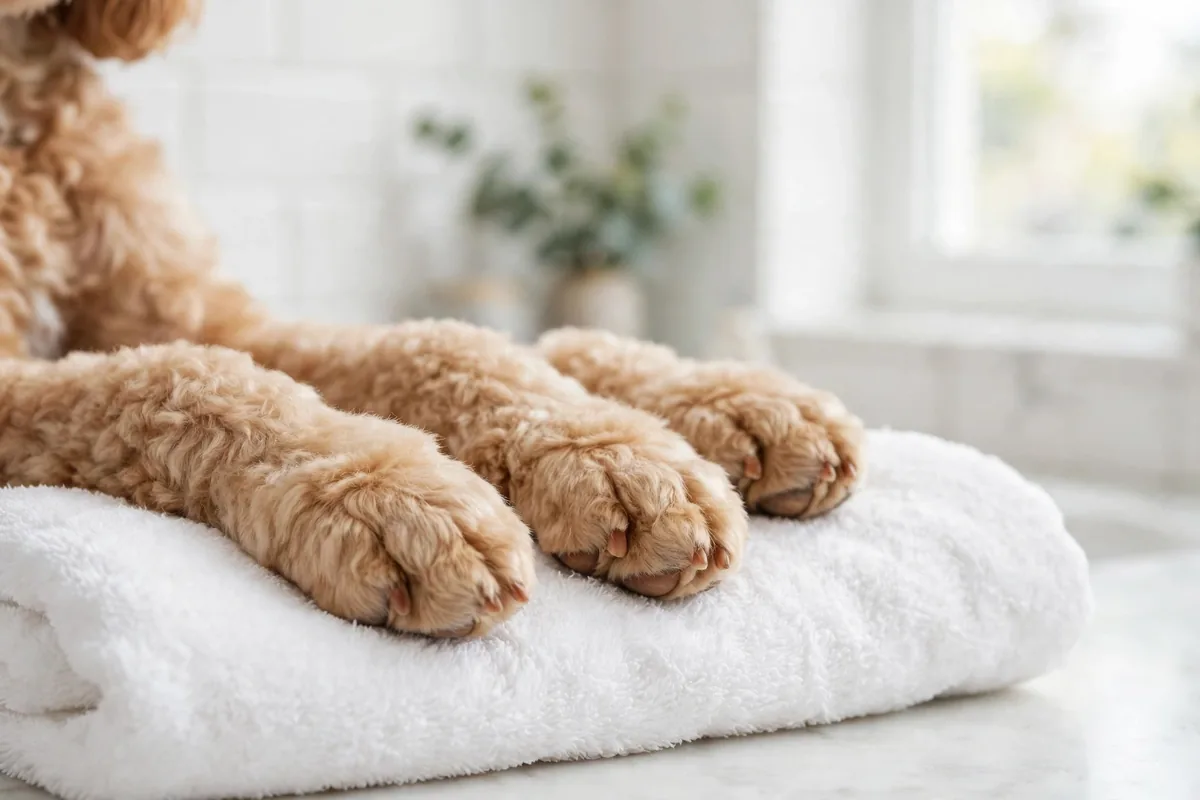
Drying is simple, but it matters most. Yeast loves damp skin, so dry paws are less inviting for overgrowth.
- Rinse or wipe paws after walks, especially in wet or muddy conditions.
- Pat dry, then check between the toes with a soft towel.
- Keep the fur between the toes trimmed short so air can reach the skin.
- Wash bedding often, so paws rest on a clean surface.
3. Coconut Oil in a Thin Layer
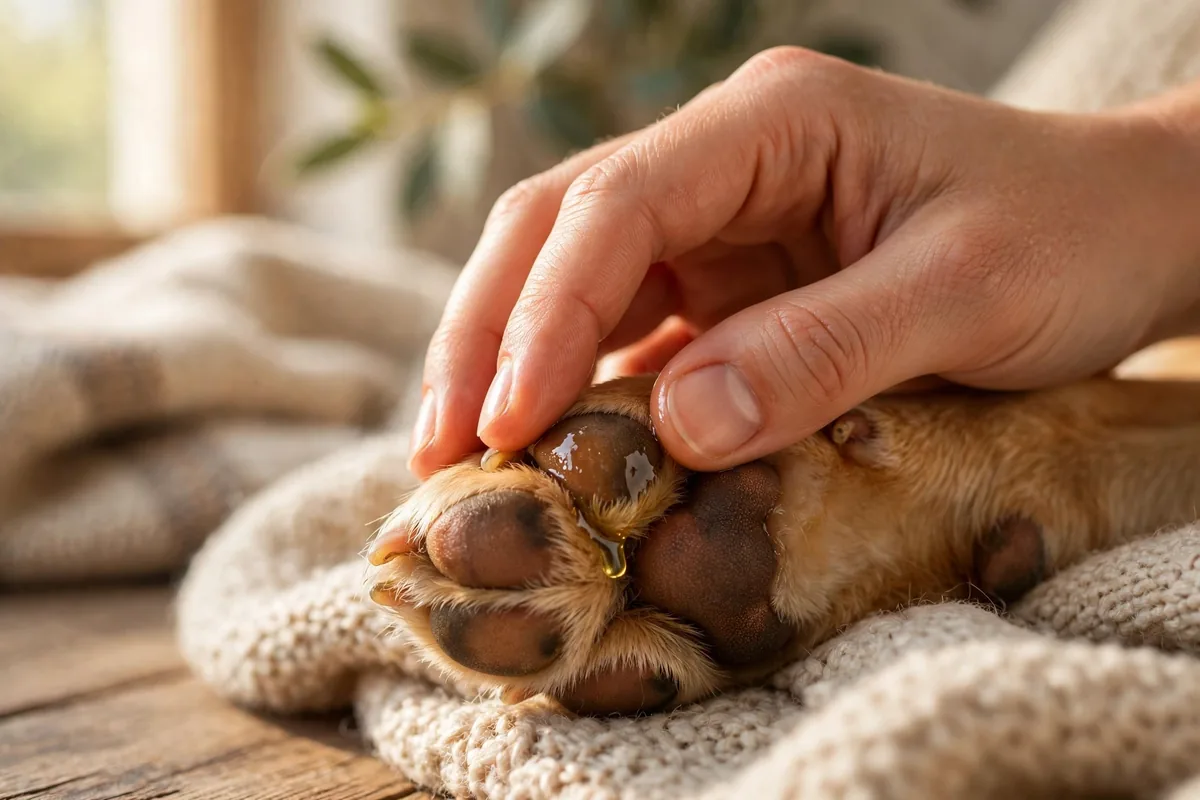
A thin layer of plain, virgin coconut oil may help moisturize dry, irritated paw skin. Use only a small amount, and watch for licking.
Coconut oil is also used for a dry cracked dog nose, but paws need an even thinner layer so the skin does not stay greasy.
If your dog licks it off at once, try a short calm activity with praise after you apply it. Do not scold licking, and do not use scented oils.
4. Paw Soaks and Baths: Keep Them Gentle
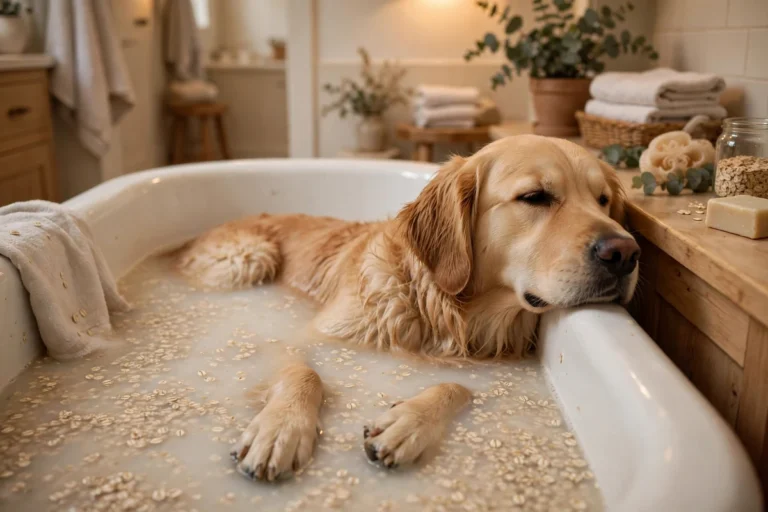
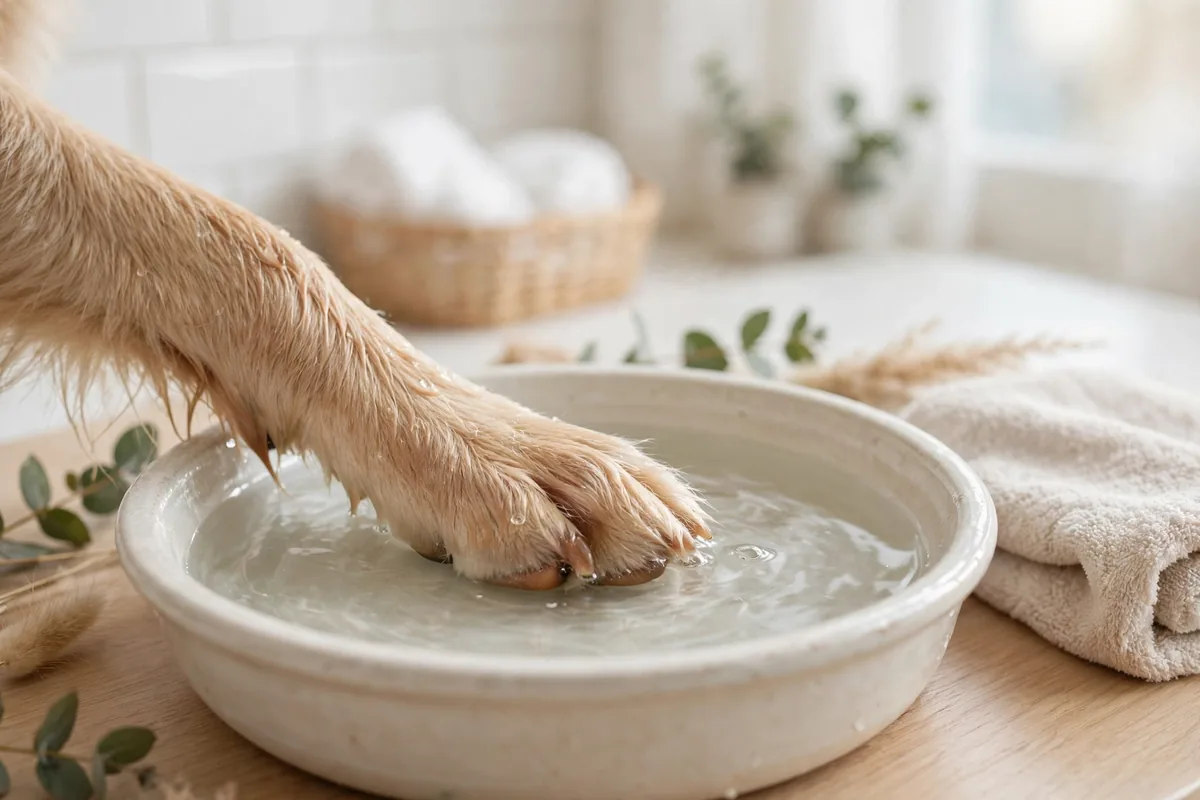
A warm water soak or a gentle bath may help remove dirt and soothe paws. Keep water warm, not hot, and keep sessions short and calm.
Use only a wash your vet has approved for your dog, and rinse well. Dry fully after every bath, because leftover moisture feeds yeast.
5. Support From Food and Daily Habits
A complete, balanced diet supports skin health in general. Ask your vet before adding any supplement, including a probiotic product.
Keep play, rest, and walks steady, and reward calm paw handling with praise and a treat. Positive reinforcement makes checks easier over time.
What NOT to Do
- Do not pour undiluted vinegar, hydrogen peroxide, or alcohol on irritated paws.
- Do not use human antifungal products without vet advice.
- Do not use essential oils or scented products unless your vet guides you.
- Do not keep treating at home for weeks with no improvement.
- Do not punish licking, and do not use shock or prong collars. Use praise and redirection instead.
Harsh products can sting, dry the skin, or make irritation worse. When in doubt, stop and ask your vet.
When Paw Problems Need Vet Attention Urgently
Call your vet promptly if you see any sign below. Do not wait to see if it settles on its own.
- Sores, swelling, or bleeding
- Spreading redness up the leg
- Limping, severe pain, or reluctance to walk
- A bad odor that gets worse
- No improvement after steady home care
- Repeated flare-ups
- Pain, a sudden change, or aggression when paws are touched. For these, ask your vet or a qualified behavior professional.
A Simple Daily Paw-Care Routine
A short routine is easier to keep up than a long one. Use this pattern on days when your vet has approved home care.
| Step | How it may help | Watch out for |
|---|---|---|
| Drying routine | Removes dampness that yeast loves | Missed moisture between toes |
| Diluted vinegar soak | May soothe mild irritation | Stinging on broken or raw skin |
| Coconut oil, thin layer | May moisturize dry skin | Licking and greasy buildup |
| Vet-approved wash | Cleans dirt from paws | Harsh products and poor rinsing |
Preventing Future Flare-Ups
Prevention is mostly about keeping paws dry, clean, and checked. Small habits, done often, help more than one strong treatment.
After walks in grass or brush, check paws and between toes, just as our guide to getting rid of dog ticks naturally suggests a check after every outing.
- Dry paws fully after water, baths, and wet walks.
- Keep toe fur trimmed and bedding clean.
- Watch for allergy patterns, and discuss them with your vet.
For dogs with repeated flare-ups, natural home remedies for dog paw yeast infection should stay part of a vet-guided plan, not a stand-alone fix.
Frequently Asked Questions
How can I tell a yeast problem apart from allergies?
They often occur together. Allergies alone tend to cause itching and redness without a strong musty smell.
Yeast often adds smell, greasy or flaky skin, and discharge between toes. Your vet can check both causes.
How long may mild cases take to improve?
With steady, gentle care, many mild cases look calmer over a week or two. That is a general pattern, not a promise.
If there is no steady improvement, contact your vet. A change of plan may be needed.
Can I use apple cider vinegar on my dog’s paws every day?
A well-diluted soak can be used for a short period during a mild flare, if your vet agrees and skin stays calm.
Stop if redness grows, and never use it on broken skin. For prevention, drying and checks matter more than daily soaks.
Is coconut oil safe if my dog licks it off?
A thin layer is usually licked in a small amount. A large amount can upset the stomach, and licking adds moisture back to paws.
Use a thin layer, then offer a short calm activity with praise.
Can diet cause paw yeast problems?
Diet alone rarely causes yeast directly. Food sensitivity can inflame skin and set the stage for overgrowth.
If flare-ups keep returning, ask your vet about a dietary check rather than guessing.
Should my dog wear boots to prevent paw yeast problems?
Boots can protect healing paws from mud for a short time. Worn all day, they can trap moisture and make yeast worse.
Clean, dry, bare paws with trimmed toe fur are usually the better everyday choice. Ask your vet if boots fit your dog.
The Bottom Line
In short, natural home remedies for dog paw yeast infection may help comfort, but vet care leads the plan. Keep paws dry, watch for warning signs, and let your vet guide the next step.
This article is for general information only and is not veterinary advice. If you are unsure what is affecting your dog’s paws, or if symptoms are severe or persistent, please see your veterinarian.
Reference
American Kennel Club, Yeast Infections in Dogs: Signs, Symptoms, Treatments.
Still stuck? Get a plan built for your dog.
Answer a few quick questions and get a personalized, force-free training plan in minutes.