

Can Dogs Eat Pineapple? Benefits, Risks and Serving Guide
Can dogs eat pineapple? Yes. Fresh, raw pineapple is a safe and genuinely nutritious treat for most dogs, as long as you prepare it properly and keep portions small.
It is sweet, hydrating, and packed with vitamins, and most dogs love the taste. But pineapple also carries real sugar, and two parts of the fruit are dangerous enough to keep well away from your dog.
This guide covers the benefits, exactly how much to serve by dog size, the parts to never feed, canned and dried versions, and the famous poop-eating claim, tested against what vets actually say.
Is Pineapple Good for Dogs? The Benefits
Pineapple is nutrient-dense for a fruit. It provides vitamin C, vitamin B6, thiamin, riboflavin, niacin, and folate, plus minerals including manganese, copper, potassium, and magnesium.
Its signature ingredient is bromelain, an enzyme that helps break down protein. That is why pineapple is often credited with supporting digestion, and why it shows up in digestive supplement formulas.
Pineapple is also about 86% water, which makes fresh chunks a hydrating summer treat. Frozen pieces are a cooling snack many dogs go crazy for on hot days.

None of this makes pineapple a health food dogs need, dogs manufacture their own vitamin C, for example. Think of it as one of the better treats, not a supplement program.
How Much Pineapple Can a Dog Eat?
Pineapple follows the treat rule: all treats together should stay under 10% of your dog’s daily calories. Pineapple’s natural sugar is exactly why that limit matters.
As a practical guide per serving: extra-small dogs get one to two small bite-sized pieces. Small to medium dogs get two to three pieces. Large dogs can have four to five pieces, and giant breeds a small handful.
First time? Start with a single piece and wait 24 hours. A few dogs react to the acidity or fiber with gas or loose stool, and a one-piece test tells you safely.
Serve it a few times a week at most, not as a daily habit. It is a treat, and its sugar load is the reason moderation is the whole game here.
How to Prepare Pineapple for Your Dog
Preparation is where safety happens. Start by cutting away all of the spiky skin, every bit of it, since it is tough, sharp, and indigestible.
Next, remove the hard central core completely. The core is the most dangerous part of the fruit for dogs, for reasons the next section explains.
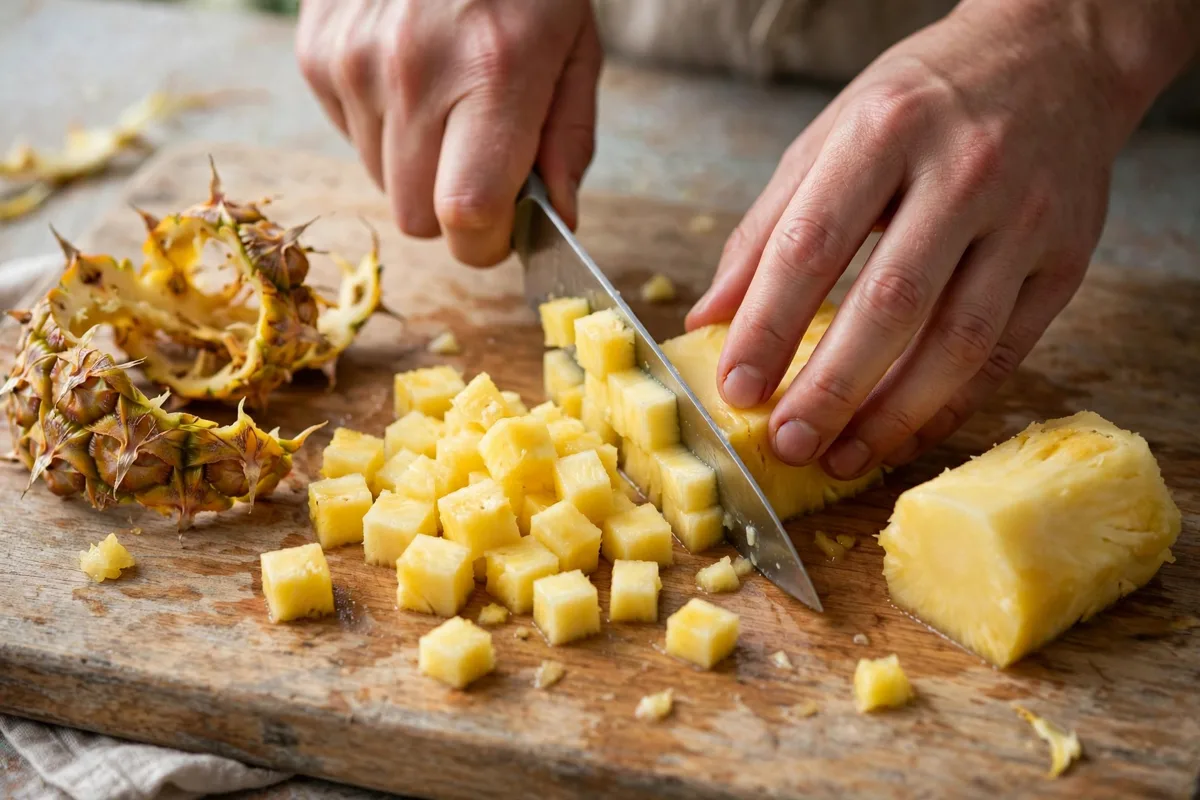
Cut the soft flesh into small, bite-sized cubes, roughly one-inch pieces, smaller for small dogs. Serve fresh and raw, or freeze the cubes for a summer treat.
Always bin the skin and core in a dog-proof trash can. A determined dog will happily raid the bin for them, which is how many accidents happen.
Can Dogs Eat Pineapple Core or Skin?
No, and this is the firm rule of the article. The pineapple core is very hard and fibrous, making it a genuine choking hazard and a risk for intestinal blockage.
Even enthusiastic chewers should never be given the core to gnaw. A swallowed chunk can lodge in the gut, and blockages are surgical emergencies, not wait-and-see problems.
The skin is no better: spiky, tough, and difficult to digest, it can irritate or tear on the way down and cause serious stomach upset.
If your dog does steal core or skin, watch for vomiting, drooling, pawing at the mouth, loss of appetite, or straining to poop, and call your vet if any appear.
Can Dogs Eat Canned Pineapple?
Canned pineapple should be avoided. Most canned fruit is packed in syrup or sweetened juice, adding a sugar load that dogs’ digestive systems handle badly.
That extra sugar feeds exactly the problems pineapple in moderation avoids: stomach upset, weight gain, dental issues, and added strain for diabetic dogs.
A second label trap: some sweetened fruit products use xylitol (also listed as birch sugar), which is highly toxic to dogs even in small amounts. It is one more reason fresh is the only version worth serving.
If your dog already stole a little canned pineapple, do not panic. Watch for vomiting or diarrhea, and call your vet if symptoms appear or a large amount was eaten.
Can Dogs Eat Dried Pineapple or Pineapple Juice?
Dried pineapple is not recommended either. Drying removes the water but keeps the sugar, so the sugar is concentrated into a much smaller, easier-to-overfeed package.
It also loses the hydration benefit that makes fresh pineapple appealing in the first place. Many dried products add even more sugar on top.
Pineapple juice is a similar story: mostly sugar and acid without the fiber of the fruit. Freshly squeezed unsweetened juice in tiny amounts is not toxic, but plain water is always the better drink.
The simple rule covering all three: if it is not fresh or frozen plain pineapple flesh, skip it.
Can Puppies Eat Pineapple?
Yes, puppies can eat pineapple in the same prepared way: skin off, core out, tiny bite-sized pieces. Their portions should be smaller than an adult dog’s.

Start with a single small piece. Puppy stomachs are more sensitive, and pineapple’s acidity and fiber can loosen stools quickly if you overdo the introduction.
Keep it occasional. Puppies need their calories from balanced puppy food for growth, so treats of any kind, fruit included, should stay well inside that 10% treat budget.
And supervise: an excited puppy gulping a too-large chunk is the main choking scenario with any fruit, easily prevented by cutting pieces small.
Pineapple for Dogs Eating Poop: Does It Work?
You may have heard that pineapple stops dogs eating poop (coprophagia). The theory is that bromelain makes the stool taste bitter and unappealing, so the dog stops.
Here is the honest answer: some owners swear by it, but there is no solid veterinary evidence that pineapple reliably prevents poop eating. Vets and pet-nutrition sources describe the support as anecdotal.
A small amount of fresh pineapple added to meals (a teaspoon or so for a small dog, a few chunks for a large one) is a safe experiment if you want to try it for a week or two.
If it fails, the effective fixes are management and training: pick up poop immediately, supervise yard time, and teach a solid “leave it.” Persistent coprophagia also deserves a vet check for nutritional causes.
Which Dogs Should Skip Pineapple?
Dogs with diabetes should avoid or strictly limit pineapple because of its sugar, unless your vet specifically approves an amount. The same caution applies to overweight dogs on a weight-loss plan.
Dogs with sensitive stomachs may find the acidity irritating even in small amounts. If fresh pineapple reliably produces gas or soft stool in your dog, it is simply not his treat.
True pineapple allergy is uncommon, but watch first servings for itching, skin irritation, swelling, or vomiting, and stop the fruit if any appear.
When in doubt, one question to your vet settles it. Bring the topic up at the next routine visit before making fruit a regular part of the bowl.
Frequently Asked Questions
Is pineapple toxic to dogs?
No. Fresh pineapple flesh is not toxic to dogs. The dangers are mechanical (core and skin causing choking or blockage) and dietary (too much sugar), not poison.
Can dogs eat frozen pineapple?
Yes, and it makes an excellent hot-weather treat. Freeze fresh prepared chunks and serve them straight from the freezer, sized appropriately for your dog.
What happens if a dog eats too much pineapple?
Expect an upset stomach: gas, loose stool or diarrhea, and possibly vomiting. Symptoms usually pass within a day; call your vet if they persist or your dog seems unwell.
Can dogs eat pineapple chunks from a fruit cup?
Only if they are packed in water or plain juice with no added sugar and no xylitol on the label, and even then, fresh is better. Syrup-packed fruit cups are a no.
How often can I give my dog pineapple?
A few times a week in the small portions above is plenty. Treat it as an occasional snack within the 10% treat rule, never a daily food.
The Bottom Line
Can dogs eat pineapple? Happily, yes: fresh chunks with the skin and core removed are a vitamin-rich, hydrating treat that most dogs love.
Respect the sugar, respect the portions, and never share the core, skin, canned, or dried versions. For more on the fruit itself, see the AKC guide to dogs and pineapple, and for another safe-food question, read our guide asking can dogs eat raw eggs.