Anal Glands of Dogs: Symptoms, Expressing and Diet Fixes
It often starts with the scoot. Your dog drags his rear along the floor, a fishy smell appears, and you start to wonder what is going on.
This guide explains, in plain terms, what these small glands do, the signs that may point to a problem, what you can watch at home, and when to call your vet.
Anal Glands of Dogs: The Direct Answer
The anal glands of dogs are two small scent sacs, one on each side of the anus.
In most dogs, they empty on their own during a bowel movement. When they do not empty well, fluid can build up and cause discomfort.
Watch for scooting, licking at the rear, or a strong fishy odor. If swelling, discharge, blood, or pain appears, contact your vet promptly.
Key Takeaways
- Most problems with the anal glands of dogs are easy to spot early.
- Scooting, rear licking, and a fishy odor are common early signs.
- Never squeeze or try to express glands yourself without vet guidance.
- Swelling, redness, discharge, blood, or pain needs vet care, not waiting.
- Use calm, positive reinforcement only, and ask a vet about pain or sudden change.
What Are These Glands?
The anal glands of dogs are two small sacs under the skin beside the anus. Each sac holds a strong-smelling fluid.
Dogs use that scent to learn about each other. It is part of how they greet and mark in general terms.
Firm stools usually press on the sacs as they pass. That pressure helps a small amount of fluid leave with each bowel movement.
Problems can start when emptying does not work well. Soft stools, narrow ducts, allergies, or extra weight can all play a part.
Common Signs of a Problem
Look for a pattern, not one moment alone. The signs below are general, and they do not diagnose a cause on their own.
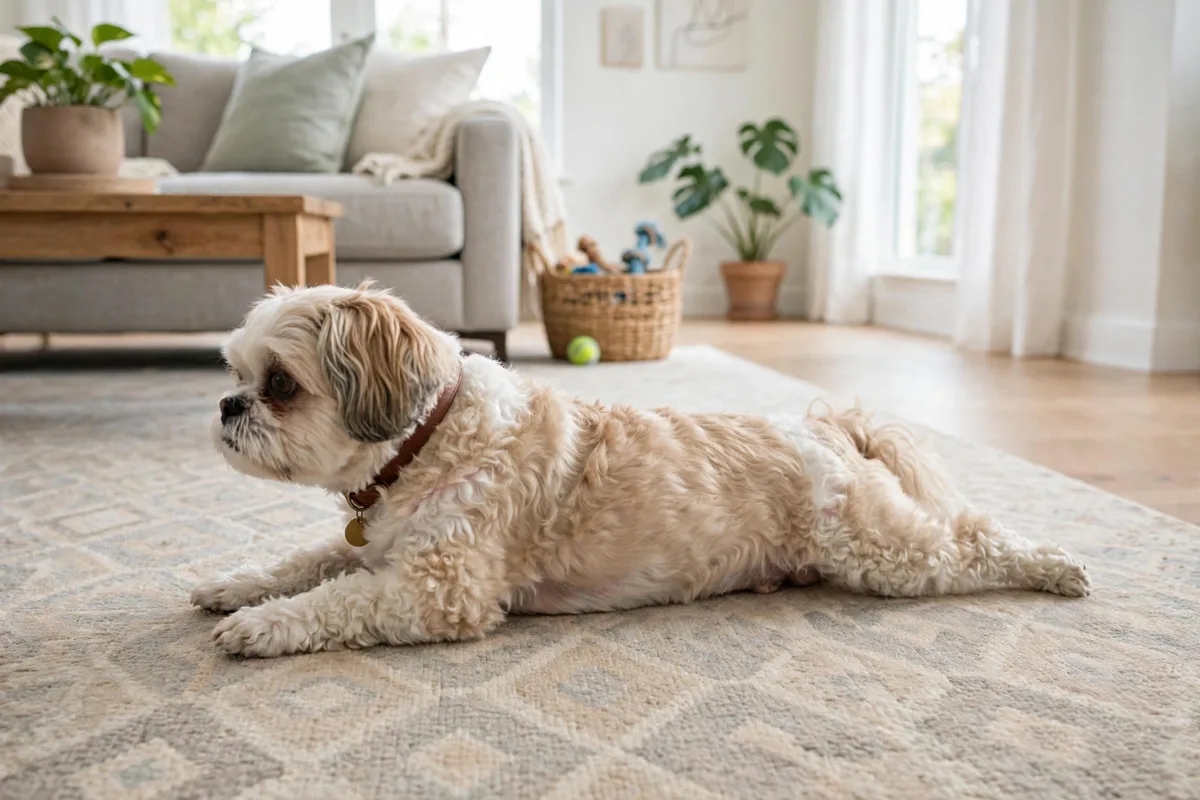
- Scooting, or dragging the rear along the floor or grass
- Licking or biting at the rear end
- A sudden, strong fishy odor on your dog, bedding, or furniture
- Reluctance to sit, or sitting down suddenly and shifting around
- Chasing the tail, or discomfort when passing stools
- Crying or whining with rear discomfort, as explained in our guide to why your dog may be crying
One sign alone does not prove a gland problem. Note when it started, how often it happens, and what else you see.
What You Can Observe at Home
Home care here means watching and noting, not treating. Keep your dog calm, and use gentle praise for calm behavior.
- How often scooting or licking happens
- Whether stools look firm or soft over a few days
- Whether your dog eats, drinks, walks, and rests as usual
- Whether you see swelling, redness, discharge, or blood near the rear
- Whether your dog seems in pain when sitting or moving
Clear notes help your vet. They also help you spot a change early, before a small problem grows.
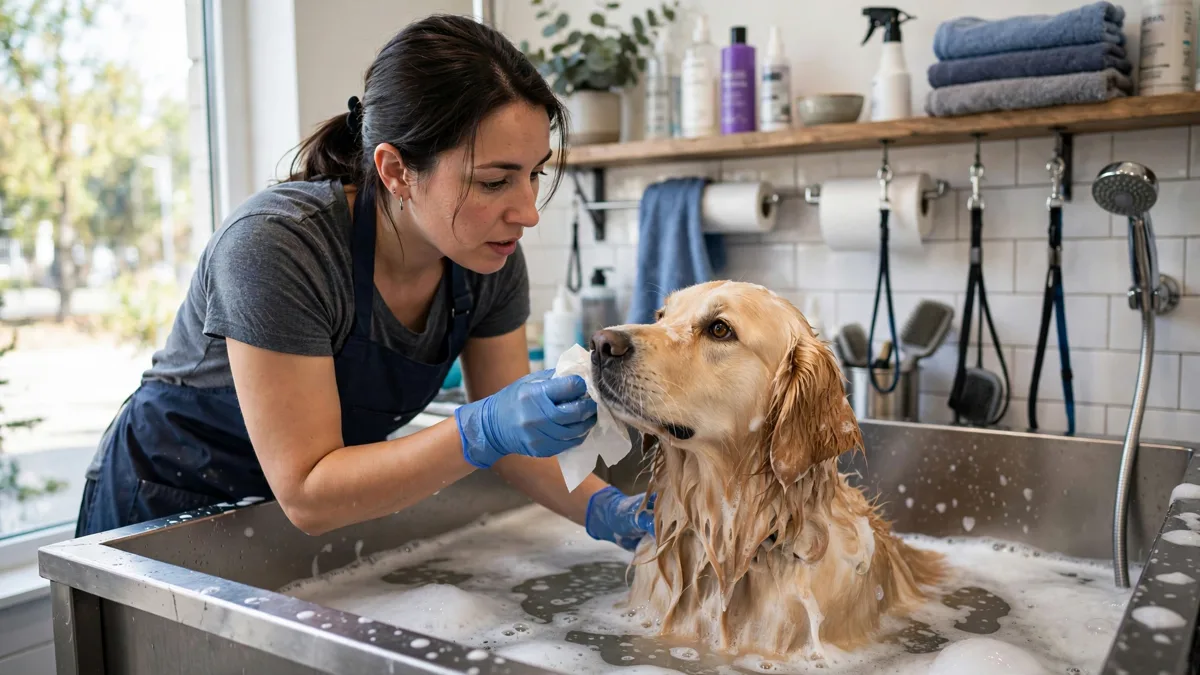
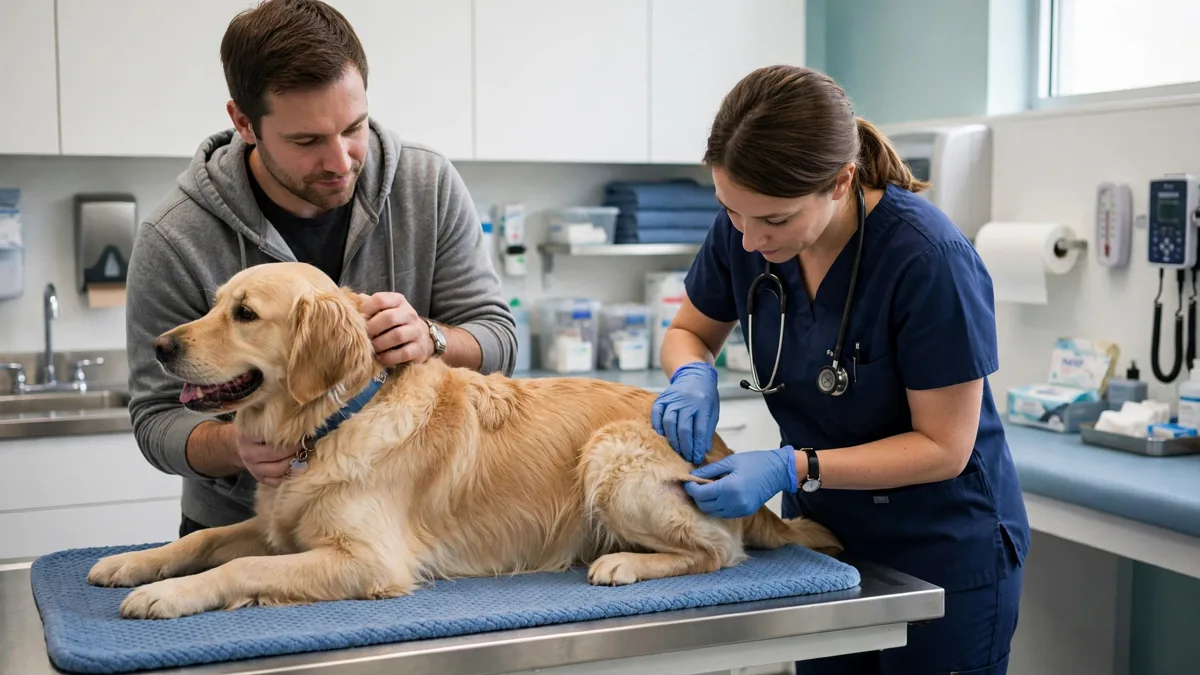
A vet or groomer may check the glands during a routine visit. Ask them to explain what they find, and what to watch next.
What NOT to Do
- Never squeeze or express glands yourself without vet guidance.
- Never ignore swelling, redness, discharge, or blood.
- Never squeeze a swollen or painful area, and never try to open a sore.
- Never give human medicine, and never guess about a medical cause.
- Never punish scooting, licking, or whining, and never use dominance or alpha framing.
- Never use shock or prong collars. Use positive reinforcement only.
If you are unsure, call your vet first. A short call is safer than a home attempt.
When Gland Problems Need Vet Attention Urgently
Some signs should not wait. Use the table below as a simple starting point, and choose the faster option when in doubt.
| What you see | What to do |
|---|---|
| Scooting once, dog still eating and moving well | Watch closely and call your vet for advice |
| Swelling, redness, discharge, or blood | Contact your vet promptly |
| Open sore, foul discharge with blood, or severe pain | Seek urgent vet care the same day |
| Swelling that bursts, fever, or loss of appetite | Seek urgent vet care the same day |
Signs That May Point to an Abscess or Rupture
- Swelling beside the anus, with redness or heat
- Pain when sitting, moving, or when the tail is lifted
- Discharge, blood, or a foul smell that worsens
- An open sore or wound beside the anus
- A dog that seems in pain, tired, or off food
An abscess needs vet care. Do not squeeze it, and do not wait for it to heal alone.
Food, Fiber, and Firm Stools
Firm, bulky stools help glands empty in a natural way. That is why stool quality matters so much in this topic.
Fiber can help stools stay firm, but the right amount and type depend on your dog. Talk with your vet before changing food.
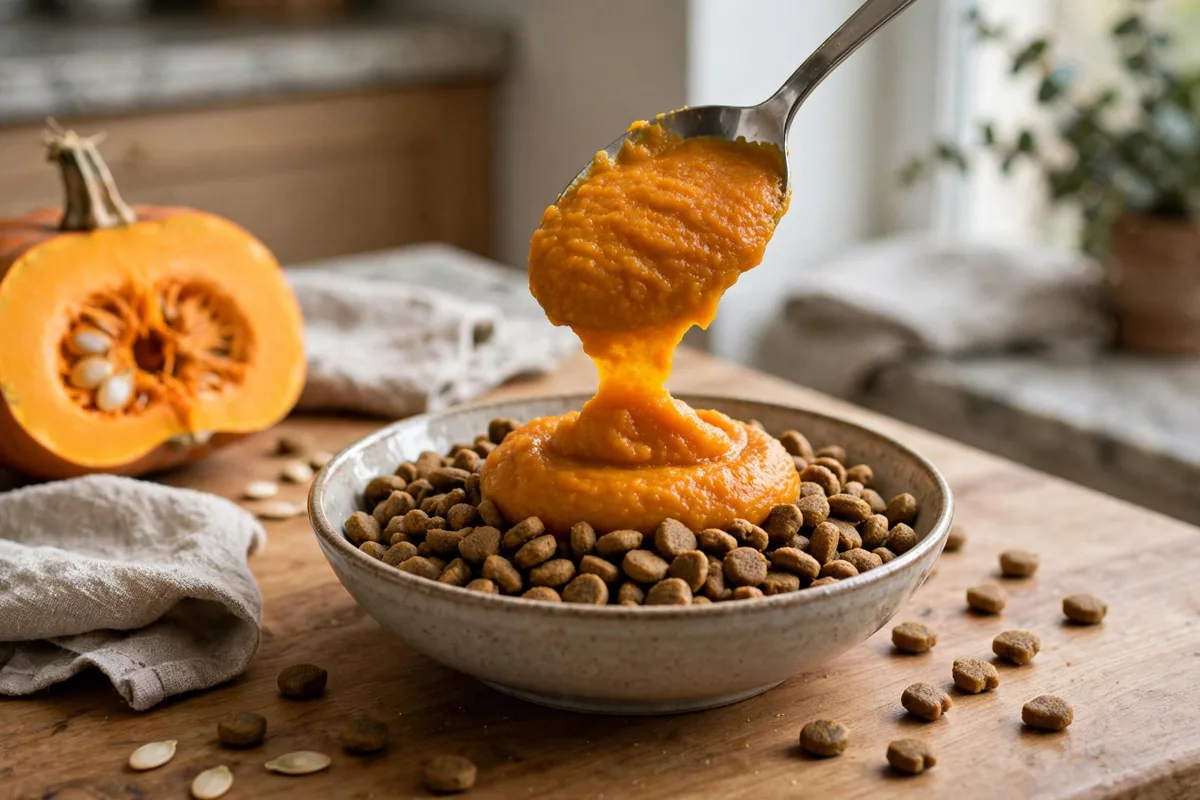
Plain pumpkin is often talked about as a fiber food. Discuss any food change with your vet first, and change food slowly.
Keep your dog at a healthy weight, and keep daily walks and play steady. Ask your vet about weight and exercise for your dog.
If gland problems keep returning, ask your vet about the cause. Food sensitivity, allergies, or weight may need a vet-guided plan.
If problems return often, talk with your vet about a long-term plan for the anal glands of dogs.
Frequently Asked Questions
Why does my dog scoot?
Scooting can point to full or irritated glands, but it can have other causes too. Note how often it happens, and call your vet if it keeps returning.
Why does my dog smell fishy?
A brief fishy smell can come from gland fluid. A strong smell that lasts, or that appears on furniture, is worth a vet conversation.
Can I express my dog’s glands myself?
No, do not try this on your own without vet guidance. Ask your vet to show you what is safe, or let your vet or groomer handle it.
What should I do if I see swelling or discharge?
Contact your vet promptly. Do not squeeze the area, and do not wait to see if swelling or discharge passes on its own.
Can food help gland problems?
Food can affect stool quality, which can affect glands in general terms. Discuss any diet change with your vet, and do not guess at amounts.
The Bottom Line
The anal glands of dogs are small, but they can cause clear discomfort when they do not empty well.
Watch early signs, keep notes, and let your vet guide any next step. That calm, steady approach protects your dog and your peace of mind.
For related BreedFix guidance, see our guide to dogs and Addison’s disease and when puppies start teething and biting.
Reference
Cornell University College of Veterinary Medicine, Anal sac diseases.
Still stuck? Get a plan built for your dog.
Answer a few quick questions and get a personalized, force-free training plan in minutes.
Try the Free Dog Tools