How to Care for a Blind Senior Dog at Home
When your senior dog starts bumping into furniture, it can feel frightening for both of you. To care for blind senior dog at home, start with small, steady changes, not a full house rebuild.
Dogs do not rely on sight alone. They use smell, hearing, touch, and memory to build a map of home. With a calm plan, many blind senior dogs keep enjoying walks, meals, and rest.
Key Takeaways
- Ask a vet promptly about any eye change, and urgently for sudden blindness, pain, redness, or discharge.
- Keep furniture, bowls, and beds in the same places, and keep walking paths clear.
- Use non-slip rugs, gates, scent landmarks, and short, consistent voice cues.
- Keep feeding, walks, and sleep on a steady routine, and praise calm, careful movement.
- Never punish bumping, hesitation, or startling. This guide is general information, not veterinary advice.
Care for Blind Senior Dog at Home: The Direct Answer
To care for blind senior dog at home, keep the layout stable, block hazards, use scent and sound cues, and follow a steady routine. Give your dog time to learn each route, and reward slow, confident steps.
Start with one safe room if your dog seems overwhelmed. Add one new route at a time, and keep the same cues for steps, doors, and turns. Small wins build confidence faster than big changes.
How Blind Senior Dogs Navigate
Your dog builds a mental map from repeated routes. The bed, the water bowl, the door, and the garden path become landmarks. That map works best when nothing moves without warning.
Smell leads the way indoors. A familiar mat, a laundry scent, or food smells can mark a place. Hearing helps too, from your voice to the sound of water or a familiar door.
Touch gives the last clues. Different floor textures, a rug edge, or a low threshold can tell your dog where a room starts. Senior dogs may move more slowly, so allow extra time.
Watch how your dog moves, rather than assuming one bad day means failure. Hesitation at a new doorway is normal. Confusion that grows, or a sudden change, is worth a vet call.
Set Up a Safe Home Layout
A steady layout is central when you care for blind senior dog at home. Put furniture back after cleaning, and do not leave bags, shoes, or laundry in walking paths.
Walk each route at your dog’s height, and look for low hazards. Move cords, low tables, and sharp corners out of main paths, or pad corners that cannot move.
Keep doors in a fixed position, either fully open or fully closed. A half-open door can confuse a dog that expects a clear opening, and it can cause a bump.
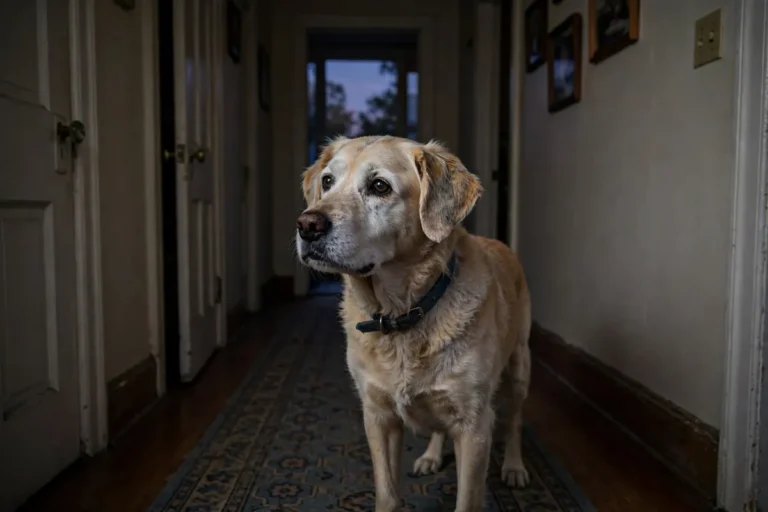
Give your dog a clear home base. A bed, water, and a quiet resting spot on one floor help a senior dog settle. Avoid asking a blind senior to learn stairs unless a gate and a safe routine are in place.
Add Traction and Safe Paths
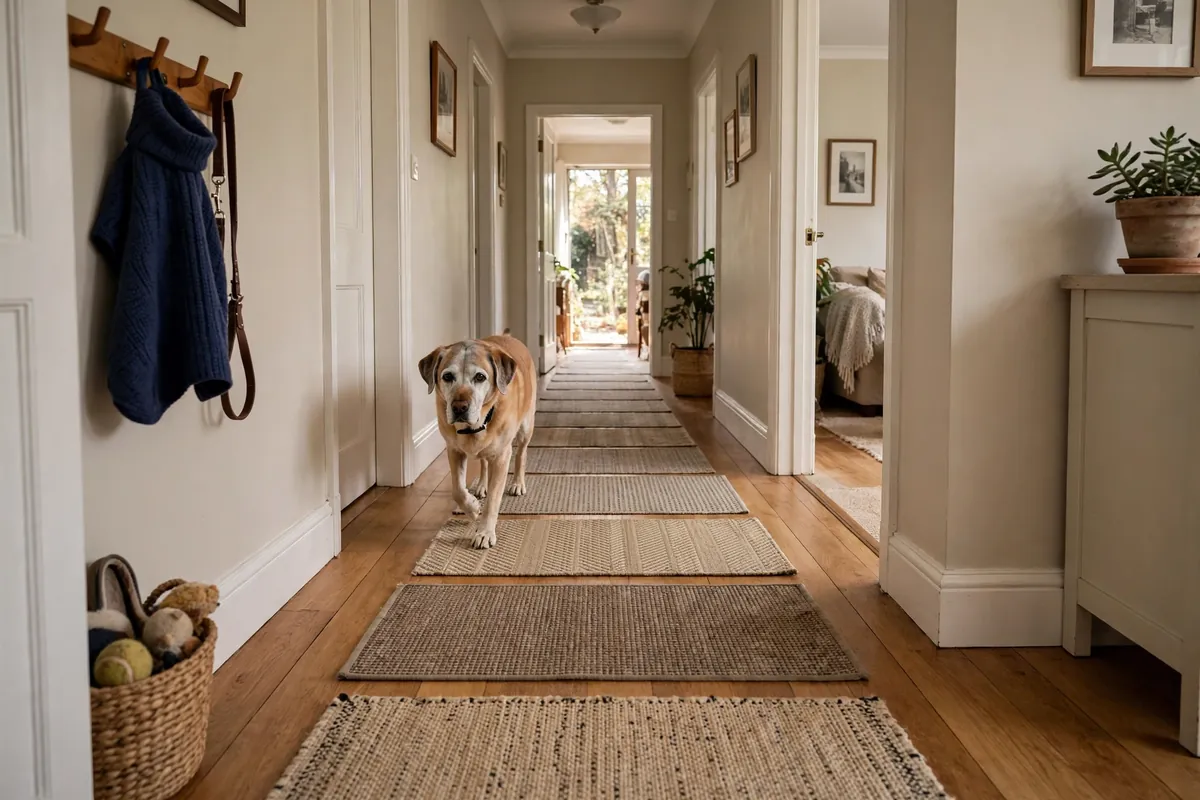
Smooth floors are hard for senior dogs, and harder when sight is gone. Lay non-slip rugs or runners along daily routes, from bed to water, water to door, and door to garden.
Pay special attention to the place where your dog gets up. A rug beside the bed gives grip for the first steps. Check rugs often, and fix any edge that curls or slides.
Keep nails short and trim fur between paw pads, if you can do so safely and calmly. Long nails and fuzzy pads can reduce grip, so ask a groomer or vet for help if needed.
Block the Danger Zones
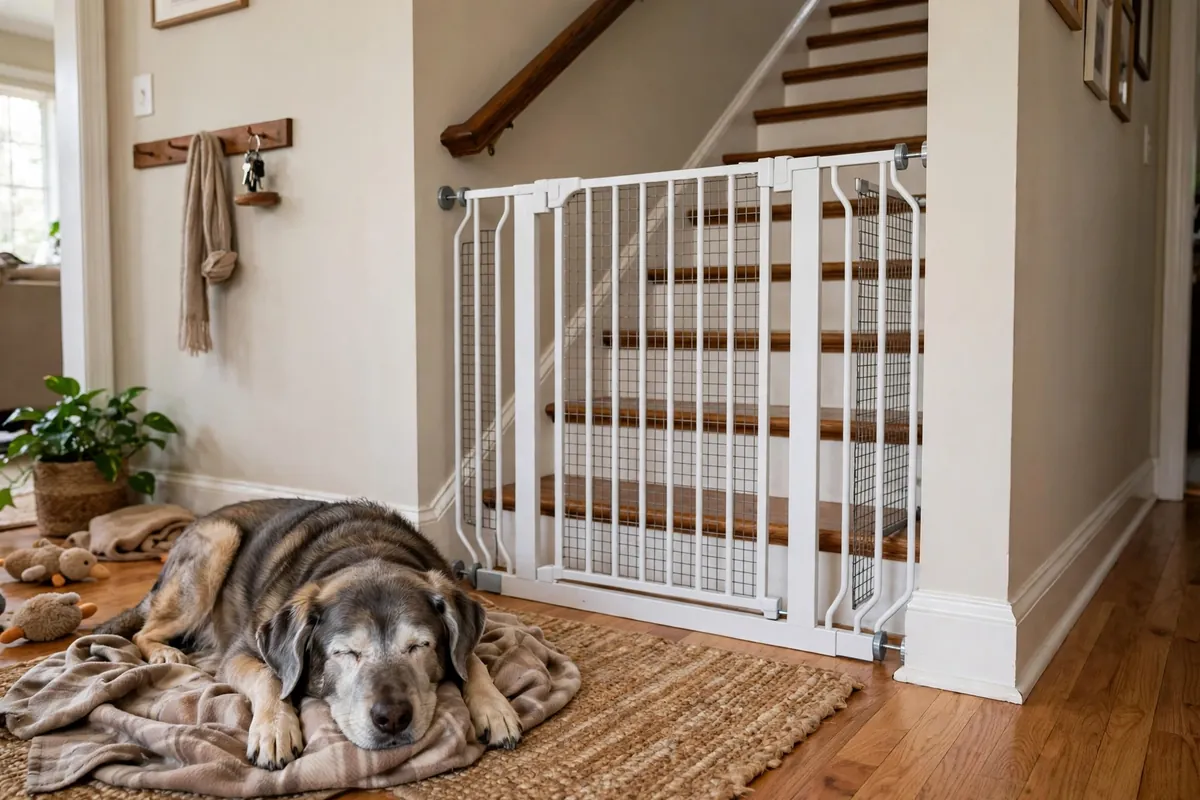
Use gates and barriers before an accident happens. Stairs need a gate at the top and bottom, and pools, ponds, and balconies need a gate or close supervision.
- Stairs: Gate both ends, and guide your dog only on a familiar, supervised route.
- Water and drops: Never leave a blind senior unsupervised near pools, ponds, balconies, or open drops.
- Sharp corners and heat: Pad low corners, and barrier off fireplaces, heaters, and stove fronts.
- Toxins and small hazards: Keep cleaning products, medicines, and trash in closed cabinets, and pick up small items from the floor.
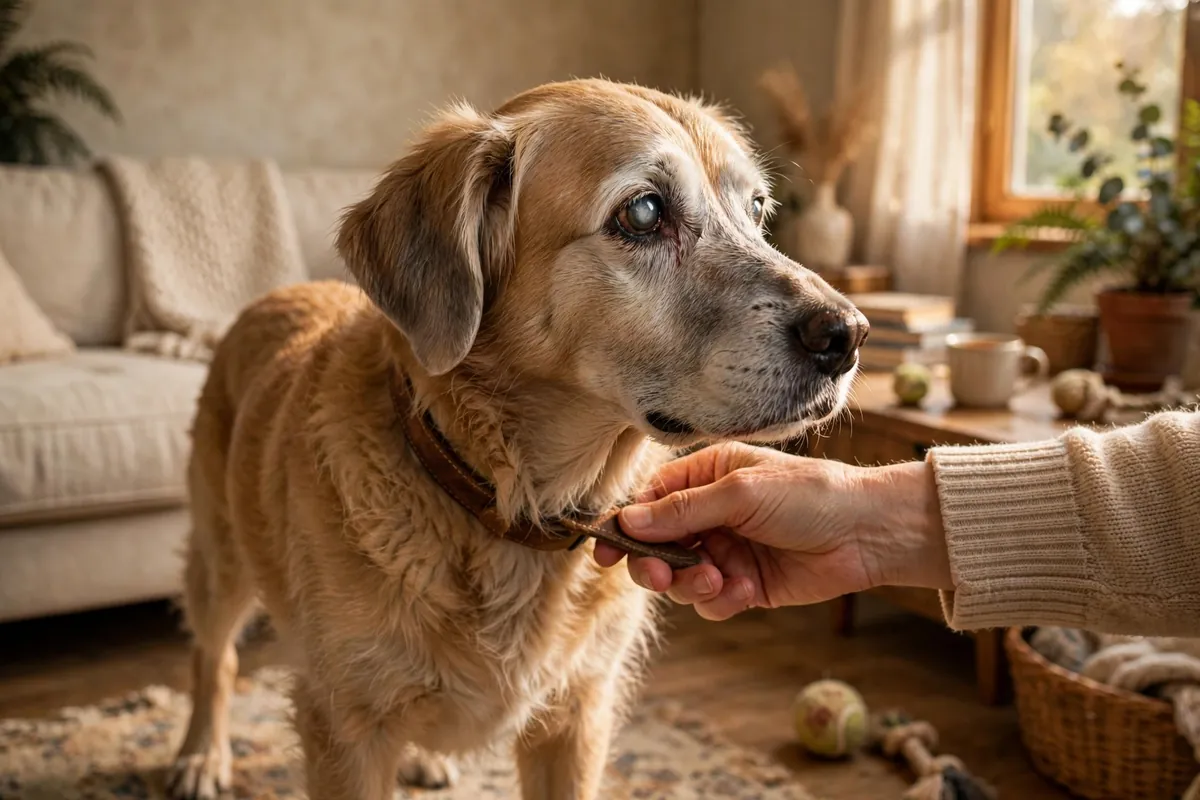
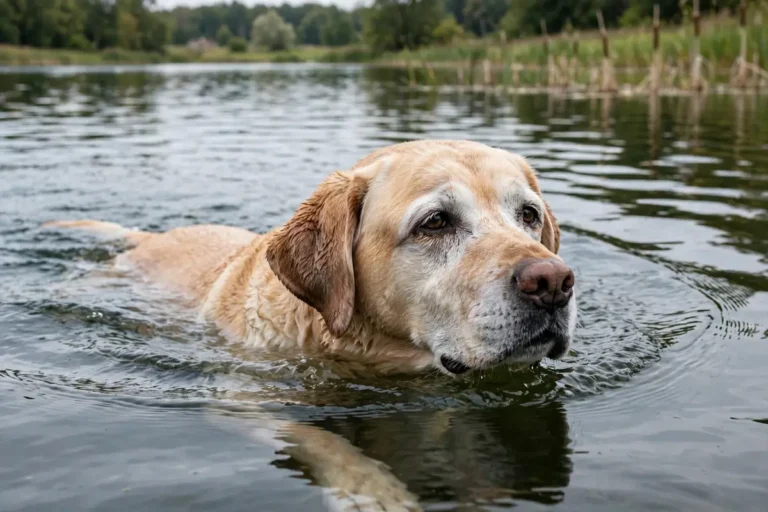
Outdoors, fence off garden ponds and steep drops. Never let a blind dog off leash outside a secure fenced area, even if the garden feels familiar.
Routine, Scent and Sound Cues
A steady routine is central when you care for blind senior dog at home. Feed, walk, play, and rest at similar times, in the same places, so your dog can predict the day.
Use texture landmarks at key places. A coarse mat at the food station, a soft rug at the door, and a different mat at the bed can mark each stop. Keep those mats in place.
Use scent with care and keep it simple. One familiar scent cue at a door or bed is enough. Too many strong scents can confuse a dog, so do not scent every room.
Pick a small set of voice cues, and use the same words each time:
- Step up and step down: Use these at curbs, thresholds, and stairs.
- Careful: Use this before an obstacle or a tight turn.
- Stop or wait: Use these when danger is ahead, then guide your dog calmly.
- This way: Use this with a gentle leash guide to show a new direction.
Say your dog’s name before touching them, especially when they are asleep. A sudden touch can startle any dog, and a blind dog cannot see a hand coming.
Teach one cue at a time, in a quiet room, with praise and treats for calm effort. Short, happy sessions work better than long lessons, especially for a tired senior.
Walks and Outdoor Safety
Keep walks short, familiar, and on a short leash. Walk the same route while your dog is learning, and let sniffing set the pace. Sniffing is both exercise and information.
Talk on the walk, with simple warnings for curbs, turns, and steps. Avoid busy dog parks and off-leash areas, where unknown dogs can rush up and frighten a blind dog.
At night, stick to routes your dog knows well. Avoid new paths in dim light, and keep your dog away from traffic, open water, and unfenced edges.
If your dog freezes, do not drag them forward. Pause, speak calmly, and let them sniff or step back. Praise the next calm step, even if it is small.
Feeding and Water Placement
Feeding is easier when you care for blind senior dog at home with one fixed spot. Use the same bowls, in the same place, on the same textured mat, at similar times.
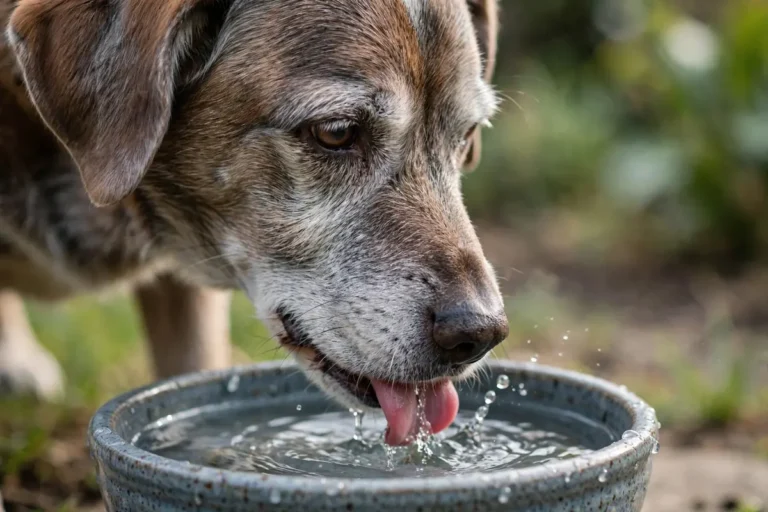
Keep water in that same area, fresh and easy to reach. The sound of water can help, but do not move the bowl to chase a new sound cue. A stable spot matters most.
Keep the feeding area away from busy paths, so your dog is not bumped while eating. If appetite, drinking, or toilet habits change, note the pattern and ask your vet.
Do not change food, treats, and routine all at once. A slow, vet-guided change is safer for a senior dog, and it makes it easier to spot what helped.
Daily Care, Grooming and Handling
Groom in the same order, in the same place, with the same words for each step. Keep sessions short, and pause if your dog seems tense or tired.
Check paws, ears, and coat gently during calm handling, and note sores, limping, or pain. Senior dogs may have sore joints, so lift and guide them slowly, never by force.
Keep the bed low and easy to step onto, with a rug beside it. A warm, quiet resting spot helps a senior dog recover after walks and play.
What NOT to Do
- Never move furniture suddenly, and never leave new hazards in a familiar path.
- Never punish bumping into things, hesitating, or being startled. Use praise for calm, careful movement.
- Never leave a blind senior unsupervised near stairs, water, balconies, or open drops.
- Never drag, push, or rush a frightened dog. Pause, speak calmly, and try again slowly.
- Never use punishment tools, and never guess the cause of blindness or delay vet care for sudden signs.
- Never startle a sleeping dog with a sudden touch or hug from behind. Speak first, every time.
When Blindness Signs Need Urgent Vet Attention
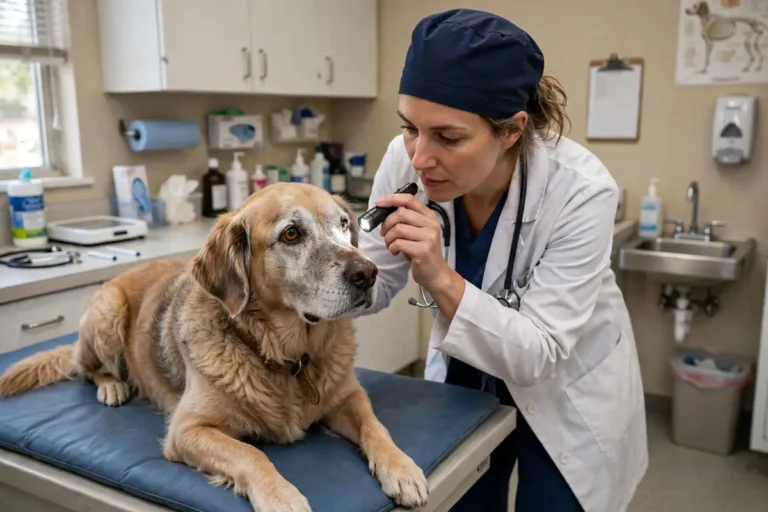
Only a vet can assess your dog’s eyes and overall health. Book a vet visit for any eye change, and seek urgent care the same day for the signs in the table below.
| Sign you may notice | What to do |
|---|---|
| Sudden blindness or a sudden loss of confidence | Contact your vet urgently, the same day if you can. |
| Eye pain, squinting, or pawing at the eye | Contact your vet urgently, and do not wait. |
| Redness in the eye | Contact your vet urgently, and describe when it started. |
| Discharge from the eye | Contact your vet urgently, and keep your dog calm. |
| Rapid decline, new pain, or confusion | Contact your vet urgently, and note what changed. |
Cloudy eyes can have more than one cause in general terms. For related BreedFix guidance, see our guide to can dogs get cataracts.
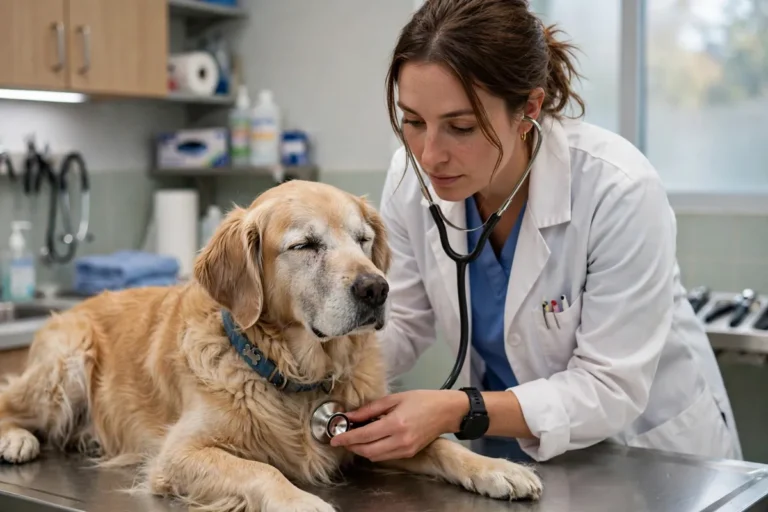
For pain, sudden change, aggression, or fear that does not settle, ask your vet about a referral to a vet or a qualified behavior professional. Do not try to diagnose or treat the cause at home.
Nights, Visitors and Family Life
Keep bedtime steady, with the same bed, the same route to it, and a calm voice at the end of the day. Some blind seniors rest better when the house quiets down at a similar time.
If restlessness or panting at night is new or worsening, note the pattern and ask your vet. For related BreedFix guidance, see our guide to dog panting at night.
Coach visitors and children to speak first, approach from the front, and avoid sudden hugs. Other pets need calm, supervised introductions, with space for your senior dog to move away.
Moving house is harder, but it can work. Set up one safe room first, with bed, water, and food on textured mats. Add one room at a time, with the same cues.
Safe Exercise and Mental Enrichment
Blind seniors still need movement and mental work. Short sniff walks, scent games, and food puzzles can tire a dog gently, without speed or rough play.
- Sniff walks: Let your dog lead with the nose on a familiar route, at a slow pace.
- Scent games: Hide treats in boxes or under cups, starting easy, and praise each find.
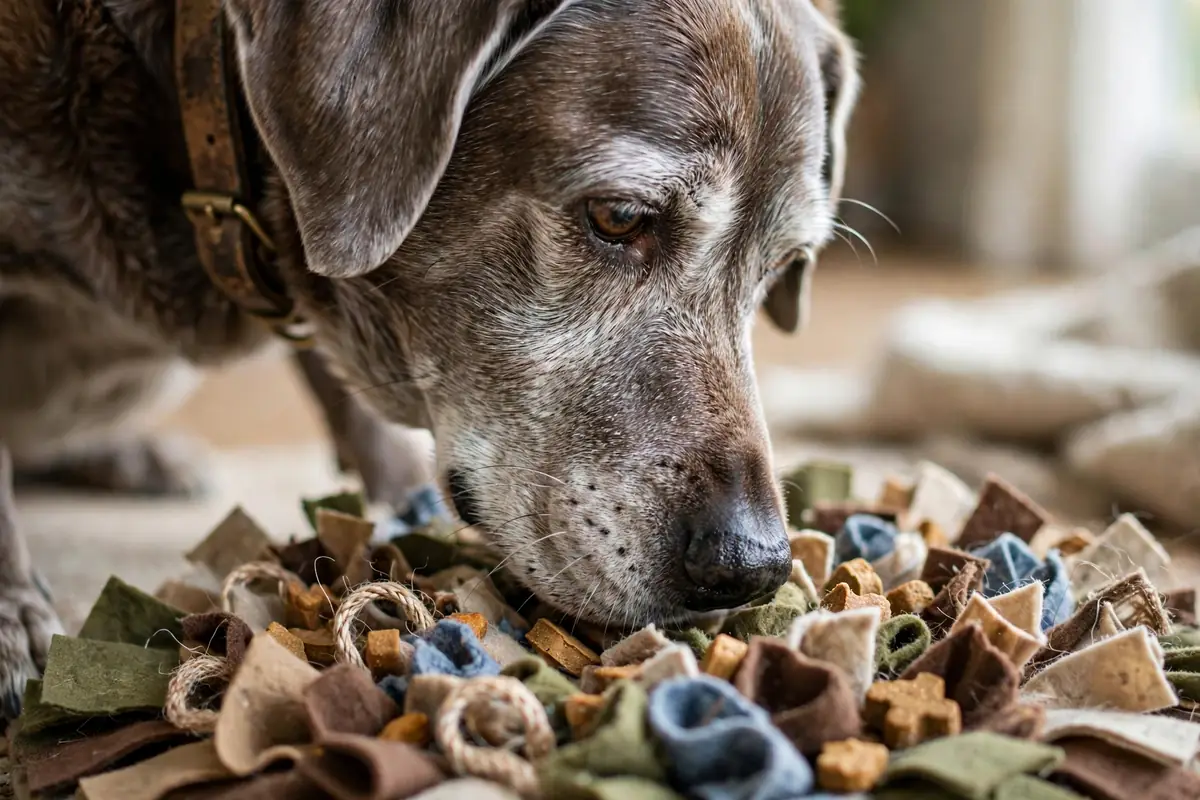
- Food puzzles and snuffle mats: Turn part of a meal into a calm search game.
- Noise toys: Use toys that crinkle or ring, and roll them rather than throwing them.
- Touch and rest: Calm brushing and massage, done in the same order, can soothe a senior dog.
Stop play if your dog seems tired, stressed, or sore. A short, happy session is better than a long one that ends in worry.
Frequently Asked Questions
Can a blind senior dog have a good quality of life?
Yes, many do. With a stable home, a steady routine, and calm guidance, blind senior dogs can enjoy walks, meals, play, and rest. Watch for pain or sudden change, and ask your vet early.
Will my blind dog still enjoy walks?
Almost always yes, once they adjust. Keep the leash short, walk familiar routes, let them sniff, and talk through curbs and turns. Stop early if your dog seems tired.
How do I stop my blind dog from bumping into walls?
You cannot pad the whole world, and most dogs learn routes quickly. Keep paths clear, use textured mats, and praise careful steps. Never punish a bump, as fear slows learning.
Do blind dogs get anxious at night?
Some do, especially if vision loss is recent or combined with hearing loss or confusion. Keep bedtime steady, speak calmly, and ask your vet about new restlessness.
Should I get another dog to guide my blind dog?
Sometimes a calm companion helps, but it is not a fix for every dog. A boisterous new dog can stress a senior, so introduce dogs slowly and ask a behavior professional if needed.
Is it safe to move house with a blind dog?
It is harder, but it can work. Set up one safe room first, then add rooms slowly, with the same bed, bowls, mats, and voice cues. Keep supervision close at first.
The Bottom Line
To care for blind senior dog at home, keep the layout stable, block hazards, use scent and sound cues, and follow a steady routine. Praise calm steps, and give your senior dog time to learn.
For related BreedFix guidance, see our guides to dog panting at night, can dogs get cataracts, and dog loose stool and vomiting.
Reference
Reference: American Kennel Club, Supporting a Blind Dog: Helping Dogs Adjust to Vision Loss.
This article is general information about blind senior dog care at home, and it is not veterinary advice. If you are unsure about a sign, contact your vet.
Still stuck? Get a plan built for your dog.
Answer a few quick questions and get a personalized, force-free training plan in minutes.