Why Is My Dog Panting at Night? 9 Causes and When to Worry
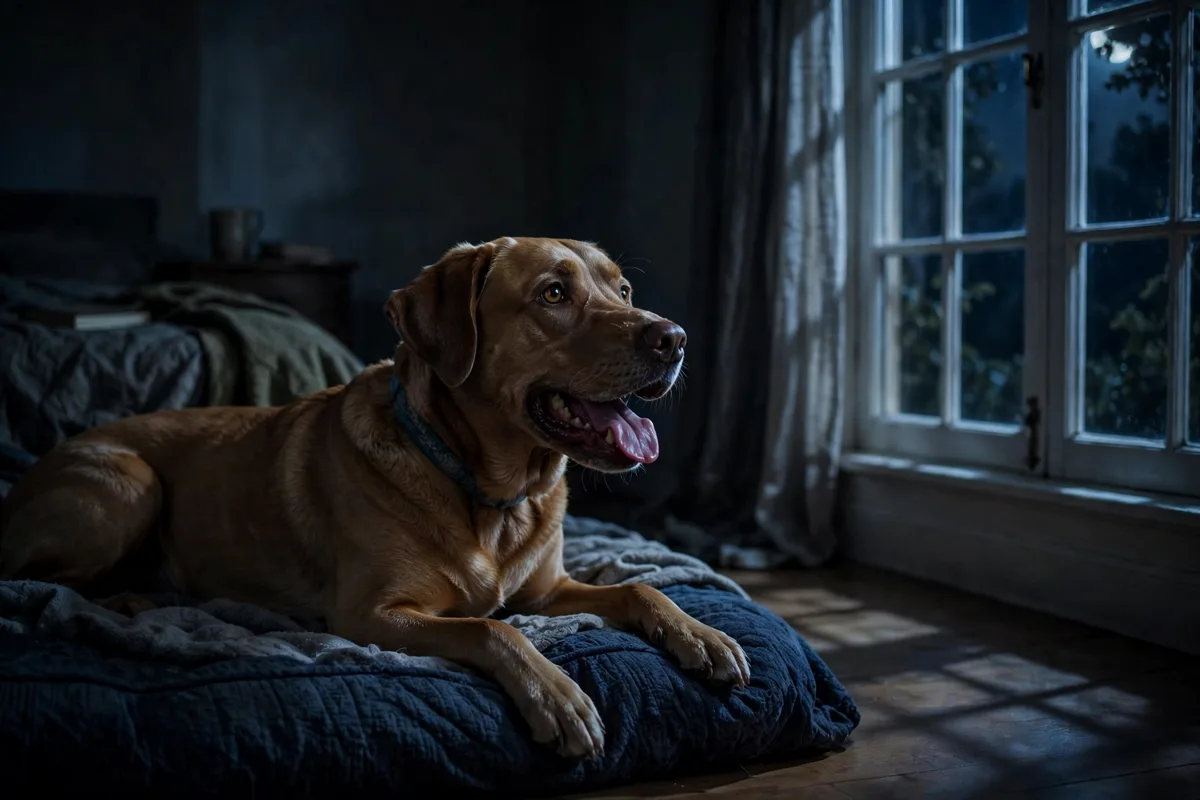
It is 2 a.m. and your dog is wide awake, panting beside the bed. The room is not hot, and the house is quiet.
Owners often worry about dog panting at night because a resting dog in a cool room should not need to pant hard.
Sometimes the cause is simple, such as heat or excitement. Sometimes it is a sign of pain, worry, or a health problem. This guide helps you tell the difference, and know when to call your vet.
This guide gives general information only. It does not diagnose your dog, and it does not replace veterinary advice.
Dog Panting at Night: The Direct Answer
In short, dog panting at night is panting that happens at rest, after the house has cooled and the day has ended.
Brief panting after play or heat can be normal. Panting that is heavy, long lasting, or repeated at rest deserves a vet visit soon.
Start by checking for urgent signs, then cool the room, offer water, and note the pattern. Those notes help your vet a lot.
Key Takeaways
- Short, brief panting after play or heat often settles once your dog rests.
- Heavy, repeated, or restless panting at rest is worth a vet visit soon.
- Labored breathing, blue or pale gums, collapse, or panting that will not settle needs emergency vet care now.
- Never give human medicines, and never punish panting, restlessness, or fear.
- Note when it starts, how long it lasts, and what comes with it.
- Use calm praise and a steady routine, and ask a vet about pain or sudden change.
When Nighttime Panting Is Normal
A little panting can be ordinary. Dogs pant after evening play, during exciting dreams, and while cooling down after a busy day.
Brief dog panting at night after play, excitement, or a warm evening is often normal when it settles quickly.
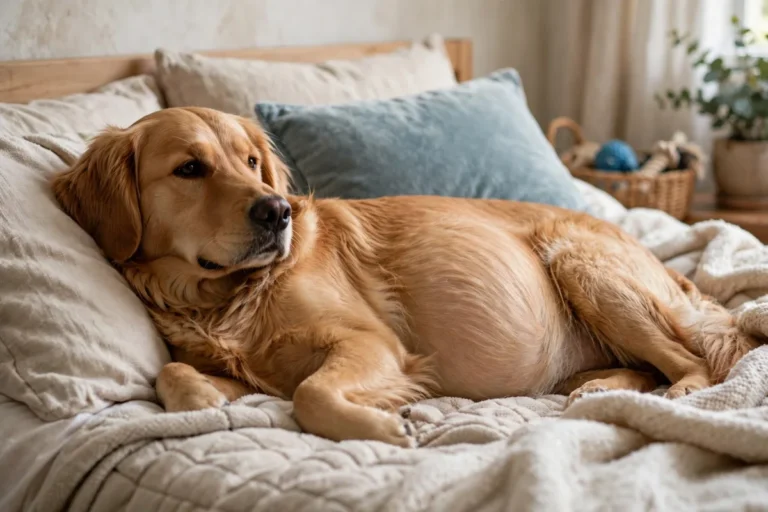
Warm bedding, a warm room, and close body heat can also raise panting. If your dog pants briefly, then sleeps with slow, easy breathing, it is rarely a concern.
Common Reasons Dogs Pant at Night
Panting is how dogs cool down, but it is also how stress, pain, and illness can show. The clues below help you sort the pattern.
Heat and a Warm Room
Dogs cool themselves mainly by panting, so heat is a common cause. A thick bed, a warm room, blankets, and body heat can all add up at night.
Keep the sleeping area cool and well aired, and offer fresh water. Avoid hard play late in the evening on hot days, and let your dog choose a cooler spot.
Pain
Pain is a common reason for restless nights. Sore joints, a sore back, mouth pain, or a recent injury can feel worse when a dog lies still.
Watch for stiffness, slow rising, shifting position, limping, or panting that starts when your dog tries to settle. Ask your vet about pain, and never guess at treatment.
Worry and Anxiety
Worry can keep a dog panting long after the house is quiet. Storms, fireworks, new sounds, a change in routine, or being apart from you can all raise stress.
Use calm praise, a steady bedtime routine, and a safe sleeping spot. If worry stays strong, ask your vet or a qualified behavior professional for help.
Age and Changes in Older Dogs
Older dogs may pant more at night for several reasons, including pain, heart or lung problems, and changes in sleep and thinking. Age alone does not explain heavy, repeated panting.
If an older dog also paces, seems confused, or gets stuck in corners, tell your vet. Keep lights and routines steady, and do not startle a confused dog.
Health Problems in General Terms
Heart and lung problems can make breathing harder, especially when a dog lies flat. Hormone problems and other illnesses can also raise thirst, restlessness, and panting.
Panting plus heavy drinking, coughing, weight change, or low energy deserves a vet visit. Only a vet can check for these problems, so do not try to diagnose them at home.
Panting in Bed, in the Crate, and in Heat
A dog that pants only in bed may simply be too warm. Body heat, blankets, and a thick mattress can trap heat, so try a cooler spot beside the bed.
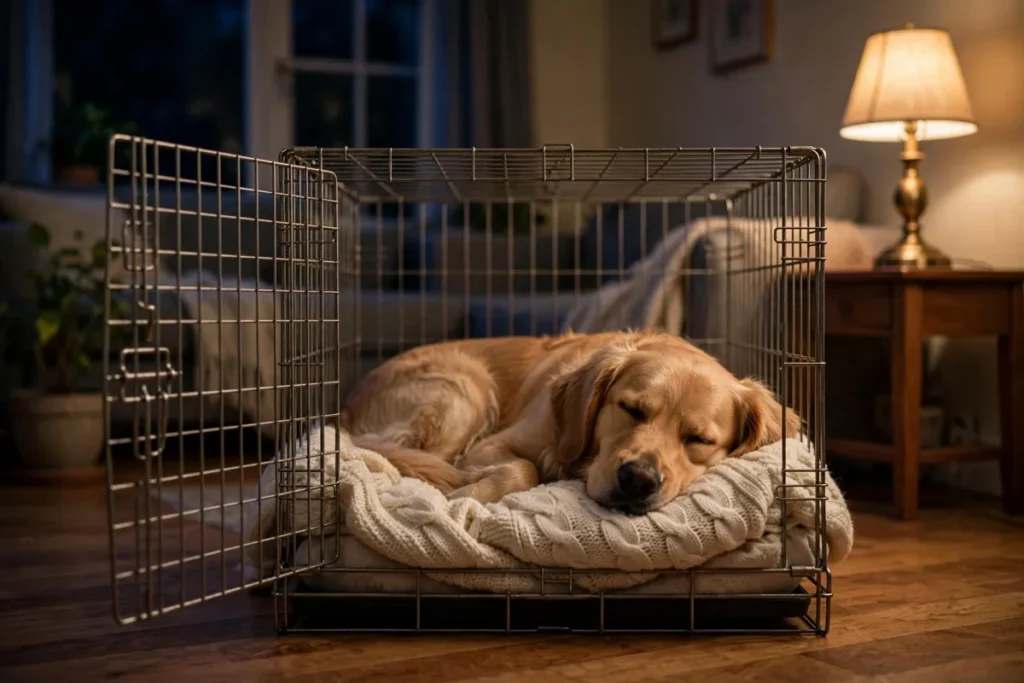
Panting in the crate can mean heat, stress, or a need for a toilet break. Check airflow, room temperature, and water before bed, and keep crate time calm and positive.
For unspayed females, being in heat can change night behavior. Panting may come and go with the cycle, but heavy discharge, pain, or illness still needs a vet visit.
Panting With Other Signs
Panting with heavy drinking deserves prompt vet attention, especially if it is new. Note drinking, toilet trips, and appetite, and share those notes with your vet.
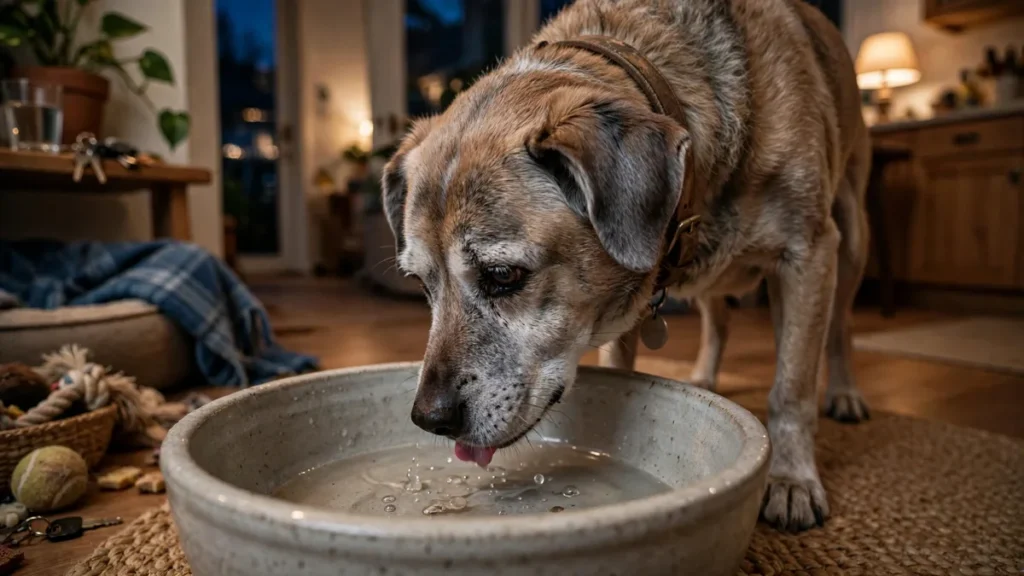
Lip licking, swallowing, or drooling with panting can point to nausea, mouth pain, or worry. If it happens most nights, ask your vet, and note what your dog ate.
Panting with shaking can mean fear, pain, cold, or feeling unwell. Warm a cold dog gently, stay calm, and seek vet care if shaking will not stop.
Panting with pacing, circling, or changing spots often means your dog cannot settle. Itchy skin can also peak at night, so note scratching, red skin, or sore spots.
Reading the Pattern: A Simple Table
When dog panting at night keeps returning, look at what comes with it, not at one night alone.
| Pattern | What it may suggest | Next step |
|---|---|---|
| Brief, after play or heat | Normal cooling | Let your dog rest and cool down |
| At rest, in a cool room | Pain, worry, or illness | Book a vet visit soon |
| With heavy drinking | Hormone or kidney problem in general terms | Note intake and call your vet |
| With pacing or restlessness | Pain, worry, or sleep change | Note the pattern and ask your vet |
| With shaking or lip licking | Fear, pain, nausea, or mouth pain | Seek vet advice if it repeats |
| With coughing or hard breathing | Heart or lung problem in general terms | Seek vet care promptly |
| Only in bed | Too warm | Try a cooler sleeping spot |
| Only in the crate | Heat, stress, or toilet need | Check airflow, routine, and bedtime breaks |
What to Do Tonight
- Cool and calm the room. Open a window or run a fan, and let your dog choose a cooler spot.
- Offer fresh water, and do not restrict water unless your vet tells you to.
- Watch breathing at rest. Count chest rises for a short timed period, and write the result down.
- Stay calm and use praise for settling. Do not scold panting or restlessness.
- Note the pattern, then call your vet if panting is heavy, repeated, or worrying.
What to Observe and Note for Your Vet
Bring notes about dog panting at night, including when it started, how often it happens, and how long it lasts.
- When it starts and ends.
- What happens before it, such as play, heat, storms, or a new routine.
- Drinking, eating, toilet habits, and energy.
- Coughing, limping, stiffness, shaking, pacing, or lip licking.
- Any new food, item eaten, or prescribed medicine.
- Gum color and breathing effort, if you can check them safely.
Photos or short notes from a few nights help more than one worried memory. Bring them to the visit, and tell your vet what has changed.
What NOT to Do
- Never give human medicines, sleep aids, or leftover medicine from another dog.
- Never ignore persistent panting, and never call it just old age without a vet check.
- Never punish panting, pacing, fear, or accidents, and never use shock or prong collars.
- Never confine a panicking dog in a tight space, and never force food or water on a dog that is struggling to breathe.
- Never change food, medicine, and routine all at once, and never delay emergency care for urgent signs.
When Night Panting Needs Urgent Vet Attention
Do not wait for morning if you see any sign below. Call an emergency vet at once, and call ahead if you can.
- Labored breathing, with the belly heaving or nostrils flaring.
- Blue, grey, or very pale gums or tongue.
- Collapse, extreme weakness, confusion, or fainting.
- A swollen, hard belly with retching but no vomit.
- Heavy panting with thick drooling, vomiting, wobbling, or signs of heat illness.
- Panting that will not settle in a cool, quiet room.
When in doubt, choose the faster option. A vet would rather hear from you early than late, especially at night.
What Your Vet May Check in General Terms
Expect questions about timing, pattern, and other signs, plus a full physical exam. Your vet will often listen to the heart and lungs, and feel the belly and joints.
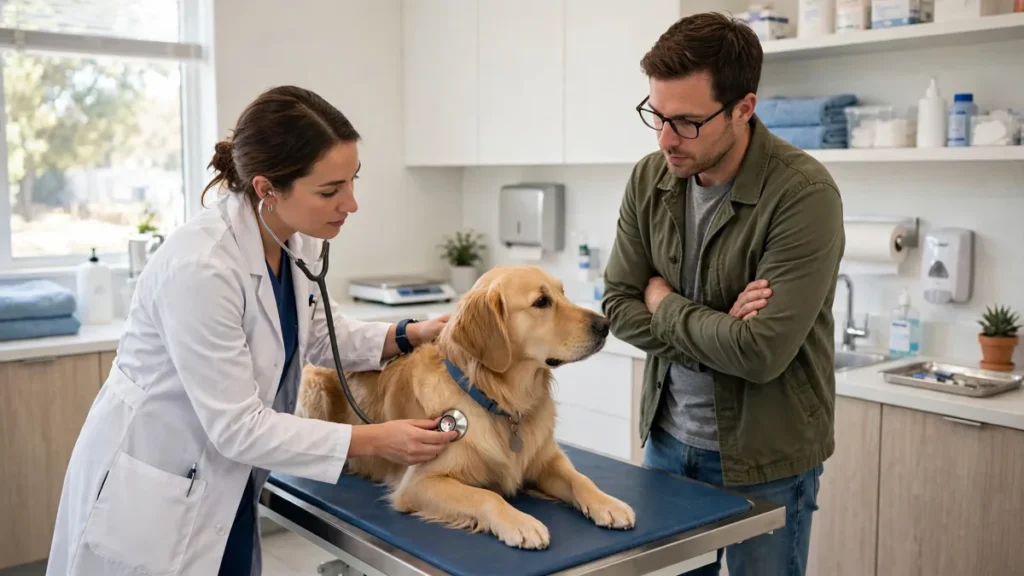
Tests may include blood tests, urine tests, or chest imaging, depending on what your vet finds. These checks help your vet narrow the cause, and they do not prove a diagnosis on their own.
For pain, sudden change, or aggression, ask about a referral to a vet or a qualified behavior professional. Bring your notes, and ask what to watch for next.
Frequently Asked Questions
Why does my dog pant at night when it is not hot?
Common causes are worry, pain, heart or lung problems in general terms, hormone problems, and some prescribed medicines. If it happens at rest, book a vet visit.
Should I worry if my dog pants in bed but settles on the floor?
Usually not much. Beds trap heat, so many dogs pant in bed and settle on a cool floor. If panting is heavy, repeated, or comes with other signs, ask your vet.
Can anxiety cause panting all night?
Yes. Noise worry, separation worry, and routine changes can keep a dog panting and restless. Use calm praise and a steady routine, and ask a professional if worry stays strong.
How can I tell if panting is an emergency?
Labored breathing, blue or pale gums, collapse, a swollen hard belly, retching without vomit, or panting that will not settle all need emergency vet care now.
When should I book a vet visit for night panting?
Book a visit for new, regular, or worsening panting, and sooner for puppies, older dogs, or dogs with other signs. Bring your night notes, and describe the pattern clearly.
The Bottom Line
In the end, dog panting at night ranges from normal cooling to a sign that needs a vet visit. The pattern, and what comes with it, matters most.
Cool the room, offer water, note the signs, and use praise and patience. If panting is heavy, repeated, or urgent, contact your vet without delay.
For related BreedFix guidance, see our guides to dog loose stool and vomiting, can dogs get cataracts, and the small golden retriever.
Reference
Reference: American Kennel Club, Why Does My Dog Pant? What to Know.
This article is general information about nighttime panting, and it is not veterinary advice.
Still stuck? Get a plan built for your dog.
Answer a few quick questions and get a personalized, force-free training plan in minutes.
Try the Free Dog Tools