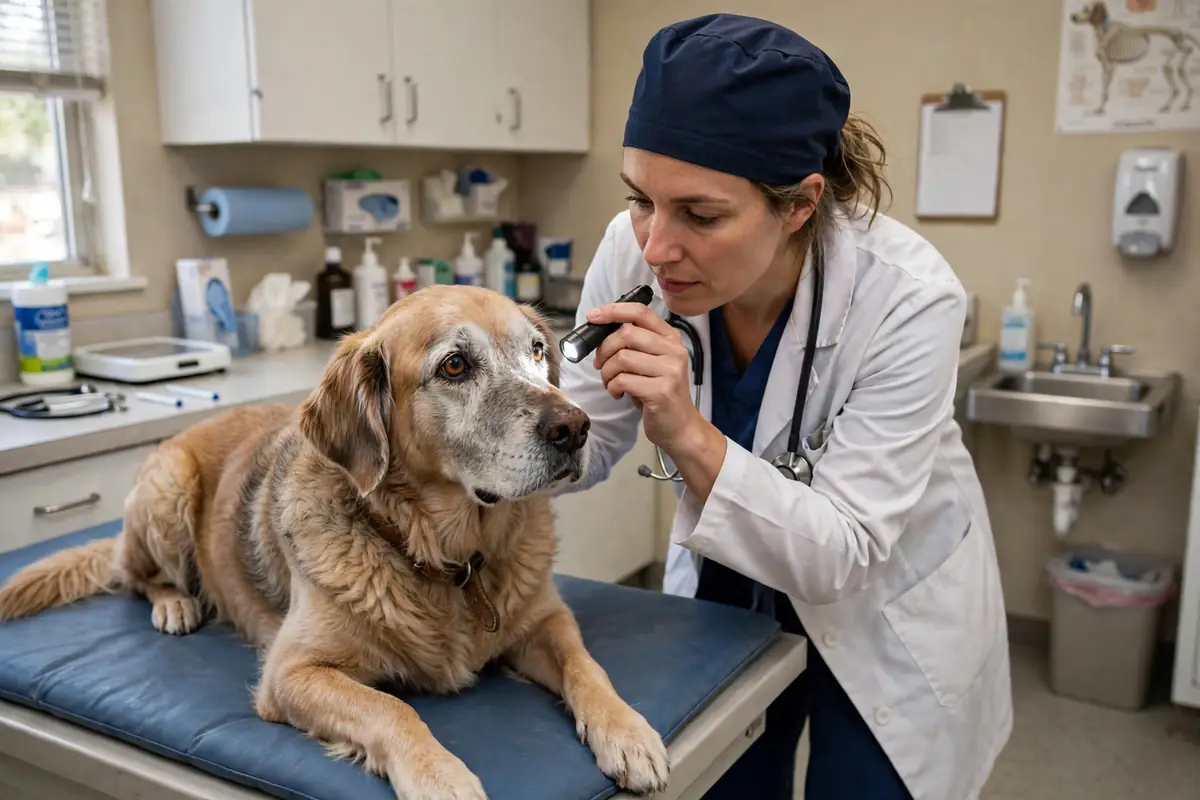
Why Do Senior Dogs Start Pacing Around the House at Night?
If you have watched your older dog walk the hallway at 2 a.m., you know how worrying it can feel.
The house is quiet, your dog cannot settle, and you wonder if something is wrong.
In many cases, senior dogs pacing at night are telling you they need help, not misbehaving.
Note: This guide is for information only. It does not replace veterinary advice. If pacing starts suddenly or gets worse, book a vet visit promptly.
Direct Answer: Senior Dogs Pacing at Night
Senior dogs pacing at night usually have a clear reason, such as pain, confusion, anxiety, fading senses, or a need to toilet.
Start with a vet check, then use a calm, steady evening routine.
Keep the bedroom safe, lit softly, and close to water and a toilet break.
Key Takeaways
- Pain, cognitive change, anxiety, fading senses, and toilet needs are the most common causes.
- Sudden, frantic, or uninterruptible pacing needs urgent vet care.
- A steady routine, a supportive bed, soft light, and a late toilet break help many dogs.
- Never scold pacing. Reward calm settling instead, and stay patient.
- Track nights for a week, then share the notes with your vet.
What Nighttime Pacing Looks Like
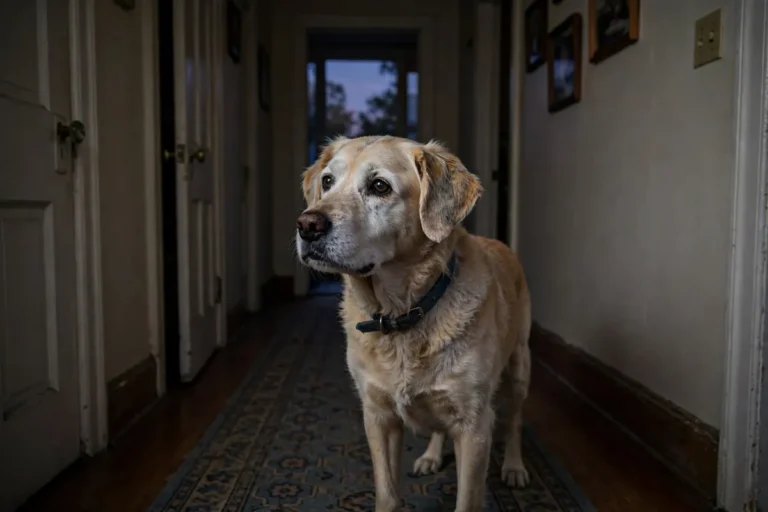
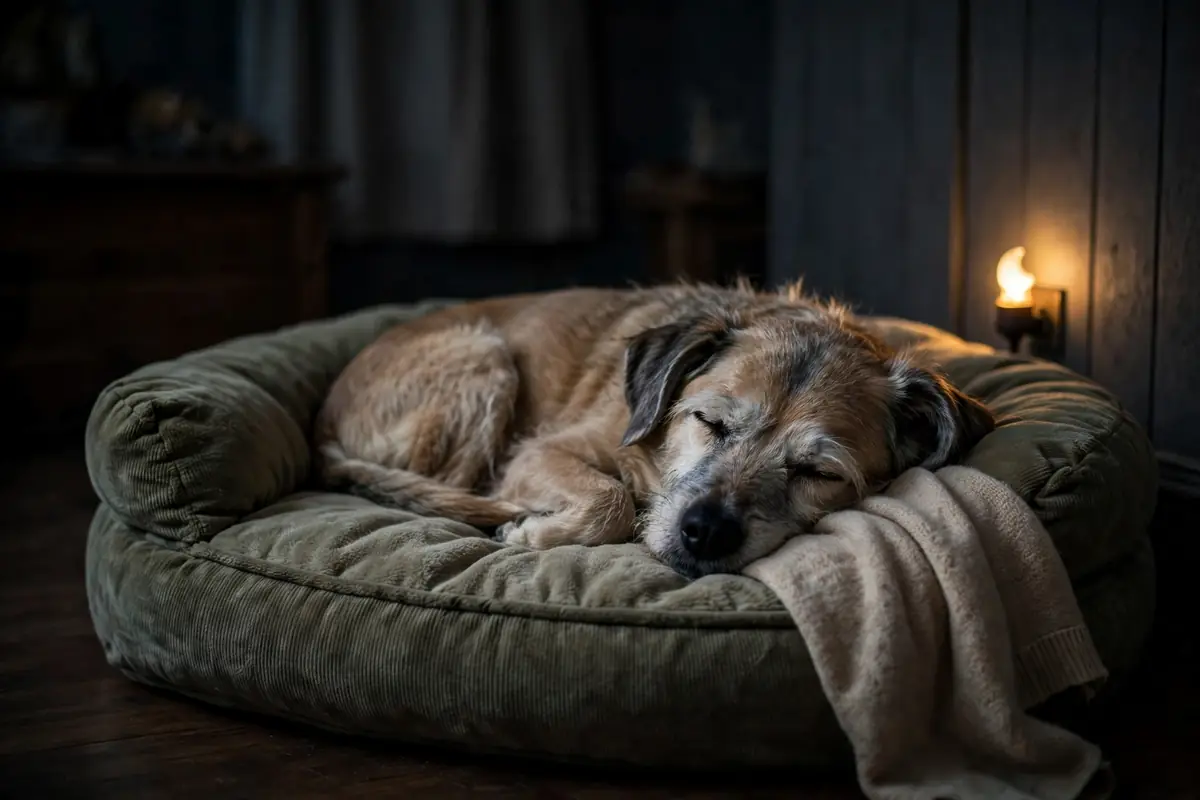
Pacing is repeated, aimless walking, often in the same loop.
Your dog may walk from room to room, circle, stop, stare, then start again.
Some dogs pant, whine softly, or seem unable to lie down.
Others settle for a few minutes, then get up and repeat the loop.
For senior dogs pacing at night, the loop often repeats after a short rest.
This is different from a single trip to the water bowl or a brief stretch after sleep.
What to Do in the Moment
- Stay calm and speak softly. Do not rush toward your dog.
- Offer a toilet break, then a drink of water.
- Guide your dog gently back to bed with a treat or a quiet word.
- Check for limping, stiffness, or signs of pain as your dog moves.
- If your dog cannot calm, note the time and what happened before.
6 Common Causes
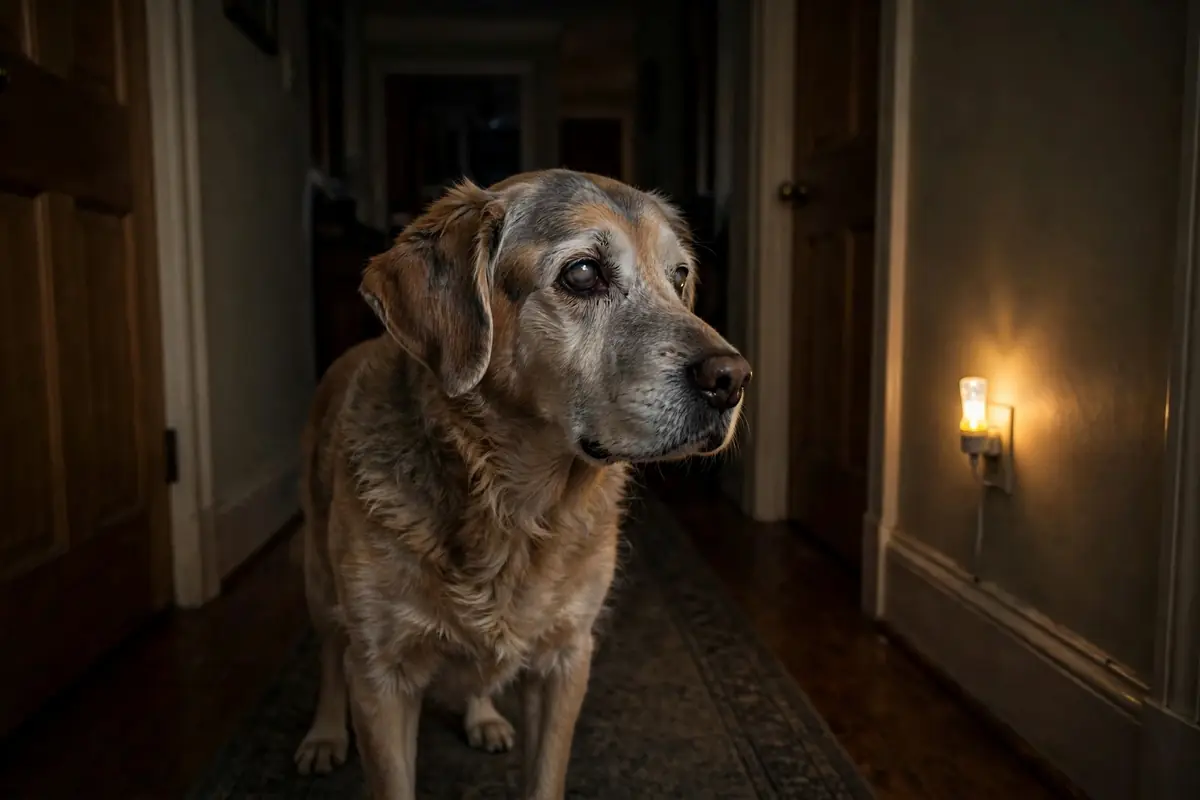
Senior dogs pacing at night do not all pace for the same reason.
Look for the pattern first, because the pattern often points to the cause.
| Cause | Clues to notice |
|---|---|
| Cognitive dysfunction | Staring, getting stuck, sleep changes, confusion at night |
| Arthritis or pain | Stiffness after rest, slow rising, limping, restless lying |
| Anxiety | Clinginess, panting, pacing when routines change |
| Fading vision or hearing | Bumping into objects, startling, trouble in dark rooms |
| Toilet needs | Restlessness near doors, frequent accidents, drinking more |
| Other illness | Thirst changes, appetite changes, vomiting, new weakness |
1. Canine cognitive dysfunction
Canine cognitive dysfunction affects memory and sleep. Dogs may feel confused in the dark.
Vets often use the DISHA checklist: disorientation, changed interaction, sleep-wake change, house soiling, and changed activity.
2. Arthritis or other pain
Pain often feels worse after long rest. Joints stiffen, so lying still becomes uncomfortable.
A dog may pace to ease stiffness, then struggle to settle again.
3. Anxiety
Older dogs can become more anxious as senses fade and routines change.
Darkness, new sounds, or a recent move can make nights harder.
4. Fading vision and hearing
A dog that cannot see or hear well has less information at night.
Dark rooms can feel confusing, so the dog keeps moving to check the space.
5. Needing to toilet
Older dogs often need to toilet more often, especially at night.
A full bladder can wake a dog and keep them restless until they go out.
6. Other medical conditions
Some illnesses change thirst, appetite, energy, or toilet habits.
These changes can show up first as restless nights, so a vet check matters.
Red Flags: When Pacing Needs Urgent Vet Care
Most pacing builds slowly, but some signs need urgent care.
- Pacing starts suddenly and your dog cannot be calmed or redirected.
- Pacing comes with vomiting, retching with nothing produced, or a swollen, hard belly.
- Your dog does not recognise you, has a seizure, or shows a head tilt.
- There is limping, crying out, or a leg that will not bear weight.
- Pacing follows a possible toxin exposure or an injury.
If you see any of these signs, contact your vet urgently or go to an emergency clinic.
How Your Vet Figures Out the Cause
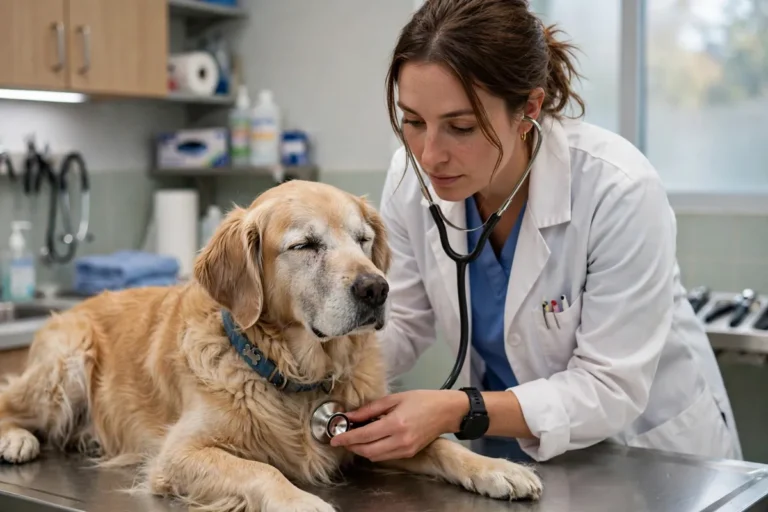
Your vet will ask when pacing started and what your dog does each night.
They may also ask about daytime sleep, appetite, toilet habits, and mobility.
A short note log helps a lot. Bring it to the appointment.
| Night | Time pacing started | What happened before | How long it lasted | Other signs |
|---|---|---|---|---|
| Night 1 | Note the time | Note the trigger | Note the length | Note panting, limping, or accidents |
| Night 2 | Note the time | Note the trigger | Note the length | Note panting, limping, or accidents |
| Night 3 | Note the time | Note the trigger | Note the length | Note panting, limping, or accidents |
Step-by-Step Evening Plan
Use this plan each evening, and keep it the same for at least a week.
Step 1: Vet check first
Book a vet visit before you change routines.
Ask about pain, sleep, toilet habits, and any new behaviour.
Step 2: Gentle daytime activity
Give short, calm walks and sniffing time during the day.
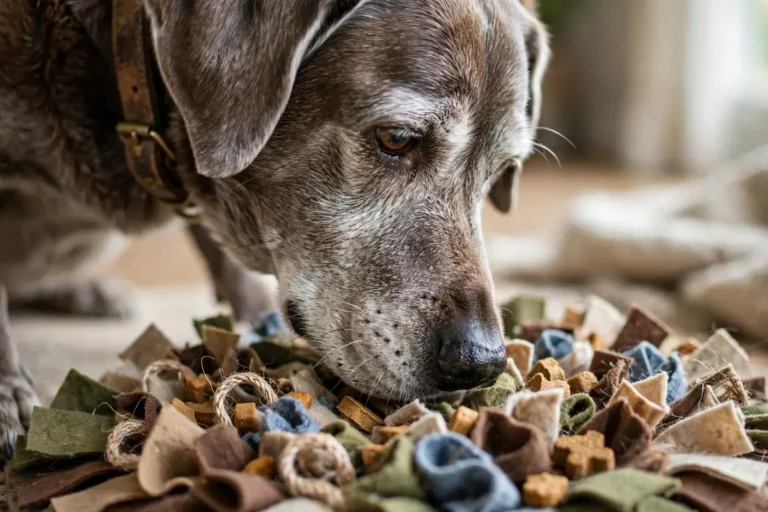
Add a food puzzle or a short, reward-based game.
Step 3: Steady evening routine
Feed, walk, and settle your dog at similar times each night.
Predictable evenings help confused dogs feel safer.
Step 4: Late toilet break
Take your dog out last thing before bed, even if they went out recently.
Keep the trip calm, short, and well lit.
Step 5: Supportive bed and soft light
Place a supportive bed in a warm, draft-free spot near you. A comfortable orthopedic bed for old dogs can make lying down easier.
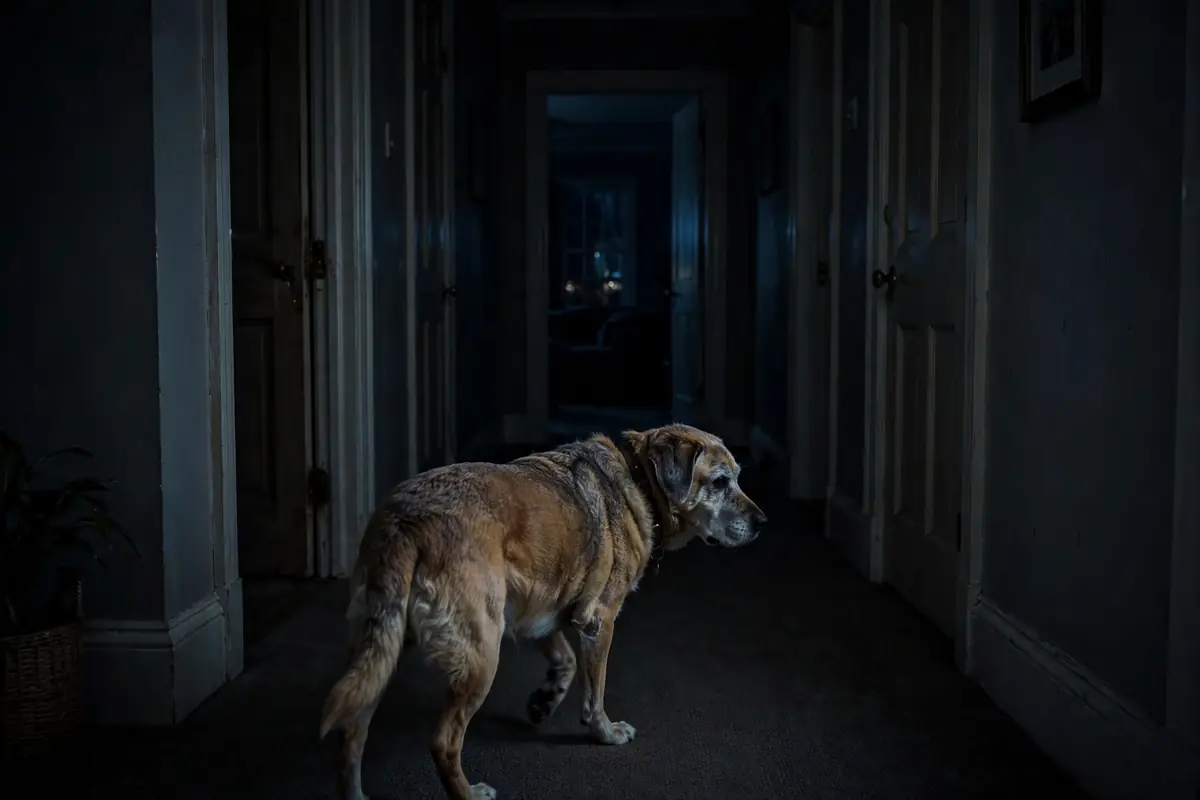
Add a low nightlight in the hallway and bedroom.
Step 6: Safe night space
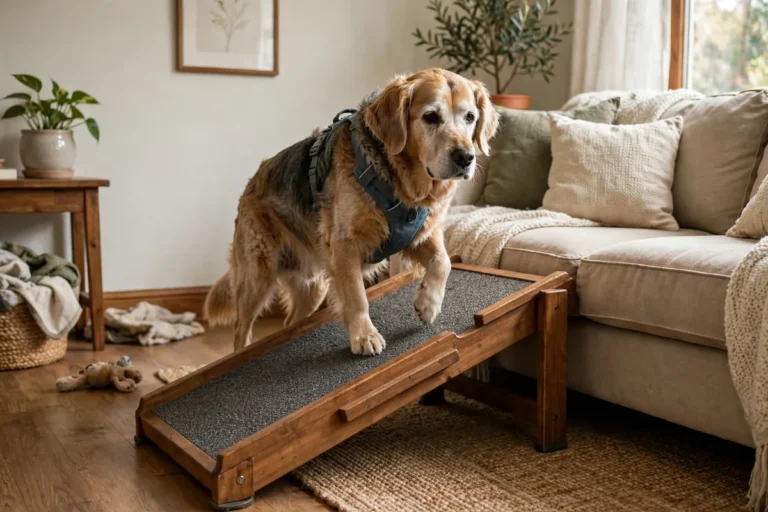
Lay runners on slippery floors along the route to water and the door. See the guide on help for a dog afraid of slippery floors for traction ideas.
Block stairs and close doors to rooms that are not safe at night.
Step 7: Sleep nearby and reward settling
Let your dog sleep in your bedroom if that helps them settle.
Reward calm lying down quietly, with a soft word or a small treat.
What Not to Do
- Do not scold or punish pacing. Punishment adds fear to pain or confusion.
- Do not call it just old age and do nothing. Many causes can be managed with vet help.
- Do not start sedatives or other medicines on your own. Ask your vet first.
- Do not use shock collars, prong collars, or force. They increase fear and do not treat the cause.
- Do not ignore daytime changes. New sleeping, soiling, or greeting changes matter too.
If your dog is also restless or distressed when left alone during the day, ask your vet about anxiety and behaviour support. A calm-alone plan for separation anxiety may help alongside vet advice.
When to Get Vet or Professional Help
Book a vet visit for new, regular, or worsening pacing.
Ask for a referral to a certified behaviour professional if anxiety stays strong after medical causes are checked.
Bring your night log, a list of medicines, and notes on daytime changes.
Frequently Asked Questions
Is pacing at night always a sign of dementia in old dogs?
No. Pain, anxiety, vision loss, and toilet needs can also cause pacing.
Only a vet can sort out the cause after an examination.
How can I tell if my senior dog has canine cognitive dysfunction?
Look for the DISHA pattern over time, not a single night.
Ask your vet to assess memory, sleep, and daytime behaviour.
Should I let my pacing dog sleep in my bedroom?
For many senior dogs, yes. Nearness can reduce confusion and anxiety.
Keep the bed low, warm, and close to water.
Will medication stop my dog pacing at night?
It depends on the cause. Vet treatment may help pain or anxiety.
Never start or change medicine without veterinary advice.
My old dog paces only on some nights. Is that normal?
Some variation is common, especially with pain that changes with weather or activity.
Track the pattern, and tell your vet if nights get worse.
At what age do dogs usually start pacing at night?
There is no fixed age. Risk rises as dogs age and joints or memory change.
Sudden pacing at any age still deserves a vet check.
Senior dogs pacing at night are asking for comfort, safety, and a vet check when the pattern is new.
Start with the vet check, keep evenings calm, and give your dog a safe place to settle.
Reference
Reference: American Kennel Club, Osteoarthritis in Dogs: Signs, Symptoms, Treatments
Still stuck? Get a plan built for your dog.
Answer a few quick questions and get a personalized, force-free training plan in minutes.
Try the Free Dog Tools