
How to Make a Comfortable Orthopedic Bed for Old Dogs
A good bed is not a luxury for a senior dog. It is pain management. Old dogs with arthritis spend up to 18 hours a day resting, and every one of those hours is either easing their joints or grinding them.
If you want to know how to make a comfortable orthopedic bed for old dogs, the project is simpler than it sounds: the right foam, the right size, a washable cover, and thoughtful placement. This guide gives you a practical build that rivals store-bought orthopedic beds at a fraction of the cost.
Note: This guide covers comfort and support. If your dog has significant joint disease, pair a better bed with a veterinary arthritis plan.
Key Takeaways
- A true orthopedic bed needs dense memory foam at least 3 to 4 inches thick that does not bottom out under your dog’s weight.
- Measure your dog sleeping stretched out, then add 6 to 12 inches for the bed size.
- A removable washable cover plus a waterproof liner underneath protects the foam and keeps the bed hygienic.
- Keep entry low for short-legged or very stiff dogs, and place the bed in a warm, draft-free spot.
- Avoid hammock-style beds and thin pillow beds that flatten; both fail arthritic dogs.
Why Senior Dogs Need Real Support
As dogs age, the cartilage cushioning their joints thins and arthritis sets in. Pressure points, especially elbows, hips, and shoulders, take a beating on hard floors or flattened beds.
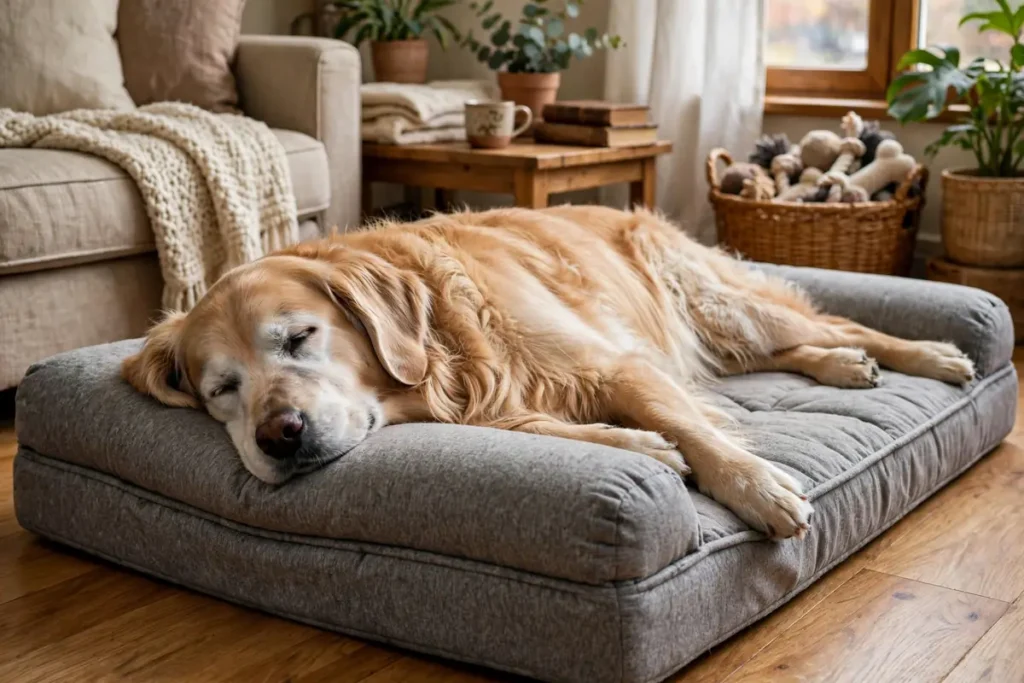
Veterinary guidance on arthritis and bedding emphasizes the same core principle: a bed for an arthritic dog should combine a draft-free position with a mattress that is both supportive and conforming, while staying easy to get in and out of.
“Supportive and conforming” is the key phrase. A bed that is merely soft lets heavy joints sink until they hit the hard base underneath, which is no better than the floor.
A bed that is merely hard does not distribute pressure. Memory foam does both: it molds around joints to spread weight evenly while pushing back enough to keep the spine aligned.
What Makes a Bed "Orthopedic"
The word "orthopedic" on packaging is unregulated, so judge by construction, not labels:
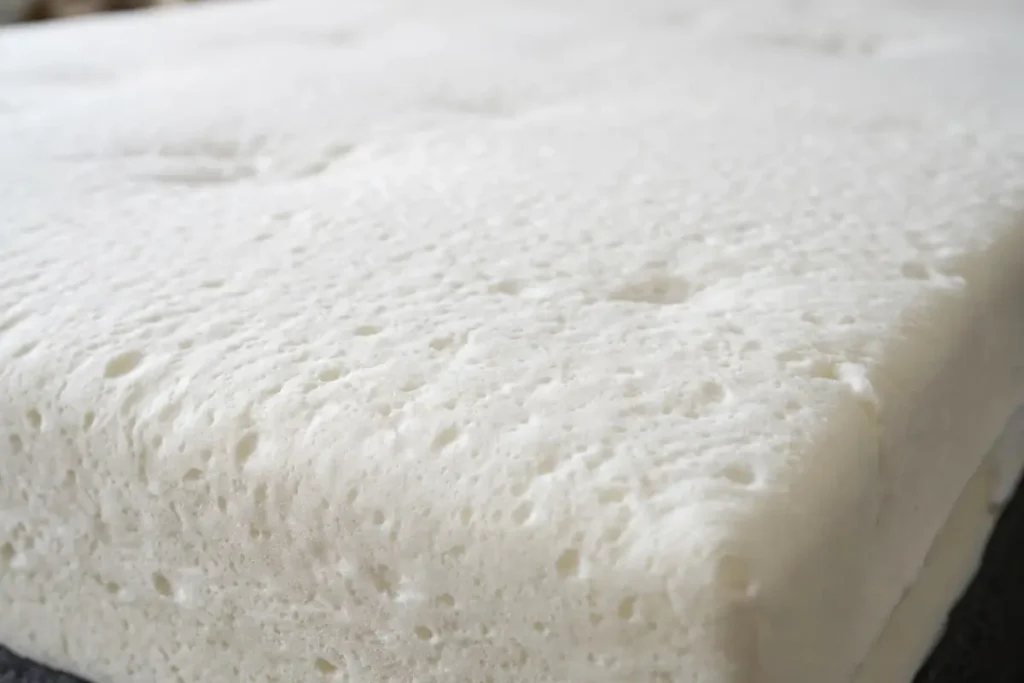
- Dense memory foam core. This is the non-negotiable part. Look for foam at least 3 to 4 inches thick for medium and large dogs; smaller dogs can do well with 2 to 3 inches of good-density foam. Press it hard with your palm: quality foam resists and slowly rebounds rather than collapsing.
- Flat, stable sleeping surface. Bolsters around the edge are fine for dogs that like leaning, but the center where your dog actually lies must be flat and supportive.
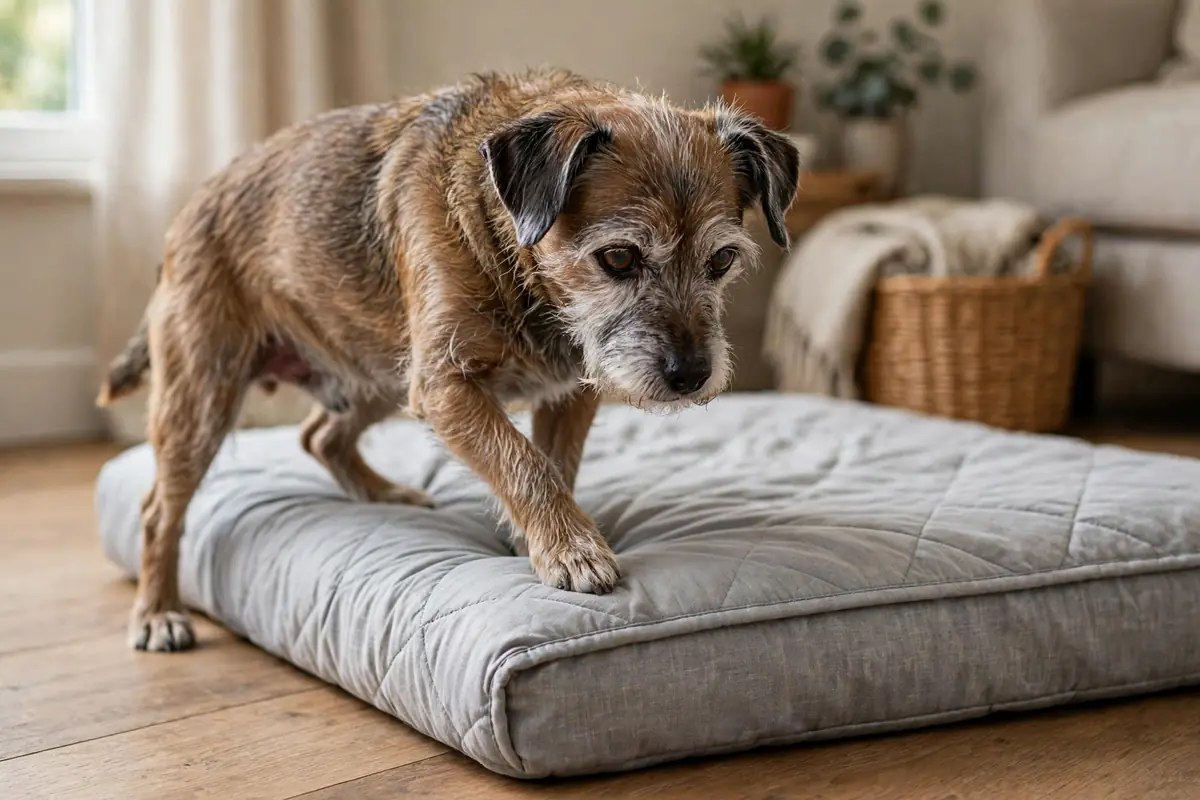
- Low entry height. Arthritic and short-legged dogs struggle to climb onto tall beds. The sleeping surface should be easy to step onto, not a hurdle.
- No hammock designs. Veterinary arthritis advisors specifically warn against hammock-style beds, which sag in the middle and strain joints instead of supporting them.
Materials You'll Need
- Memory foam mattress topper, 3 to 4 inches thick. A twin-size topper yields one large bed or two medium beds. Buying a "like new" topper secondhand and cutting it down is the classic budget route; many owners report excellent results doubling or tripling thinner layers to reach proper thickness.
- Removable, washable outer cover. A duvet cover, a purpose-made pet bed cover with a zipper, or fabric you sew into a simple envelope cover. Machine-washable is essential for senior dogs, who have more accidents.
- Waterproof liner. A waterproof mattress protector or crib liner between the foam and the outer cover. This is the difference between a bed that lasts years and one ruined by a single accident, since foam cannot be machine washed.
- Non-slip base. A sheet of non-slip rug pad or rubber shelf liner under the bed stops it sliding on hard floors when your stiff dog heaves themselves up.
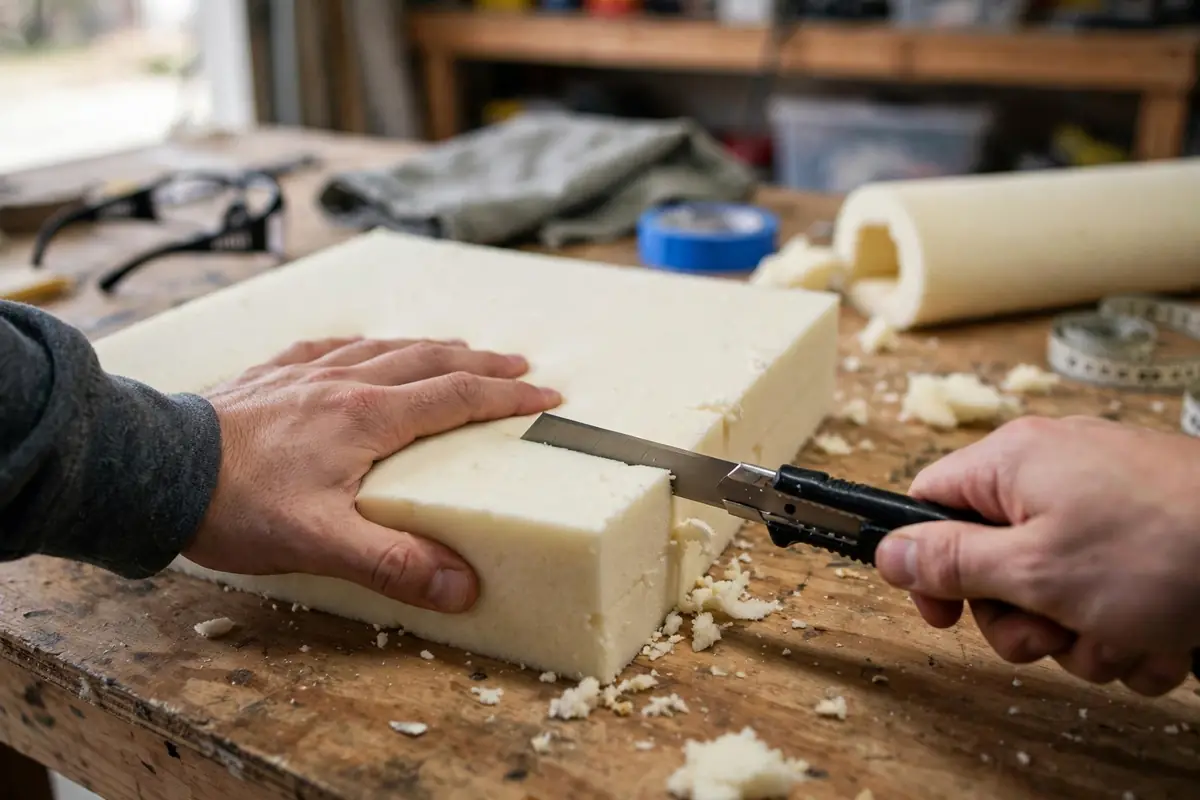
- Basic tools. Measuring tape, a marker, and a long sharp knife (an electric carving knife cuts foam cleanly) for trimming foam to size.
Step-by-Step Build
Step 1: Measure your dog
Measure your dog lying stretched out on their side, nose to tail base, then add 6 to 12 inches so they can sprawl without hanging off the edge. For dogs that curl up, measure the curled diameter and add a few inches. Write down length and width.
Step 2: Cut the foam
Lay the topper flat and mark your measurements. Cut with smooth, steady strokes; a sawing motion tears foam.
If you are layering two thinner toppers for extra thickness, cut both to the same dimensions and stack them. For dogs that struggle to step up, chamfer (bevel) the front edge at an angle so there is a gentle slope rather than a wall.
Step 3: Add the waterproof liner
Wrap the foam in the waterproof liner like a present, or slide it into a waterproof protector sized to fit. Smooth out wrinkles, since bunched liner creates pressure ridges. This layer never gets removed for washing, so fit it well once.
Step 4: Fit the washable cover
Slide the whole thing into your outer cover. A zippered cover is easiest; a duvet-style envelope cover works if the opening is generous. The cover should fit snugly without compressing the foam. If sewing your own, fleece or cotton canvas are durable, comfortable choices.
Step 5: Add the non-slip base and place the bed
Put the non-slip pad underneath, then position the bed in a warm, draft-free corner your dog already likes. Near the family, not isolated: senior dogs rest better close to their people. If your dog sleeps in multiple spots, consider building a second, simpler bed for the other location rather than dragging one bed around.
Sizing and Thickness Guide
Use these as starting points and adjust to your individual dog:
| Dog size | Example breeds | Bed size (approx.) | Foam thickness |
|---|---|---|---|
| Small (under 25 lb) | Dachshund, Shih Tzu | 24 x 18 in | 2-3 in |
| Medium (25-60 lb) | Beagle, Border Collie | 36 x 24 in | 3-4 in |
| Large (60-90 lb) | Labrador, Golden Retriever | 44 x 32 in | 4 in |
| Extra large (90+ lb) | German Shepherd, Great Dane | 52 x 36 in | 4 in+ |
Heavier dogs need thicker, denser foam because more weight compresses it. The test never changes: press your full weight on the spot where your dog’s hips will lie. If you feel the floor through the foam, add thickness.
Placement and Daily Care
- Warm and draft-free. Cold stiffens arthritic joints. Avoid doorways, exterior walls, and tile floors in winter.
- Near water and exits. Senior dogs drink and toilet more often; a bed near both reduces painful trips.
- Wash the cover weekly. Senior dogs shed skin oils and have more accidents. Keep a spare cover so the bed is never out of service.
- Air the foam monthly. Remove the cover, let the foam breathe for a few hours, and check for flattening or crumbling.
- Replace foam when it stops rebounding. Even good foam eventually wears out. If the sleeping dent stays dented, the orthopedic benefit is gone.
Mistakes to Avoid
- Pillow-only beds. Loose stuffing migrates and bottoms out under an old dog’s weight within weeks. Fine as a topper over foam, useless as the support layer.
- Beds with high walls all around. Dogs that must climb over a bolster to lie down will simply sleep on the floor instead.
- Pretty but unwashable beds. If the cover cannot go in the washing machine, it will not survive senior-dog life.
- One bed dragged between rooms. Senior dogs need support wherever they rest. A second simple foam pad beats one perfect bed that is never where the dog is.
- Ignoring the floor around the bed. A perfect bed on a skating-rink floor still means a painful, frightening dismount. Put a rug or mat beside it.
Protecting your senior’s joints does not stop at bedtime. If your dog still launches off furniture during the day, our guide on protecting dachshunds’ backs from jumping explains the same joint-protection principles applied to couches and stairs.
FAQ: How to Make a Comfortable Orthopedic Bed for Old Dogs
Is memory foam really better than regular stuffing for old dogs?
Yes, for support. Memory foam distributes weight evenly and does not migrate like loose stuffing, which means pressure points stay cushioned all night. Regular stuffed beds flatten under a heavy senior within weeks and end up no better than the floor.
How thick should an orthopedic dog bed be?
Aim for at least 3 to 4 inches of dense memory foam for medium and large dogs, 2 to 3 inches for small dogs. The real test is the palm press: if you can feel the floor through the foam under firm pressure, it is too thin or too soft for your dog’s weight.
Can I just use an old human mattress topper?
Absolutely. A used memory foam mattress topper is the most popular DIY source. Just make sure it is clean, free of strong odors, and thick enough after any compression it has already suffered. Air it out well before cutting.
How do I keep a DIY dog bed from smelling?
The washable outer cover is your main defense; wash it weekly. The waterproof liner protects the foam itself, which is the part you cannot wash. Baking soda sprinkled on the foam during monthly airing, then vacuumed off, helps with residual odor.
My senior dog prefers the cold tile floor to any bed. What now?
Some dogs, especially in warm weather, genuinely prefer cool surfaces. Do not force the bed. Instead, put a thin cooling mat or a single folded blanket on their chosen spot, and keep offering the orthopedic bed nearby. Preferences can change with seasons and pain levels.
How often should I replace the foam in a DIY orthopedic bed?
Inspect it every few months. When the foam no longer springs back and holds a permanent dent where your dog lies, its support is gone. With good foam and a protective liner, expect one to three years depending on the dog’s weight.
A comfortable orthopedic bed is one of the highest-value things you can build for an old dog: a weekend project, modest cost, and better rest every single night for years. Measure carefully, buy dense foam, protect it with washable layers, and place it where your senior already loves to be. Their joints will thank you at every sunrise stand-up.
