Senior Dog Cognitive Dysfunction Sundowning: Symptoms & Help
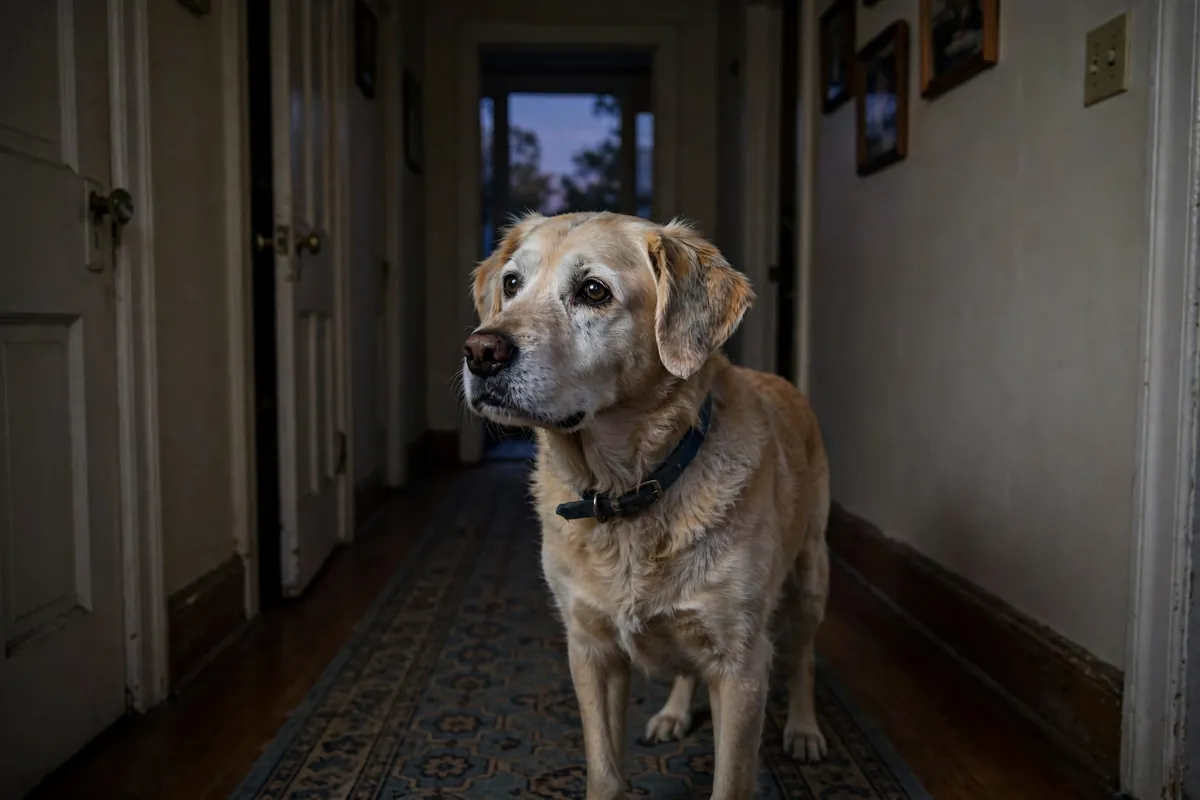
Your old dog was fine all day. Then, as the light faded, everything changed. He paced the hallway, stared at walls, whined at nothing, and got stuck behind furniture.
If this evening pattern sounds familiar, you may be seeing sundowning. Understanding senior dog cognitive dysfunction sundowning symptoms is the first step to making nights calmer for both of you.
Key Takeaways
- Canine cognitive dysfunction (CCD) is the dog term for dementia. Sundowning is its evening pattern of confusion, restlessness, and anxiety.
- CCD is a diagnosis of exclusion. Your vet must first rule out pain, organ disease, and vision or hearing loss.
- The classic signs follow DISHAA: Disorientation, altered Interactions, Sleep-wake changes, House soiling, altered Activity, and Anxiety.
- Evening signs often include pacing, panting, vocalizing, staring blankly, and getting stuck in corners.
- A calm evening plan uses light, routine, a safe night space, and gentle daytime enrichment.
- Ask your vet about prescription options and diet changes. Do not start, stop, or change any medicine on your own.
- This article is general information, not veterinary advice. Behavior changes in seniors always deserve a vet exam.
Senior Dog Cognitive Dysfunction Sundowning Symptoms: The Direct Answer
In short, senior dog cognitive dysfunction sundowning symptoms are evening confusion, restlessness, and anxiety in an older dog with CCD. Signs get worse as daylight fades, even when the dog seemed settled during the day.
Common signs are pacing or wandering, panting, whining or barking, staring into space, and getting stuck behind furniture. Some dogs also seem unsure who familiar people are, or they wake and pace through the night.
Sundowning alone does not prove CCD. A vet check comes first, because pain and illness can look very similar. Once treatable causes are ruled out, a steady evening routine often helps.
What Is Canine Cognitive Dysfunction?
Canine cognitive dysfunction is a slow, age-related decline in brain function. It can affect memory, learning, awareness, and sleep. Many people compare it to dementia in people, but dogs show it through behavior.
Signs often appear in the last third of a dog’s life. Age varies by size and breed, and change is usually gradual. Early signs are easy to miss, because owners may first blame normal aging.
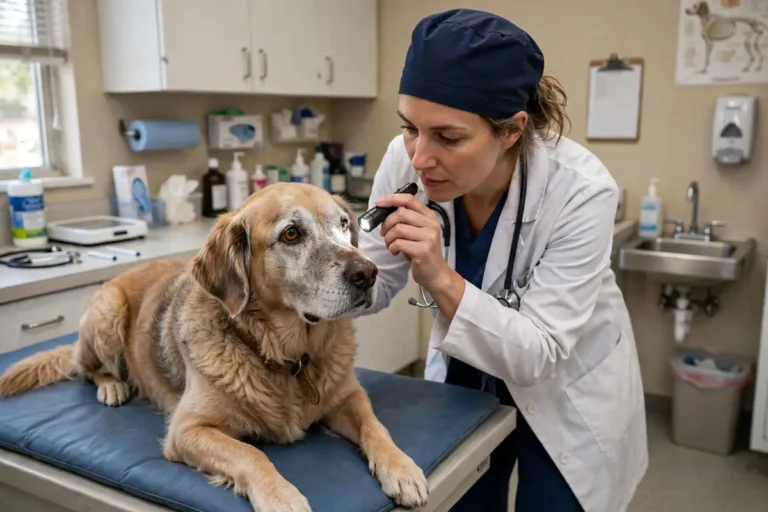
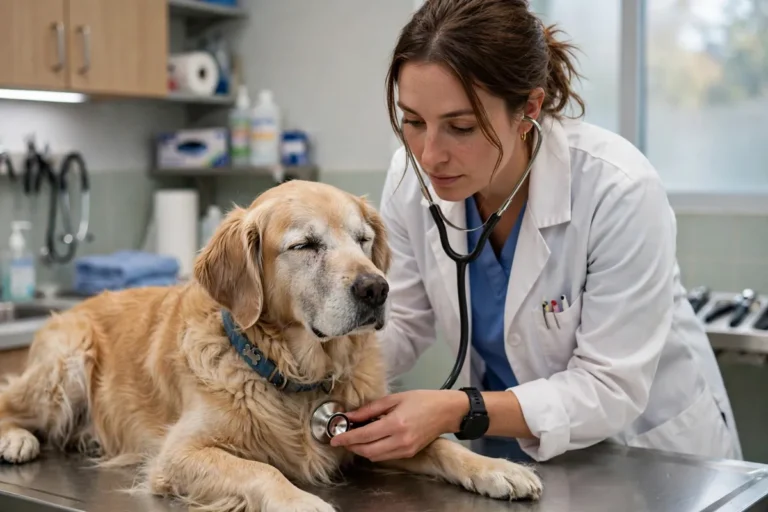
There is no single test that confirms CCD in a living dog. Your vet will take a history, examine your dog, and often run blood and urine tests. Imaging may be used when the vet needs to rule out other problems.
What Is Sundowning, and Why Evenings?
Sundowning is not a separate disease. It is a pattern within CCD, in which confusion and anxiety worsen in the late afternoon and evening. The term comes from dementia care in people, where the same evening change is seen.
Evenings remove visual cues that a confused dog relies on. Fatigue builds through the day, and the brain’s sleep-wake control may already be damaged. That mix can leave a dog most lost just as the house winds down.
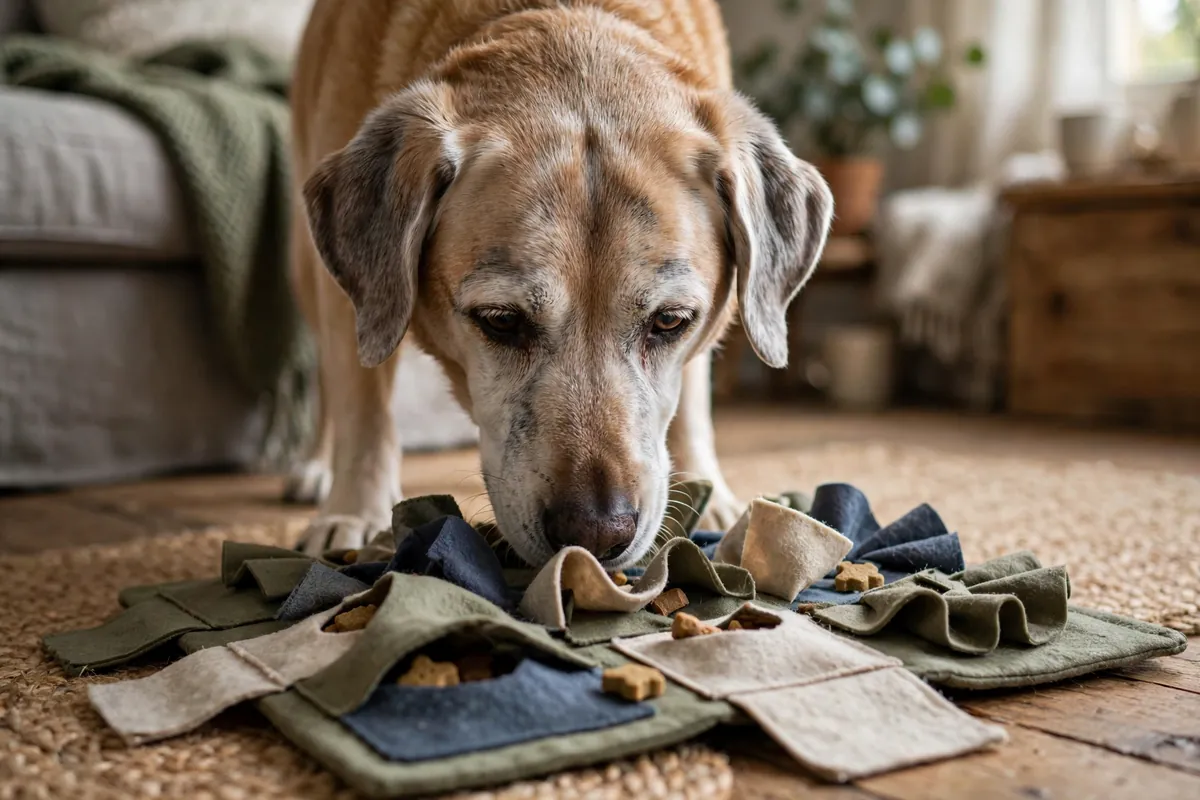
Senior Dog Cognitive Dysfunction Sundowning Symptoms: The DISHAA Checklist
Use this checklist to note what you see, and when. Bring your notes to your vet. Specific times and examples help far more than a general report that your dog seems confused.
| Letter | What it means | What you may see |
|---|---|---|
| D | Disorientation | Getting lost in familiar rooms, going to the wrong side of doors, staring at walls, getting stuck |
| I | Interactions altered | Less greeting, less interest in petting, walking away during affection, seeming not to know family |
| S | Sleep-wake changes | Sleeping all day and restless all night, pacing, vocalizing, or panting through the night |
| H | House soiling | Losing housetraining despite regular outings. This is forgetting, not defiance. Never punish it. |
| A | Activity changes | Repetitive licking or pacing, less interest in play, or restless wandering instead of rest |
| A | Anxiety | New fears, clinginess, evening agitation, or distress when left alone |
If several signs are present and worse in the evenings, book a vet visit soon. Note the start time, how long episodes last, and what seemed to help. That log can guide the vet’s next steps.
What Else Could It Be? Rule-Outs That Matter
Because CCD is diagnosed by exclusion, your vet will consider lookalikes. Several are treatable, which is why the workup matters and should not be skipped.
- Pain: Arthritis and spinal pain can cause nighttime restlessness and panting. Stiffness, slow rising, and reluctance on stairs point toward pain. See our guide on natural pain relief for old dogs with arthritis.
- Urinary problems: Infections or incontinence can cause nighttime waking and accidents that look like lost housetraining.
- Vision or hearing loss: Bumping into things and startling in dim rooms can look like disorientation. See our guide on caring for a blind senior dog.
- Organ disease: Kidney, liver, and thyroid problems can cause behavior change, thirst, and restlessness.
- Medicine effects: Some drugs can worsen confusion or restlessness. Tell your vet if signs changed after a new prescription.
- Sudden balance problems: Sudden circling, head tilt, or falling over is different from gradual sundowning. Seek vet care promptly.
Do not try to diagnose CCD at home. Treating the wrong cause wastes time, and some lookalikes need prompt care.
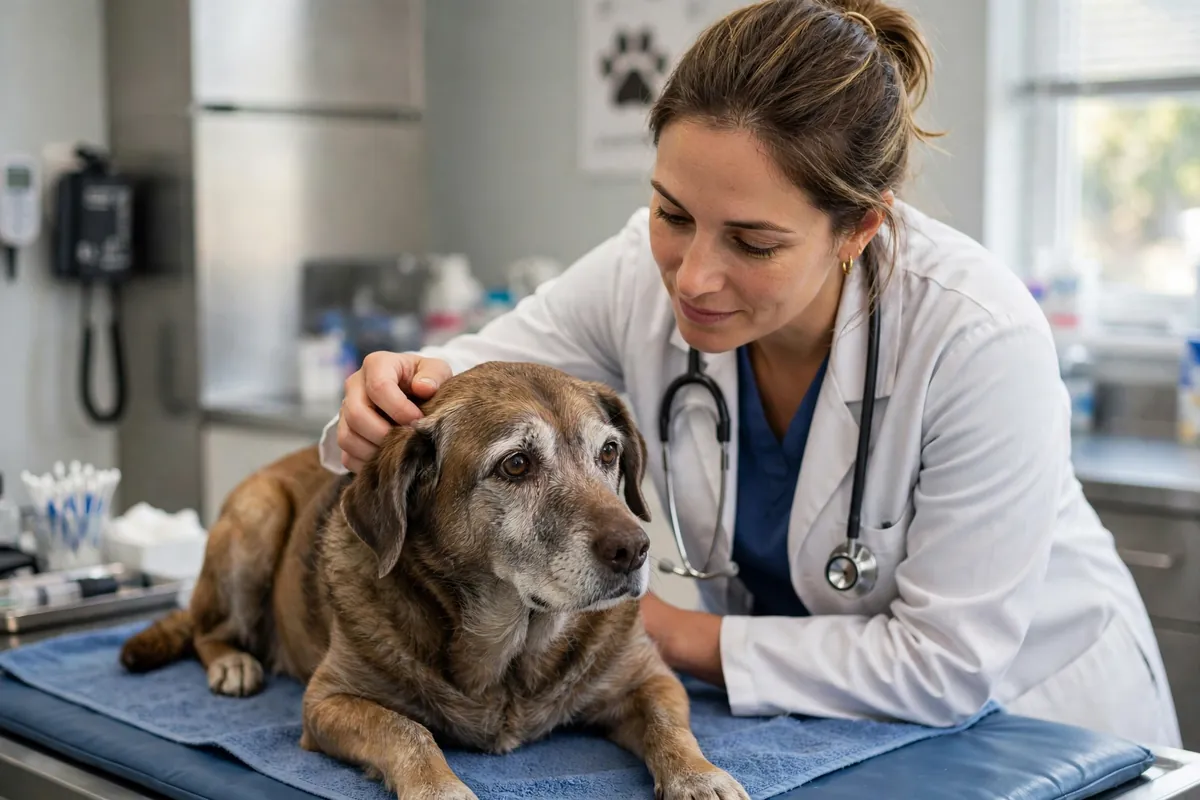
A Calm Evening Plan: Step by Step Tonight
There is no cure for CCD, but evenings can often get calmer. Try this plan in order, and keep it the same each night. Predictability helps a confused dog feel safer.
- Light the house before dusk. Turn on lights early, and use timers if that helps. Add nightlights in hallways, near the water bowl, and along the path to the door.
- Keep dinner and the last potty break at the same times. Use the same order each night. A fixed routine reduces the anxiety that can fuel sundowning.
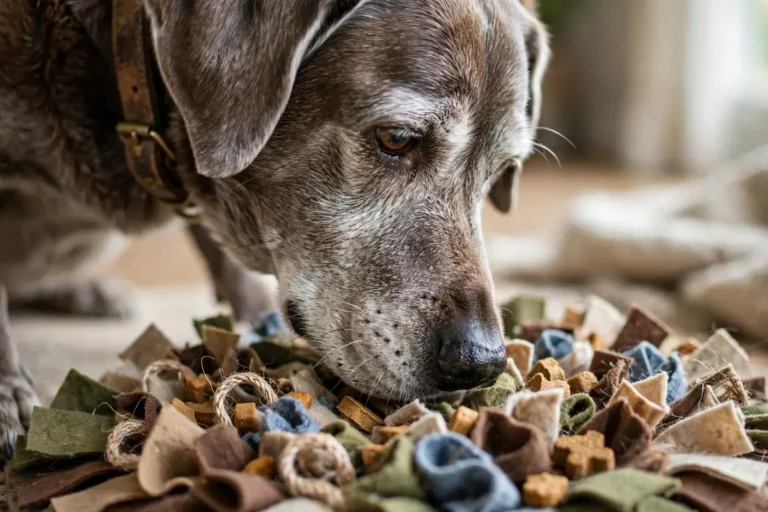
- Offer gentle daytime activity, not late excitement. Short sniff walks and food puzzles during the day can support better sleep. Keep sessions short for a fragile senior.
- Set up a safe night space. Use a bed in a quiet corner, away from household traffic, with familiar-smelling bedding. See our guide to a comfortable orthopedic bed for old dogs.
- Wind down the house. Lower noise and visitors in the evening. Soft music or white noise can mask startling sounds.
- Respond calmly during an episode. Speak first, then gently guide your dog to the bed, offer water, and turn on a light. Do not startle, scold, or force interaction.
- Log the night. Note the time, the signs, and what helped. Review the log with your vet at the next visit.
Daytime Habits That Help Nights
Daylight matters. Open curtains during the day, and keep your dog’s main rest area bright but not harsh. A clear day and night pattern can support the damaged sleep-wake cycle.
Use short, calm enrichment. Sniff walks, scatter feeding, and simple food puzzles give the brain gentle work. Stop before your dog gets tired or stressed, and rest between sessions.
Keep water easy to reach, and watch drinking habits. If your dog walks away from the bowl, read our guide on how to keep an older dog hydrated. Tell your vet about any sudden change in thirst.
Night pacing is a common worry on its own. If pacing is the main sign, read our guide on senior dogs pacing at night. It can help you sort pain, anxiety, and sundowning clues to discuss with your vet.
What NOT to Do
- Do not punish pacing, vocalizing, or house soiling. Punishment adds fear and does not teach a confused dog.
- Do not startle a dog that is staring, stuck, or half asleep. Say their name calmly first, then guide them gently.
- Do not suddenly confine a dog that is not used to a crate or small room. Confinement can panic a confused dog.
- Do not give human pain medicine, sleep medicine, or supplements without vet advice. Interactions and dosing matter.
- Do not change food, medicine, or routine all at once. Change one thing at a time, and note the result.
- Do not rely on a single gadget, scent, or supplement as a cure. No home product replaces a vet exam.
Vet Treatments Worth Discussing
Your vet may discuss prescription medicine for CCD. One option vets sometimes discuss is selegiline (Anipryl). It is a prescription medicine, it helps some dogs and not others, and it needs vet monitoring.
Your vet may also discuss support for related problems. That can include pain care when arthritis overlaps, help for nighttime anxiety, or sleep-wake support. Your vet will weigh benefits, risks, and interactions.
Diet is another topic to raise, not a home experiment. Ask your vet whether a brain-supportive or senior diet suits your dog. Tell your vet about every food, treat, and supplement your dog takes.
Ask what to monitor between visits. Good questions are: what change should prompt a call, when to recheck, and what to do if nights suddenly get worse.
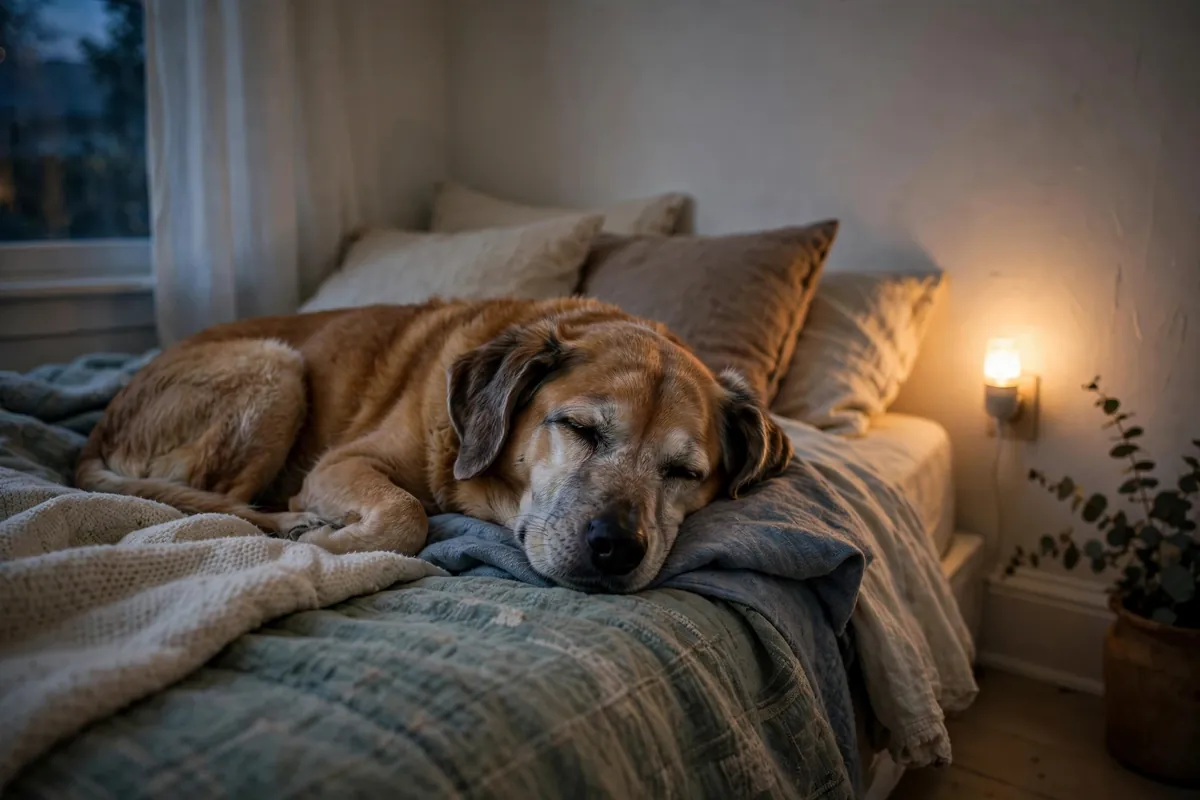
When to Get Vet Help: Red Flags
Book a vet visit at the first clear evening pattern, not months later. Early checks rule out treatable lookalikes and start management sooner.
If senior dog cognitive dysfunction sundowning symptoms appear suddenly, or get much worse in a day, seek vet care promptly. Sudden change can signal a medical problem, not just CCD.
- Sudden confusion, collapse, weakness, or trouble walking
- Not eating or drinking, vomiting, or clear signs of pain
- Rapid breathing, distress, swelling, or a hot, painful joint
- New aggression, hiding, or a dog that cannot settle at all
- Accidents paired with straining, blood, or clear discomfort
- Any sign that your dog is in pain or in danger
For pain, sudden change, aggression, or a medical cause, a vet or certified behavior professional should be involved first. This guide does not replace that care.
Looking After Yourself, Too
Sundowning is exhausting. Broken sleep and watching a beloved dog seem lost can wear you down. That does not mean you are failing your dog.
Keep the log simple: time, sign, and what helped. Patterns often emerge within a week or two. Share the log, and be honest about sleep and stress at home.
Talk with your vet about quality of life as CCD progresses. The goal is comfort and calm, not a cure. Having that talk early, before a crisis, can make later choices clearer.
Frequently Asked Questions
What age do dogs start sundowning?
It varies by size and individual. Signs often emerge in the last third of life, and later for small breeds than for large breeds. Any new evening confusion in a senior deserves a vet check, whatever the exact age.
Is sundowning in dogs the same as dementia?
Sundowning is a pattern within canine cognitive dysfunction, which is the vet term for dog dementia. Not every dog with CCD sundowns, and evening restlessness alone does not prove CCD.
Can sundowning be cured?
No. CCD is progressive, and there is no cure. Its signs, including sundowning, can often be reduced with routine, light, enrichment, and vet-guided care. Many owners see calmer nights over time.
How fast does canine cognitive dysfunction progress?
It varies widely. Some dogs stay stable for long periods with good management. Others decline over months. Regular vet rechecks let the plan change as your dog changes.
Should I wake my dog during a sundowning episode?
Do not startle them. Speak calmly first, then gently redirect them. Guide them to the bed, offer water, and turn on a light. Quiet redirection works better than correction.
When should I call the vet about sundowning?
At the first pattern you notice, not months later. Call promptly for sudden confusion, collapse, not eating, or signs of pain. Early assessment rules out treatable lookalikes and starts help sooner.
With a steady routine, gentle light, and prompt vet care, senior dog cognitive dysfunction sundowning symptoms can become easier to manage, even when they do not go away completely.
Reference
Reference: Senior dog dementia, Cornell University College of Veterinary Medicine
This article is general information about canine cognitive dysfunction and sundowning and is not veterinary advice. Behavior changes in senior dogs always deserve a veterinary exam.
Still stuck? Get a plan built for your dog.
Answer a few quick questions and get a personalized, force-free training plan in minutes.