

Can Dogs Eat Grass? Why They Do It and When to Worry
Every dog owner has watched it happen. Your dog spots a patch of lawn, starts grazing like a small cow, and you are left wondering whether to stop him.
So, can dogs eat grass? The reassuring answer is yes, in most cases. Grass eating is one of the most normal behaviors in the dog world.
In a University of California, Davis survey of more than 1,500 dog owners, 68% of dogs ate plants, mostly grass, on a daily or weekly basis. It is what dogs do.
Can Dogs Eat Grass and Why Do They Do It?
Researchers have tested the popular explanations, and the results surprise most owners. Grass eating is rarely about sickness, and it is not usually about a missing nutrient either.
The simplest explanation is instinct. Wild canines eat plant material too, and grazing appears to be a normal, inherited behavior that domestic life never removed.
Taste and texture play a role. Many dogs genuinely enjoy fresh grass, especially tender spring growth, and dogs in one Australian study ate more grass before meals, suggesting plain hunger is part of it.
Boredom and habit finish the picture. A dog alone in a yard with nothing to do will graze the way a bored person snacks.
Dog Eating Grass and Vomiting: What the Research Says
The famous belief is that dogs eat grass to make themselves throw up when they feel sick. The UC Davis numbers mostly dismantle that myth.
Only about 8 to 9% of dogs showed any sign of illness before eating grass. And fewer than a quarter, around 22%, vomited afterward.
In other words, most dogs eat grass while perfectly healthy, and roughly three out of four never vomit at all. Vomiting looks incidental rather than the goal.
One twist survived the data: dogs that did look unwell before grazing were more likely to vomit after it. A nauseous dog may graze, but grass is not usually the medicine.
Can Dogs Eat Grass and Not Throw Up?
Yes, and that is the most common outcome of all. Can dogs eat grass and not throw up? Most do exactly that, every single time.
If your dog nibbles a few blades on a walk and carries on happily, nothing is wrong. That is the textbook version of this behavior.
What deserves attention is a change: a dog that suddenly grazes frantically, or starts vomiting after grass when he never used to. Patterns matter more than single episodes.
Dog Suddenly Eating Grass Like Crazy
A dog suddenly eating grass like crazy, lunging at the lawn and gulping mouthfuls without chewing, is behaving differently from a casual grazer. Frantic grazing often does signal nausea.
Watch what comes with it. Lip licking, drooling, swallowing repeatedly, and restlessness point to an upset stomach that may need a vet, especially if it repeats.
Frantic retching with nothing coming up, plus a tight or swollen belly, is a bloat emergency. That combination means an emergency clinic immediately, not a wait-and-see.
If the frenzy passes and your dog is bright, eating, and drinking normally, mention it at the next checkup. Repeated frantic episodes deserve a proper workup for gut problems.
How Long After Eating Grass Will a Dog Vomit?
When vomiting does happen, it usually follows within a short window, typically minutes to a couple of hours after grazing. The grass irritates the stomach, and the body reacts quickly or not at all.
Most owners see it happen on the walk itself or soon after coming home. A dog that ate grass at breakfast and vomits at dinner is probably dealing with something else.
Repeated vomiting, vomiting that continues beyond a day, or vomiting with blood, lethargy, or refusal of water is a vet visit, whatever the timing.
Dog Eating Grass and Throwing Up Foam
Foam is usually bile, not grass. A dog eating grass and throwing up white or yellow foam is typically vomiting on an empty stomach, often first thing in the morning.
The grass may trigger the episode, but the foam itself points to an empty, acidic stomach rather than poisoning. This pattern is often called bilious vomiting.
An earlier evening meal or a small bedtime snack helps many of these dogs. If foam vomiting becomes a daily pattern, ask your vet to check for reflux or other stomach issues.
Can Dogs Eat Grass and Leaves?
Leaves follow the same rule as grass: plain, untreated, and in small amounts, they usually pass through without drama. Most dogs mouth leaves out of curiosity, not hunger.
The risk is never the leaf category itself. It is the specific plant, because some common garden and house plants are toxic to dogs, and fallen leaves can hide mold.
Treated gardens are the bigger issue. Leaves in sprayed flower beds carry the same pesticide risk as treated lawns, so steer grazing toward areas you know are untreated.
Can Dogs Eat Grass and Weeds?
Most common lawn weeds are not highly toxic, but “most” is doing heavy lifting in that sentence. A dog eating grass and weeds together can easily mouth a plant you would rather he skipped.
Weed killer is the main danger. Lawns and verges sprayed for weeds are exactly where dogs love to graze, and herbicide exposure causes vomiting and diarrhea in many dogs.
Learn the few genuinely dangerous plants in your area and remove them from your own yard. For unknown greenery on walks, a simple rule works: grazing on plain grass is fine, mystery plants are not.
Can Dogs Eat Grass Seeds?
Grass seeds deserve a special warning, because the danger is mechanical, not toxic. Dry grass seed heads and foxtails have barbed awns designed to travel in one direction only.

Those seeds lodge in ears, noses, paws, eyes, and throats, and they burrow deeper with movement. The result is pain, infection, and often a vet procedure to remove them.
Head shaking, paw licking, sneezing fits, or a sudden sore eye after time in long dry grass are classic foxtail signs. Keep dogs out of seeding long grass in late spring and summer where possible.
Can Dogs Eat Grass and Dirt?
Plenty of dogs do. A dog eating grass and dirt together is usually grazing enthusiastically and taking the soil with it, which is harmless in small amounts.
Occasional dirt tasting is normal exploration, especially for puppies. The soil itself can carry worm eggs from other animals’ feces, which is one more reason to keep deworming current.
Persistent dirt eating is different. Eating non-food items regularly is called pica, and it can signal nutritional problems, anemia, or gut disease. A dog that seeks out dirt daily should see a vet.
Can Dogs Eat Grass Roots?
Roots come up with the grass when a dog pulls hard, and small amounts of clean root and soil are not a poisoning risk by themselves.
The concerns are the same as with dirt: whatever is in that soil. Roots from chemically treated lawns, or from toxic plants dug up whole, are the real problem.
If your dog is excavating and eating roots obsessively, treat it like pica rather than grazing. Redirect, supervise, and book a checkup if the habit is new or intense.
Can Dogs Eat Grass Clippings?
Fresh clippings are a poor snack. Piles of cut grass clump together, ferment quickly, and can grow mold, and a dog that gulps a clump risks stomach upset or worse.
Small amounts nibbled from a freshly mowed, untreated lawn are unlikely to harm a healthy dog. The risk rises with piles: more material, more fermentation, more mold.
Clippings from treated lawns combine both problems at once, chemicals plus fermentation. Rake up piles before letting your dog back onto a mowed lawn.
Can Dogs Eat Grasshoppers?
An occasional grasshopper is generally not toxic to dogs, and many dogs catch them for fun. The insect itself is mostly protein and crunch.
There are two cautions. Grasshoppers in sprayed areas can carry insecticide residue, and insects can act as hosts for parasites such as the stomach worm that infects dogs which eat bugs regularly.
One grasshopper on a hike is nothing to panic about. A dog that hunts and eats insects daily is better redirected, and should be on regular parasite prevention.
Can Dogs Eat Grass Jelly?
Grass jelly is a human dessert made from a plant in the mint family, and plain grass jelly is not known to be toxic to dogs. That does not make it a dog food.
The problem is everything that comes with it. Grass jelly is usually served sweetened, in syrup or sweet drinks, and none of that sugar load suits a dog.
Sugar-free versions are the true danger, because some contain xylitol, which is severely toxic to dogs. Our advice is simple: keep desserts human-only, and check any “sugar-free” product for xylitol before it is anywhere near your dog.
Do Dogs Eat Grass When They Have Worms?
This is an old belief with a plausible story: wild ancestors may have used rough plant fiber to help clear parasites from the gut.
For modern pet dogs, there is no evidence that worms cause grass eating, or that grass eating removes worms. Healthy, well-dewormed dogs in the studies grazed just as happily.
Keep your dog’s worming and parasite prevention up to date because it matters for health generally. Just do not read a grazing habit as a worm diagnosis.
Why Does My Dog Eat Grass on Walks?
Walks concentrate every grass motive at once. There is fresh grass, interesting smells from other dogs and wildlife, pauses with nothing else to do, and sometimes genuine enjoyment of the taste.

Verge grass also carries the day’s risks: road runoff, council spraying, and other dogs’ waste. Let your dog nibble in cleaner spots and keep walks moving past treated or roadside strips.
A “leave it” cue, taught with positive reinforcement, gives you an off-switch for the patches you do not trust. Most dogs learn it quickly when the reward beats the salad.
What Should I Do If My Dog Eats Grass?
In most cases, nothing at all. If your dog grazes calmly, stays bright, eats meals normally, and does not vomit repeatedly, grass eating is a non-event.
Do check where the grass came from. If it was freshly sprayed or you are unsure, watch for vomiting, drooling, diarrhea, or lethargy over the next hours and call your vet if they appear.
Book a vet visit when grass eating becomes daily and obsessive, when vomiting follows often, or when appetite, weight, or stools change. Bring notes on frequency; they help more than you would expect.
And remember our Raw Eggs guide covers the same pattern for kitchen foods: most everyday questions end with “a little is fine, the details matter.”
Safer Substitutes for Dog Eating Grass
If you want to redirect the habit, give your dog a legal version of it. A tray of pet grass, usually wheatgrass or oat grass grown indoors, satisfies many grazers.
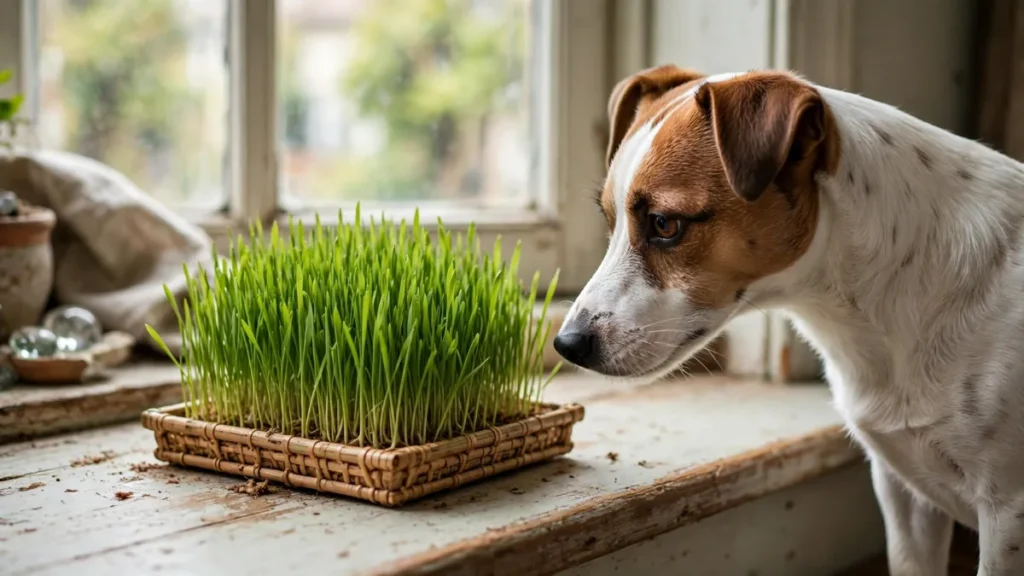
Fiber is the other lever. In one documented case, a dog that ate grass and vomited daily stopped entirely on a high-fiber diet. A spoon of plain pumpkin or a few steamed green beans can help some dogs; keep extras under 10% of daily calories.
Enrichment handles the boredom cases: longer sniffy walks, puzzle feeders, and training games. And if grazing is the only issue, sometimes the best substitute is simply permission, on grass you know is clean.
Frequently Asked Questions
Is it OK to let my dog eat grass?
Usually yes, if the grass is untreated and your dog stays well. Supervise, avoid sprayed lawns and long seeding grass, and see a vet if the behavior suddenly intensifies or vomiting becomes routine.
Can dogs eat grass every day?
Many healthy dogs graze daily or weekly; in the UC Davis survey, 68% of dogs did. Daily grazing by itself is not a diagnosis, but new, frantic, or obsessive grazing deserves a vet conversation.
Why does my dog eat grass but not throw up?
Because vomiting is not the point for most dogs. Only about 22% of dogs in the research vomited after grazing. The rest simply enjoy it, do it from habit or boredom, and digest it without incident.
Should I stop my dog eating grass after vomiting once?
One vomit followed by a bright, hungry dog is rarely serious. Offer water, keep the next meal plain and modest, and watch. Repeated vomiting, blood, weakness, or refusal to drink means a vet the same day.
The Bottom Line
Can dogs eat grass? Yes. For most dogs it is a normal, harmless habit rooted in instinct, taste, and boredom, not a secret illness or a home remedy.
Your job is only quality control: untreated grass, no foxtails, no mystery plants, and attention when the pattern suddenly changes. Do that, and you can let your little cow graze in peace.
For more on the instincts behind everyday canine habits, see the ASPCA overview of dog behavior. And when in doubt about a new behavior, a quick call to your vet beats a week of worrying.