Golden Retriever Raiding the Garbage? How to Stop It Safely
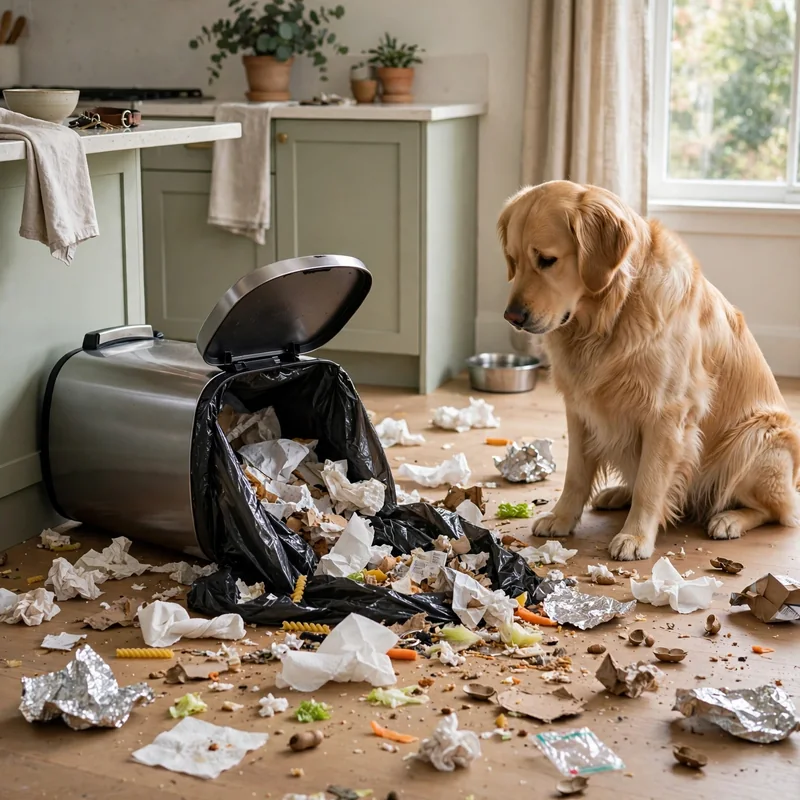
You walk into the kitchen and find the trash can tipped over, chicken bones scattered across the floor, and your Golden Retriever looking enormously pleased. If you have a Golden Retriever eating garbage, take a breath.
This is not defiance or spite. It is one of the most natural dog behaviors there is, amplified by a breed with a famously powerful food drive.
But “natural” does not mean harmless. Kitchen trash can hide foods that are genuinely toxic to dogs, plus bones, wrappers, and mold that cause blockages or poisoning.
This guide covers what makes garbage dangerous, how to dog-proof your home today, and how to train your Golden to leave the trash alone, with positive reinforcement only.
Key Takeaways
- A Golden Retriever eating garbage is following powerful instincts: high food drive plus scavenging behavior. Every successful raid makes the next one more likely.
- Trash is genuinely dangerous. Chocolate, xylitol, grapes, onions, cooked bones, and moldy food can cause poisoning or blockages. “Garbage gut” can be life-threatening.
- Prevention beats training. A latched bin your dog cannot open, trash behind closed doors, and secured outdoor cans solve most cases.
- Train “leave it” and a “trade” game so giving things up pays better than stealing. Never chase a dog that stole something, it turns theft into a game.
- If your dog eats something possibly toxic, call your vet, ASPCA Animal Poison Control (888-426-4435), or Pet Poison Helpline (855-764-7661) right away. Never induce vomiting unless told to.
Why Golden Retrievers Raid the Garbage
Dogs are scavengers by nature, and that programming never left. Add the Golden Retriever’s famously high food drive, and your trash can looks like a bakery window.
What turns sniffing into a habit:
Self-reward. The first raid that finds roast chicken pays the biggest paycheck of your dog’s life. Behaviors that pay get repeated. One or two jackpots can create a lifelong trash raider.
Hunger. A dog fed once daily may spend evenings genuinely hungry.
The Wisconsin Humane Society notes hungry dogs who ransack garbage may improve with several small meals a day; ask your vet about a diet that helps your dog feel full.
Boredom. An under-exercised Golden invents entertainment. The Wisconsin Humane Society notes some dogs get into trouble purely from boredom.
Attention. If raiding summons the whole family running and shouting, trash becomes an exciting social event.
The Dangers of a Golden Retriever Eating Garbage
This section matters more than the training tips, because a Golden Retriever eating garbage is not just making a mess.
Penn State professor Nancy Dreschel warns that garbage raiding can be genuinely dangerous: plastic bags, string, chicken bones, chemicals, or rotten food can cause blockages, diarrhea, and poisoning (“garbage gut”), which can be life-threatening.
She describes treating dogs that cut their mouths on cans and surgically removing a corn cob from a dog’s intestines a month after it was eaten.
Here are the most common trash dangers:
| Danger | Why it harms dogs |
|—|—|
| Chocolate, coffee grounds | Theobromine and caffeine affect the heart and nervous system. Darker chocolate is worse. |
| Xylitol (sugar-free gum, some peanut butters) | Rapid blood-sugar drop and possible liver damage, even in small amounts. |
| Grapes and raisins | Linked to sudden kidney injury. No known safe amount. |
| Onions, garlic, leeks, chives | Damage red blood cells, raw, cooked, or powdered. |
| Cooked bones | Can splinter or cause blockages. |
| Corn cobs | Classic surgical blockage. The cob does not digest. |
| Moldy food | Some molds cause tremors or seizures. |
| Fatty scraps | Can trigger pancreatitis. |
| Wrappers, string, plastic | Choking or blockage risk. |
Save these numbers now: ASPCA Animal Poison Control (888-426-4435) and Pet Poison Helpline (855-764-7661), staffed around the clock by veterinary professionals (a consultation fee may apply).
What to Do About a Golden Retriever Eating Garbage Right Now
Do not wait for symptoms. If your Golden ate garbage that may have contained anything from the table above, or you do not know what was in there:
1. Secure your dog. Remove remaining trash from reach. Note what they may have eaten, roughly how much, and your dog’s weight.
2. Call your vet, an emergency vet, or a poison helpline immediately. Treatment is far more effective before symptoms appear.
3. Do not induce vomiting unless a professional tells you to. Some substances cause more damage coming back up.
4. Watch for warning signs: repeated vomiting, drooling, lethargy, appetite loss, bloating, diarrhea, tremors, or collapse. Bloating with unproductive retching is an emergency.
If it was plainly non-toxic trash, like paper towels, monitor for vomiting or appetite loss and call your vet if anything seems off. When in doubt, call.
Step 1: Make the Garbage Impossible to Reach
Management does the heavy lifting. The Wisconsin Humane Society’s core principle: prevent the dog from ever experiencing the reward of stealing.
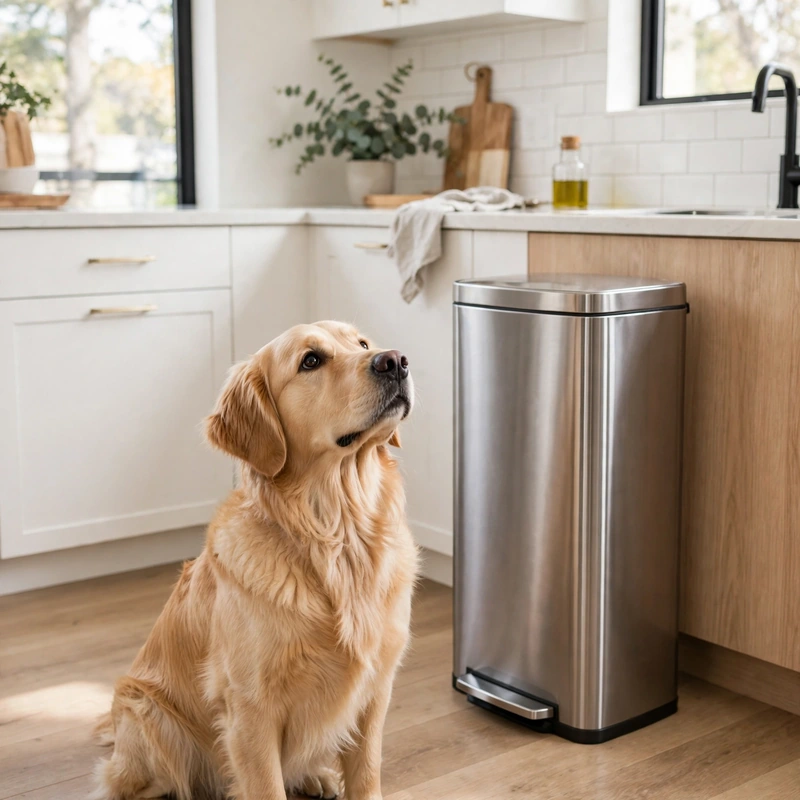
Upgrade the kitchen bin. Use a locking lid or latch your dog cannot operate. Step-pedal bins are not dog-proof. If your dog defeats every bin, move the trash inside a latched cabinet or behind a closed door.
Secure every other bin. Bathroom, bedroom, and office bins are all targets. Put small bins up high, behind closed doors, or switch to lidded versions.
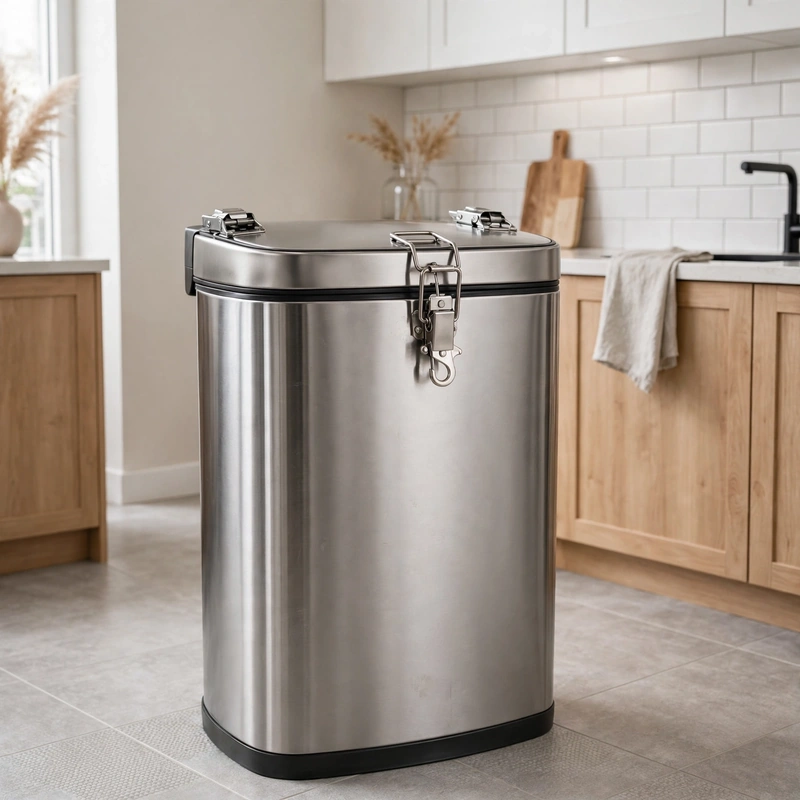
Lock down outdoor cans. Locking lids, bungee cords, or a bin enclosure, and bring bins in promptly after collection.
Gate the kitchen if needed, when you cannot supervise.
Clean up after a raid. Lingering smells keep the location interesting. Take the trash out immediately.
Zero successful raids is the goal. Solid management alone resolves most garbage raiding within weeks, because the behavior stops paying.
Step 2: Train “Leave It” and the Trade Game
Management stops the rehearsal. Training builds the alternative.
“Leave it”
1. Closed fist with a treat. When your dog sniffs then pulls away, say “yes” and reward from your other hand.
2. Open the hand; close it if they dive in. Reward looking away.
3. Treat on the floor, first covered then uncovered, on leash.
4. Practice with dropped food on walks and staged “trash.” Reward generously.
The trade game
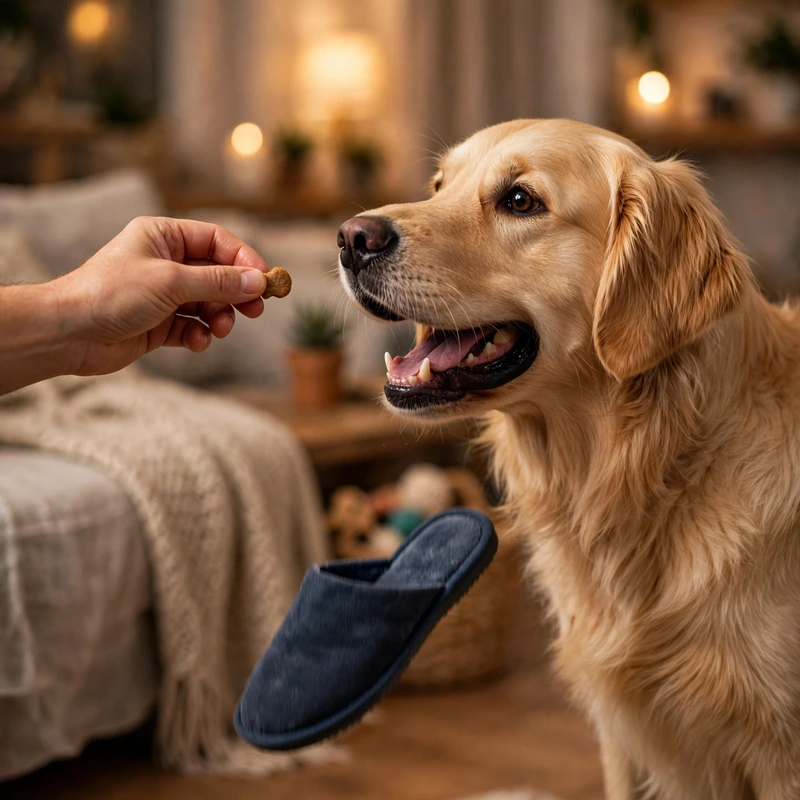
Dogs that get chased for stealing learn to swallow faster and guard harder. Teach the opposite: giving things up pays.
1. Offer a low-value toy. When they take it, present an amazing treat and say “trade.”
2. The moment they release it, say “yes,” give the treat, then give the toy back. Surrendering must not mean losing.
3. Work up to higher-value items. Always trade up: a stolen chicken bone buys the best treat in the house.
4. Practice as a game, not only in emergencies.
Never chase a dog with stolen goods. It turns theft into keep-away and teaches faster swallowing. Stay calm, get the treat, and trade.
No shock collars, prong collars, yelling, or physical punishment: they add fear around food and can contribute to resource guarding.
Step 3: Fix the Root Cause
A dog-proof bin stops the symptom. Fixing the root cause stops the motivation.
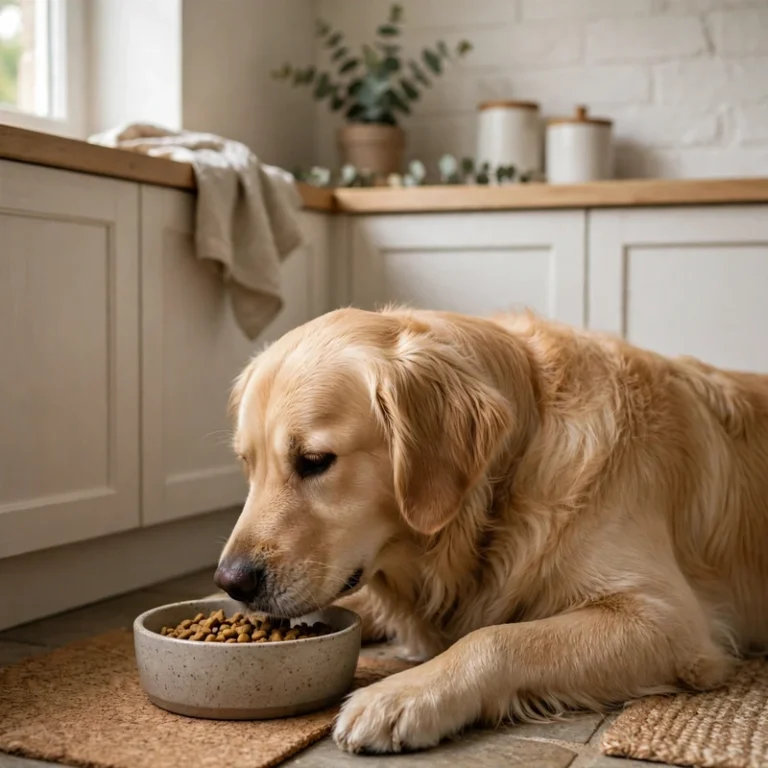
Feed enough, often enough. If your Golden acts perpetually hungry, talk to your vet. Splitting food into two or three meals, or a diet formulated for satiety, can help.
Do not cut food for weight management without veterinary guidance; a hungry dog is a motivated thief.
Enrich the day. Puzzle feeders, training sessions, sniffy walks, swimming, and chew outlets make a Golden far less likely to go looking for trouble.
Serve one daily meal from a puzzle feeder or snuffle mat, and offer a frozen stuffed Kong when you leave.
Supervise and redirect. Puppies and new rescues should not have unsupervised kitchen access. Catch them sniffing the bin, cheerfully cue “leave it,” reward, or send them to their mat with a chew.
Check for medical causes. A sudden increase in scavenging, especially with weight loss or digestive changes, deserves a vet visit.
Stopping a Golden Retriever Eating Garbage on Walks
Street garbage is the outdoor version of the kitchen bin, and a Golden Retriever eating garbage on walks faces the same dangers. Walk your dog on a leash or long line in litter-prone areas.
Practice “leave it” with staged setups: place a tempting but safe item on your route, approach on leash, and reward the leave-it heavily. Walk when bins are secured rather than on collection mornings when trash lines the curb.
And keep the trade game fluent: the dog that will trade a chicken bone for cheese on cue is a dog you can keep safe.
Frequently Asked Questions
Why does my Golden Retriever keep eating garbage even though I feed them well?
Scavenging is instinctive and self-rewarding, not a sign of hunger. One successful raid can create a lasting habit. The fix is management plus training, not more food.
What foods in the garbage are most dangerous for dogs?
Chocolate, xylitol, grapes and raisins, onions and garlic, macadamia nuts, alcohol, and yeast dough are the major toxic foods. Cooked bones, corn cobs, moldy food, and wrappers cause blockages and injury.
If unsure what your dog ate, call your vet or a poison helpline immediately.
Should I punish my dog for getting into the trash?
No. Punishment does not address hunger, boredom, or access, and chasing a dog with stolen food teaches faster swallowing and can contribute to resource guarding. Prevent access and train “leave it” and trading instead.
How do I dog-proof my trash cans?
Use a locking lid or latch, or keep trash in a latched cabinet or behind a closed door. Step-pedal bins are not dog-proof for most Goldens.
Secure bathroom bins too, lock outdoor cans, and gate rooms you cannot proof.
My dog ate something from the trash. When should I call the vet?
Immediately, if the trash may have contained anything toxic or you do not know what was in it. Do not wait for symptoms, and do not induce vomiting unless told to.
Will a “dog-proof” trash can really stop the behavior?
In most cases, yes. The Wisconsin Humane Society emphasizes that preventing the reward of stealing is the most effective step.
If every bin is truly inaccessible, the habit fades. Keep training “leave it” for walks too.
The Bottom Line
A Golden Retriever eating garbage is following ancient instinct with the breed’s legendary food drive. Respect the instinct, but respect the danger more: trash hides toxic foods and blockage risks.
Dog-proof every bin, train “leave it” and trading, fix hunger and boredom, and save your vet’s and poison control’s numbers.
For poisoning emergencies, bookmark the ASPCA Animal Poison Control page: https://www.aspca.org/pet-care/aspca-poison-control — it is the fastest expert help when a Golden Retriever eating garbage gets into something dangerous.
See our Golden Retriever behavior problems pillar guide and the Golden Retriever category. Also: our puppy chewing guide, how to stop shoe chewing, the puppy nipping plan, how to calm a hyperactive Golden, and destructive behavior when left alone.