Why Do Dogs Lick Humans? 7 Reasons, From Love to Anxiety
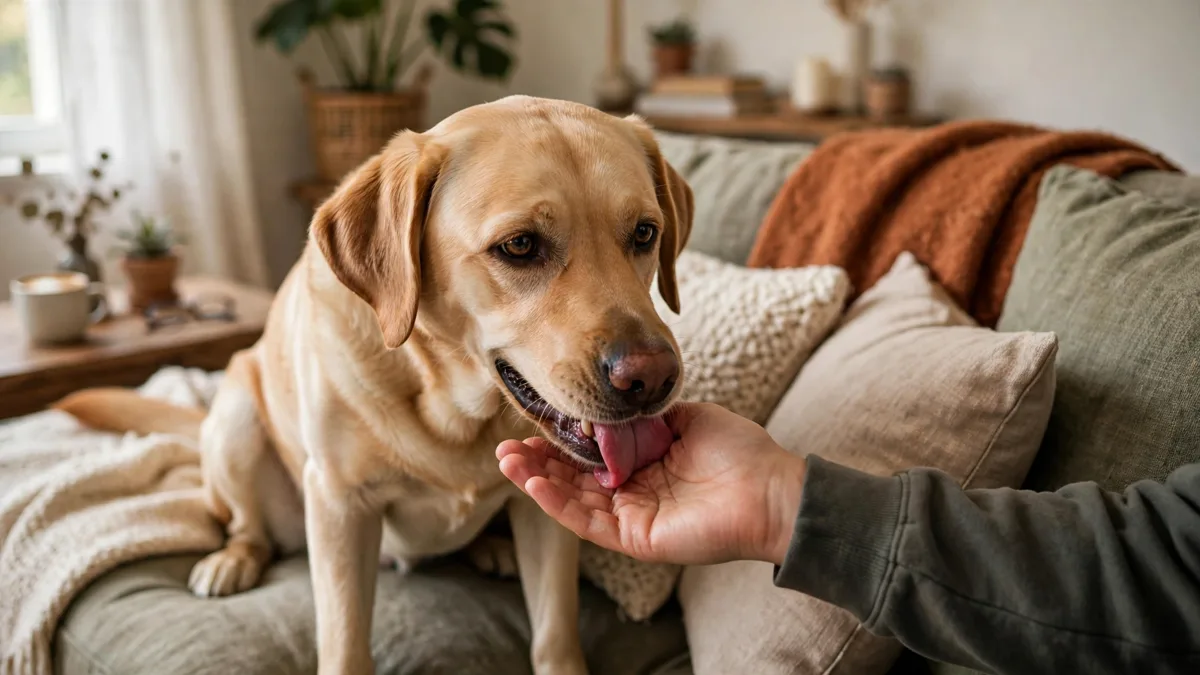
Why do dogs lick humans? If you live with a dog, you have been licked: your hands, your face, your legs after a run, your feet the second your shoes come off.
Owners call them kisses, and sometimes that is exactly right. But licking is one of the most multi-purpose tools a dog owns, and the same tongue can mean affection, curiosity, politeness, or stress.
This guide covers the seven real reasons dogs lick people, how to tell them apart, when licking becomes a problem, and how to reduce it kindly if it is driving you up the wall.
Licking Starts at Birth
Licking is a dog’s first language. A mother dog licks her newborn puppies to clean them, warm them, and even trigger urination and defecation in the first weeks of life.
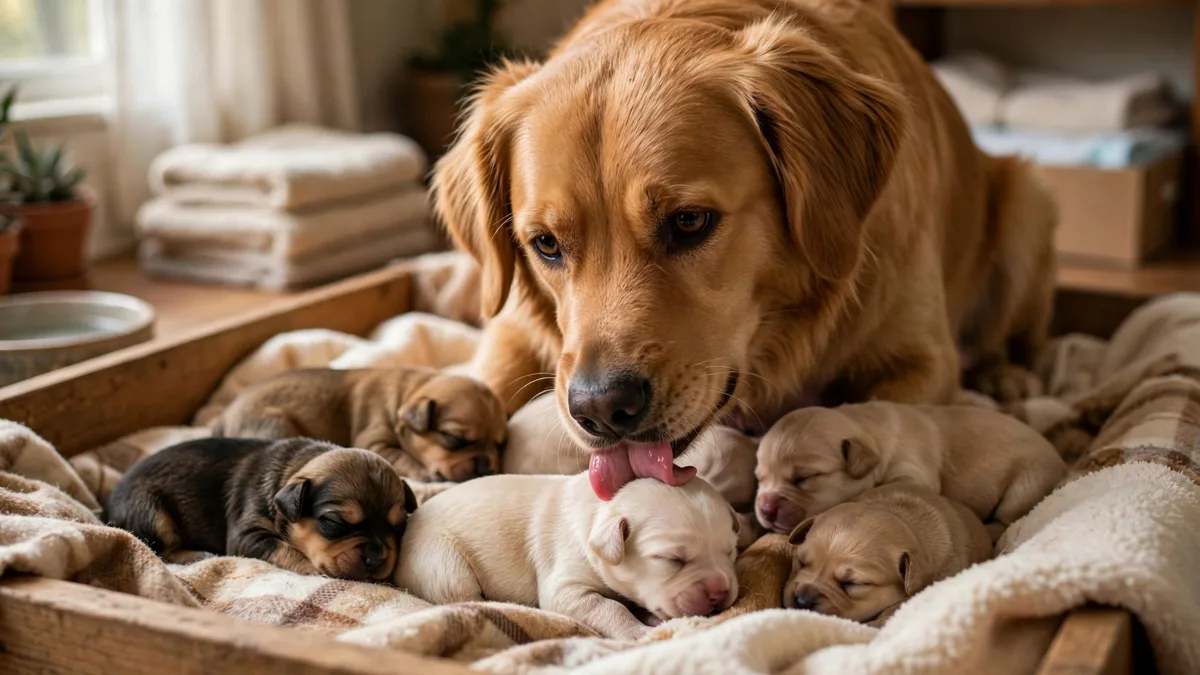
Puppies quickly learn to lick back. They lick their mother’s muzzle, their littermates, and any friendly adult dog, and it becomes their default social tool.
In the wild ancestors of dogs, puppies licked adults’ faces to prompt them to share food. That ancient muzzle-licking survives today as a greeting and appeasement gesture.
So when your adult dog licks you, he is using a behavior wired in from his very first day: it means connection, and it has meant connection his whole life.
Reason 1: Affection and Bonding
Yes, dog licks can genuinely be kisses. Licking is how dogs show fondness within their social group, and you are the center of your dog’s group.
Veterinary behaviorists note that licking can be a clear sign of affection. It also releases feel-good chemicals in the dog, which makes bonding self-reinforcing.
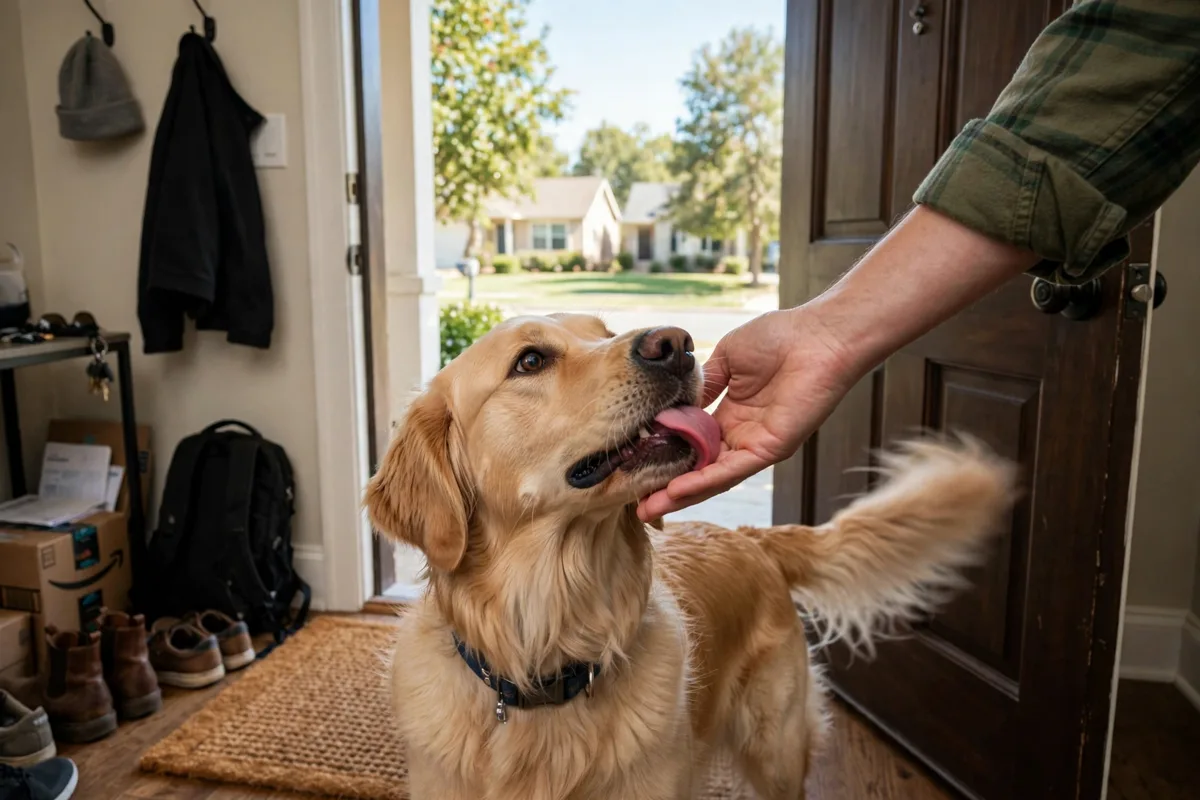
The affection lick usually comes with a soft, loose body: a wagging tail, relaxed ears, and a dog who leans in rather than looming over you.
It often appears at calm moments, greeting you, settling beside you in the evening, rather than in frantic bursts. Context, as always with dogs, tells you the meaning.
Reason 2: You Taste and Smell Interesting
To a dog, you are a walking tasting menu. Human skin carries salt from sweat, traces of food on hands and faces, and lotions and soaps that smell fascinating.
Dogs explore the world orally. With a sense of smell vastly stronger than ours, licking lets them sample scent and taste together, gathering information about where you have been and what you have touched.
This explains the target selection: hands (food, everything you touch), faces (food, sweat glands), ears, and feet (concentrated scent). It is rarely random; your dog is reading you.
Post-exercise licks are almost pure flavor-seeking: salty, sweaty skin is genuinely delicious to most dogs. Flattering or not, part of the love is seasoning.
Reason 3: Attention-Seeking That Works
Dogs are brilliant students of cause and effect. If licking you produces a laugh, a pat, eye contact, or even a “stop that!”, licking just got rewarded.
Any response counts as attention, and attention is currency. That is how a dog who licks “too much” is often a dog we have accidentally trained to lick expertly.
The licking itself also releases endorphins, the dog’s own feel-good hormones, so the behavior pays him twice: once internally, once from you.
Watch the timing if you suspect this one: licking that starts when you are busy, on the phone, or working is usually a bid for engagement, not affection overflow.
Reason 4: Appeasement and Politeness
Not every lick is joyful. Dogs also lick to say “I am no threat,” a calming, appeasing gesture aimed at keeping the peace with a bigger or more senior social partner.
Appeasement licking often comes packaged with other signals: ears back, body low or turned sideways, quick flickery licks, and a dog who licks and then looks away.
You will see it when a dog is unsure: meeting strangers, being loomed over, being scolded, or being hugged by an enthusiastic child.
Reading it correctly matters. An appeasement lick is a request for space or gentleness, and the kind response is to ease off, not lean in for more kisses.
Reason 5: Self-Soothing and Anxiety
Licking calms dogs down. The repetitive action and the endorphin release make it a built-in stress valve, which is why anxious dogs lick more.
You may notice it during thunderstorms, fireworks, visitors, car rides, or when you are packing a suitcase. The lick is the dog managing his own nerves.
Some dogs lick their owners when the OWNER is upset, picking up on our stress signals and responding with contact that soothes them both.
Occasional stress licking is healthy coping. When it becomes constant, frantic, or impossible to interrupt, it has crossed into a problem worth addressing, covered below.
Reason 6: Hunger and Food-Seeking
Remember the wolf puppies licking muzzles for a share of the hunt. A version of that lives on: licking around food times, near the kitchen, or at your face after meals can be a hopeful request.
Dogs that lick more as dinner approaches, or fixate on mouths and hands after you eat, are often simply prospecting for snacks.
It can also be learned scheduling: if licking has ever produced a treat or a shared bite, the dog will run that play again, precisely and persistently.
The fix is boring consistency: no food from plates, no exceptions, and feeding on a predictable schedule so hope is not the dog’s only strategy.
Reason 7: Something Medical
Most licking of people is normal, but a sudden change deserves attention. Dogs in pain or feeling nauseous sometimes lick more: their owners, the floor, the air, or themselves.
Excessive licking of surfaces (floors, walls, furniture) is a recognized flag for gastrointestinal problems. In one veterinary study, most dogs with excessive surface licking turned out to have an underlying GI disorder.
New, intense licking in a senior dog can also accompany cognitive changes or neurological issues, and compulsive licking disorders exist in dogs much as OCD does in people.
Rule of thumb: licking that is new, suddenly worse, targeted at surfaces, or paired with appetite or behavior changes gets a vet visit before any training plan.
How to Stop a Dog Licking You (Kindly)
First decide your actual goal. Zero licking is unrealistic for most dogs; a dog who licks less, and stops when asked, is the achievable and fair target.
The core technique: calmly withdraw attention the moment licking starts. Turn away, stand up, no eye contact, no talking, and the instant he stops, reward THAT with attention. He learns “not licking” is what works.
Redirect, do not just forbid. Offer a lick mat, a stuffed food toy, or a chew, so the urge has a legal outlet. Many heavy lickers are simply under-occupied mouths.
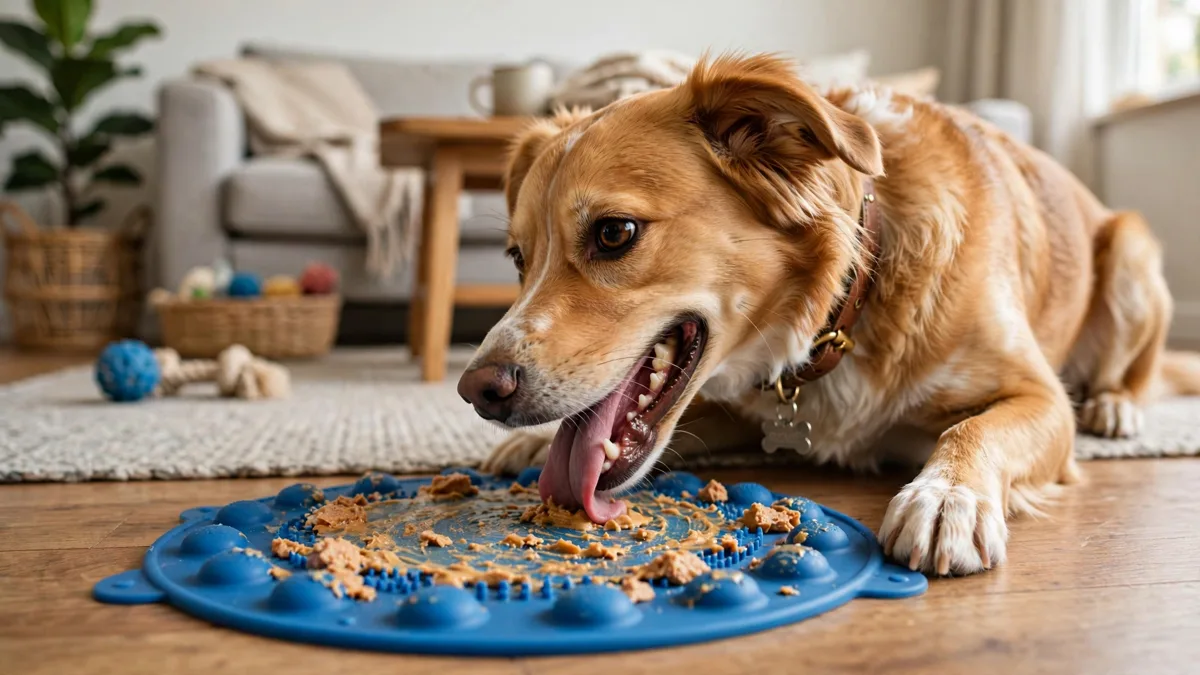
Never punish or yell: it adds anxiety to a behavior often rooted in anxiety or affection, and it damages trust. Consistency from everyone in the house is what makes the lesson stick.
Is It Safe to Let a Dog Lick Your Face?
Dog mouths are not sterile, whatever the old myth says. Saliva carries bacteria, and licking faces, especially around mouths and eyes, is best kept occasional rather than a daily ritual.
Sensible hygiene covers most of the risk: wash hands and faces after big licking sessions, and keep dog tongues away from open cuts and wounds.
Extra care applies for babies, elderly people, and anyone immunocompromised: friendly supervised contact yes, face-licking marathons no.
And a practical note: dogs that have just eaten raw food, scavenged outdoors, or licked unsavory things should get a time-out from face privileges altogether.
Frequently Asked Questions
Are dog licks really kisses?
Sometimes. Affection is one real reason, especially with a relaxed body and calm timing. But licks can equally mean “you taste salty,” “notice me,” or “please calm down,” so read the whole dog.
Why does my dog lick me so much compared to other dogs?
Personality, habit, and your responses. Dogs differ hugely in lickiness, and a dog whose licking reliably earns attention will simply do more of it.
Why do dogs lick your hands specifically?
Hands carry the richest scent-and-taste record of your day: food, other animals, everything you touched. They are also the part of you a dog can reach while being petted, making hand-licking a common greeting ritual.
Can licking be a sign my dog is stressed?
Yes, especially if it is frantic, hard to interrupt, or appears in stressful situations alongside panting, pacing, or clinginess. Occasional calm licking is normal; escalating patterns are information.
Should I let my dog lick my baby?
Supervised gentle contact is fine for most families, but keep licking off the baby’s face and hands, and wash skin afterwards. Never leave any dog unsupervised with a baby, licker or not.
The Bottom Line
Why do dogs lick humans? Because licking is their oldest social tool: it bonds, greets, explores, appeases, and soothes, often all in the same wet gesture.
Read the context, reward the behavior you want more of, and let sudden or excessive licking send you to the vet rather than the training books.
If your dog licks everything in sight, our guide on excessive licking in dogs and what it means goes deeper, and for the general science of the behavior, see the ASPCA guide to dog behavior.