Elderly Dog Slipping on Floors: How to Help
The first slip is easy to brush off. Then it happens again when your dog turns too quickly, or struggles to rise from bed. You may notice slower steps, a pause at the kitchen doorway, or a dog who now stays in one room.
This guide explains elderly dog slipping on floors in plain steps: why it happens, what to fix first at home, and when to ask your vet for help.
Direct Answer: Elderly Dog Slipping on Floors
For elderly dog slipping on floors, fix the footing first, then check nails and paw fur, support getting up, and ask your vet about pain if slipping is new or getting worse.
Start with rugs on daily paths, and keep movement calm and steady while you make changes.
Key Takeaways
- Slipping often comes from a mix of smooth floors, weak muscles, sore joints, long nails, and fur over the pads.
- Rugs and runners with non-slip backing, placed on daily paths, usually help fastest.
- Short nails and trimmed paw fur let the pads grip the floor.
- Grip aids can help, but they do not replace rugs and vet care.
- New, sudden, or worsening slipping, especially with stiffness or limping, deserves a vet visit.
- Keep play calm on slick floors, and never force a frightened dog across a bare floor.
Why Elderly Dogs Slip
Several age-related changes can combine to cause elderly dog slipping on floors.
- Muscle loss: Hind legs weaken first for many seniors, so a small slide is harder to correct.
- Arthritis and joint pain: Sore hips, knees, or spine make a dog move tentatively and avoid quick corrections.
- Long nails: Overgrown nails lift the pads off the floor, so the main grip surface cannot work.
- Fur between pads: Hair over the pads acts like a sock on polished wood.
- Dry or cracked pads: Hard, dry pads grip poorly, especially in winter or after hot, dry weather.
- Nerve problems: In some seniors, weakness, knuckling, or dragging toes points to nerve trouble, not just joints.
You do not need to work out the cause alone. Use the list to fix what you can at home, and share the rest with your vet.
A Step-by-Step Plan
Work through these steps in order, and change one thing at a time when you can. That way you can see what helps your dog most.
Step 1: Map Traction First
You do not need to carpet the house. You need grip where your dog actually walks, turns, stops, and stands up.
When you plan for elderly dog slipping on floors, start with the routes your dog uses most, not the rooms that look tidiest.
Watch your dog for a day and note the routes: bed to water bowl, water bowl to door, and door to garden. Mark the turns and thresholds, because those are the slip points.
- Beside the bed: First steps after rest are often weakest.
- Food and water area: Dogs brace while eating and drinking.
- Stairs and doorways: Add treads where stairs cannot be avoided, and a flat mat on each side of a threshold.
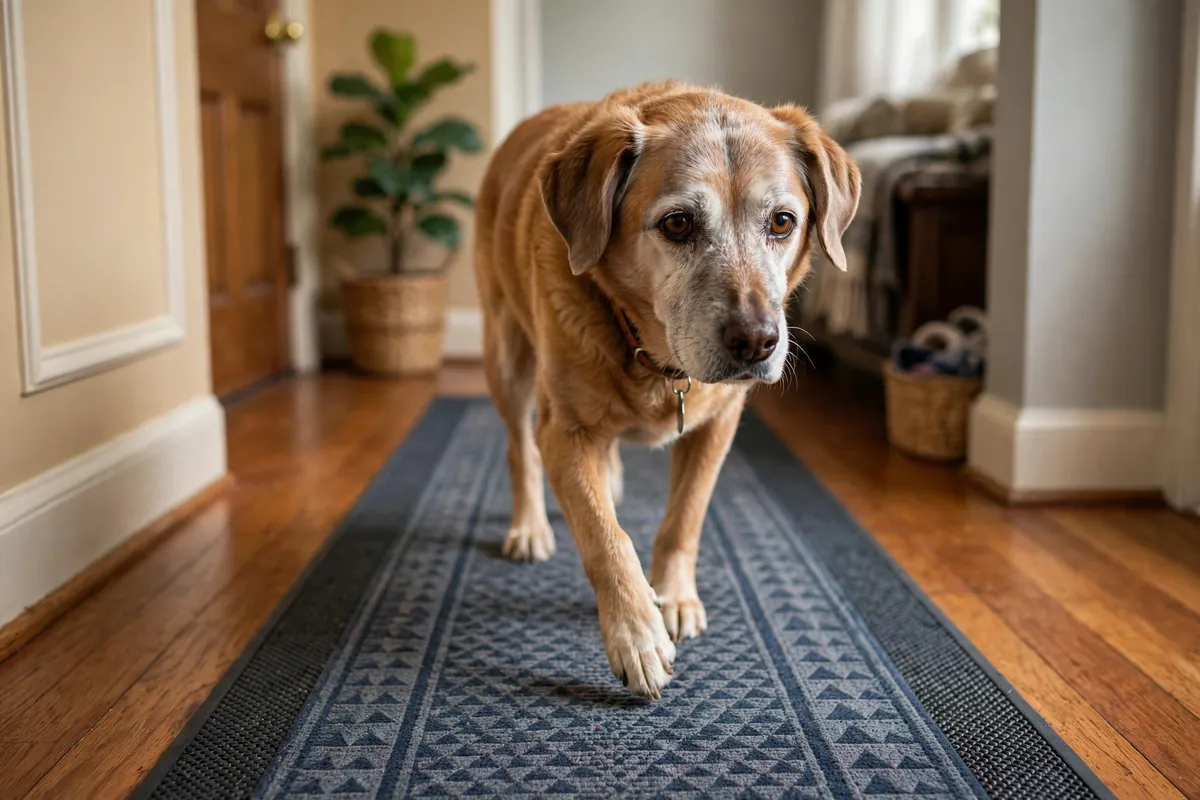
- Hallways and turns: A continuous runner beats a small mat that slides.
Choose low-pile rugs that lie flat, with non-slip backing or a separate non-slip pad underneath. Thick, bunching rugs and small scatter mats can trip a senior dog.
Yoga mats and interlocking foam tiles can cover a large area for a short time. Check them daily, because a curled edge is a trip risk.
Floor types at a glance
| Floor | Main risk | What helps most |
|---|---|---|
| Hardwood | Long, slick runs and sharp turns | Continuous runners on main paths |
| Tile | Wet spots near doors and bowls | Mats at entries and under bowls, dry feet after rain |
| Laminate | Smooth, low-grip surface | Runners, plus nail and paw-fur care |
| Vinyl | Slick when wet or dusty | Regular cleaning, mats at thresholds |
| Stone | Hard falls if a dog slips | Runners and a low, supportive bed nearby |
Step 2: Nails and Paw Fur
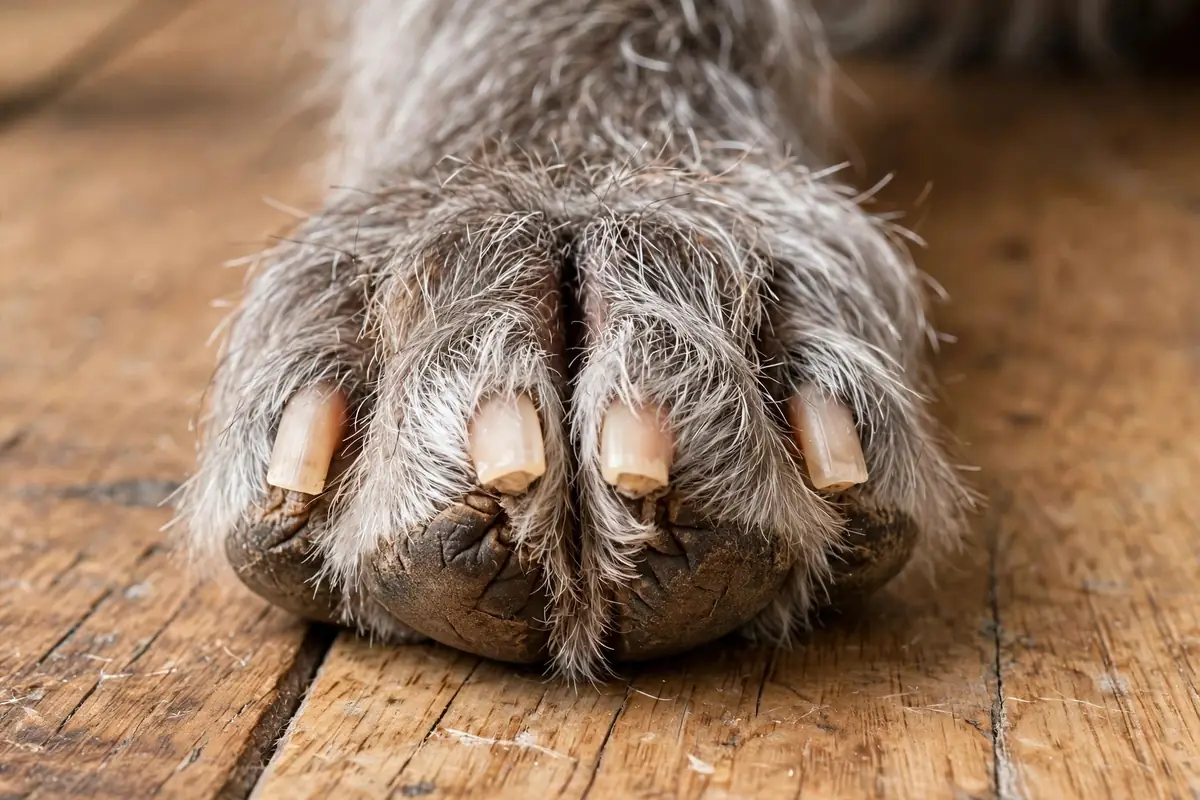
Trim nails so they just clear the floor when your dog stands. If you hear clicking on hard floors, the nails are too long.
Clip fur growing between the paw pads flush with the pads, using blunt-tipped scissors and good light. Work slowly, and stop if your dog pulls away.
If nail trims stress your dog, ask your vet or groomer to help, and reward calm cooperation with treats and short sessions. Never rush a trim or hold a dog down to finish it.
Step 3: Compare Grip Aids
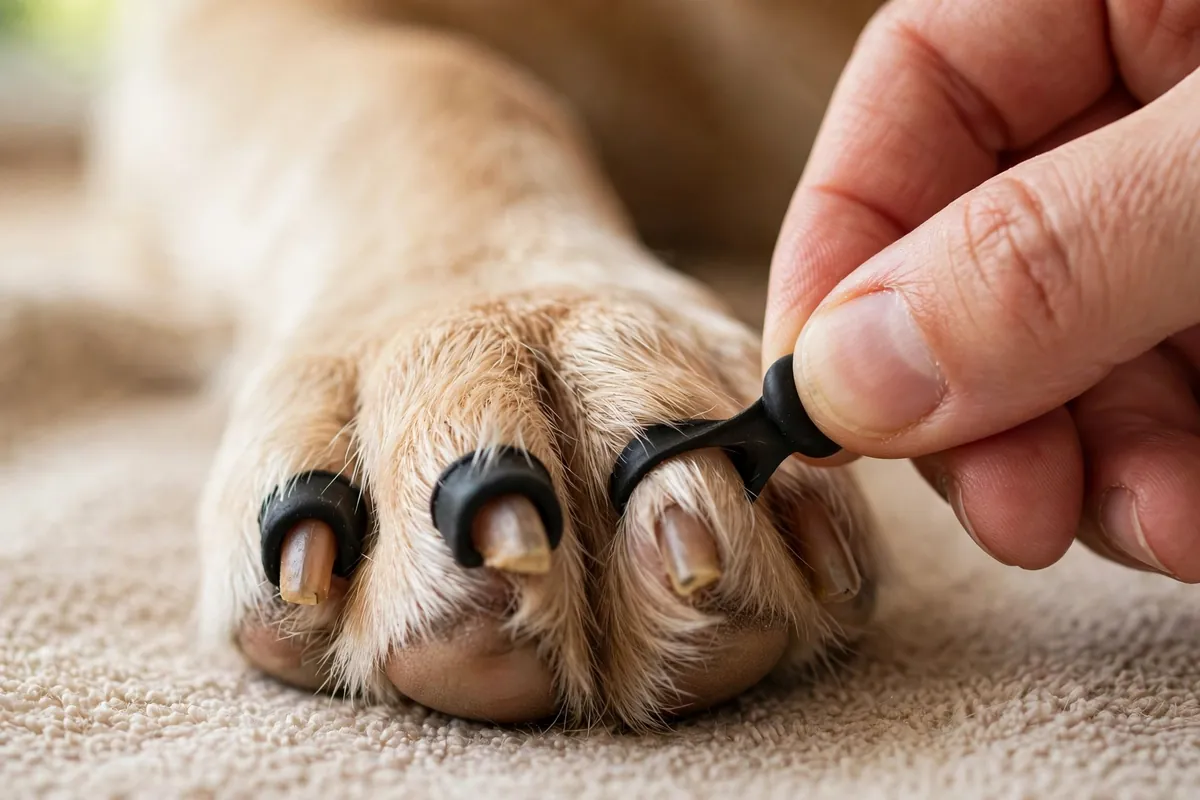
Think of grip aids as extras on top of rugs, not replacements for them. No aid can make a house full of bare, slick floors safe.
| Grip aid | Best for | Watch out for |
|---|---|---|
| Rugs and runners | Most dogs at home | A rug that slides or bunches is unsafe |
| Toe grips | Dogs who will not wear boots | They need refitting as nails grow |
| Non-slip socks | Short trips on floors you cannot cover | Some dogs chew them off or walk oddly |
| Boots with grippy soles | Outdoors or very slick floors | Introduce slowly, with treats and short wear |
| Paw balm | Dry or cracked pads | It helps grip only a little, and needs reapplying |
| Adhesive paw pads | Vet visits or short outings | They are temporary, and some dogs peel them off |
Remove any aid that causes limping, chewing at the feet, sores, or distress. A grip aid should help movement, not change how your dog walks.
Step 4: Support Getting Up and Moving
Slipping is worst during changes of position: lying to standing, sitting to walking, and turning in a doorway. Support those moments first.
- Orthopedic bed: Choose a supportive bed with a low edge on at least one side, so your dog can step out without climbing over a bolster. For a build you can make at home, see how to make a comfortable orthopedic bed for old dogs.
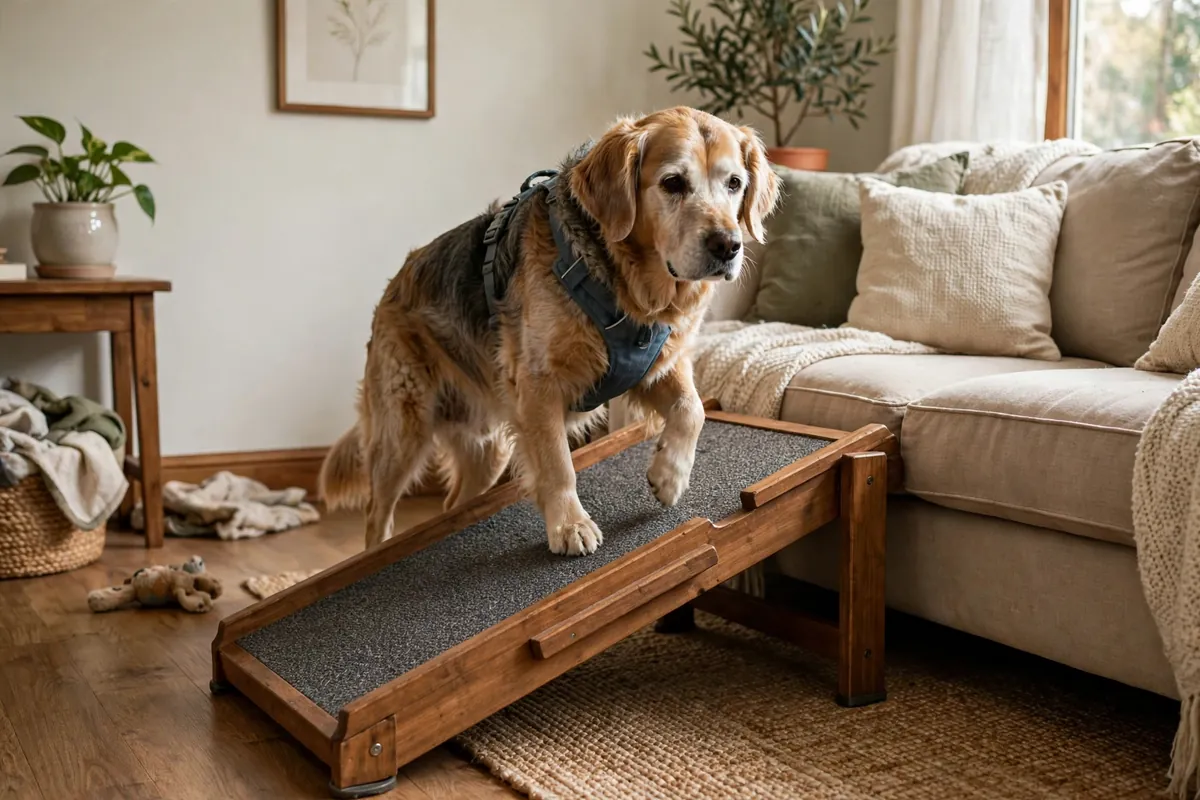
- Ramps: Use a gentle ramp for the couch, bed, and car, and introduce it with treats before your dog urgently needs it.
- Lifting harness: A harness with a handle over the hips or belly can steady a dog on bad days, without pulling on the neck or legs.
- Half-step risers: A sturdy intermediate step can make one tall step into the house or onto a porch easier.
Move essentials closer together for a very frail dog: bed, water, and a toilet area on one floor, with a clear rug path between them.
Step 5: Ask Your Vet About Pain and Strength
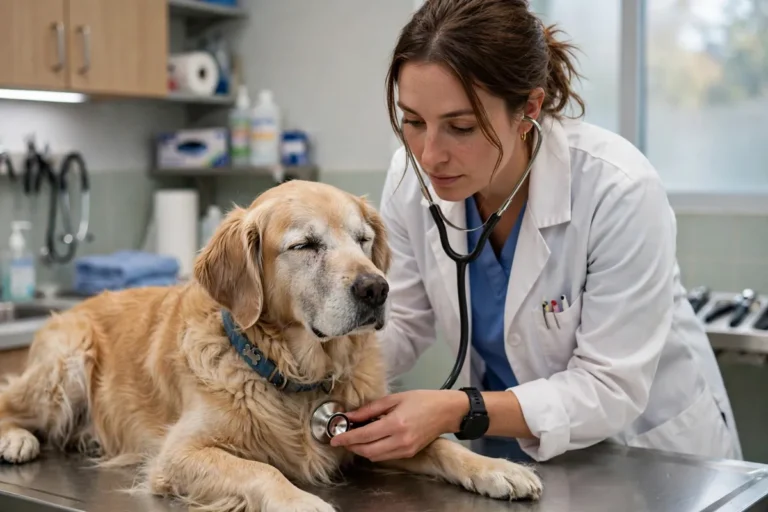
Book a vet visit if slipping is new, worsening, or paired with stiffness, limping, reluctance to walk, or trouble rising. Bring notes on when it started and what has changed.
Your vet may discuss pain care, joint support, rehabilitation, and weight, and may check for nerve problems if toes drag or legs weaken suddenly. Never give human pain medicine to a dog, because some human medicines can seriously harm dogs.
For gentle, vet-guided ideas to discuss at that visit, read natural pain relief for old dogs with arthritis.
Ask about gentle, regular movement that fits your dog, such as short, calm walks on grass or textured paths. Keep sessions short on bad days, and stop if limping worsens.
Step 6: Rebuild Confidence After a Slip
A bad slip can leave a senior dog nervous, even after the floor is fixed. Keep sessions short, calm, and easy to leave.
Start on rugs, reward relaxed walking, and let your dog choose to step onto a small bare patch. If your dog freezes, go back to the rug and end on a calm note.
If fear is the main problem, the guide on a dog afraid of slippery floors explains this slow, reward-based approach in more detail.
Use treats, a quiet voice, and praise for calm steps. Never drag, push, or punish a dog for refusing a slick floor.
Keep It Working Week After Week
For elderly dog slipping on floors, a short weekly check is often more useful than one big change.
- Rug check: Press each rug edge, and replace or re-stick any pad that slides.
- Nail check: Listen for clicking, and check paw fur between trims.
- Pad check: Look for cracks, cuts, soreness, or a pad that looks dry and hard.
- Slip log: Note the date, place, and what your dog was doing, plus stiffness or limping that day.
Share the log with your vet if slips become more frequent, or if your dog starts avoiding rooms they used to enjoy.
What NOT to Do
- Do not chase, wrestle, or play fetch with a senior on slick floors.
- Do not use human anti-slip sprays or shoe waxes on paws, because many are unsafe if licked.
- Do not force walks on icy, wet, or very smooth surfaces. Choose grass or textured paths.
- Do not ignore worsening mobility and rely on rugs alone.
- Do not use shock collars, prong collars, or punishment for slow or fearful movement.
- Do not start, stop, or change any medicine or supplement without vet advice.
When to Get Vet Help Quickly
Get prompt vet help for any of these signs, and use emergency care if your dog cannot stand or seems in severe distress.
- Sudden inability to stand, dragging both hind legs, or collapse.
- A leg that will not bear weight, swelling, or a hot, painful joint.
- Crying out, yelping when touched, or sudden aggression when handled.
- Sudden weakness, knuckling, or toes dragging on the floor.
- Refusing food or water, vomiting, or a clear change in toilet habits alongside slipping.
For pain, sudden change, aggression, or a medical cause, see your vet first. If fear or anxiety stays strong after medical causes are checked, ask for a referral to a certified behavior professional.
This article is general information, not veterinary advice. If you are unsure about a sign or a product, ask your vet before you try it.
Frequently Asked Questions
Why is my old dog suddenly slipping on floors they used to handle?
A sudden change often means something changed in the dog, not the floor. Arthritis flare, muscle loss, pain, vision change, or nerve trouble can all reduce grip and control.
Book a vet visit, and note when the change started and whether stiffness, limping, or reluctance to move came with it.
Are hardwood floors bad for senior dogs?
Hardwood floors are a common trigger for elderly dog slipping on floors, but they can be managed. Runners on main paths, trimmed nails and paw fur, and support for getting up usually make the biggest difference.
Do toe grips really work?
They can help some dogs, especially when long nails or smooth pads are part of the problem. They work best with rugs, and they need checking and refitting as nails grow.
Should I restrict my slipping dog’s movement?
Do not confine a mobile senior out of fear. Less movement can speed up muscle loss, which makes slipping worse over time.
Instead, shorten routes, add traction, gate off stairs when you cannot supervise, and keep movement gentle and regular with vet guidance.
My dog slips mostly when getting up. What helps most?
A rug beside the bed, a low-entry supportive bed, trimmed nails, and vet advice about pain if stiffness is part of the pattern.
Stand nearby, let your dog rise at their own pace, and use a harness handle to steady them if your vet has shown you how.
When is slipping an emergency?
Sudden inability to stand, dragging both hind legs, crying out, or collapse needs same-day veterinary care. Do not wait to see if it passes.
If your senior also paces at night or seems confused in the evening, read the guides on senior dogs pacing at night and senior dog cognitive dysfunction sundowning for the next steps to discuss with your vet.
Reference
Reference: American Kennel Club, Osteoarthritis in Dogs: Signs, Symptoms, Treatments
Still stuck? Get a plan built for your dog.
Answer a few quick questions and get a personalized, force-free training plan in minutes.