Dachshund Separation Anxiety: Signs and Solutions
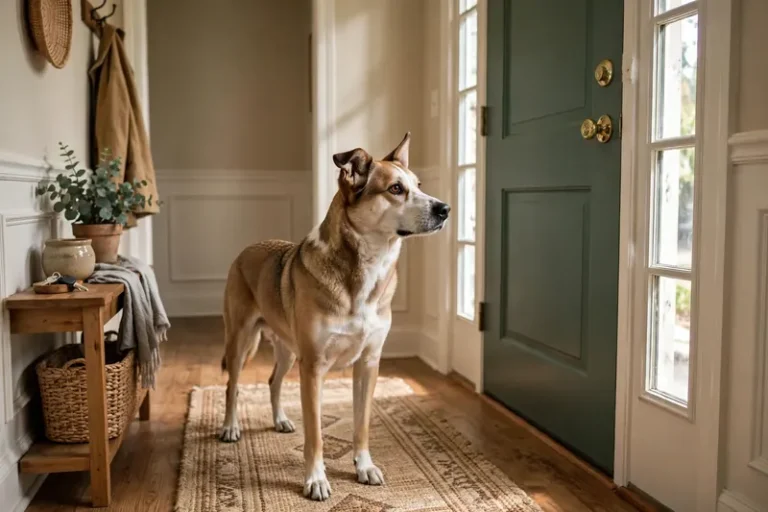
You put your shoes on and your Dachshund is already staring. Keys jingle and the pacing starts.
When you come home two hours later, the neighbors have opinions, the door frame has new scratches, and your dog is plastered to your legs like you were gone a year.
That’s Dachshund separation anxiety, and none of it is spite: your dog is in genuine distress, and distress responds to a plan, not to punishment.
Dachshunds may be more prone to this than many breeds: bred to work closely with their hunter, bonded intensely to their people, never designed to be independent operators.
A breed that thinks of itself as your shadow finds your absence genuinely hard. That doesn’t mean it’s unfixable; it means the fix has to respect how your dog feels.
Key Takeaways
- Dachshund separation anxiety is real distress, not disobedience or spite. Punishing anxious behaviors makes them worse.
- Film one absence with a cheap camera or old phone. It tells you exactly when the distress starts and whether it’s anxiety or boredom.
- The core fix is graduated absences: departures so short the dog stays calm, repeated many times, with duration increased only when the dog is ready.
- Rule out medical causes first, especially for sudden onset or house-soiling in a previously reliable adult dog.
- A second dog is not a fix for separation anxiety, and crating a panicking dog without a plan can cause injury. Build independence through training instead.

Signs of Dachshund Separation Anxiety
Separation anxiety is a pattern tied to your absence, not a single behavior:
- Vocalizing. Barking, howling, or whining that starts after you leave and can go on for a long stretch. Lonely dogs vocalize after dark too (see barking at night).
- Destruction focused on exits. Scratching at doors, chewing window frames, destroying barriers. Dogs trying to get out to reach you are different from dogs chewing a shoe out of boredom. Our destructive when left alone guide covers the chewing angle; this article is the full anxiety picture.
- House-soiling. Toileting indoors despite being fully housetrained, usually soon after departure.
- Escape attempts. Pushing through gates, jumping barriers, hurting themselves trying to get out. This says "get professional help now," not "try harder."
- Drooling, panting, pacing. Soaked bedding, frantic pacing paths, heavy panting in a cool room: physical signs of panic.
- Pre-departure panic. Shadowing you room to room, trembling at keys, distress at shoes and coats. Your dog has learned the whole departure sequence.
One absence tells you almost everything. Film it with a camera or old phone and watch what happens and when.
With Dachshund separation anxiety, most dogs peak in the first 20 to 30 minutes after departure. A dog calm for two hours who then chews a cushion is probably bored; a dog howling at the door three minutes after you leave is anxious.
Dachshund Separation Anxiety vs. Boredom: How to Tell
This distinction matters because the fixes differ, and our destructive-when-left-alone guide handles the boredom side in depth:
- Anxiety starts within minutes of departure: vocalizing, exit-focused destruction, house-soiling, drooling. The dog can’t settle even briefly alone, on short absences too.
- Boredom shows up later in a long absence. A bored dog is fine for a 30-minute errand; an anxious dog is not.
Many Dachshunds have a bit of both; the enrichment here helps both, while graduated absences target the anxiety.
Rule Out Medical Causes First
Before treating anything as behavioral, check the medical side, especially with sudden onset in an adult who used to be fine alone.
Sudden house-soiling can mean a urinary infection or digestive upset; restlessness and vocalizing can be pain. Back pain is common enough in this breed to always be on the list.
Cognitive changes in seniors can look like new anxiety, too. A vet visit that finds nothing isn’t wasted: it confirms the training plan below is the right tool.
The Fix: Graduated Absences That Actually Work
This is the core of every effective Dachshund separation anxiety protocol. You’re not building how long your dog can endure. You’re teaching them, through dozens of easy repetitions, that departures are safe and predictable.
Step 1: Defuse the departure cues. Your dog knows the sequence: shoes, keys, coat, bag, door. For a week, run the sequence without leaving: shoes on, then sit on the couch; keys up, then put them back down.
You’re teaching the dog these cues don’t always predict a long absence.
Step 2: Start absurdly small. Step out the front door, close it, count to ten, come back in. No fanfare on exit, no celebration on return; boring both ways.
Repeat ten to fifteen times per session. The goal is departures so short the dog never tips into anxiety.
Step 3: Increase duration gradually, and vary it. Only lengthen the absence when the dog is relaxed at the current one. Mix short and longer departures. If the dog panics at ten minutes, drop back to five and rebuild.
Expect weeks, not days. One panicked four-hour absence can undo days of careful work, so during training, avoid leaving the dog alone longer than they can handle. Use a sitter, a friend, or daycare for the gaps.
This is the hardest logistical part of the plan, and the part that makes it work.

Independence Training: Learning to Be Near You Without Needing You
Anxious Dachshunds tend to shadow their people constantly, and that constant contact feeds the panic when it stops. You’re not withdrawing affection; you’re teaching the dog that calm separation is normal and safe.
- Break up the shadowing gently. When you’re home, sometimes close a door between you for a few minutes while the dog has a chew or stuffed Kong. Start with seconds. Reward calm.
- Teach a settle spot. A mat or bed where the dog learns to lie down and relax while life happens. Reward calmness on the mat throughout the day.
- Vary your attention. Alternate interaction and quiet coexistence so the dog stops expecting constant contact.
- Keep departures and returns low-key. Long, emotional goodbyes teach the dog that leaving is a big deal. Calm exit, calm return, greet the dog once they’ve settled.
Set Up Every Absence for Success
While the training does its slow work, stack the deck: exercise before you leave (a tired Dachshund settles faster), and enrichment for the highest-risk first minutes. A stuffed Kong, snuffle mat, or puzzle feeder, rotated so it stays interesting.
Add background noise to mask outside sounds, and keep the dog in a safe limited space rather than the run of the house.
Every calm absence is a rep against Dachshund separation anxiety. Note: if your dog injures themselves trying to escape a crate or room, confinement is making things worse. Get professional guidance before continuing.
When to Talk to Your Vet About Extra Help
For mild Dachshund separation anxiety, training and management are often enough.
But some dogs are so distressed that they can’t stay calm even during a ten-second absence, which makes graduated training nearly impossible to start. That’s the point where your vet should be part of the plan.
Anti-anxiety medication can help a severely anxious dog tolerate enough calm for the training to work; the ASPCA notes medication can be very helpful especially for severe cases. This is a conversation with your veterinarian or a veterinary behaviorist, not a DIY decision.
No dosages or drug advice here: that belongs in the vet’s office. If your vet isn’t experienced with behavior cases, ask for a referral.
When to Call a Professional
Get a qualified behavior professional involved (a certified separation anxiety trainer or veterinary behaviorist, via your vet’s referral) if:
- Your dog injures themselves trying to escape: broken teeth, torn nails, cut paws, bloody door scratches
- The dog panics within seconds of departure and can’t settle even briefly alone
- Several weeks of consistent graduated-absence work shows no improvement
- You can’t tell whether it’s anxiety, boredom, or something else
- The distress is severe enough that you can’t leave the house at all
Separation anxiety is a genuine welfare issue, not a training inconvenience. A panicking dog is suffering, and professional help is how you take that seriously.
What Won’t Fix It
- Punishment. Anxious behaviors are distress responses, not disobedience or spite. The ASPCA is explicit: do not scold or punish; it makes anxiety worse.
- Getting a second dog. The most common folk remedy, and not a fix. The anxious dog frequently transfers the attachment to the new dog. Resolve the anxiety first.
- Just crating them. A crate suits a dog who’s already comfortable in one. For a panicking dog, it’s a box they injure themselves escaping. Crate training is a separate project; see our Dachshund crate training guide.
- Waiting for them to grow out of it. Untreated, it usually gets worse: every panicked absence rehearses the panic.

Frequently Asked Questions
How long does it take to fix Dachshund separation anxiety?
Mild cases often improve within a few weeks of consistent daily practice; moderate to severe cases typically take months. It depends on severity, how long the pattern has rehearsed, and whether you can avoid over-threshold absences during training.
Can I crate my Dachshund while I work on this?
Only if the crate is already a happy place. If your dog panics in the crate or has injured themselves trying to get out, don’t crate them and hope for the best. Work on crate comfort separately, and get professional advice.
Should I get another dog to keep my Dachshund company?
No, not as a fix. The anxious dog may simply attach to the new dog instead of you, leaving the panic untouched. Build your dog’s independence first; a second dog is wonderful for the right reasons, just not this one.
How long can a Dachshund be left alone?
During training, no longer than your dog can currently handle calmly. Adult dogs cope better after exercise and with enrichment; puppies need much shorter stretches and midday breaks. Build up to your real-life schedule gradually.
Will my Dachshund grow out of separation anxiety?
Very unlikely without help. It’s self-reinforcing: every panicked absence teaches the dog that being alone is terrible. Start the graduated-absence work now.
Is it okay to leave the TV or radio on?
Yes, as one piece of the plan. Background noise masks startling sounds and makes the house feel less empty. It won’t fix anxiety alone.
—
Dachshund separation anxiety is one of the most fixable problems because the method is proven and the steps are simple, even if the patience required is not.
For the destruction-specific angle, see destructive when left alone. For the full breed picture, read the complete Dachshund behavior guide, and browse all Dachshund guides.