How to Train an Aggressive Rescue Dog Around Strangers
Bringing home a rescue dog can feel hopeful and hard at the same time. When your new dog barks, lunges, or snaps at strangers, you may worry about safety and about the future.
This guide shows how to train aggressive rescue dog strangers safely, with distance first and positive reinforcement throughout. You will learn how to read warning signs, plan calm walks, and know when professional help is essential.
This guide gives general information only. It does not replace advice from your vet or a qualified behavior professional.
Key Takeaways
- Distance comes first. Keep enough space so your dog can notice a stranger without reacting.
- Use positive reinforcement only. Reward calm behavior, and never punish growling, barking, or lunging.
- Work slowly below your dog’s reaction threshold. Small, successful steps build trust over time.
- Consider muzzle training as a safety tool. A well fitted basket muzzle can help you manage risk while you train.
- To train aggressive rescue dog strangers safely, keep children separate and get professional help for any bite history.
- Watch for pain or a sudden change. Ask your vet promptly, because pain and illness can affect behavior.
How to Train Aggressive Rescue Dog Strangers: The Direct Answer
In short, to train aggressive rescue dog strangers safely, keep distance, reward calm behavior, and move closer only when your dog stays relaxed. If your dog reacts, you are too close. Increase distance, end the session calmly, and try again later at an easier level.
Progress is measured in weeks and months, not in one good walk. Many dogs learn to pass strangers calmly at a comfortable distance, even if they never enjoy greetings. That is a real success.
A professional behaviorist should lead the plan if your dog has bitten, tried to bite, or keeps escalating. Do not test your dog with strangers to see what happens. Safety and a clear plan come first, every time.
Why Rescue Dogs May React to Strangers
Many rescue dogs react because they are afraid, not because they are bad dogs. A dog may have had little contact with different people, or past contact may have been frightening.
New homes also take time to learn. Sounds, smells, routines, and visitors can feel overwhelming at first. A dog that feels trapped or cornered is more likely to bark, lunge, or snap to create space.
Some dogs react more when pain, illness, or tiredness lowers their tolerance. A sudden change in behavior deserves a prompt vet check. Your vet can look for medical causes and advise on next steps.
Reading Warning Signs in General Terms
Warning signs often appear before a bark or lunge. Learn them in general terms, and act early by giving your dog more space. The table below can help you respond calmly.
| Sign you may notice | What it may mean | What to do |
|---|---|---|
| Stiff body or hard stare | Your dog feels tense and unsure | Increase distance calmly |
| Lip licking, yawning, or turning away | Early signs of stress | Give space and do not push closer |
| Growling | A clear warning, not rudeness | Do not punish it, and move away |
| Barking, lunging, or snapping | Your dog wants more distance urgently | Leave calmly and seek professional help |
Growling is valuable information. Never punish a growl. A dog that is punished for growling may skip the warning next time, which raises risk for everyone.
Distance and Management First
Management comes before formal training. It stops your dog from practicing reactions, and it keeps people safe while learning slowly builds.
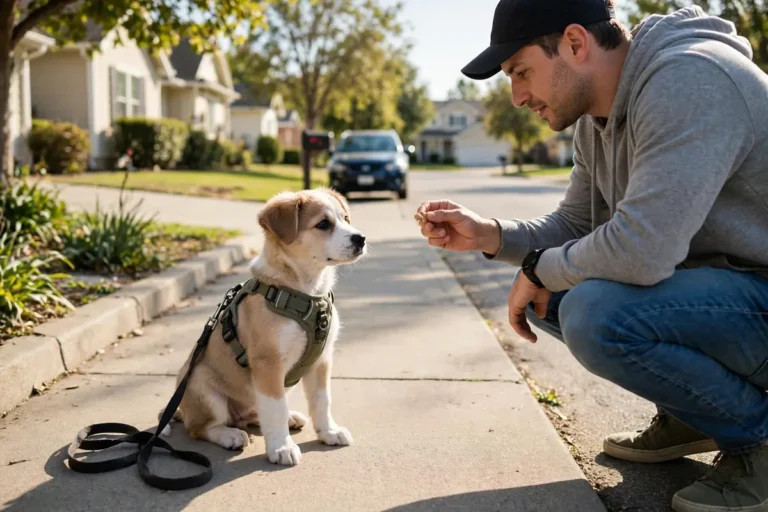
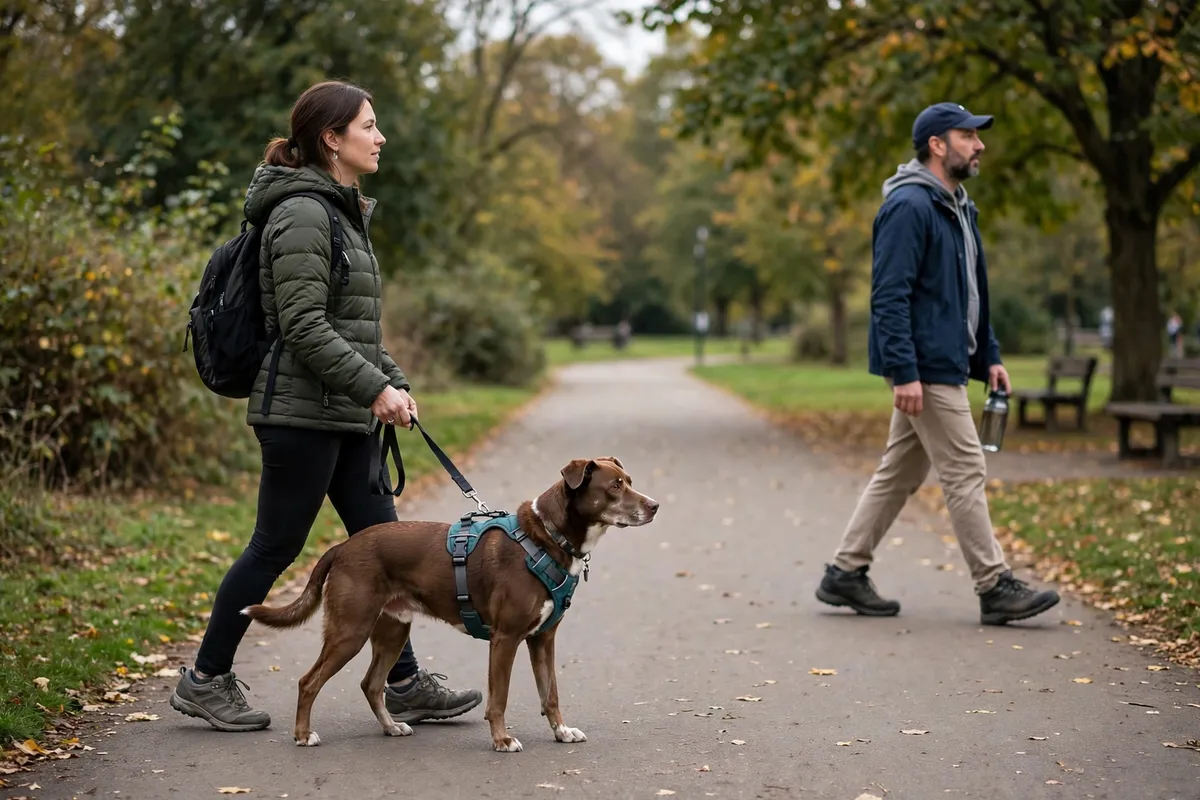
When you train aggressive rescue dog strangers, distance is your main tool. Find the distance where your dog notices a person but can still look at you and take a treat. That distance is your starting point.
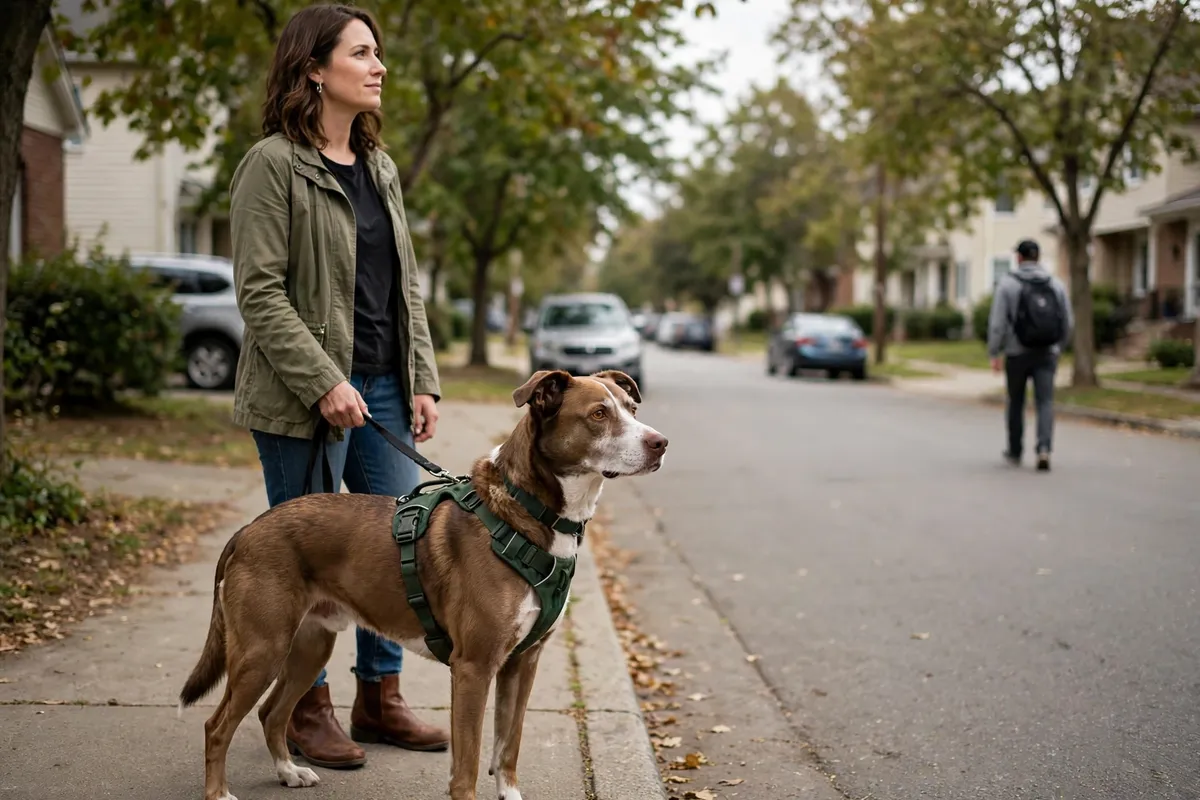
On walks, cross the road or turn away before your dog reacts. Use a secure harness and a short, non-retractable leash. At home, use a separate room or a barrier before guests arrive.
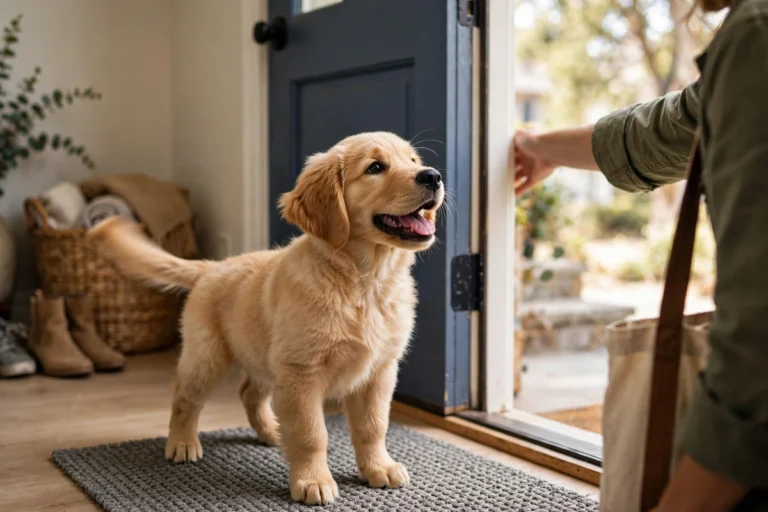
Tell visitors the rules in advance. Ask them to ignore your dog, avoid eye contact, and never reach out to pet. Let your dog choose whether to move closer, and accept no greeting as a good outcome.
Muzzle Training as a Safety Tool
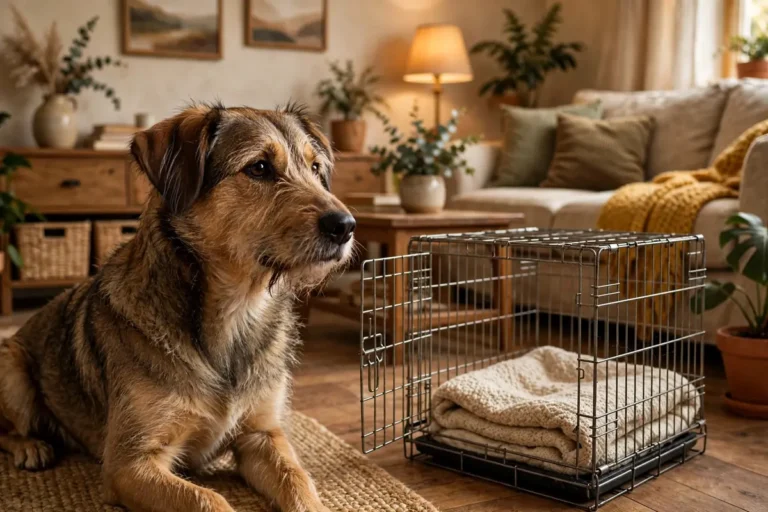
A basket muzzle is a safety tool, not a punishment and not a cure. It should allow your dog to pant, drink, and take treats. Fit matters, so follow the maker’s guide and check comfort often.
Introduce it slowly with treats. First, let your dog sniff the muzzle and reward calm interest. Then build up to brief wearing at home, before you use it on a walk.
Use the muzzle for higher risk situations, not as a reason to move closer faster. Keep distance and reward calm behavior, just as you would without it.
Gradual Desensitization in General Terms
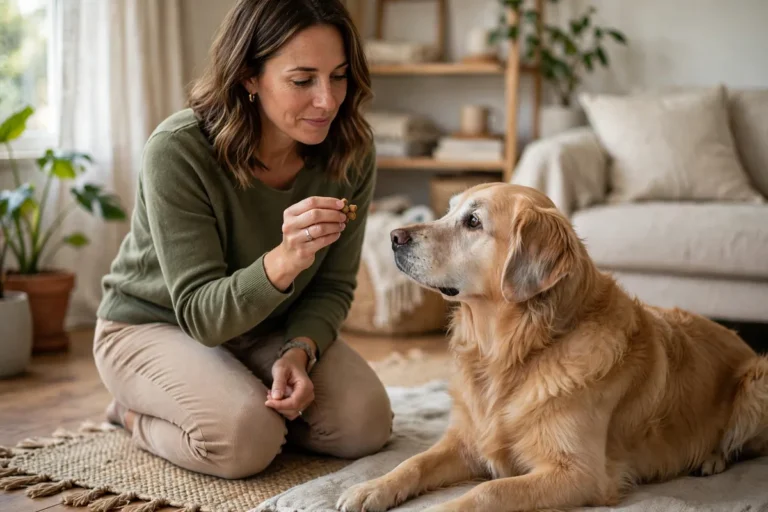
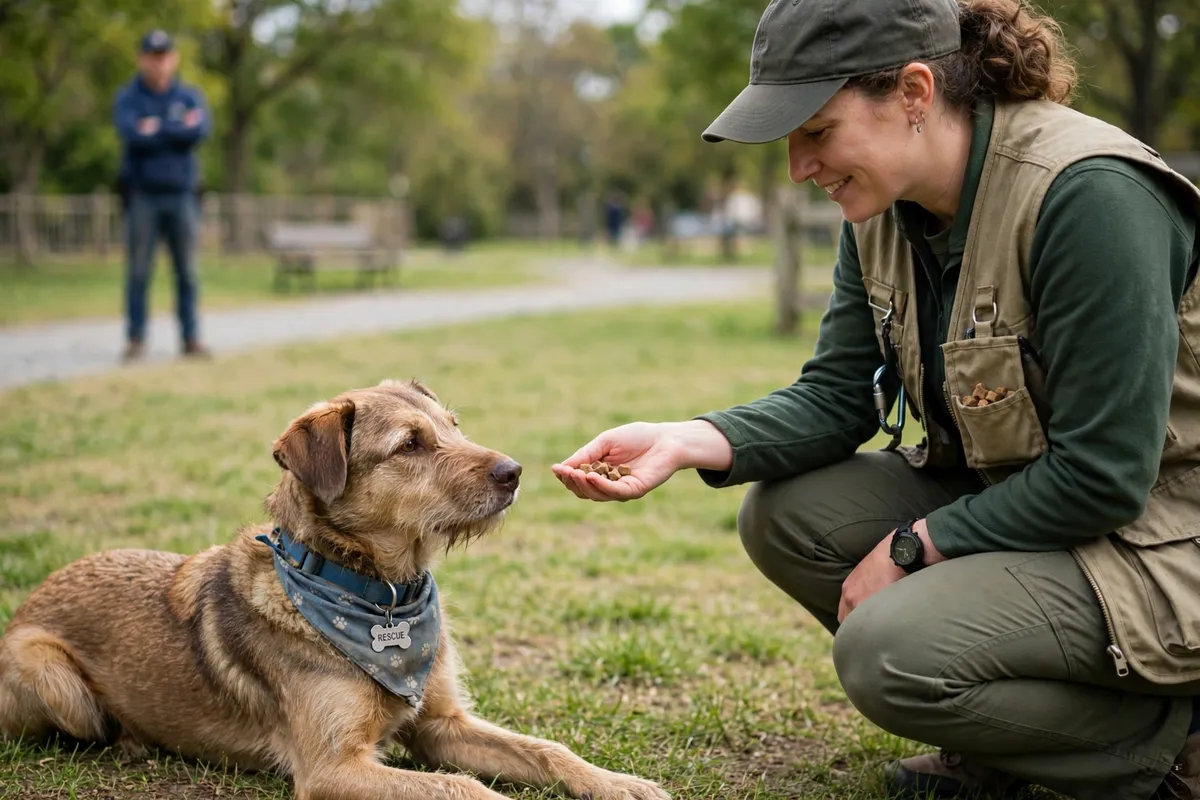
Desensitization means presenting a stranger at a low intensity, usually far away, so your dog can stay calm. Counter-conditioning means pairing that sight with something your dog loves, such as small, tasty treats.
- Start at a comfortable distance, where your dog notices the stranger but stays relaxed.
- When your dog looks at the stranger, feed a few small treats in a calm, steady way.
- When the stranger moves away, stop the treats. This links strangers at a distance with good things.
- Repeat in short sessions, and end while your dog is still calm and successful.
Keep sessions short and end while your dog is still calm. If your dog reacts, the step was too hard. Return to an easier distance and rebuild slowly. Never flood your dog with close, prolonged stranger contact.
Over time, reduce distance in very small steps, only when your dog stays relaxed. Change only one thing at a time: distance, duration, or how busy the place is. Track distance, reactions, and recovery time in a simple log.
Teach Calm, Useful Behaviors
Teach simple cues in a quiet place first. A look at you, a U-turn away, and going to a mat can all help you leave a situation calmly. Reward each small success with praise and treats.
At home, a mat can be a safe station when guests arrive. Teach your dog to settle on the mat before visitors come. On walks, a sniff game can lower arousal and give your dog a useful job.
What NOT to Do
- Never punish growling, barking, or lunging. Punishment adds fear and can hide warnings, which makes bites more likely.
- Never force greetings. Letting a stranger pet a fearful dog can feel like a trap, and fear often grows.
- Never test your dog with strangers. Do not ask friends to approach and see what happens. Every rehearsal can strengthen the reaction.
- Never flood your dog. Crowded places and long, close contact do not teach calm. They often make reactivity worse.
- Never use shock, prong, or choke collars. Never use dominance or alpha framing. These methods work through fear and pain, and they can increase aggression.
- Never rush progress. Moving closer before your dog is ready can undo calm work and shake trust.
When Professional Help Is Essential
Get professional help early, not only after a serious incident. Look for a veterinary behaviorist or a certified behavior consultant who uses positive reinforcement only. Ask about their methods before you book.
Professional help is essential if your dog has bitten, tried to bite, or reacts intensely and often. It is also essential if behavior escalates, or if you feel unsafe managing your dog. A vet can also discuss whether anxiety support may help.
Avoid any trainer who promises a fast fix, recommends punishment tools, or talks about dominating your dog. Those methods can increase fear and bite risk. A humane plan should feel calm, clear, and safe for your dog.
Child Safety Rules
Never leave your dog unsupervised with children. Children move quickly, make high sounds, and may not read warning signs. That mix can raise risk, even for a dog that is usually gentle at home.
- Keep your dog in a separate room or behind a barrier when children visit.
- Teach children to ignore the dog, avoid eye contact, and never reach for the face.
- Never allow hugging, kissing, climbing on, or cornering the dog.
- Do not let a child approach your dog while it is eating, sleeping, or resting.
- An adult should supervise all contact, and stop at once if your dog moves away.
If a child visits, plan ahead. Give your dog a quiet room with water, a bed, and a food toy. Calm separation is kinder than a forced greeting, and it protects everyone.
If a Bite Happens: Act at Once
If a bite happens, stay as calm as you can and separate the dog safely. Get first aid and medical care for the person at once. Contact your vet and a behavior professional immediately, and do not try to train through the incident alone.
Do not punish the dog after a bite. Punishment does not make the next meeting safer, and it can increase fear. Keep the dog separated, note what happened in plain terms, and follow professional advice before any new stranger contact.
Check local reporting rules in general terms, because rules can vary by area. Your vet, local animal control, or local authority can explain what applies where you live. Follow their guidance and keep records of care and advice.
A Realistic Timeline and Progress
Expect slow, uneven progress. Good days and setbacks are normal. Judge change over weeks, using your log, rather than one walk or one visitor.
Celebrate calm choices, not perfect greetings. A dog that notices a stranger, looks at you, and moves on calmly is learning well. Keep management in place even as training improves.
Frequently Asked Questions
Can an aggressive rescue dog ever be trusted around strangers?
Some dogs become relaxed with unfamiliar people, but many still need management. A realistic goal is calm coexistence at a comfortable distance, with you as guide. Honest management is safer than hoping for a perfect greeting.
Should strangers give my dog treats to make friends?
Only from a safe distance and without approaching. A stranger can toss treats while your dog stays far away. Hand feeding a fearful dog is too close, and it can backfire.
Is it safe to walk my dog in busy places for exposure?
No, not at first. Busy places remove your control over distance and can flood your dog. Start in quiet places, and add difficulty only when your dog stays calm.
My dog is fine with family but reacts to visitors. What should I do?
Manage arrivals first. Settle your dog in a separate room before guests enter. Later, if your dog is calm, let your dog watch from a distance while you reward relaxed behavior. Never force an introduction at the door.
Will a second dog help my aggressive rescue feel calmer?
Not reliably. A second dog does not treat stranger aggression, and it may copy reactive behavior. Focus on your current dog first, and discuss any new dog with your behavior professional.
When should I get help urgently?
Get help at once after any bite, attempted bite, or escalation. Contact your vet and a behavior professional immediately. Also seek help promptly for pain, a sudden change, or behavior that makes you feel unsafe.
How long does training take?
Training often takes weeks to months, and some dogs always need management. The right pace depends on your dog’s history, triggers, and support. Short, calm sessions and a clear plan matter more than speed.
What if my rescue dog is still settling in?
Give your dog time, routine, and a quiet safe space. Keep early meetings short and distant, and do not rush greetings. If fear or aggression does not settle, ask your vet and a behavior professional for guidance.
The Bottom Line
To train aggressive rescue dog strangers safely, keep distance first, reward calm behavior, and get professional help when risk is high. Your dog does not need to love every stranger. Calm, safe coexistence is a strong and kind goal.
For related BreedFix guidance, see our guides to pug breathing heavy sleeping, signs a puppy is drinking too much water, and care for a blind senior dog at home.
Reference
Reference: American Kennel Club, How to Help Your Dog Be Less Fearful of Strangers. This guide is general information only and is not veterinary advice.
Still stuck? Get a plan built for your dog.
Answer a few quick questions and get a personalized, force-free training plan in minutes.