Puppy Whining in Crate During Daytime: How to Fix It
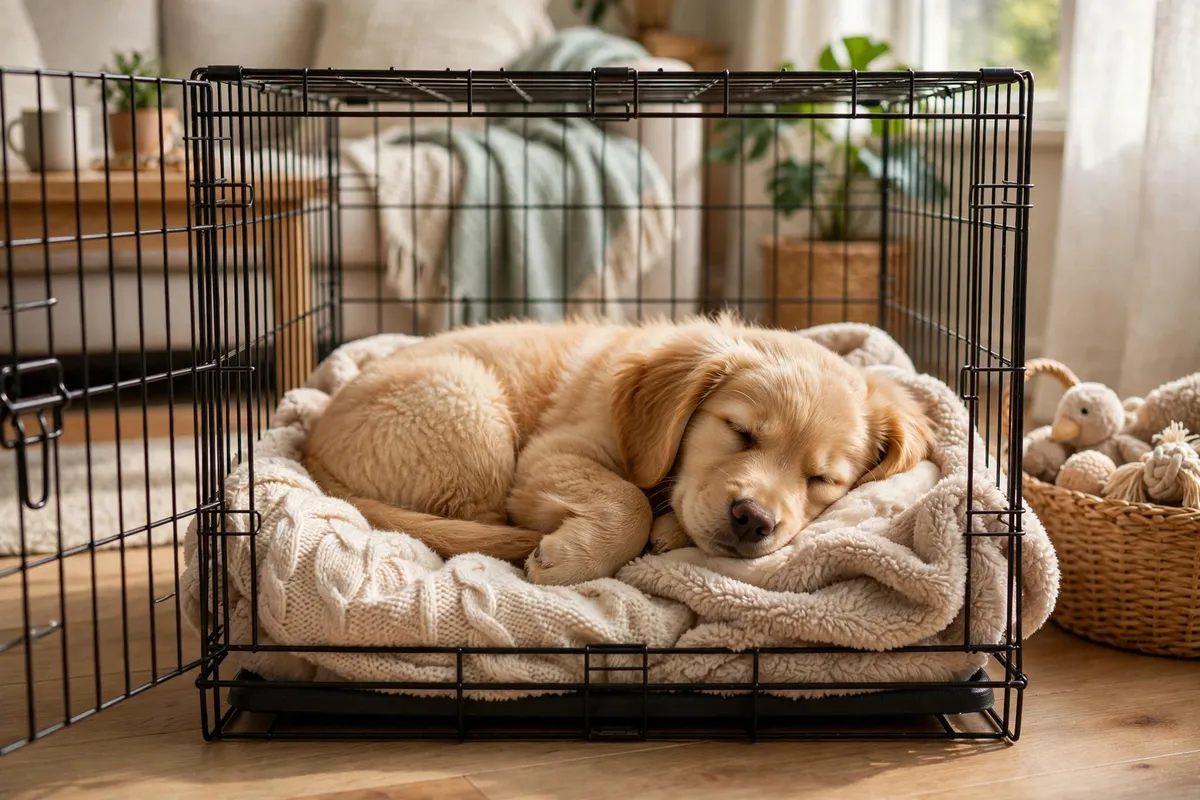
Puppy whining in crate during the daytime can turn a quiet afternoon into a noisy one. You leave the room, and the whining starts within minutes. You may wonder if you have done something wrong, or if the crate is the problem.
Most of the time, neither is true. Daytime whining is common in young puppies, and it usually points to a need, a feeling, or a skill they have not learned yet. This guide gives you a calm, positive plan you can use today.
Key Takeaways
- Check needs first: potty, hunger, thirst, comfort, and tiredness. A puppy cannot settle while a basic need is pressing.
- Wait for a brief pause before you open the door. Even a few seconds of quiet is worth rewarding.
- Build good crate feelings with meals, treats, and short practice sessions during the day.
- Keep practice short and successful. Small steps, repeated often, build calm faster than long, hard sessions.
- Stop and get help if whining turns into panic. Drooling, frantic clawing, or self-injury are red flags, not protest.
Puppy Whining in Crate: The Direct Answer
For puppy whining in crate during the day, start with needs, then practice in short, calm steps. Check potty, hunger, thirst, comfort, and tiredness before you close the door. Then reward quiet moments, keep departures boring, and build time slowly.
Do not open the door while your puppy is whining loudly, and do not punish the sound. Wait for a brief pause, then let your puppy out calmly or reward quiet inside the crate. If whining turns into panic, stop the session and get professional help.
Why Daytime Whining Happens
Daytime whining is different from night whining in one important way. At night, your puppy is tired and the house is quiet. During the day, your puppy can hear you, smell food, and see movement, so being shut away feels harder.
Puppy whining in crate during the day is usually a message, not a test. Your job is to read that message before you decide what to do next. The table below can help you sort the most common patterns.
| What you notice | What it may mean | What to do first |
|---|---|---|
| Soft whining soon after going in | Adjustment or mild protest | Stay nearby and reward quiet moments |
| Restless whining after sleep | A potty need | Take a boring leash trip outside, then straight back |
| Whining only when you are home | Your puppy wants access to you | Practice tiny absences and boring departures |
| Escalating panic, drooling, or clawing | Distress, not protest | Open the door, stop closed-crate practice, and get help |
| Sudden whining in a settled puppy | Possible pain or a big change | Book a vet check before you train harder |
Loneliness and missing people. A new puppy has just left littermates and a busy home. A closed crate in a quiet room can feel lonely, even when you are only in the next room.
Unmet needs. Hunger, thirst, a full bladder, tiredness, or discomfort can all cause whining. A puppy cannot learn to settle while a basic need is pressing.
A crate that does not feel good yet. If the crate was introduced too fast, your puppy may link it with being shut away. That link can be rebuilt, but it takes patient, short practice.
Learned whining. If whining has opened the door before, your puppy may try it again. That is not bad behavior. It is simply a lesson that worked, and a new lesson can replace it.
Distress or pain. A small number of puppies panic in confinement, and some whine because something hurts. Those cases need help, not longer crate time.
The 7-Step Daytime Plan
Step 1: Meet Every Need Before Crating
Think of calm crating as a skill, and skills build fastest when the student is comfortable. Before a daytime session, run through the basics in the same order each time. Consistency helps your puppy predict what comes next.
- Potty break immediately before going in, even if it has only been a short while.
- A short play session, gentle training, or sniff walk to take the edge off energy.
- Fresh water available in good time before, not a huge drink right before crating.
- A comfortable crate that is big enough to stand, turn around, and lie down in.
A tired, comfortable puppy with an empty bladder is far more likely to settle than a wired, restless one. If you skip this step, the rest of the plan will feel much harder.
Step 2: Set Up the Crate for Daytime Rest
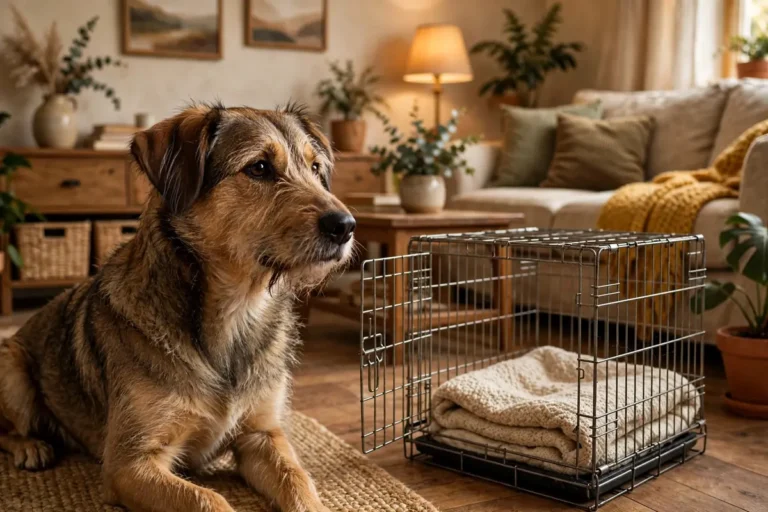
Put the crate where your puppy can still sense family life, at least at first. A crate in a distant, silent room can feel like isolation. A crate in a busy room, with the door open between sessions, feels like part of the home.
- Use soft, washable bedding that your puppy does not chew or shred.
- Leave at least one side uncovered for airflow, even if you use a cover.
- Remove collars and loose items that could catch on bars.
- Keep the crate clean, dry, and free of strong smells.
Try a cover for a few days if your puppy seems distracted by movement. Some puppies settle better with less to watch, while others prefer to see out. Watch your puppy, and keep the setup that helps them rest.
Step 3: Build Good Feelings With the Door Open
If your puppy already dislikes the crate, spend a few days rebuilding the link before you ask for closed-door time. Keep the door fixed open, and let every visit end with something good. The goal is a puppy that walks in by choice.
- Feed every meal in the crate with the door open, starting near the entrance.
- Toss treats inside at random times during the day, and let your puppy wander in and out.
- Give a special food-stuffed toy in the crate only, so the crate predicts good things.
- Reward calm entries with quiet praise, not excited fuss.
For a full, gentle introduction from scratch, see our Dachshund crate training guide. Its step-by-step intro works for puppies of any breed, not only Dachshunds.
Step 4: Practice Short Closed-Door Sessions Nearby
Once your puppy enters happily, close the door for a very short time while you sit nearby. Give a food toy or chew, then open the door before whining starts. Short and successful beats long and stressful every time.
- Start with a few seconds, then build to a few minutes over many repetitions.
- Stay close at first, reading or working quietly beside the crate.
- Reward quiet moments through the bars, calmly and without a big fuss.
- End each session while your puppy is still calm, if you can.
If whining starts, do not rush to fix it by making the next session longer. Go back to the last length that was calm, and build up again from there. Progress is rarely a straight line, and a step back is still progress.
Step 5: Practice Tiny Absences Out of Sight
Daytime whining often happens because your puppy knows you are home and available. So practice being home, but boring and briefly out of sight. The aim is to teach your puppy that your absence is normal and short.
| Practice level | What to do | When to move on |
|---|---|---|
| Nearby | Sit beside the crate while your puppy settles with a toy | Your puppy relaxes with you close by |
| Across the room | Move a little farther away, still in sight | Your puppy stays calm at the new distance |
| Out of sight, briefly | Step out of sight for a few seconds, then return | Your puppy stays calm through short absences |
| Another room | Build to a short stay in another room | Your puppy settles, even when you are not visible |
Keep departures and returns completely boring. No big goodbyes, and no excited greetings. You want comings and goings to be the least interesting part of the day. Background sound, such as soft music or white noise, can also mask household noises.
Step 6: Respond Calmly When Whining Starts
When puppy whining in crate starts, pause first and check the most likely need. How you respond in that moment shapes what your puppy learns next. Stay calm, keep your voice low, and avoid rushing to the door in a panic.
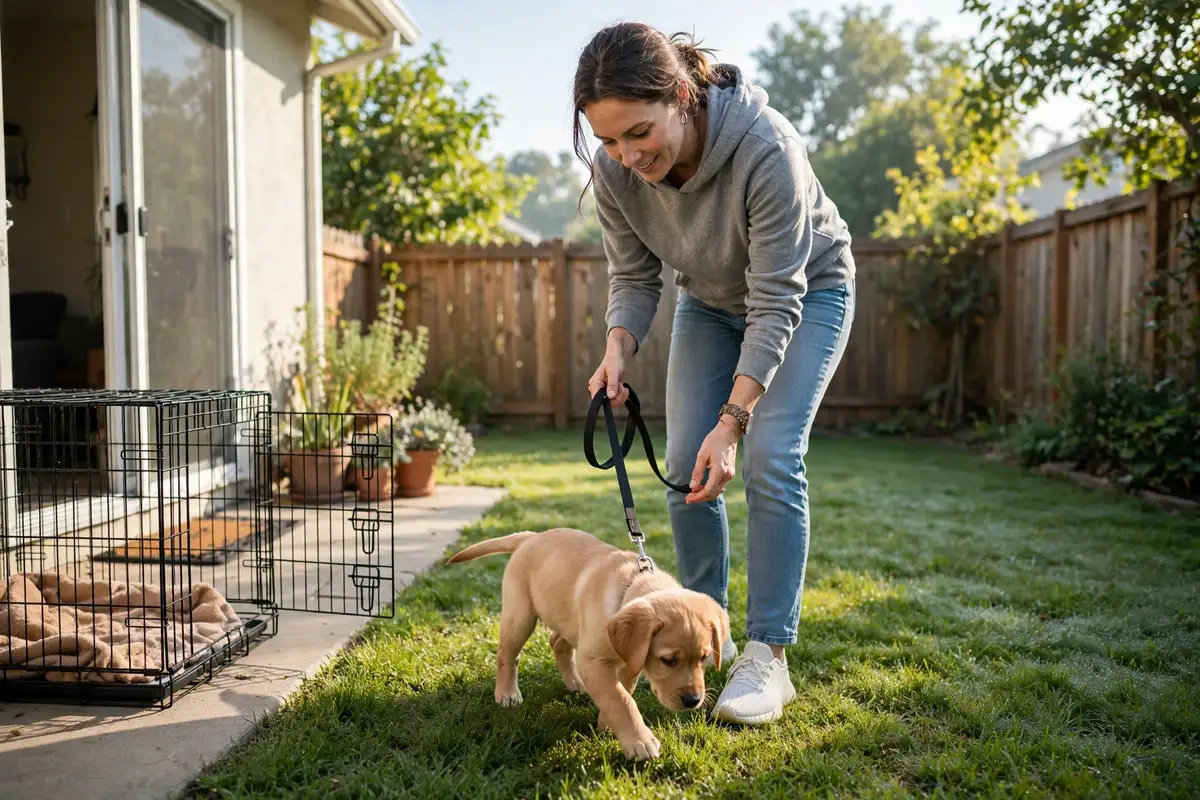
- If it might be potty: take your puppy out on leash for a boring trip, with no play, then straight back in.
- If needs are met and it is mild protest: wait for a pause, even a few seconds of quiet, then reward or let your puppy out calmly.
- Do not yell at or bang the crate. Loud reactions can scare your puppy and make the crate feel worse.
- If whining escalates into panic: go to your puppy, end the session, and rethink the plan with professional help.
One tricky trap is the whine at the end of a nap. If your puppy wakes and whines, check for a potty need first. If no need is likely, wait for a brief pause before you open the door. That pause is the lesson, not the wait itself.
Step 7: Build a Steady Daytime Routine
Daytime crating fails most often because of the routine around it, not the crate itself. A predictable rhythm helps your puppy know when to play, when to rest, and when you will return. Keep the pattern similar each day, even on weekends.
- Cap continuous crate time. Young puppies need frequent breaks, play, and potty trips.
- Protect naps. Overtired puppies whine more, so plan rest after play and training.
- Use the same wake, feed, play, potty, and crate rhythm each day.
- Exercise the brain, not just the body. Short training games and food puzzles can tire a puppy well.
If you work from home, plan crate sessions around your work, not only around your puppy. The Golden Retriever crate training problems guide covers daytime crying while you work from home, and its workday ideas apply to any breed.
A puppy pen can help on long days. A pen with the crate inside, door open, gives more space and a potty area if needed. Your puppy can choose to nap in the crate, while still having room to move.
What a Daytime Routine Can Look Like
This is a pattern, not a strict clock. Adjust the order to your puppy, and keep breaks frequent in the early weeks. The point is balance: activity, rest, potty, and calm crate time, spread through the day.
| Part of the day | What to do | Why it helps |
|---|---|---|
| Morning | Potty, play, short training, then a crate nap | Energy is used before rest is asked for |
| Midday | Potty, a food toy in the crate, then a short absence | Practice happens when your puppy is already settled |
| Afternoon | Play, sniff walk, potty, then another crate nap | Rest is built into the day, not forced at one point |
| Evening | Calm play, potty, and free time with family | Your puppy is not crated only when you are busy |
Mistakes That Make Daytime Whining Worse
- Using the crate as punishment. The crate must never predict anger or isolation as discipline.
- Sneaking away. Puppies that are tricked by a sudden disappearance learn to watch you more closely.
- Inconsistent responses. Letting your puppy out for whining just once in a while teaches them to keep trying.
- Too much crate, too soon. Jumping from no crate time to a long stretch almost guarantees failure.
- Comparing puppies. Some settle in days, and others take weeks. Both patterns can be normal.
Another common mistake is crating only when you leave. If the crate appears only at departure time, it becomes a leaving cue. Use the crate for naps and calm rest while you are home too, so it stays neutral.
When to Get Vet or Professional Help
Talk to your vet promptly if whining starts suddenly in a puppy that was settled, or if you notice pain, limping, vomiting, diarrhea, loss of appetite, or trouble passing urine or stool. This guide does not diagnose illness, and training cannot fix a medical problem.
Also seek help from a certified, force-free trainer or veterinary behaviorist if your puppy panics in the crate, injures themselves trying to escape, shows aggression when confined, or cannot settle at any length of time. Distress that happens whenever you leave, not only in the crate, also deserves professional advice.
- Sudden change in a previously settled puppy: vet check first.
- Signs of pain, illness, or discomfort: vet check first.
- Panic, drooling, frantic escape attempts, or self-injury: stop crating and get help.
- Aggression, or whining that does not improve after steady practice: professional help.
Frequently Asked Questions
How long should I let my puppy whine in the crate during the day?
There is no fixed time that fits every puppy. If needs are met and the whining is mild protest, waiting for a brief quiet pause is usually the right move. If whining is intense, escalating, or paired with drooling or frantic clawing, do not wait it out.
How long does puppy whining in crate usually last?
It varies a lot by puppy, routine, and how gradual the practice has been. Judge progress by the trend, not by one bad session. Shorter whining, faster settling, and calmer days are all signs that the plan is working.
Why does my puppy only whine in the crate when I am home?
Because your puppy knows you are available. This is the classic daytime pattern, and it can actually be good news. It often means the whining is about access to you, not fear of the crate, and tiny-absence practice is made for this.
Should I cover the crate with a blanket?
For many puppies, yes. A cover can reduce visual stimulation and make the crate feel den-like. Leave at least one side uncovered for airflow, and remove the cover if your puppy pulls it in and chews it.
Is it okay to give my puppy a food toy every time they go in the crate?
Yes, especially in the early weeks. A food-stuffed toy gives your puppy something to do during the hardest part, which is often the first few minutes. Introduce any new chew under supervision first, and remove it if your puppy shreds it.
Can I use a puppy pen instead of a crate during the day?
Yes. A pen with the crate inside, door open or removed, is an excellent daytime setup. Your puppy gets more space and a potty area if needed, and can choose to nap in the crate on their own.
What if my puppy whines, I wait, and they just never stop?
Then something in the setup needs changing. Go back to shorter sessions, rebuild positive links with the crate, and check the routine, including exercise, potty timing, and crate location. Puppies that cannot settle after steady practice deserve a vet check and professional advice.
With short, calm practice, puppy whining in crate during the day can fade into quiet rest. Keep sessions kind, keep departures boring, and keep the crate a place that predicts good things. If your puppy’s whining is mainly a night problem instead, see our German Shepherd crying in the crate guide for a night-focused plan.
Reference
Reference: American Kennel Club, Safe and Stress-Free Crate Training: A Step-by-Step Guide: https://www.akc.org/expert-advice/training/crate-training-step-by-step/
Still stuck? Get a plan built for your dog.
Answer a few quick questions and get a personalized, force-free training plan in minutes.