How to Teach an Old Dog New Tricks: Step-by-Step Guide
“You can’t teach an old dog new tricks.” You have probably heard that saying many times. It sounds final, but it is not true for real dogs in real homes.
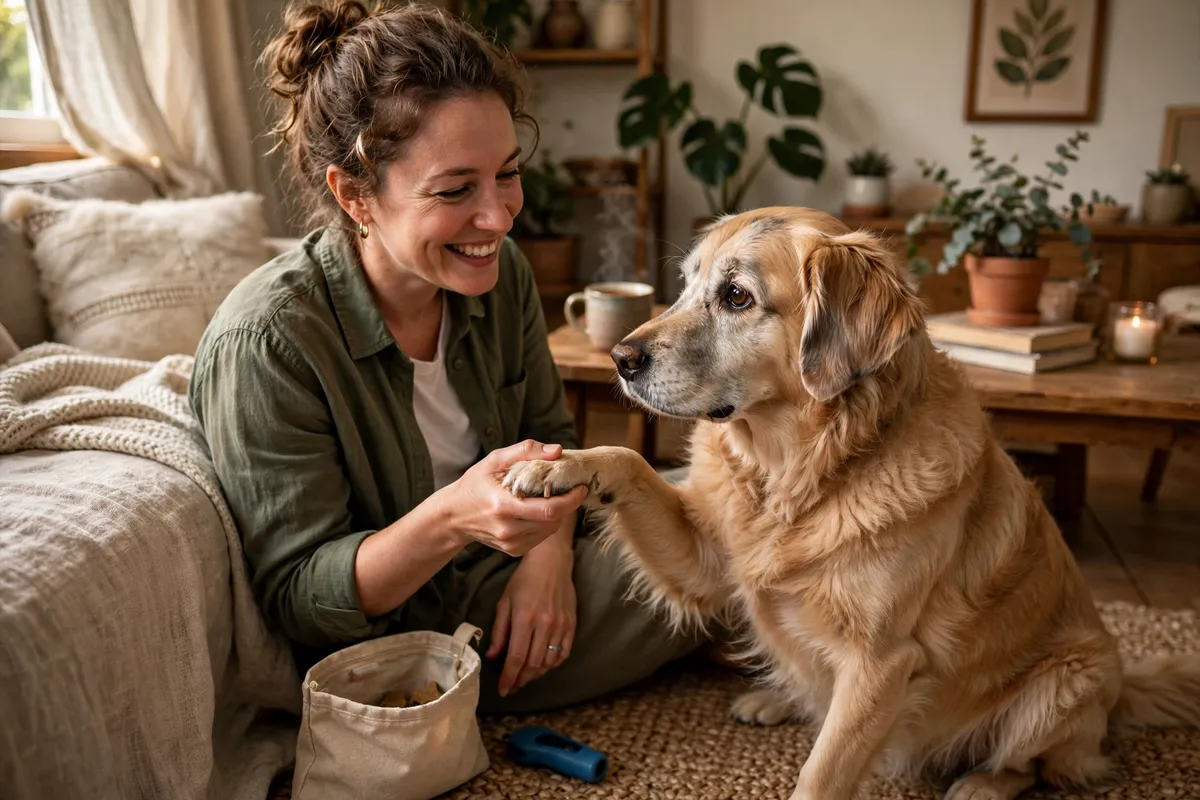
Senior dogs can still learn, play, and surprise you. They may learn at a slower pace, and they may need easier steps, but they can build new skills with kind, patient training.
Key Takeaways
- Yes, old dogs can learn. Age changes the body more than the wish to learn.
- Keep sessions short, calm, and full of rewards your dog truly likes.
- Choose joint-friendly tricks and a soft, non-slip surface.
- Use clear markers, hand signals, and small steps for hearing or vision changes.
- Never punish slowness, confusion, or mistakes. Make the next step easier instead.
- Ask your vet about pain, sudden changes, aggression, or any medical worry.
Teach Old Dog New Tricks: The Direct Answer
To teach old dog new tricks, start with touch, keep sessions to a few minutes, and reward the exact moment your dog gets it right.
Teach one trick at a time in a quiet room. Add the word or hand signal only after the action is smooth, then practice in new places in tiny steps.
Yes, Old Dogs Can Learn
Learning does not stop at a set age. A senior dog can link an action to a reward, remember a cue, and enjoy a short training game each day.
If you teach old dog new tricks in tiny steps, your dog can succeed often and stay keen to try again.
Older dogs often bring real strengths to training. Many are calmer than puppies, know your routines, and can focus when the task is clear and the reward is worth it.
What changes most is not willingness, but comfort and speed. Stiff joints, tired muscles, fading senses, and old habits can all make a step harder, so good senior training adapts to the dog in front of you.
Why Learning Helps a Senior Dog
Short training games give a senior dog mental enrichment. Thinking, sniffing, choosing, and solving small problems can brighten a quiet day and add structure to it.
Training also builds connection. A few happy minutes together can help a dog who sleeps more, moves less, or feels unsure in new places.
Keep the goal modest and kind. Success does not mean a long list of tricks. It means your dog feels safe, engaged, and eager for the next short session.
Senior Adjustments That Make Learning Easier
Small changes often make the biggest difference. Plan around your dog’s body, senses, and energy, not around a fixed training schedule.
| Senior change | What to do |
|---|---|
| Shorter focus and faster tiredness | Train for two to five minutes, once or twice a day, and end on a win. |
| Stiff joints or sore hips | Use a mat or carpet, avoid jumps and tight turns, and keep reps few. |
| Hearing loss | Use a clear hand signal, a thumbs-up marker, or a light flash. |
| Vision loss | Use scent, sound, touch, and a steady voice, and keep furniture in place. |
| Old habits | Reward the new choice often, and split hard steps into smaller ones. |
Watch your dog during each session. Yawning, turning away, lip licking, lying down, or walking off can mean tiredness, confusion, or stress. Pause, make it easier, or stop for the day.
Check With Your Vet First
Before you start, think about how your dog moves and feels. Pain can look like stubbornness, and training through pain is unfair and unhelpful.
Ask your vet if your dog limps, stiffens after rest, resists sitting or lying down, lags on walks, snaps when touched, or changes suddenly. A vet can check for pain, dental problems, vision or hearing loss, and other medical causes.
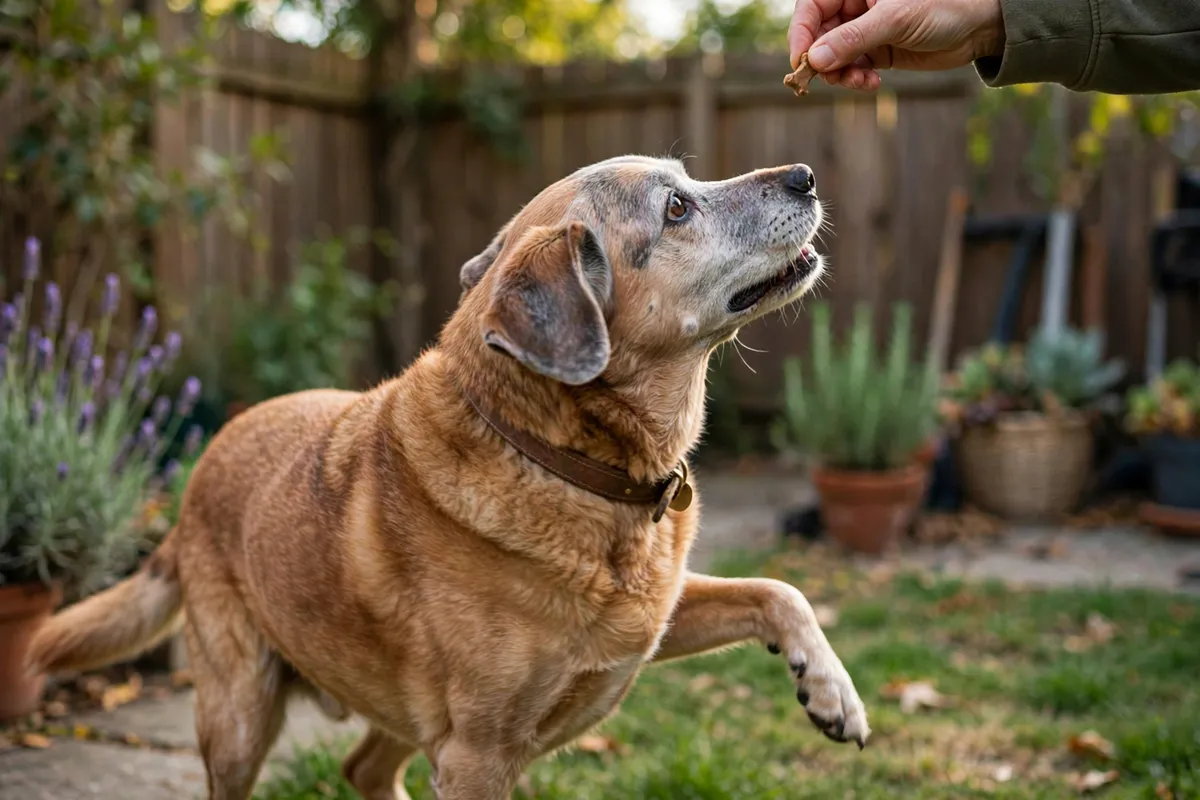
That check also helps you choose safe tricks. A dog with sore hips may love touch, place, and find it, while jumping, rolling over, and fast spins may be poor choices.
Set Up for Senior Success
Train in a calm, familiar room with few distractions. A quiet living room beats a busy park for the first sessions.
Use small, soft, smelly treats that are easy to chew and swallow. If your dog has food limits, ask your vet for safe reward options.
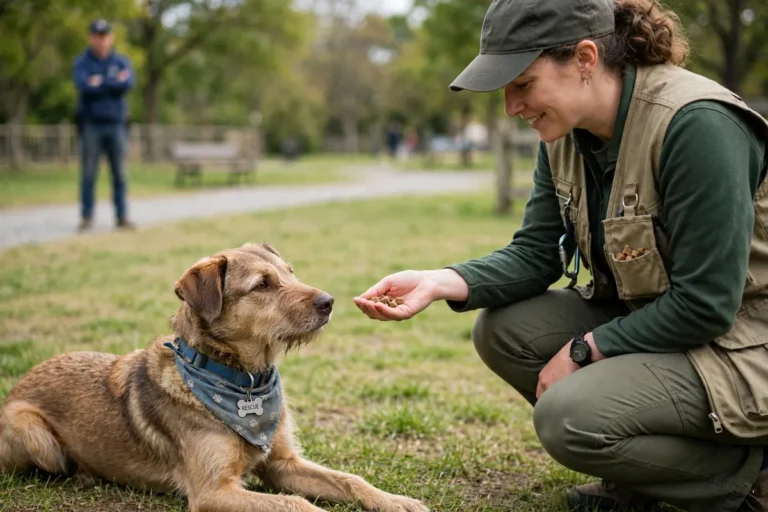
Pick a marker and use it the same way every time. A clicker, the word yes, or a thumbs-up for a deaf dog can all mark the exact moment your dog gets it right.
Keep treats close, move slowly, and speak in a calm voice. Your dog should not have to rush, jump, or guess what you want.
Joint-Friendly Tricks to Start With
Start with tricks your dog can do standing, sitting, or lying comfortably. Early wins build confidence for both of you.
| Trick | How to start | Why it suits seniors |
|---|---|---|
| Touch | Hold out a flat palm and reward any nose touch. | No jumping, bending, or fast movement is needed. |
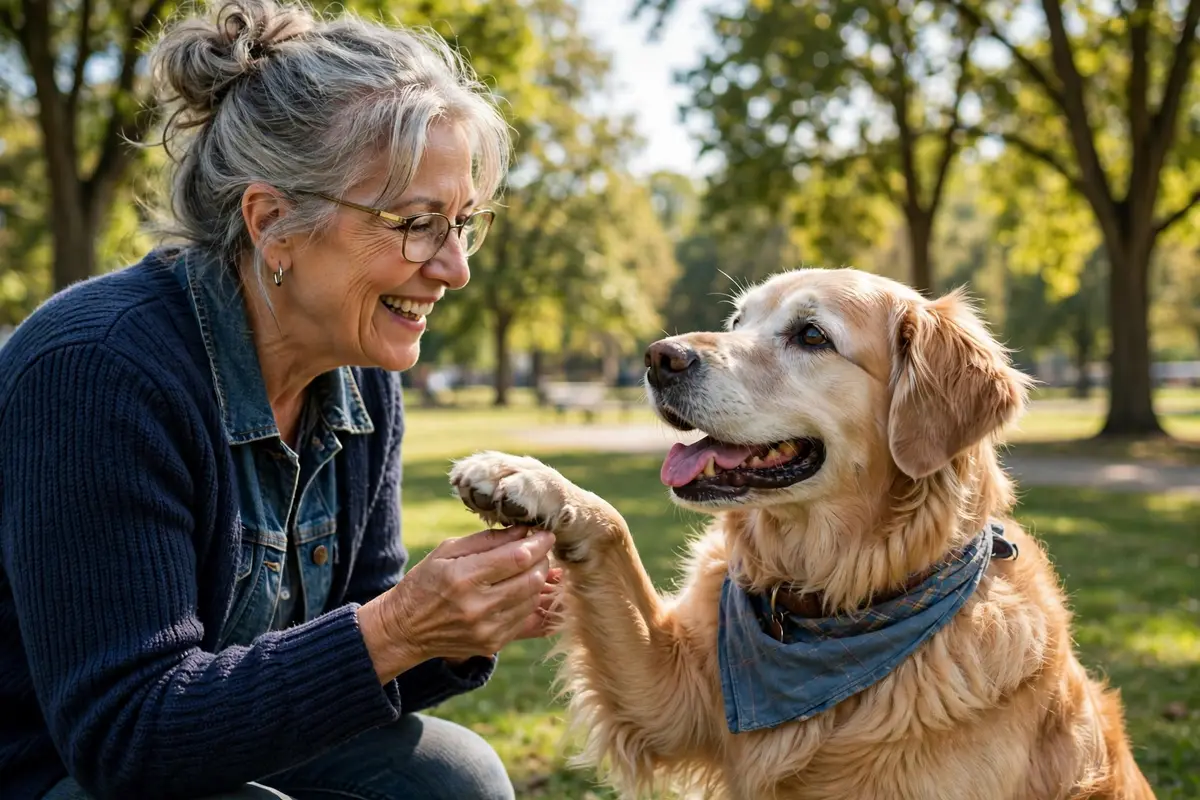
| Shake | Reward a gentle paw lift from a sit, without pulling the paw. | It uses a small, natural movement. |
| Go to place | Lure your dog onto a mat and reward all four paws on it. | It is calm, useful, and easy on joints. |
| Find it | Hide a treat in plain sight, then in slightly harder spots. | It uses nose work and thinking, not speed. |
| Chin rest | Reward your dog for resting the chin on your hand or lap. | It is still, gentle, and great for vet visits. |
These are good first choices when you teach old dog new tricks. Skip any trick that causes limping, panting, freezing, or reluctance to repeat it.
Teach Touch in Five Small Steps
Touch is a great first trick because it is simple, useful, and easy to reward. It also helps you guide your dog without pushing or pulling.
- Hold your flat palm a few inches from your dog’s nose.
- Mark and treat the instant the nose touches your palm.
- Move your hand away, present it again, and repeat.
- Add the word touch only after your dog drives to your hand.
- Move your hand higher, lower, and to each side in turn.
If your dog sniffs without touching, wait a moment, then try again with your hand closer. Keep the game short and end while your dog still wants more.
Lure, Capture, and Shape in Plain Words
Luring means guiding your dog with a treat. Hold the treat near the nose, move slowly, mark the right moment, and reward. Then make the hand motion smaller over time.
Capturing means rewarding something your dog already does. If your dog stretches after a nap, mark and reward it, and you have the start of a bow.
Shaping means rewarding small steps toward a bigger trick. Reward a nose touch to a door, then a firmer touch, then a touch that moves it. Small steps keep success likely.
Use the method that fits the trick and your dog. Most senior tricks work best with a mix of clear luring and patient shaping.
Practice in New Places, One Step at a Time
Dogs do not always carry a skill from one room to another. A trick that works in the kitchen may fall apart in the garden, and that is normal.
When you change places, go back to easy reps and generous rewards. Add distance, noise, or movement only after your dog succeeds calmly in the easier version.
If progress stalls, go back to the last step your dog could do well. A smaller step is not a failure. It is how steady learning works.
What NOT to Do
- Do not punish slowness, confusion, or mistakes. It adds stress and slows learning.
- Do not use shock or prong collars, and do not force your dog’s body into a position.
- Do not repeat the cue many times. Say it once, wait, and help with an easier step.
- Do not train through pain, limping, fear, or clear tiredness.
- Do not ask for jumping, tight spins, rolling over, or sudden movement from a stiff dog.
- Do not make every session long. Short and happy beats long and tiring.
Positive reinforcement only means the dog earns good things for good choices. It does not mean you must accept unsafe behavior. Use distance, calm breaks, and easier steps instead of force.
When Difficulty Learning Needs Vet Attention
Most slow learning is normal, but some changes need prompt care. Do not wait if learning problems arrive with a change in health or mood.
- Pain, limping, stiffness, or trouble standing, sitting, or lying down.
- A sudden change in behavior, sleep, appetite, or house training.
- New fear, confusion, staring, getting stuck, or trouble finding familiar places.
- Growling, snapping, or guarding that is new or getting worse.
- A skill that was solid and then falls apart quickly.
See your vet first for pain, sudden changes, or possible medical causes. Then talk to a qualified, reward-based behavior professional if the problem is fear, aggression, or a behavior that keeps getting worse.
Troubleshooting: When a Trick Stalls
| Problem | Try this |
|---|---|
| Your dog just stares at you | Use a better reward and make the first step much easier. |
| Learned yesterday, forgotten today | Warm up with known tricks, then repeat the new step slowly. |
| Tired after two minutes | Train for two minutes. Short sessions each day work well for seniors. |
| Only works when a treat is visible | Reward every rep again, then fade treats slowly and keep praise. |
| Looks stressed, not happy | Stop, add distance, shorten the session, or switch to a known trick. |
Frequently Asked Questions
At what age is a dog too old to learn tricks?
There is no fixed age. Dogs can keep learning through their senior years, but the tricks, pace, and session length should match the dog’s body and senses. You can teach old dog new tricks at any senior age, as long as the trick fits the dog’s body.
How long does it take an old dog to learn a trick?
It varies. Simple tricks like touch or shake may click in a few short sessions, while shaped tricks may take weeks. Steady, short practice matters more than speed.
Should I use a clicker with a deaf senior dog?
Use a visual marker instead. A thumbs-up, a hand signal, or a flash of light at the exact moment of the right action works the same way as a click.
My senior dog is not food motivated. What can I use?
First, ask your vet about dental pain, nausea, or other medical causes. Then try soft meat, cheese, a favorite toy, praise, or a short game your dog loves.
Can trick training help with boredom or worry?
Yes, it can help many dogs. Short, predictable games give mental activity, clear choices, and positive time with you, which can ease boredom and restlessness.
Is it bad to teach an old dog physically demanding tricks?
It can be. Avoid jumping, tight spins, rolling over, and sudden movement, especially with arthritis or hip problems. When in doubt, ask your vet which movements are safe.
The Bottom Line
Start with touch, keep sessions short, and choose tricks that suit your dog’s joints, hearing, and vision. Start today, and teach old dog new tricks one short, happy session at a time.
If you want more practice ideas, start with these easy tricks to teach your dog, learn how to socialize a shy puppy with other dogs, or read how to introduce a new puppy to an older cat.
Reference
American Kennel Club, Dog Sports and Activities for Senior Dogs.
Still stuck? Get a plan built for your dog.
Answer a few quick questions and get a personalized, force-free training plan in minutes.
Try the Free Dog Tools