Best Way to Socialize a Shy Puppy With Other Dogs
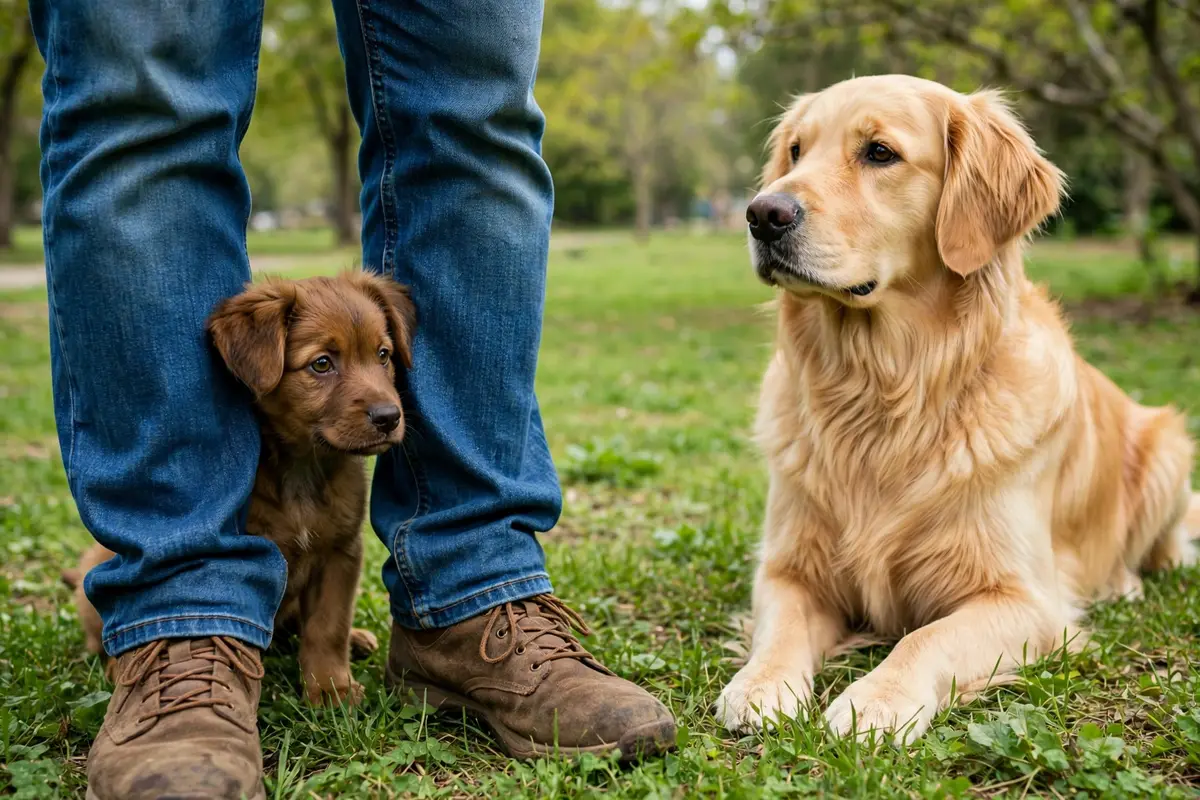
Watching your shy puppy hide behind your legs when another dog comes close can be hard to watch. You want them to have friends, not fear. Slow, kind steps can build real confidence.
Shyness does not mean your puppy is broken. It often means they need more time, more space, and better first meetings.
Key Takeaways
- Let your puppy watch from a distance and choose when to move closer.
- Build up in small steps, from watching to walking side by side to brief greetings.
- Reward calm and curious behavior with treats and gentle praise.
- Choose calm, friendly dogs, and skip crowded dog parks at first.
- Never flood your puppy or force a greeting.
- Ask your vet or a qualified trainer for help if fear grows or turns to aggression.
How to Socialize Shy Puppy With Other Dogs: The Direct Answer
To socialize shy puppy with other dogs, start at a distance where your puppy can see another dog and still relax. Reward calm looks, then move a little closer over several sessions.
Only add a brief greeting when your puppy is loose, curious, and able to take treats. End while it is going well, and repeat with the same calm dog before you try a new one.
Why Some Puppies Are Shy Around Other Dogs
Limited early experience is a common cause. Puppies that met few dogs early on may not know what to expect from a new dog.
Temperament also plays a part. Some puppies are naturally cautious, even in a calm and loving home.
A single scary meeting can leave a mark. A rude rush, a chase, or a loud bark can teach a puppy to expect trouble.
Busy places can overwhelm a puppy that copes well one to one. Noise, movement, and many dogs at once can be too much.
Fear periods can add to shyness too. A puppy that was fine last week may suddenly seem worried, so slow down and keep experiences easy.
Reading Stress Signals Before You Move Closer
Learn to read your puppy before you decide what to do next. Their body tells you when to pause, move back, or stop.
| Level | Signals | What to do |
|---|---|---|
| Mild | Lip licking, yawning, turning away, sniffing the ground | Slow down and add distance |
| Moderate | Tucked tail, crouching, whining, refusing treats | Take a break in a quiet spot |
| High | Freezing, trembling, trying to bolt, growling | Leave calmly and try again another day |
Growling is communication, not naughtiness. Do not punish it. Move your puppy away and give them space to recover.
The Gradual Exposure Ladder
The best way to socialize shy puppy with other dogs is to shrink the challenge until your puppy can succeed, then grow it slowly. Use one step at a time.
Move on only when your puppy is relaxed at the current step on more than one day. Rushing a step often causes a setback.
| Step | What to do | Move on when |
|---|---|---|
| 1. Watch | Watch dogs from a distance and reward calm looks | Your puppy looks, then looks back at you |
| 2. Parallel walk | Walk the same way, far apart, with a calm dog | Your puppy walks loosely and takes treats |
| 3. Brief greeting | Let dogs sniff for a few seconds, then call away | Your puppy stays loose and can disengage |
| 4. Short play | Play in a fenced area with a known gentle dog | Play stays bouncy, with pauses |
| 5. Widen slowly | Add one new calm dog at a time | Your puppy recovers quickly after each meeting |
Stage 1: Watch dogs from a distance
Find a bench or quiet spot 30 to 50 feet from a path where dogs pass. Reward every calm glance, then let your puppy look away.
Keep sessions to 5 to 10 minutes. A few short sessions each week are enough to build a good habit.
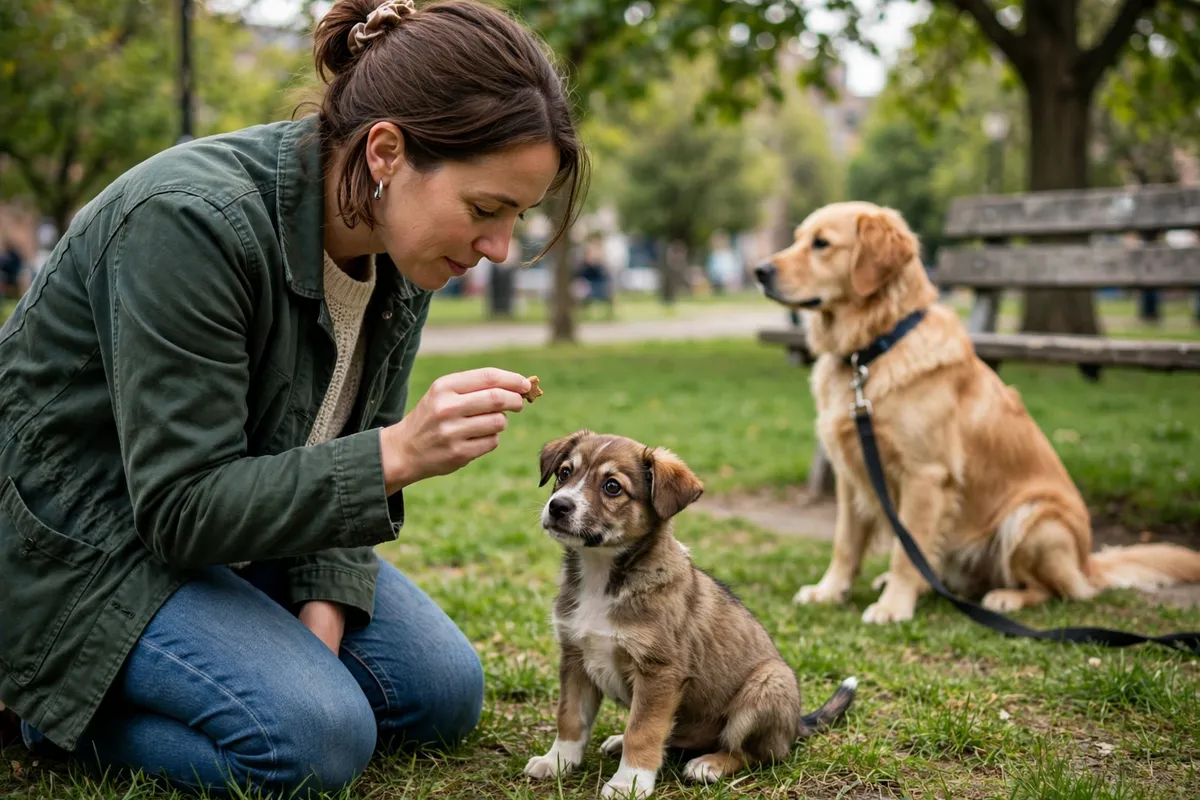
Stage 2: Parallel walks
Ask a friend with a calm dog to walk with you. Start far apart and walk in the same direction.
Shorten the distance only over several walks, as your puppy relaxes. Let the dogs share the walk before they share a greeting.
Stage 3: Brief greetings with one calm dog
Choose one calm adult dog or gentle puppy for a first greeting. Keep it to a few seconds on loose leashes, then call your puppy away with a treat.
Short greetings stop tension from building. Most bad greetings happen because they go on too long.
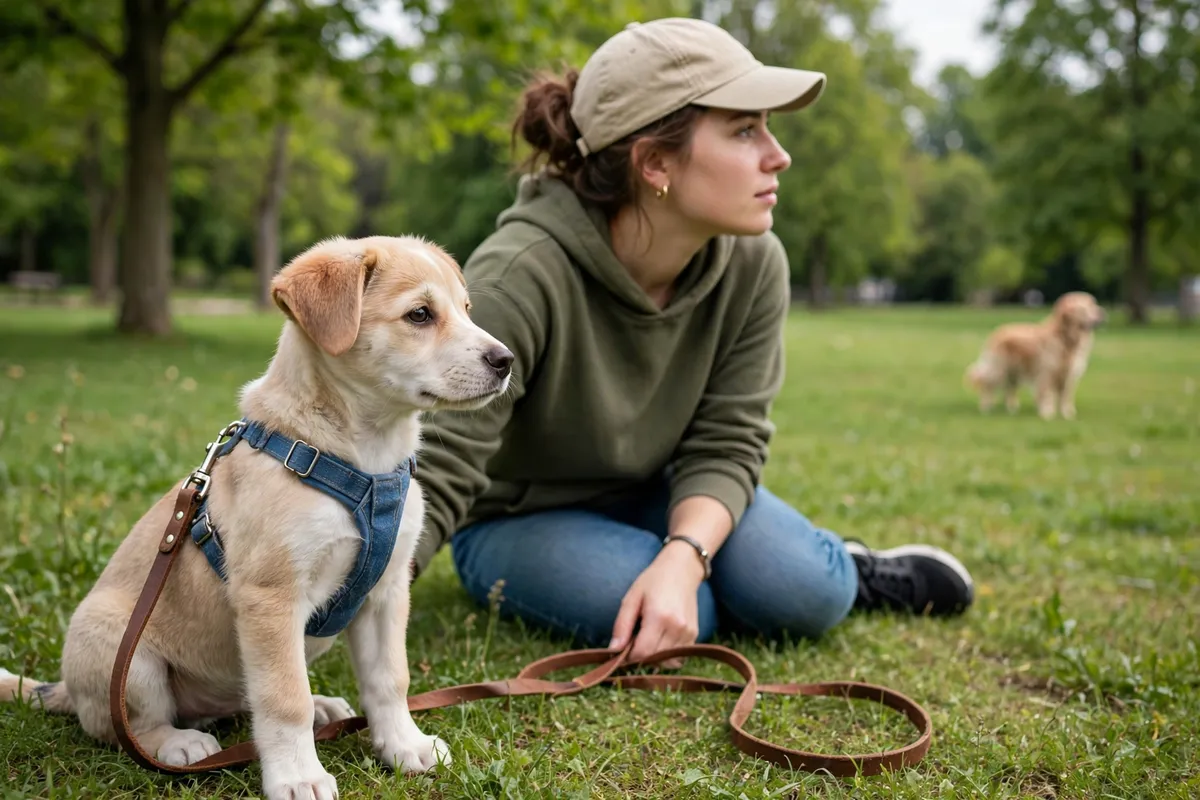
Stage 4: Supervised play with the right partner
When greetings go well, try short play in a secure area. Watch for pauses, play bows, and loose bodies.
End while it is still fun. If your puppy starts to feel overwhelmed, call them out for a calm break.
Stage 5: Gradually widen the circle
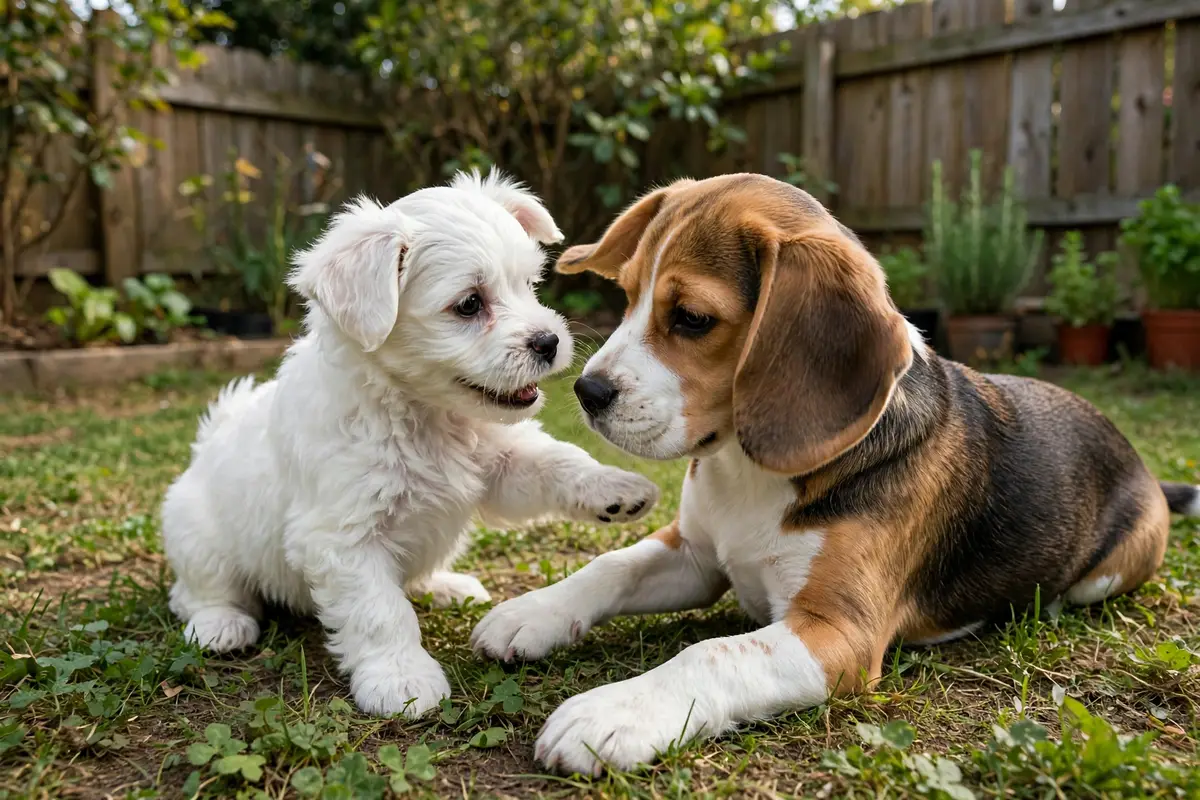
Once your puppy has one or two dog friends, add new calm dogs one at a time. Mix sizes and looks slowly, but keep each first meeting short and easy.
Choosing Calm Dog Partners
The right partner matters more than the number of dogs your puppy meets. One calm teacher can do more than ten chaotic meetings.
- Calm adult dogs that are known to be gentle with puppies.
- Puppies of a similar size and play style.
- Owners who will keep their dog under control and respect your plan.
Skip for now: dog parks, daycares, off-leash beaches, and busy pet store aisles. Those places are hard to control, and one bad rush can undo good work.
Safe First Meetings, Step by Step
- Meet in a neutral, open space with room to move away.
- Keep leashes loose. Tight leashes can add tension.
- Walk side by side first, rather than meeting face to face.
- Let dogs sniff briefly, then call your puppy away and reward them.
- Repeat short greetings, and end before either dog gets tired or pushy.
If your puppy hides, freezes, or tries to leave, increase distance at once. That is not failure. It is useful information.
What NOT to Do
- Never flood your puppy by placing them in a crowd of dogs and hoping they cope.
- Never force a greeting by dragging your puppy forward or holding them in place.
- Never punish fear, barking, or growling. Punishment adds fear to fear.
- Never use shock or prong collars. Use rewards, distance, and short breaks instead.
- Never skip steps because progress feels slow. Small wins build lasting confidence.
To socialize shy puppy with other dogs well, patience matters more than speed. A calm plan beats a fast plan every time.
Setbacks Are Normal
Setbacks are normal. A puppy may do well for a week, then struggle after a loud meeting, a move, or a tired day.
When that happens, go back one step. Return to watching from a distance, shorten sessions, and rebuild with a known calm dog.
Keep a simple note of what helped: distance, partner, time of day, and how your puppy recovered. Patterns will show you what to repeat.
Short training games also build confidence between meetings. Teach a simple touch cue with these easy tricks to teach your dog, and use it to redirect your puppy before a greeting.
If excitement turns to mouthing in a German Shepherd puppy, use calm, reward-based steps in this German Shepherd puppy biting guide.
Socialization Before Vaccinations Are Complete
Puppies learn fastest early in life, but full vaccination takes time. Ask your vet what is safe in your area.
Until your vet clears wider contact, use controlled meetings with known, healthy, vaccinated dogs in clean, private spaces. Avoid unknown dog waste and crowded dog areas.
When Shyness Needs Vet or Professional Help
Most shy puppies improve with slow steps, but some need extra support. Do not wait if fear is growing.
- Your puppy freezes, panics, or tries to flee at the sight of any dog, with no improvement over several weeks.
- Shyness is turning into growling, lunging, or snapping.
- Fear is spreading to people, sounds, or new places.
- Your puppy shows pain, limping, loss of appetite, or a sudden change in behavior.
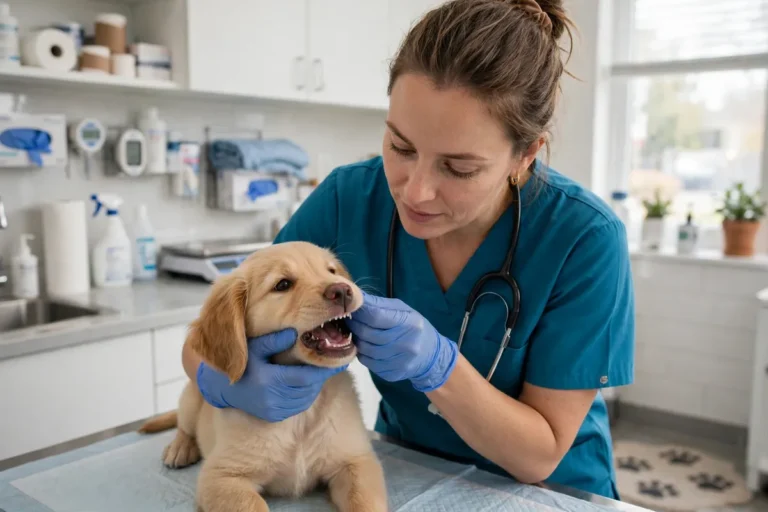
See your vet first for pain, sudden changes, or possible medical causes. Then talk to a qualified, reward-based trainer or behavior professional.
Frequently Asked Questions
How do I socialize shy puppy with other dogs?
Start far away, reward calm behavior, use parallel walks, then try brief greetings with one calm dog. Keep sessions short and end on a win.
Should I take my shy puppy to the dog park?
Not yet. Dog parks are unpredictable, with too many dogs of unknown temperaments in a confined space. Build up with known calm dogs first.
How long does it take to socialize a shy puppy?
It varies. Some puppies show clear progress in a few weeks of steady, short sessions. Others need months. Judge by relaxed body language, not by the calendar.
Can I socialize my puppy before vaccinations are complete?
Yes, with vet guidance and precautions. Use controlled meetings with known, healthy, vaccinated dogs in clean, private spaces.
My puppy was fine and suddenly became fearful. What happened?
Your puppy may be in a fear period. Slow down, keep experiences easy, and return to watching from a distance. Ask your vet or a trainer if fear persists.
Is it too late to socialize a 6-month-old shy puppy?
No. Dogs keep learning throughout life. The steps are the same, but an older puppy may need more time and smaller steps.
The Bottom Line
Confidence grows one calm meeting at a time. Give your puppy space, reward brave choices, and protect every experience.
Start with distance, choose one calm partner, and if you need quiet play between outings, try these indoor games to tire an energetic puppy.
Reference
American Kennel Club, How to Raise a Confident Puppy.
Still stuck? Get a plan built for your dog.
Answer a few quick questions and get a personalized, force-free training plan in minutes.
Try the Free Dog Tools