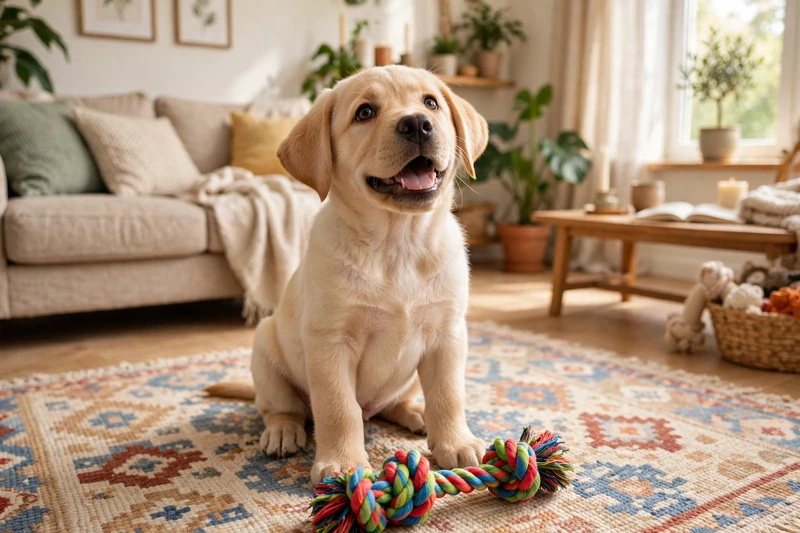
How to Stop Your Labrador Puppy Biting: 4-Week Plan
Those needle-sharp teeth hurt, and they seem to find hands, sleeves, and trouser legs at the worst moments.
Take heart first: this biting is normal puppy behavior, not a sign that your Labrador is aggressive or badly behaved.
Labradors were bred to carry things gently in their mouths, so your puppy is wired to explore the world mouth-first.
Over four weeks, you will teach a softer mouth, give that mouth a better job, and fix the tiredness and sore gums that make biting worse.
This plan uses positive reinforcement only, with calm pauses, toys, treats, and rest, and no fear-based methods.
Direct Answer: labrador puppy biting
To stop labrador puppy biting, make teeth on skin boring and make toys pay better, every single time.
When teeth touch skin, freeze, withdraw attention for a short pause, then offer a toy and praise teeth on the toy.
Keep the same response from everyone, protect naps, soothe teething, and practise the skill around gentle distractions in week 4.
Key Takeaways
- Labrador puppy biting is normal retriever mouthiness and teething, not aggression, but it still needs a plan.
- Week 1 teaches bite inhibition: teeth on skin ends the fun, every time.
- Week 2 builds redirection: toys in every room, plus a nose touch as an alternative.
- Week 3 fixes hidden causes: overtiredness and sore gums.
- Week 4 proofs the gentle mouth around distractions.
- Everyone in the household must follow the same rules.
- See your vet for pain, sudden behavior change, or aggression signs.
Why Labrador Puppies Bite So Much
Puppies learn about the world with their mouths, much as toddlers learn with their hands.
Labradors take this further, because retrievers were bred to pick things up, carry them, and work closely with people.
Teething adds pressure, because sore gums make puppies chew and mouth more as new teeth push through.
Play is another driver, because mouthing invites interaction, and excited puppies often grab hands, sleeves, and moving feet.
Over-arousal is the third driver, because a tired, excited, or overstimulated puppy loses self-control and bites harder.
That mix is why labrador puppy biting can feel constant in a busy home, even when your puppy is friendly and happy.
Growling during play is usually just play, with a loose, wiggly body and easy pauses.
True warning signs look different, with a stiff body, hard stare, or growling outside play, and those need professional advice.
Before You Start: The Ground Rules
Stock toy stations. Put safe chew toys in every room your puppy uses, so redirection is always close at hand.
Praise your puppy when he chooses a toy, because rewarded choices repeat and hands become less interesting.
Prepare a teething soother. A damp washcloth, twisted, knotted, and frozen, can soothe sore gums.
Supervise washcloth play closely, and remove it if your puppy starts to tear or swallow fabric.
Agree on one response. If one person laughs and keeps playing while another stops play, biting sometimes still pays.
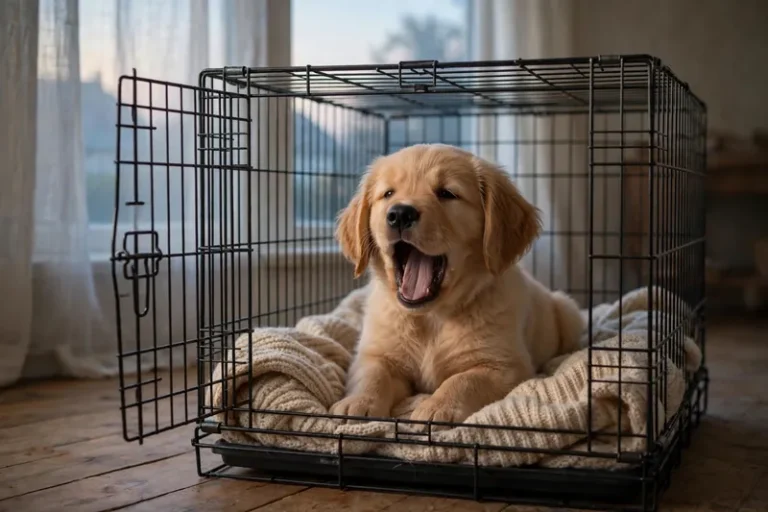
Keep the crate punishment-free. Use a crate or pen your puppy already likes for calm breaks, with a chew inside.
Calm breaks should mean rest, never punishment, or your puppy will resist settling there.
Rule out pain first. A puppy who suddenly bites harder, cries when touched, or guards his mouth may be hurting.
If biting changes suddenly, or comes with illness signs, see your vet before you push on with training.
Your 4-Week Plan at a Glance
| Week | Focus | Daily goal |
|---|---|---|
| Week 1 | Soft mouth | Pause play for teeth on skin, reward gentle mouthing |
| Week 2 | Redirection | Offer a toy every time, teach nose touch |
| Week 3 | Rest and teething | Protect naps, soothe gums, keep play short |
| Week 4 | Real life | Practise around distractions, keep rules steady |
Keep earlier weeks going as you add each new week, because the plan builds in layers rather than replacing old skills.
Week 1: Teach Bite Inhibition
Week 1 has one goal: teach your puppy that teeth on human skin ends the fun.
This is bite inhibition, the lesson littermates teach by yelping and walking away when teeth land too hard.
When teeth touch skin, say ouch in a calm voice, freeze, and withdraw all attention.
Tuck your hands away, turn your head, and go still for a short pause, or step briefly out of the room.
Then calmly resume play with a toy, and praise warmly when teeth land on the toy instead.
Use the same response every time, from every person, because consistency is the whole lesson.
If ouch excites your puppy, drop the sound and use silent freeze-and-withdraw instead.
Also reward what you want, with praise and a treat when your puppy mouths gently or licks.
Puppies repeat what pays, so gentle must pay better than hard, and play should end while it is still fun.
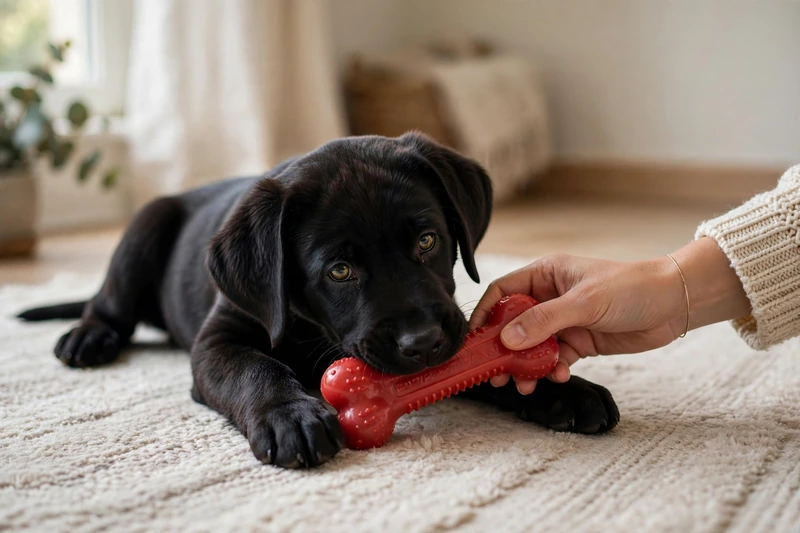
End each session on a success, even a small one, and keep training woven into normal play rather than long drills.
Week 2: Build Your Redirect Toolkit
Keep the week 1 rule, and add the replacement skill: grabbing a toy instead of a hand.
Play the trade game. When mouthing starts, freeze, then wiggle a toy on the ground or squeak it.
The instant teeth touch the toy, praise and play, so the toy becomes the exciting choice.
Teach a nose touch. Hold out your palm, and the instant his nose bumps it, say yes and treat.
After a few short sessions, you can ask for a nose touch before greetings and exciting moments.
A nose touch works because a puppy cannot touch your palm and bite your hand at the same time.
Stop teaching that hands are toys. Rough hand-wrestling teaches your puppy that hands are for biting.
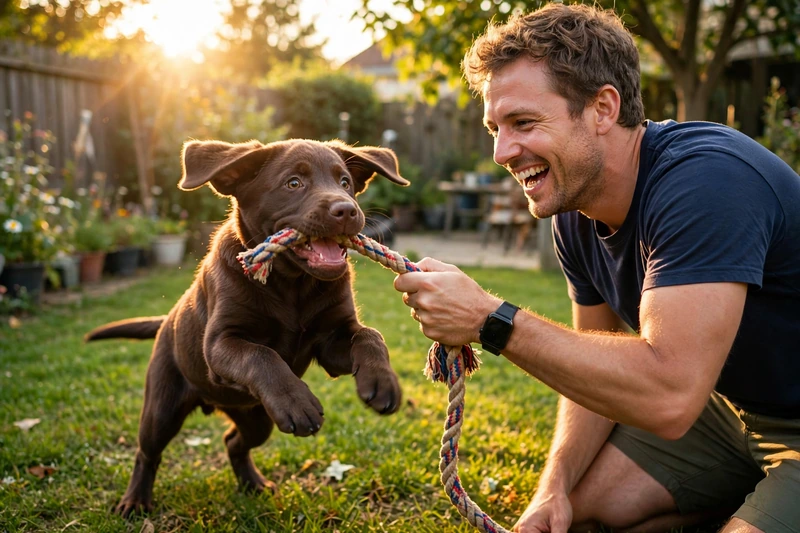
Use balls, tug ropes, and rubber toys for rough play, and keep hands for calm petting and treats.
Practise greetings. Puppies bite hardest when excited, which makes hellos a danger zone.
Ask visitors to stand still, keep hands low, and wait for calm before they greet your puppy.
If teeth on skin continues past puppyhood, our Labrador mouthing guide explains the next steps for older dogs.
Week 3: Fix the Hidden Drivers, Tiredness and Teething
By week 3, many owners hit a wall, because the puppy is worse in the evenings.
This is almost always one of two drivers, overtiredness or sore gums, and both are fixable.
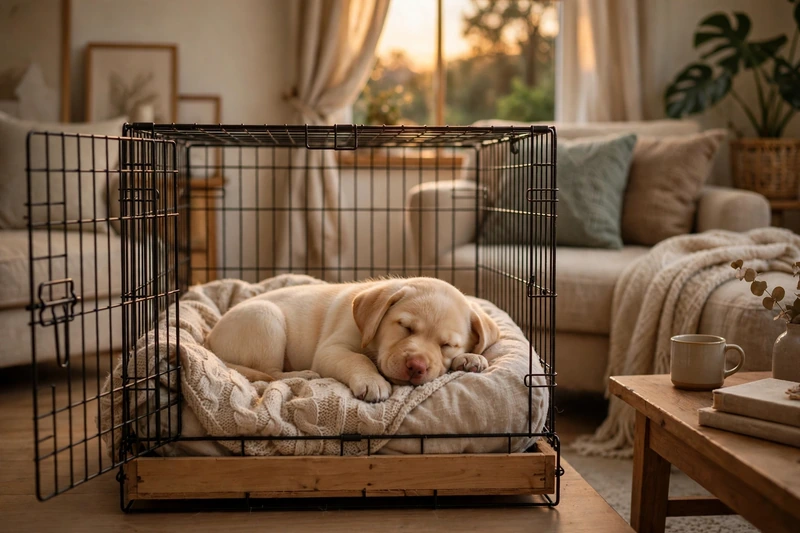
Driver 1: he is overtired. Puppies need a lot of sleep, and a puppy awake too long turns cranky and bitey.
The fix is enforced naps, with a quiet crate or pen, a chew, and a calm routine after play.
Move the last nap later into the afternoon, and keep evenings calm, with chew time and gentle settling.
Driver 2: his gums hurt. As baby teeth loosen and adult teeth push through, chewing peaks.
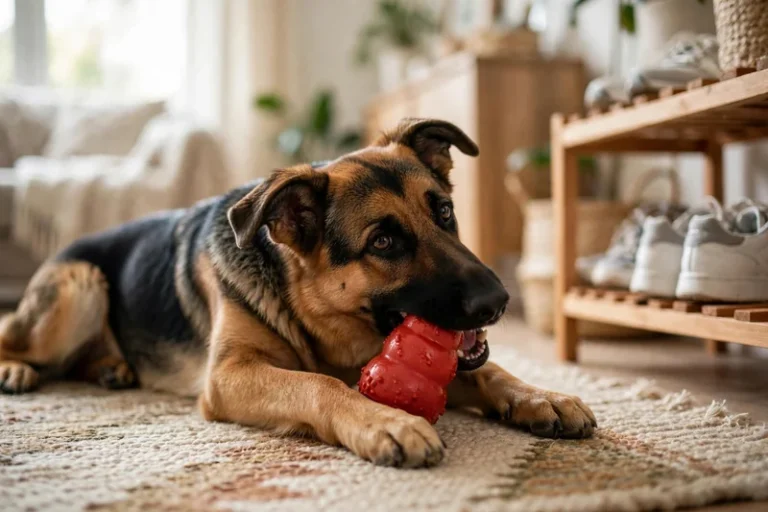
Rotate frozen washcloths, chilled rubber toys, and other safe chews, and keep several textures available.
Exercise him the right way. Use short, frequent play sessions instead of long forced runs.
Short walks, sniffing games, and gentle play tire a puppy without overloading growing joints.
Keep socializing. Calm puppy playdates teach bite inhibition from other dogs, who yelp and walk away.
Keep playdates short and supervised, and end them before excitement tips into frantic biting.
For the chewing side of teething, see our Labrador chewing guide for safe chew choices and house management.
Week 4: Proof the Gentle Mouth
Week 4 makes the new habits survive real life, not just quiet training sessions.
Add distractions gradually. Practise pause, redirect, and nose touch with mild distractions first.
Start with the television on, then a family member moving nearby, then a visitor at the door.
Rehearse the hard moments. Note when your puppy bites most, and set those moments up deliberately.
Have a toy ready before the trigger, and reward the calm choice before biting can start.
Track the trend, not the day. Note roughly how many biting incidents happened, and how hard they were.
You want the trend over the week to fall, even if one bad day still happens.
Know what success looks like. By the end of week 4, most Lab puppies are much gentler.
Teeth may still touch skin sometimes, but bites should be softer, rarer, and easier to interrupt.
If walks bring a new version of the problem, our Labrador pulling on leash guide covers calm walking basics.
Calm Handling in the Moment
When teeth hit skin, run this short routine every time, without changing it mid-bite.
- Mark calmly, with ouch only if the sound calms rather than excites your puppy.
- Stop everything, freeze, withdraw your hands, and turn slightly away.
- Wait for a short pause, staying boring, with no eye contact and no talking.
- Redirect to a toy, and praise warmly when teeth land on it.
- If biting escalates, leave calmly behind a baby gate, then return neutrally and try again.
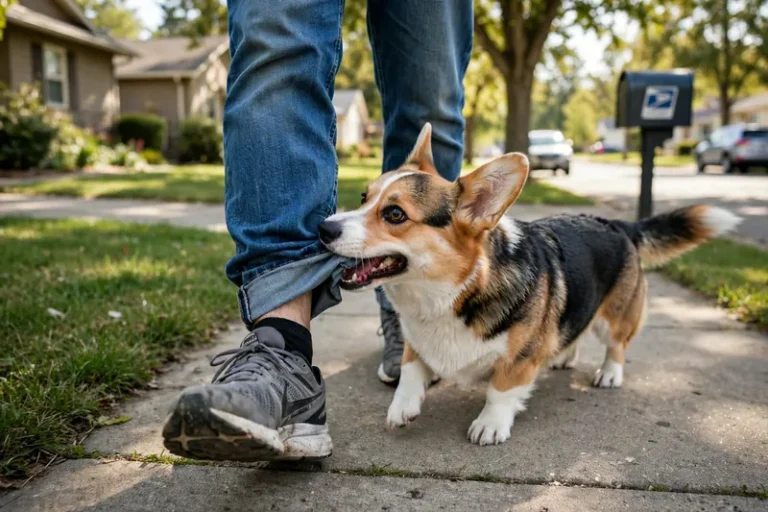
For moving feet, the same freeze rule helps, because walking faster can look like prey.
Stop, stand still like a tree, wait for calm, then redirect to a toy or treat near your leg.
What NOT to Do
Positive reinforcement only means no dominance, alpha, or punishment framing, and no fear-based tools.
- Do not shout, chase, or push your puppy away, because those reactions can excite or frighten him.
- Do not use scruff grabs, alpha rolls, or muzzle holding, because fear does not teach a soft mouth.
- Do not use shock, prong, or choke collars for puppy biting, and choose reward-based training instead.
- Do not use spray deterrents or shake cans as a plan, because a startle teaches fear, not a gentle mouth.
- Do not scold damage found later, because your puppy cannot link a past bite to a present scolding.
- Do not offer old shoes or clothes as toys, because your puppy cannot tell toy shoes from good shoes.
Troubleshooting: When Your Labrador Puppy Still Bites
He bites my trouser legs when I walk. Stop moving and go still, then redirect to a toy.
Walking faster makes you look like prey, so stillness plus a toy breaks the chase pattern.
Saying ouch makes him bite harder. Drop the sound, freeze, withdraw attention, and leave briefly.
For persistent biters, calmly step behind a gate, then return and offer a toy.
He is an angel all day and wild in the evening. That is overtiredness, so protect the afternoon nap.
Keep evenings calm, with chew time, gentle play, and an earlier bedtime routine.
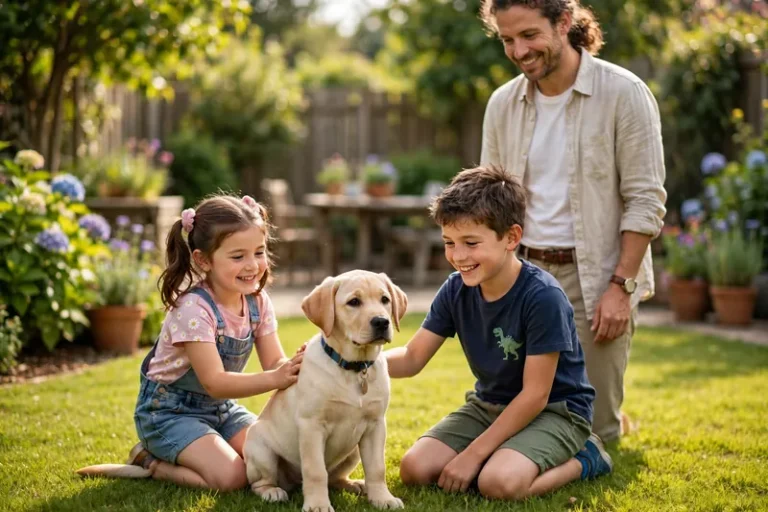
The kids get bitten most. Children move fast and squeal, which is irresistible to a puppy.
Teach children the freeze rule, supervise every interaction, and switch to toy-based play.
Our Labrador puppy jumping on children guide covers safe, adult-led greetings for kids.
He improved, then suddenly got worse. A teething surge is common, so go back to week 3 basics.
Increase chew choices, protect naps, and keep sessions short until the surge passes.
Guests trigger the worst biting. Brief visitors before they arrive, and keep greetings calm and short.
Our Labrador jumping up on guests guide explains calm door routines in more detail.
When Biting Needs Vet or Professional Attention
This plan covers normal puppy mouthing, so seek help promptly if biting goes beyond that pattern.
- Biting that repeatedly breaks skin and keeps escalating despite consistent training.
- A sudden change in a normally gentle puppy, or biting with signs of pain or illness.
- Stiff body language, hard staring, growling over food, toys, or resting places.
- Mouth pain, trouble eating, crying when touched, or guarding the mouth.
- Fear that is getting worse, or panic when left alone.
Contact your vet first for pain, sudden changes, aggression, or any medical cause you suspect.
Then ask for a qualified behavior professional who uses positive reinforcement, and avoid fear-based methods.
Frequently Asked Questions
When do Labrador puppies stop biting?
There is no single week it ends, because mouthing fades as training takes hold and adult teeth settle.
Most families see clear improvement across the four weeks, with occasional setbacks during teething.
Is my Labrador puppy’s biting a sign of aggression?
Almost certainly not, because playful biting comes with a loose, wiggly body and easy pauses.
True aggression looks stiff and intense, and it needs vet and professional advice, not just more training.
Should I yelp ouch when my Lab puppy bites?
For many puppies it works, because it mimics littermates, but some puppies get more excited by the sound.
If ouch makes biting worse, drop the sound and use silent freeze-and-withdraw instead.
What are the best chew toys for a teething Lab puppy?
Safe rubber toys sized for puppies, rope toys for supervised play, and frozen washcloths are good starting points.
Rotate textures, supervise new chews, and remove any toy that starts to break apart.
My Lab puppy bites hardest in the evening. Why?
Usually overtiredness, because puppies need a lot of sleep and one awake too long turns wild.
Protect naps, keep evenings calm, and give a chew before the usual witching hour.
Can I use a spray deterrent or shake a can to stop the biting?
I do not recommend them, because a startle might interrupt one bite but teaches fear rather than gentleness.
Redirection, pauses, and rewards teach the skill your puppy actually needs.
The Gentle Mouth Is a Skill, Not a Phase
Your Labrador puppy is not giving you a hard time, he is having a hard time learning how his mouth works.
With steady work, labrador puppy biting usually becomes softer, rarer, and easier to redirect.
Keep toys close, keep naps protected, keep everyone on the same response, and judge progress week by week.
For other puppy biting plans, see our German Shepherd puppy biting guide and our Golden Retriever puppy nipping guide.
Reference
Reference: ASPCA, Mouthing, Nipping and Biting in Puppies.
Still stuck? Get a plan built for your dog.
Answer a few quick questions and get a personalized, force-free training plan in minutes.
Try the Free Dog Tools