
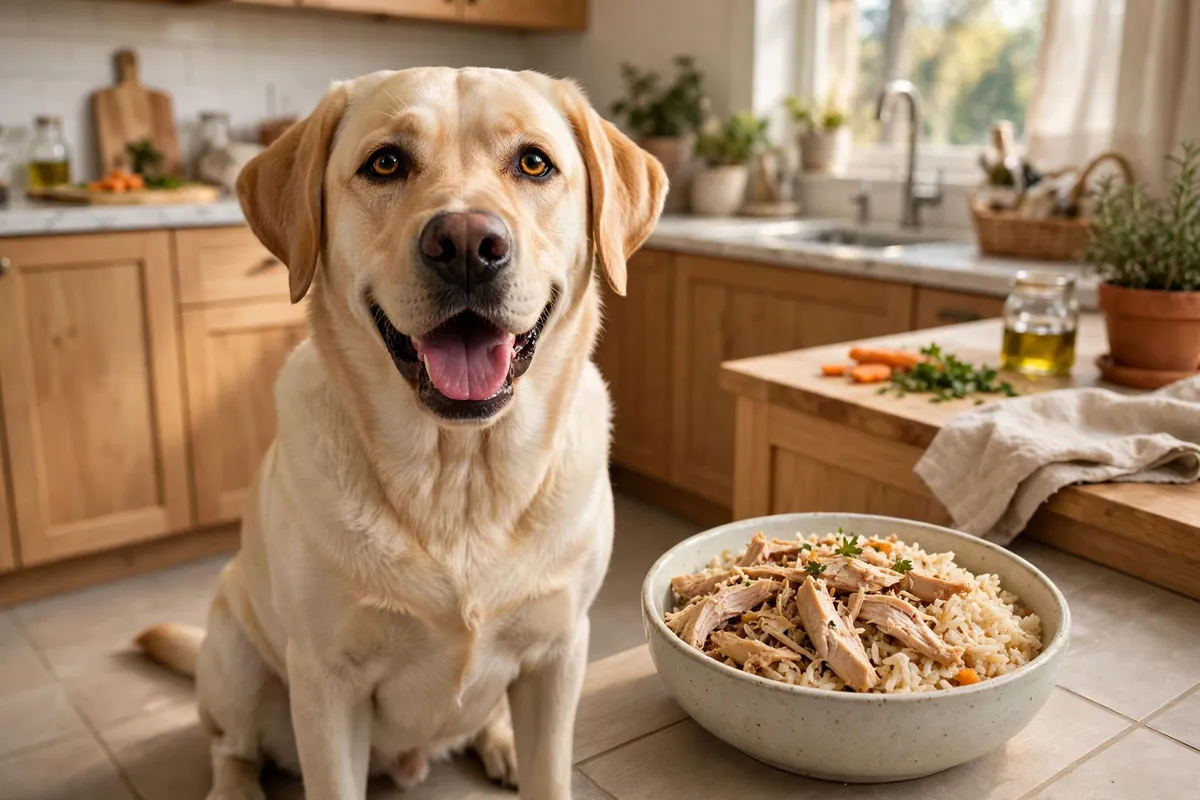
Best Homemade Food for Labrador Retriever With Sensitive Stomach
If your Labrador rushes meals, scavenges on walks, and then has loose stools, you are not alone. Labs are enthusiastic eaters, and that enthusiasm can upset a sensitive stomach.
Read this first: a homemade diet fed long term must be formulated or approved by your veterinarian or a veterinary nutritionist. This guide gives general information only. It does not diagnose a stomach condition, and it does not prescribe a diet as treatment.
This guide covers homemade food labrador sensitive stomach planning in plain terms: gentle ingredients, a short bland example, slow transitions, and clear vet warning signs.
Key Takeaways
- Any long term homemade diet needs veterinary formulation. Do not guess at nutritional balance.
- Start plain and simple: lean protein, plain rice or potato, and a small amount of pumpkin.
- Introduce one new ingredient at a time, so you can spot what suits your dog.
- Move from bland food back to normal food slowly, over 7 to 10 days.
- Blood in stool or vomit, vomiting or diarrhea that will not settle, weight loss, or refusal to eat needs vet care.
Homemade Food Labrador Sensitive Stomach: The Direct Answer
For homemade food labrador sensitive stomach care, start with a short, vet-guided bland phase, then return slowly to a complete diet. Use plain, lean, well cooked foods, keep portions measured, and watch stools, appetite, and energy at each step.
A homemade meal is not automatically complete or balanced. That is why the long term plan must come from your vet or a veterinary nutritionist, not from a recipe found online.
Why Labradors Get Sensitive Stomachs
Labradors often eat fast, which can mean swallowed air and vomiting. They also explore the world with their mouths, so scavenged food can upset digestion.
Other common factors include a sudden food change, rich or fatty food, and a reaction to a particular protein. Stress and a change in routine can also play a part.
Sometimes an ongoing problem has a medical cause that food alone cannot fix. If signs keep returning, ask your vet to check before you try another diet.
- Fast eating: a slow feeder bowl and calm meals can help.
- Scavenging: secure bins and watch closely on walks.
- Sudden changes: even a good food can upset a gut if it is introduced too fast.
- Rich food: fatty scraps and seasoned leftovers are common triggers.
The Vet Formulation Rule
That is why homemade food labrador sensitive stomach plans need professional formulation for long term feeding. Meat, rice, and vegetables alone do not guarantee the right balance of minerals and vitamins.
Use this order: talk to your vet first, use simple foods for a short period with vet guidance, and only continue home cooking long term with a formulated or approved recipe.
Ask your vet about supplements too. Do not add calcium, fish oil, or a vitamin mix by guesswork, because the right amount depends on the full recipe and your dog.
Gentle Ingredient Basics
Choose foods that are plain, lean, and easy to digest. Serve everything cooked, cooled, and unseasoned, with no salt, butter, oil, or sauce.
| Group | Gentle choices | Serve it plain |
|---|---|---|
| Protein | Skinless chicken breast, lean turkey, white fish, cooked egg | Boiled, poached, or baked, with no skin or bones |
| Carbohydrate | Plain white rice, plain oatmeal, peeled sweet potato | Cooked soft in water only, then cooled |
| Vegetables and extras | Plain pumpkin puree, steamed carrots, plain green beans | Plain only, never pie filling or seasoned mixes |
Plain pumpkin puree is not pumpkin pie filling. Pie filling can contain sugar and spices, so check the label every time.
If your dog may react to chicken, ask your vet about a novel protein such as lamb or fish. Do not run a long elimination trial on your own.
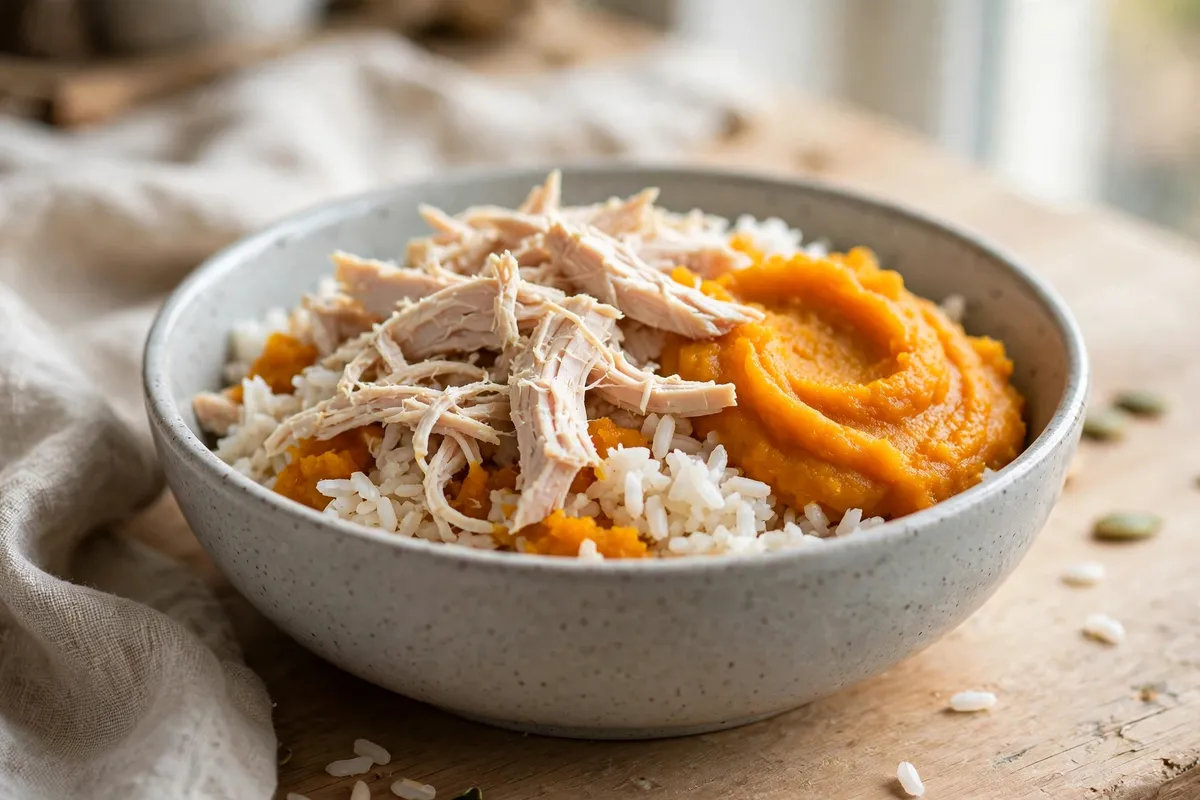
Easy to Digest Proteins
Keep protein lean and well cooked. Drain fat from ground meat, and remove all skin and bones before serving.
- Skinless, boneless chicken breast, shredded after boiling.
- Lean ground turkey, cooked plain and drained of fat.
- White fish such as cod or tilapia, poached or baked plain.
- Cooked eggs, fully set and unseasoned.
Gentle Carbohydrates and Vegetables
Plain white rice is a common bland base because it is soft and easy to digest. Sweet potato, peeled and well cooked, is another gentle choice.
Steamed carrots and plain green beans add gentle fiber. Offer new vegetables one at a time, in small amounts, and watch the response.
Onion and garlic free bone broth can add moisture and aroma. Always read the label, because many broths contain onion, garlic, or added salt.
A Sample Day: From Bland to Normal
This example shows homemade food labrador sensitive stomach transition as an idea to discuss with your vet. It is not a prescription, and it is not a complete long term diet.
For a short bland phase, many vets suggest plain boiled chicken and plain white rice, with a small spoonful of plain pumpkin if it suits your dog.
| Stage | Example pattern | What to watch |
|---|---|---|
| Bland phase, a few days | Small, frequent meals of plain chicken and rice | Appetite, stools, vomiting, and energy |
| Early return | Mostly bland food, with a small amount of normal food | Whether stools stay firm |
| Later return | Gradually more normal food, less bland food | Any return of loose stools or vomiting |
Split the day into 3 or 4 smaller meals. Smaller meals are often easier on an irritated gut than one or two large meals.
If signs return at any stage, go back to the last stage that suited your dog and call your vet. Do not push through a stage that is clearly not working.
Transition Rules That Protect Sensitive Stomachs
Change food slowly, even when the new food looks better. A slow change gives the gut time to adjust and makes it easier to spot a problem ingredient.
| Days | Mix to try |
|---|---|
| Days 1 to 3 | Mostly old food, with a small amount of new food |
| Days 4 to 6 | About half old food and half new food |
| Days 7 to 9 | Mostly new food, with a small amount of old food |
| Day 10 | Fully switched, if stools and appetite have stayed steady |
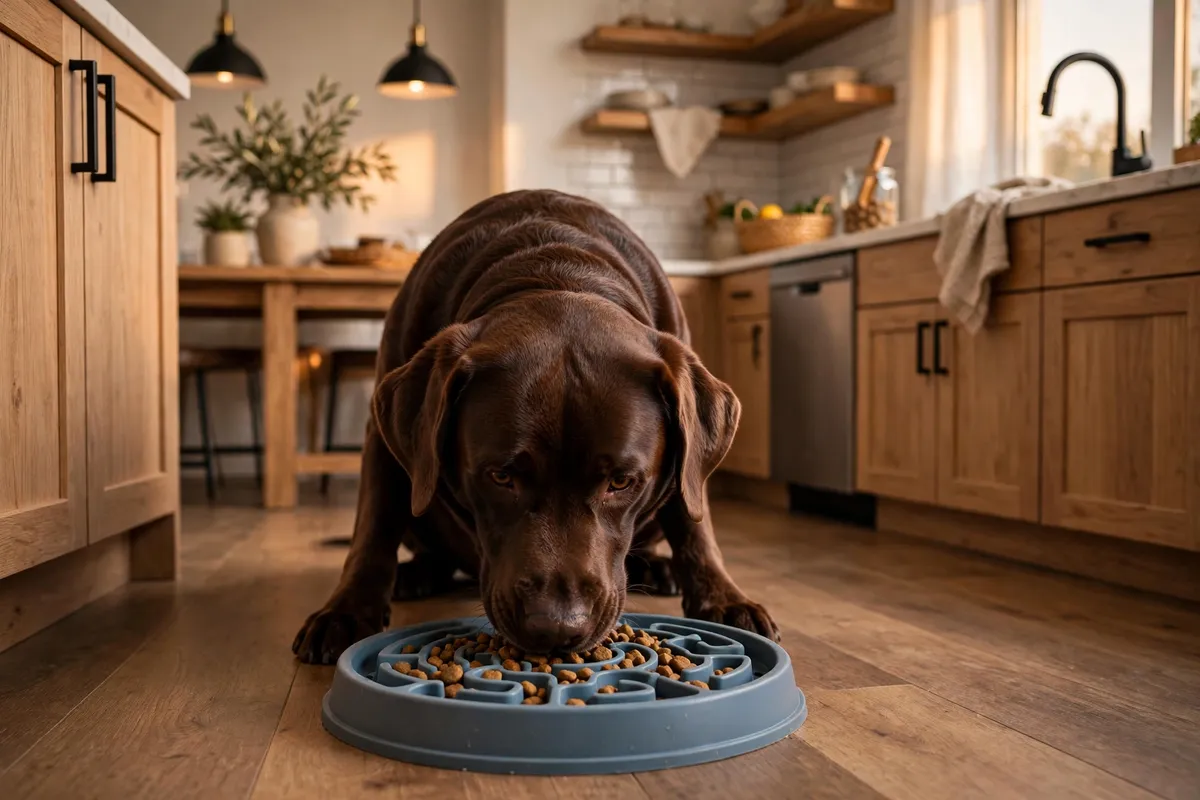
Keep meal times calm and steady. Use praise and patience, and let your dog eat at a relaxed pace instead of rushing.
Keep a short note of what was fed, when signs started, and how stools looked. That note can help your vet far more than a vague memory.
Portion and Body Condition Watching
Labradors gain weight easily, so measure food rather than guessing. Use the same cup or scale each time, and count treats as part of the day.
Watch body shape as well as weight. Ribs should be easy to feel under a thin layer of fat, with a waist visible from above.
If weight is rising, ribs are hard to feel, or weight is falling, ask your vet before making a sharp change. Small, steady adjustments are safer than sudden cuts.
What to Avoid for Sensitive Stomachs
Some foods are unsafe for any dog, and others are simply too rich for a sensitive stomach. Keep the list simple and check labels.
- Onions and garlic in any form, including powder. These are toxic to dogs.
- Grapes and raisins. These are toxic, even in small amounts.
- Chocolate, caffeine, and alcohol. All are toxic to dogs.
- Xylitol, found in some peanut butters and sugar free products. Check every label.
- Fatty scraps and rich gravies. These can trigger a flare and, in some dogs, pancreatitis.
- Cooked bones. They can splinter and injure the gut.
- Heavy spices, salt, and seasoning. Keep homemade food plain.
Raw meat also needs care, so ask your vet before offering it. For a sensitive stomach, plain cooked food is the safer starting point.
What NOT to Do
- Do not switch diets suddenly, and do not try several new foods in a row.
- Do not offer rich or fatty table scraps as a treat or a reward.
- Do not use bones as a staple food, and never offer cooked bones.
- Do not fast your dog on your own, and do not force food or water if your dog refuses it.
- Do not give human stomach medicines, and do not guess supplement doses.
- Do not punish vomiting, accidents, or food refusal. Stay calm, use praise, and keep sessions short and kind.
- Do not use dominance or alpha framing, and never use shock or prong collars.
If a feeding shortcut sounds too good to be true, treat it with caution. Steady, plain, vet-guided feeding beats a fast fix.
When Stomach Signs Need Vet Attention
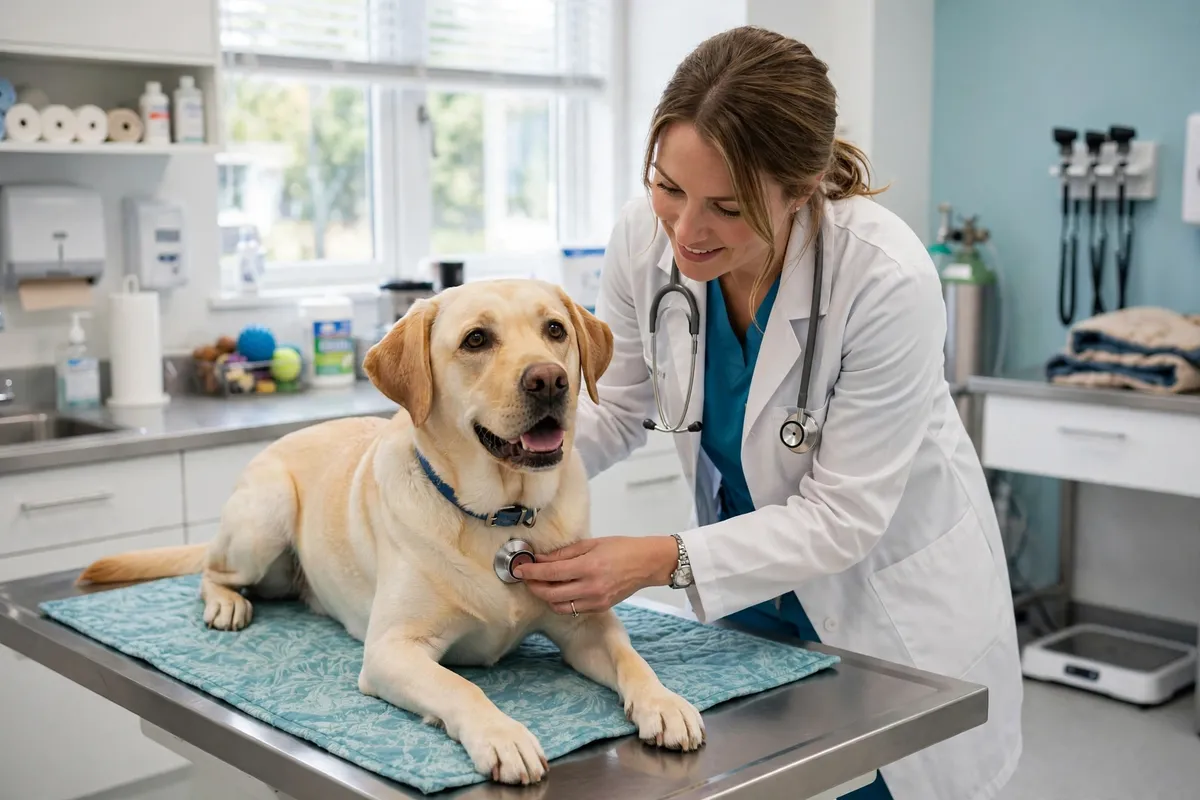
Home cooking is not the answer when signs are severe, repeated, or getting worse. Call your vet promptly in these cases.
- Blood in stool or vomit, or black, tarry stool.
- Vomiting or diarrhea that will not settle, or that keeps coming back.
- Weight loss, weakness, lethargy, or signs of dehydration.
- Refusal to eat, or refusal to drink.
- Suspected poisoning, or a swallowed foreign object.
- Pain, a sudden behavior change, or aggression when handled. Ask your vet or a qualified behavior professional for guidance.
For pain, sudden changes, or aggression, do not try to manage it with food alone. Get professional advice first, and use positive reinforcement only.
Frequently Asked Questions
Is homemade food better than kibble for a Lab with a sensitive stomach?
Not automatically. A complete commercial sensitive stomach formula is balanced by design. Homemade food gives ingredient control, but only a vet formulated diet matches that balance long term.
What is the blandest homemade meal for a Labrador with an upset stomach?
Plain boiled skinless chicken and plain white rice is a common short term bland choice, sometimes with a small amount of plain pumpkin. Keep it plain, feed small meals, and limit it to a few days.
Can I feed my Labrador homemade food every day?
Yes, but only with a recipe formulated or approved by your veterinarian or a veterinary nutritionist, including the right supplements. An unbalanced homemade diet fed daily can cause problems over months.
What protein is best for Labs with sensitive stomachs?
Lean turkey, skinless chicken breast, and white fish are common first choices. If chicken seems to be a problem, ask your vet about a novel protein and a proper trial.
How much homemade food should I feed my Labrador?
Portion depends on weight, age, activity, and the calorie density of the vet formulated recipe. Follow your vet plan, measure meals, and adjust only in small steps.
My Lab eats too fast and vomits. Will homemade food fix that?
Probably not on its own. Try a slow feeder bowl, scatter feeding, or a puzzle feeder, and keep meals calm. If vomiting continues despite slower eating, see your vet.
The Bottom Line
With homemade food labrador sensitive stomach planning, patience matters more than novelty. Start plain, change slowly, measure portions, and let your vet guide the long term recipe.
For related BreedFix guidance, see our guides to feeding a 3-month-old German Shepherd, signs of joint pain in senior small dogs, and German Shepherd puppy ear taping.
Reference
American Kennel Club, Best Foods to Soothe Your Dog’s Upset Stomach.
Still stuck? Get a plan built for your dog.
Answer a few quick questions and get a personalized, force-free training plan in minutes.