Labrador Jumping Up on Guests
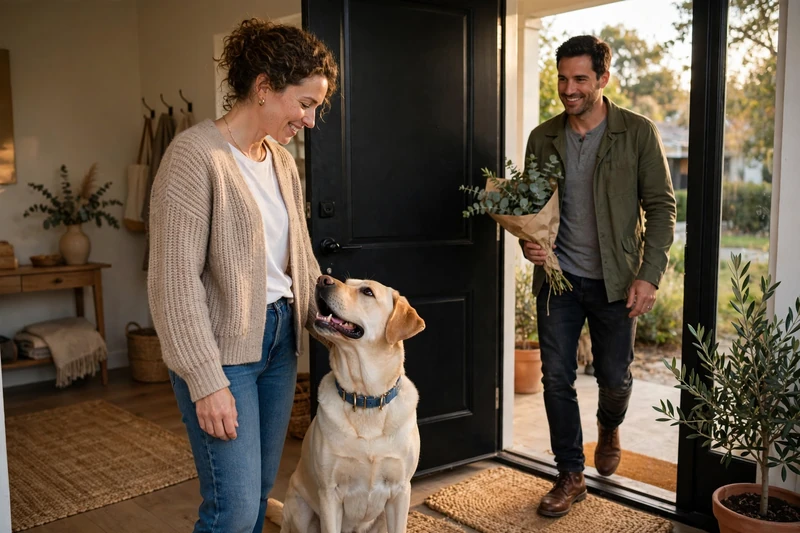
The doorbell rings, and your Labrador is already on the move. Before you can greet your visitor, two big paws are on their chest, and the visit starts in chaos.
If labrador jumping up on guests has taken over arrivals at your home, you are not alone. It is a learned greeting habit, and a learned habit can be changed with a calm plan.
This guide gives you one clear rule, a door routine, and a training plan. You will brief guests, manage arrivals, and reward the calm greeting you want.
Direct Answer: labrador jumping up on guests
To stop labrador jumping up on guests, make calm greetings pay and jumping pay nothing. Ask for a sit, reward four paws on the floor at once, and keep guests calm and boring when jumping starts.
Manage arrivals with a leash or a gate while you train. Brief every guest with the same short script, and use the same rule at every visit.
Key Takeaways
- Jumping works because it earns attention, so remove attention for jumping and reward calm greetings.
- A sitting dog cannot jump, so teach sit as the greeting and reward it fast.
- Brief guests before they arrive, and manage the doorway with a leash or a gate.
- Everyone in the home must use the same rule, every time.
- Never knee, push, shout at, or use shock, prong, or choke collars for jumping.
- Sudden jumping, pain, or aggression needs a vet or behavior professional first.
Why Labradors Jump Up on Guests
Labradors are friendly, people-focused dogs, and jumping is a natural way for a dog to greet face to face. For a Lab, a visitor is a chance to say hello up close, not a chance to be rude.
Excitement adds fuel. The doorbell, a new voice, and a moving person can push arousal high, and an excited Lab finds it hard to stay still.
Size then turns a small habit into a real problem. A large adult Lab can knock a child over, scratch skin, or startle an older visitor, even with friendly intent.
Dogs repeat what pays. If jumping has earned talk, touch, laughter, or eye contact, your Lab has learned that jumping is the fastest way to get attention.
That reward history is why labrador jumping up on guests can feel hard to break. Change the payoff, and the habit has a reason to change too.
Guest Safety: Children and Older Visitors
Safety comes before training in this section. Do not practice a new greeting on a small child or a frail visitor, because a large, excited dog can knock them over.
Keep your dog on a leash or behind a gate until the first excitement has passed. Bring your dog out only when you can control the greeting and keep it short.
- Children: An adult stays in charge. The child stands still like a tree, with arms folded, eyes down, and quiet, until the adult says the greeting is safe.
- Older visitors: Use a seated greeting, keep your dog on a leash, and keep the greeting brief. The guest should stay calm and should not bend over the dog.
- Nervous guests: Give them a simple job. Stay calm, wait for four paws on the floor, and greet briefly, then move away from the door.
If a child is knocked over, comfort the child first. Then calmly separate your dog, and do not use the moment as a training test.
Our guide to Labrador puppy jumping on children covers child safety in more detail.
The Four-Paws-on-the-Floor Protocol
The four-paws rule is the heart of stopping labrador jumping up on guests. Jumping earns no attention, and four paws on the floor earn calm praise and a treat.
Pick one greeting rule and keep it. Sit for greetings works well, because a sitting dog cannot jump, and it gives guests a clear moment to say hello.
- Teach sit in a calm room. Lure, mark with yes, and reward. Keep sessions short and fun.
- Make sit pay for everything. Ask for a sit before meals, doors, toys, and greetings, so sitting becomes the way good things start.
- Practice with a family helper. The helper walks toward your dog slowly. Reward the sit at once, before excitement builds.
- If paws leave the floor, reset calmly. The helper turns away and goes quiet. Wait for four paws on the floor, then reward again.
- Let the guest reward the sit. Once the sit is reliable, the guest hands the treat for the calm greeting.
Keep sessions short, about five minutes, and end on a success. Short, calm practice builds a stronger habit than one long, exciting session.
Ask guests to greet low and calm, stroking the chest or side. Leaning over a dog or patting the top of the head can raise excitement again.
Brief Your Guests Before They Arrive
Guests are half the training team, and most undo training without meaning to. A friendly laugh or a pat during a jump still rewards the jump.
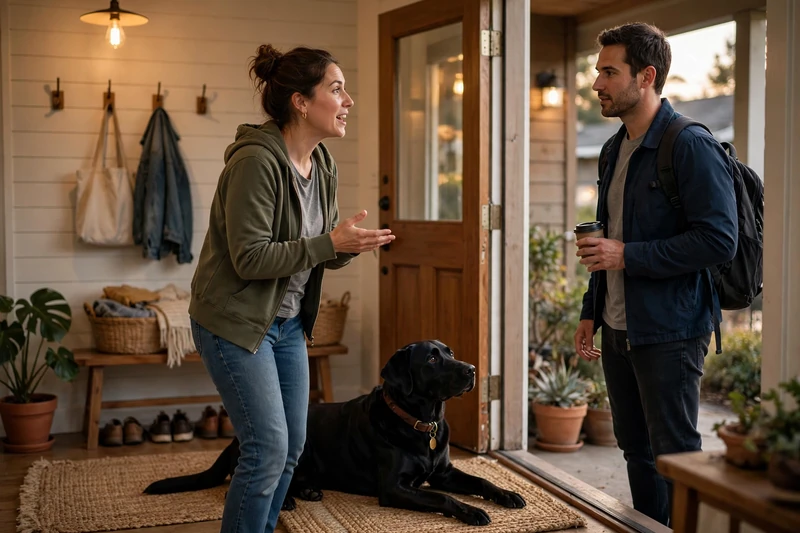
Quick favor before you come over: we are training our Lab not to jump. Please turn away if he jumps, and say hello only when all four paws are on the floor. Thank you!
Send that script before every visit, not only the first one. New guests need the same briefing, and returning guests need a short reminder.
If a guest cannot follow the plan, keep your dog behind a gate. That is good management, not failure, and it protects your training.
The Door Routine, Step by Step
- Before guests arrive, take a short walk or play briefly, set treats by the door, and clip the leash on.
- Ask for a sit, or send your dog to a mat, while the guest is still outside.
- Open the door slowly, and pause if your dog breaks position. Reset calmly and try again.
- Let the guest step in, and greet your dog only while all four paws stay down.
- Keep the greeting short, reward calm behavior, and end it before excitement builds.
Practice the doorbell on its own too. Ring it, ask for a sit, and reward calm, so the sound stops meaning instant chaos.
Rehearse with a helper before real guests arrive. Start in a calm room, move to the front door, and only then try a real visit.
Management While You Train
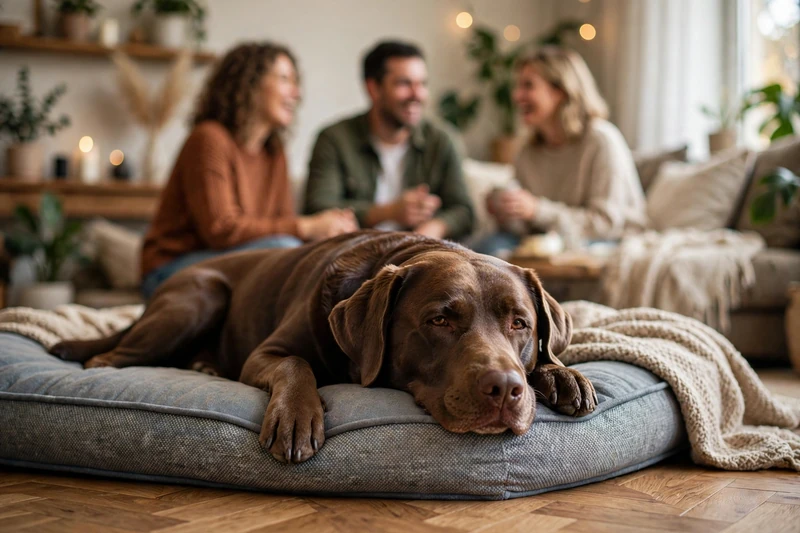
While you train, stop your Lab from practicing the old greeting. Every rewarded jump teaches the old habit again, so management matters as much as training.
| Tool | How to use it | Best for |
|---|---|---|
| Leash | Clip it on before the door opens, and keep it short and loose. | Expected guests and new greetings |
| Baby gate | Keep your dog behind the gate until excitement passes. | Busy arrivals and very excited dogs |
| Mat or place | Send your dog to a bed, and reward staying there. | Dogs who need a clear job at arrivals |
| Separate room | Let your dog settle with a chew, then bring him out later. | Nervous, young, or frail visitors |
Choose the tool that fits the visit, not the mood in the moment. A calm plan made before the doorbell rings is easier to follow.
If leash control is part of your plan, our guide to stopping a Labrador pulling on leash covers loose leash basics.
Consistency Across the Whole Household
Jumping lasts longest when rules change from person to person. If one person allows jumping, your Lab will keep trying it with everyone else.
Agree on one rule, one cue, and one response in your home. Write it on the fridge if that helps, and brief babysitters and family visitors too.
- Same cue: sit, every time, from every person.
- Same response: turn away and go quiet when jumping starts.
- Same reward: calm praise and a treat for four paws on the floor.
Do not train only at real arrivals. Real doorbells spike excitement past the learning point, so helper practice is where the habit is built.
If excited greetings also bring mouthing, see our Labrador mouthing guide for teeth on skin.
What Not to Do
Old advice is still common, and it works against calm training. The methods below add excitement, fear, or attention, and they teach no calm alternative.
- Do not knee your dog in the chest. It can hurt your dog and damage trust.
- Do not push your dog down. Pushing is touch, and touch is attention.
- Do not shout. Shouting adds excitement to an exciting moment.
- Do not use shock, prong, or choke collars. They use pain or fear, and they teach no greeting skill.
- Do not let guests use their own methods. Reset calmly, or use the gate.
Use positive reinforcement only. Reward the greeting you want, remove attention from jumping, and keep every session kind and calm.
Troubleshooting: When the Jumping Persists
If jumping continues after steady practice, look for the weak link. Most setbacks come from one person, one place, or one moment in the routine.
| Problem | Likely cause | Fix |
|---|---|---|
| Only jumps on some people | Those people reward the jump | Re-brief them, and use the gate if needed |
| Calm at the door, jumps later | Excitement returns after the greeting | Keep greetings short, and reward settling |
| Jumps on guests on the sofa | Seated guests look like an invitation | Practice a settle on a mat, with the leash on |
| Jumps on children, not adults | Children are at face height and exciting | Manage first, and use adult-led practice only |
If progress stalls, go back one step. Short, successful greetings build a stronger habit than long sessions that end in jumping.
When to Get Professional Help
Most jumping is a training habit, and this plan will help. Get help sooner if jumping comes with growling, snapping, guarding, or a stiff body.
See your vet first if jumping started suddenly in a previously calm dog. Pain, illness, and other medical causes can change behavior, and training cannot fix pain.
Ask a qualified, reward-based behavior professional for help if jumping escalates despite steady work. Also seek help if anyone feels unsafe, or if your dog has bitten.
Do not wait if safety is a concern. Management with a leash or gate is a fair step while you arrange vet or professional support.
Frequently Asked Questions
Why does my Labrador jump on guests but not on me?
You may have stopped rewarding it, while guests still reward it. Guests are new and exciting, and they often laugh, pet, or talk during a jump.
How long does it take to stop labrador jumping up on guests?
It varies from dog to dog, and it depends on consistency. Family greetings often improve first, while exciting real guests take longer to master.
Should I let guests give my Lab treats?
Yes, once he greets calmly. A guest treat teaches your dog that guests themselves reward calm behavior, which strengthens the new greeting.
My Lab jumps on guests sitting on the sofa. What do I do?
Treat it as a separate task. Practice a settle on a mat away from guests, then add seated visitors in short, leashed sessions.
Will my Labrador grow out of jumping?
No, not on its own. A rewarded habit rarely fades, because every successful jump teaches your dog to try again.
What if my guests will not follow the plan?
Control the situation, not the visitor. Use a leash, a gate, or a separate room, and keep greetings short and calm.
Closing
A Labrador who greets with four paws on the floor is still a friendly dog. He has simply learned a better way to say hello, and that skill makes visits easier for everyone. For a similar calm greeting plan for another breed, see our Golden Retriever jumping on guests guide and our German Shepherd jumping on guests guide.
Reference
Reference: American Kennel Club, How to Stop Your Dog From Jumping on People: https://www.akc.org/expert-advice/training/stop-dog-jumping/
Still stuck? Get a plan built for your dog.
Answer a few quick questions and get a personalized, force-free training plan in minutes.
Try the Free Dog Tools