Labrador Puppy Jumping on Children
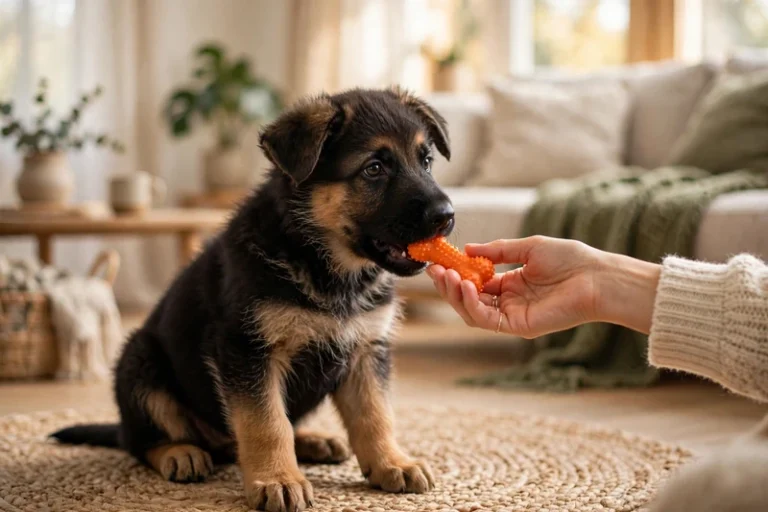
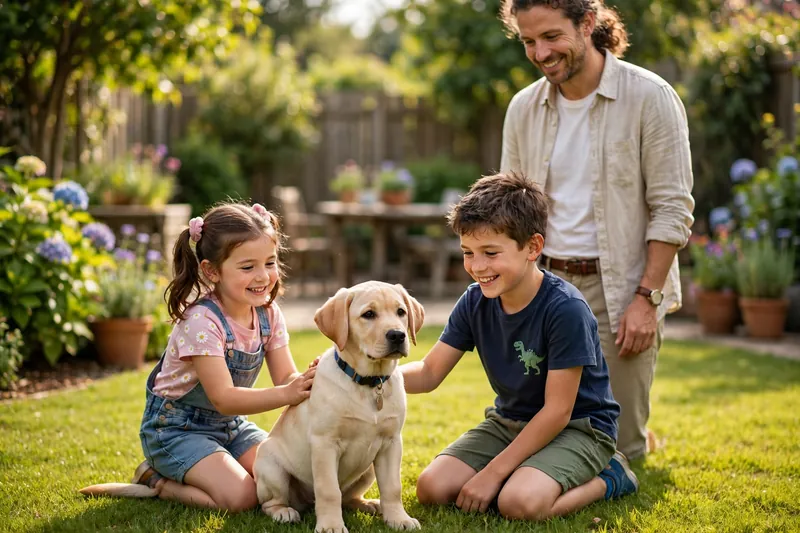
A labrador puppy jumping on children can feel sweet and worrying at the same time. Your puppy is not being naughty. They are excited, they want attention, and a small child is close to face height for a bouncy Lab.
The good news is that jumping is a learned habit. When calm greetings pay better than jumping, most puppies learn to choose the calm greeting instead.
Direct Answer: labrador puppy jumping on children
To stop labrador puppy jumping on children, teach a calm greeting and make jumping boring.
Ask for a sit before any greeting, and reward four paws on the floor right away. When the puppy jumps, calmly turn away and remove attention.
Keep an adult in charge, use a leash or gate in exciting moments, and use the same rule every time. That steady plan is what makes the new habit stick.
Key Takeaways
- labrador puppy jumping on children is usually excitement and attention seeking, not aggression.
- Jumping keeps happening because it works. Talking, touching, laughing, and pushing all count as attention.
- Teach a sit for greetings. A puppy cannot sit and jump at the same time.
- Never leave a child alone with a puppy. An adult should watch every interaction.
- Manage exciting moments with a leash, a gate, or a pen while training is still new.
- Teach children to stand still and turn away if jumped on, and let an adult take over.
- Everyone must use the same response, every time.
- Get vet or behaviour help for pain, sudden changes, or any sign of aggression.
Why Lab Puppies Jump on Children More Than Adults
Dogs jump because it pays. A jump often earns eye contact, talk, touch, and laughter, so the puppy learns to jump again.
Children are a special target. They are smaller, they move fast, they sound exciting, and their faces are easy for a puppy to reach.
That mix is why labrador puppy jumping on children can feel constant in a busy home. Every reaction, even a squeal or a giggle, can reward the jump.
A growing Lab also gets stronger and taller fast. A jump that was cute at a small size can knock a small child over later, so early training matters.
Neither your child nor your puppy is at fault. Both are learning, and your job is to make the calm choice the rewarding choice.
Child Safety Rules First
Set safety rules before you start training. Safety comes first, even when everyone is excited to play.
- Adult supervision, always. Every interaction happens with an adult present and actually watching.
- Hands off at the wrong times. Children should not approach the puppy when eating, sleeping, chewing a favourite toy, tired, or unwell.
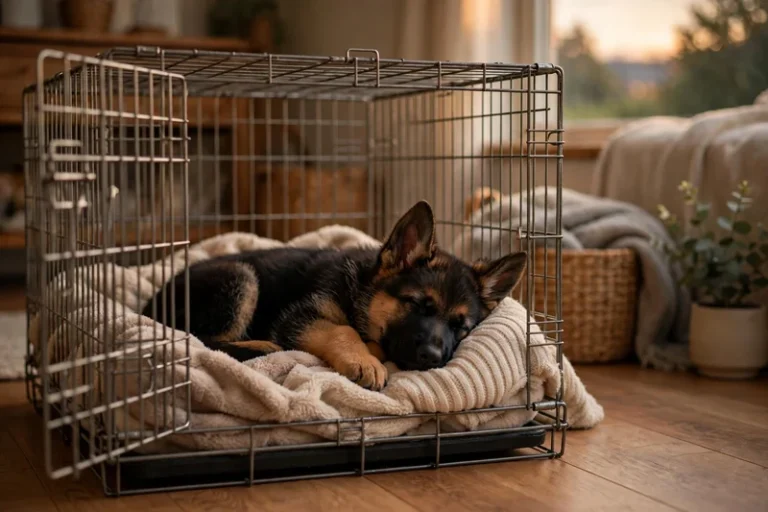
- A safe retreat spot. Give the puppy a quiet crate or bed corner that is off limits to children.
- Gentle hands only. Show children how to stroke the chest or side calmly. No grabbing ears or tails, no climbing on the puppy, and no chasing.
- Watch for stress signs. Yawning, lip licking, turning away, or moving off can mean the puppy is overwhelmed. End play calmly when you see them.
If you cannot watch closely, separate puppy and children with a gate, pen, or closed door. Separation is not punishment. It keeps everyone safe.
If a child is knocked over or scratched, stay calm. Comfort the child first, clean any scratch, and quietly change the setup next time.
The Four Paws on the Floor Protocol for Kids
The core rule is simple. Jumping gets no attention, and four paws on the floor get calm praise and treats.
- Teach the sit in a calm room. Lure the nose up and back until the puppy sits, say yes, and reward. Keep sessions short.
- Make sitting pay for everything. Ask for a sit before meals, doors, toys, and greetings. Sitting becomes the way good things start.
- Practise greetings with adults first. Ask for the sit, then reward the moment the puppy sits. Good timing makes the lesson clear.
- Add children at a safe distance. An adult holds the puppy while the child stands still. Reward the sit, and keep the greeting brief.
- Reward the recovery. The moment all four paws return to the floor, or the puppy sits, calmly praise and reward again.
Keep sessions short. End on a success, even if that success is one calm sit.
For children, the adult runs the session. The child can stand still, stay quiet, and wait for the adult to cue the sit.
Manage the Moments That Cause Jumping
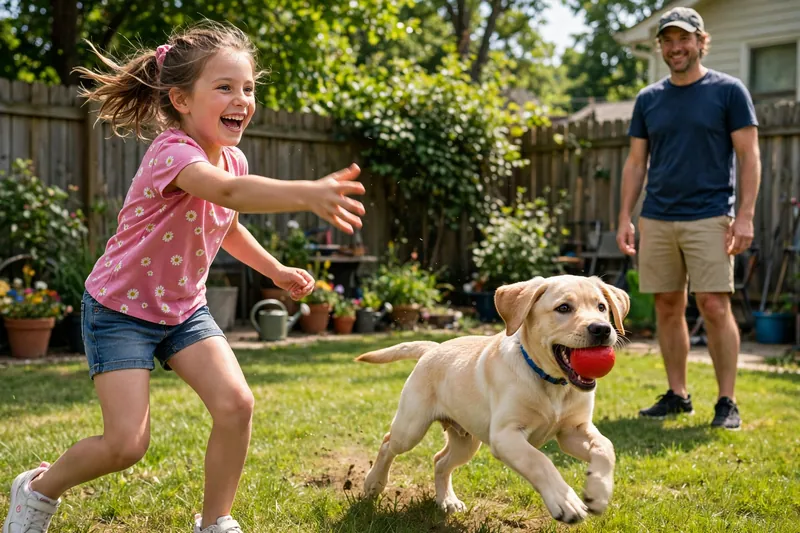
Training builds the new habit, but management stops old jumps from being practised. Every rewarded jump slows progress.
| Moment | Plan |
|---|---|
| Homecoming | Leash on, sit first, then a calm hello |
| Wild play | Gate or pen, a chew toy, and watching from a safe spot |
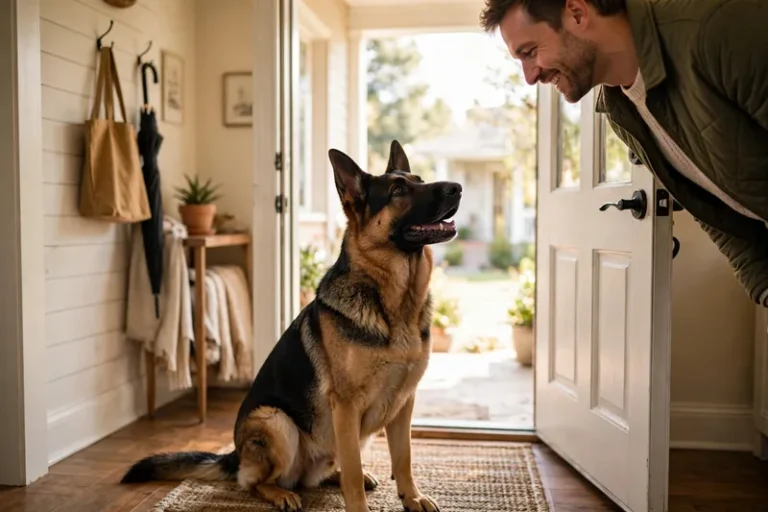
| Visitors arrive | Adult holds the leash, and the guest waits for a sit |
| Tired evenings | Enforced nap in a quiet crate spot |
Scatter treats on the floor before a jump can start. A puppy sniffing the floor cannot jump at the same time.
Keep greetings low key. Ask family and visitors to speak quietly, move slowly, and wait for a sit.
A short leash helps here, and our Labrador pulling on leash guide explains loose leash basics for walks too.
Teach Your Children Their Part
Children can help, but the adult stays in charge. Match the job to the child’s age, and keep it simple.
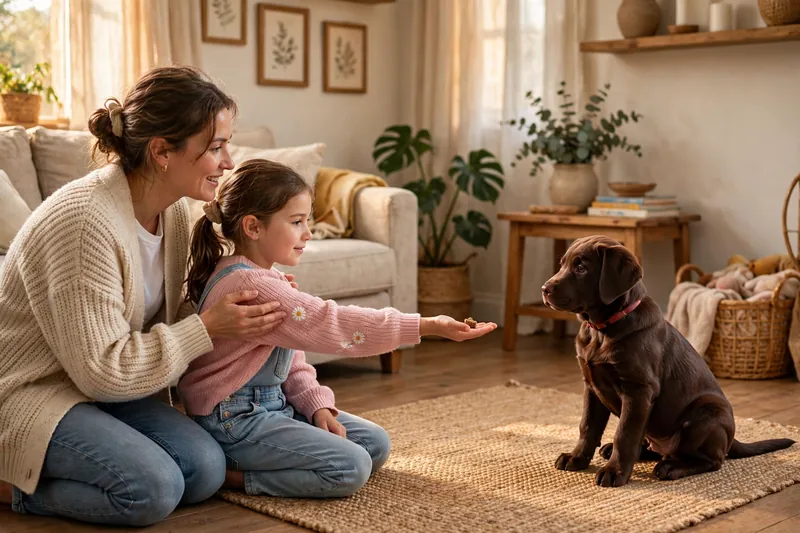
Children under about seven should be boring when jumped on. Stand still like a tree, fold arms, look away, and wait for an adult.
Older children can give the sit cue with an adult beside them. Hold a treat in a flat palm, say sit once, and reward the moment the puppy sits.
Teach children not to run or scream when jumped on. Fast movement and high noise can excite a puppy even more.
Use one friendly script for visitors. Try: We are training our puppy not to jump, so please wait until they sit.
The same calm greeting rule helps with adult guests too. Our Golden Retriever jumping on guests guide shows the guest version of this plan.
What to Do When a Jump Happens, and What to Avoid
Jumps will still happen while training is new. Stay calm, step between puppy and child if needed, and ask for a sit or offer a toy.
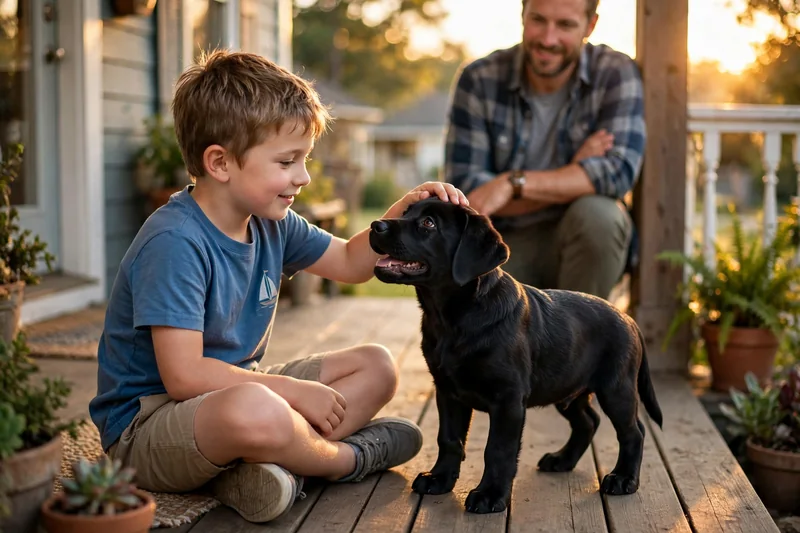
If the puppy is too excited, lead them calmly to a pen for a short break. Then check on your child and reset the plan.
- Do not yell or scold. Shouting can excite the puppy and worry your child.
- Do not push the puppy off or grab paws. Pushing and grabbing still count as attention.
- Do not use a knee to block the jump. It can injure the puppy and damage trust.
- Do not use shock or prong collars, choke chains, or spray bottles. Use rewards and management instead.
If jumping comes with nipping, stay calm and use the same turn away rule. Our Labrador mouthing guide covers teeth on skin in more detail.
The Overtired Puppy Problem
An overtired puppy loses self control fast. If jumping is worst in the evening, tiredness may be part of the cause.
Build naps into the day. Use a quiet crate spot, a chew toy, and a regular routine, and keep play sessions short.
Consistency Across the Whole Family
Consistency is the part most families find hardest. If one person allows jumping, the puppy will keep trying it with everyone.
Agree on one rule, one cue, and one response. Write it on the fridge if that helps, and brief babysitters and visitors too.
The same four paws rule works for smaller dogs too. Our Dachshund jumping on guests guide shows how guests should respond for a small breed.
When to Get Professional Help
Most labrador puppy jumping on children improves with calm, consistent training. Asking for help is good ownership, not failure.
Call your vet first if behaviour changes suddenly, jumping gets worse quickly, or your puppy seems in pain. Behaviour changes can have medical causes.
Seek a qualified behaviour professional if you see growling, snarling, snapping, or a stiff body around children. The same applies if the puppy guards food, toys, or spaces from children.
Also get help if jumping escalates despite weeks of consistent work, or if anyone in the family feels frightened. A professional can watch your puppy and build a safe plan for your home.
Frequently Asked Questions
Why does my puppy jump on children but not on adults?
Children usually reward jumping more. They move fast, sound exciting, and react in ways that feel like play to a puppy.
At what age will my Labrador stop jumping?
There is no fixed age. Jumping fades as training takes hold, usually over weeks to months of consistent work.
Should I hold my puppy’s paws when they jump?
No. Grabbing paws gives the puppy touch and attention, which is exactly what they want. Turn away calmly instead.
Can my child help with training?
Yes, with supervision. Older children can cue the sit and give treats while an adult coaches. Younger children should stand still and let the adult handle it.
My puppy jumps and nips at the same time. Is that aggression?
Almost certainly not. Jumping with nipping is common overexcited puppy play. If nipping is hard, the body is stiff, or you see growling, seek vet or behaviour help.
Is it ever okay to leave children and the puppy together unsupervised?
No. Never leave a child alone in a room with a dog, not even your own dog, not even for a moment.
Why does labrador puppy jumping on children get worse in the evening?
Tiredness is a common cause. An overtired puppy has less self control, so build in naps and keep evening play calm and short.
Calm greetings take time, but they are worth the patience. Keep children safe, reward four paws on the floor, and let every adult use the same rule. With safety first and steady practice, your puppy can learn to greet children calmly.
Reference
Reference: American Kennel Club, How to Stop a Dog From Jumping on People During Greetings: https://www.akc.org/expert-advice/training/stop-dog-jumping/
Still stuck? Get a plan built for your dog.
Answer a few quick questions and get a personalized, force-free training plan in minutes.
Try the Free Dog Tools