Beagle Running Away Off Leash
Beagle Running Away Off Leash: The Direct Answer
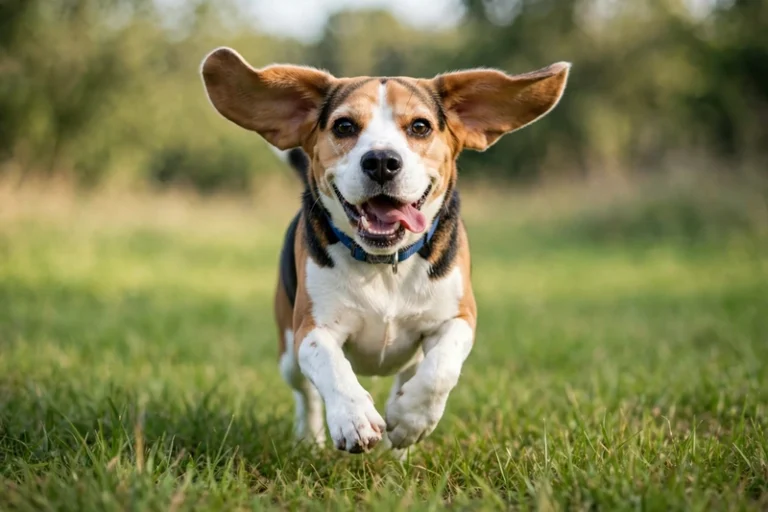
A beagle running away off leash is usually following a scent, not rejecting you. Stay calm, do not chase, and make coming back pay better than the trail.
Use a long line and fenced areas while you build recall in small steps. That plan keeps your Beagle safe today, while training slowly makes returns stronger.
Key Takeaways
- Beagles follow scent first, so training must work with the nose, not against it.
- Never chase a loose Beagle, and always reward a return, even a slow one.
- A long line on a harness is the safety net for outdoor recall practice.
- Train in stages, from a quiet room to the garden, then to busier places.
- Use fenced areas for true off-leash time, and keep ID and a microchip current.
- A GPS tracker can help you find a dog, but it cannot replace training.
Why Beagles Run Off: When the Nose Takes Over
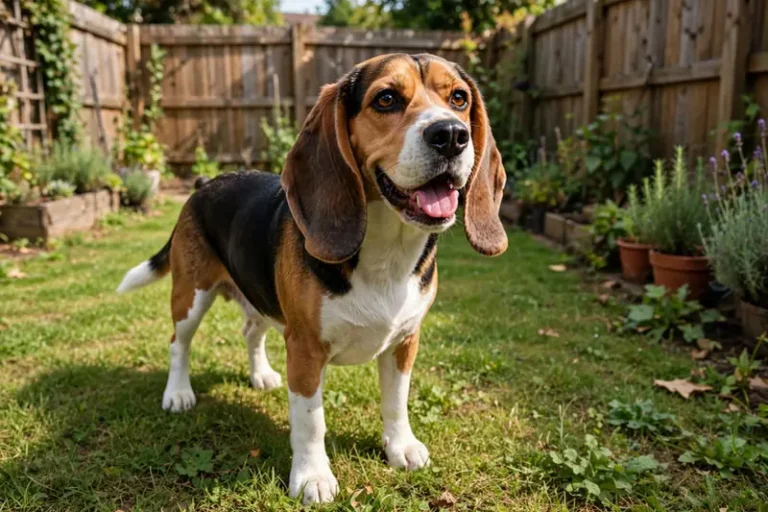
Your Beagle is not running away from you. Your Beagle is running toward something interesting, and a strong scent can fill the whole world for a moment.
Beagles were bred to put their nose on a trail and follow it. Once that drive switches on, your voice can feel far away, even to a dog that listens well at home.
That switch explains why a beagle running away off leash can seem deaf to your call. The problem is usually a hard distraction, not a lack of love or loyalty.
| Trigger | What you see | First fix |
|---|---|---|
| A fresh animal trail | Head down, nose working, no turn | Stay on a long line in that area |
| Other dogs or people | Pulling to greet, then no return | Train at a greater distance first |
| Food smells | Slow to turn, hard sniffing | Use a higher-value reward |
| A moving animal | Fixation, then a sudden bolt | Do not call, collect calmly instead |
Other triggers can add to the pull, such as boredom, too little sniffing time, or a cue that has been repeated too often. Fix the setup first, then train the skill.
What to Do in the Moment a Beagle Bolts
If your Beagle bolts, what you do in the next few seconds matters more than any lesson from last week. Keep your voice happy, and keep your body low and inviting.
- Do not chase. You will not outrun a Beagle, and chasing can turn the escape into a game.
- Crouch and run a few steps away. Use an excited voice, and be the fun thing to follow.
- Offer a high-value reward. Show a treat or a squeaky toy, and reward at once if your dog turns toward you.
- Stay in sight if you can. Follow at a distance, ask for help, and call cheerfully when your dog glances your way.
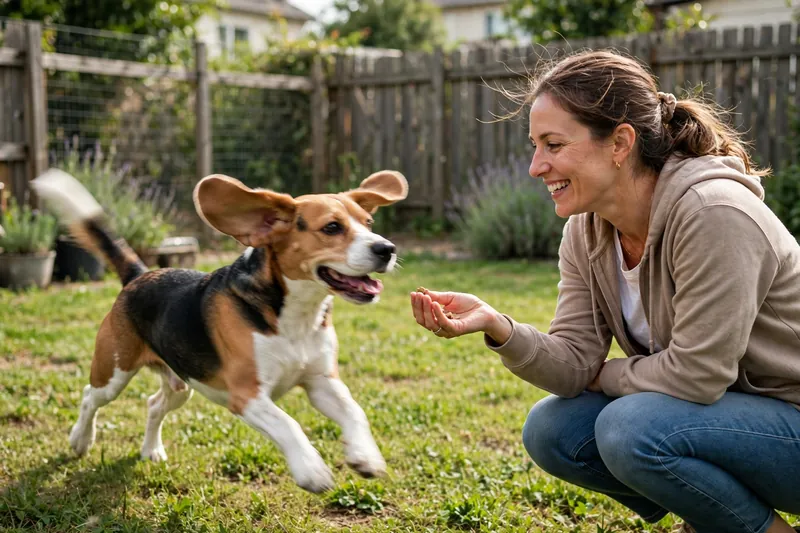
When a beagle running away off leash keeps going, stay in the area if it is safe to do so. Many dogs circle back to the last place they saw you, so do not leave too soon.
If Your Beagle Is Already Gone: A Calm Search Plan
First, check the places a nose would lead a Beagle, such as nearby trails, hedges, and spots where other dogs walk. Ask people nearby if they saw which way your dog went.
- Tell neighbors at once, with a clear photo and a simple description.
- Leave a familiar item and water near the place your dog was last seen, if it is safe to do so.
- Contact nearby shelters and vets, and check that your microchip details are current.
- When your dog returns, greet warmly and reward. A return must always feel safe.
If your dog is hurt, limping, or acting strangely after a run, contact your vet promptly. Do not wait to see if a problem passes on its own.
Recall Foundations for Scent Hounds
You can build a strong recall with a Beagle, but it takes longer than with many other breeds. Train in short, happy sessions, and end while your dog still wants more.
Start indoors with no distractions. Say one recall word once, then reward at once with a small, smelly treat your Beagle loves. Repeat until the word alone makes your dog turn.
For a step-by-step plan, follow the Beagle recall guide. The staged approach is similar in the German Shepherd recall guide, even though the breeds differ.
| Stage | Where to practice | Move on when |
|---|---|---|
| 1. Charge the cue | Quiet room, no distance | Your dog turns happily at the word alone |
| 2. Short distance | Across rooms, then hallways | Your dog comes quickly across the house |
| 3. The garden | Quiet garden on a long line | Your dog comes well on the line there |
| 4. Open spaces | Quiet park on a long line | Your dog comes around mild distractions |
If recall fails at a stage, drop back one step and rebuild there. That result is useful feedback, not failure, and it protects the recall word from losing its meaning.
Teach a separate emergency cue for danger only, such as a rare word or a whistle. Charge it in easy places with a jackpot of treats, and save it for real danger.
Long Line Work: Freedom With a Safety Net
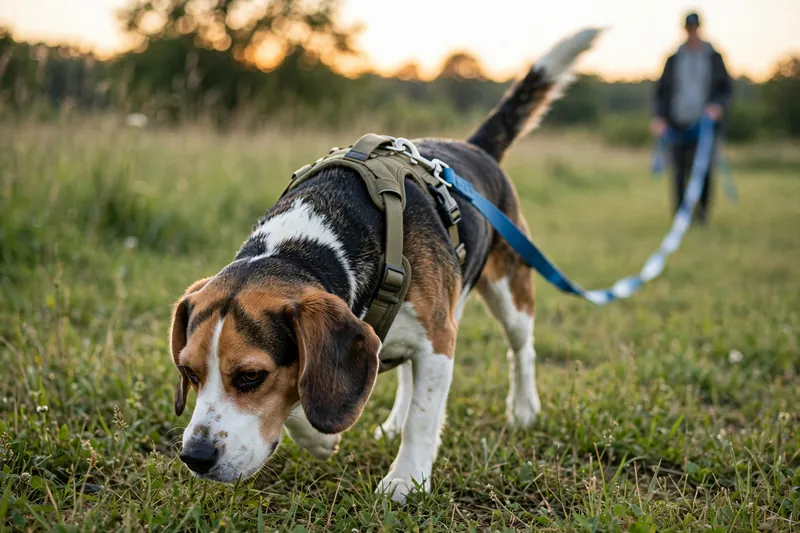
A 15 to 30 foot long line gives your Beagle room to sniff and explore while you stay connected. It is the most useful safety tool for scent hound owners.
- Always attach the line to a harness, never to a collar alone, so a sudden bolt does not jerk the neck.
- Keep the line loose and clear. Gather it in loose loops, wear gloves, and keep it away from legs, fences, and roads.
- Build in sniff breaks. Stop, let the line go slack, and give your Beagle time to investigate. A nose with a job is less likely to bolt.
- Reel in calmly. Walk up the line hand over hand if you need your dog close, rather than yanking.
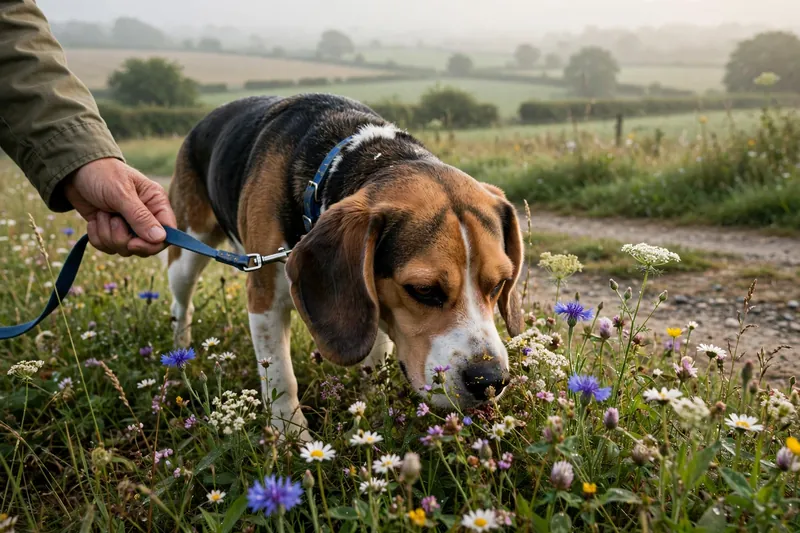
Call once when your dog pauses, then reward and release back to sniffing when you can. That habit teaches your Beagle that coming back does not always end the fun.
Prevention and Safe Off-Leash Rules
The best answer to a beagle running away off leash is prevention before the bolt happens. Check fences, gates, and doors, and plan every walk around the nose.
Walk the fence line the way the Husky escaping yard guide suggests, checking gates, gaps, and dig spots. A small gap can be enough for a determined dog.
- Use a long line near roads, livestock, wildlife, and unfenced open land.
- Choose fenced fields, secure dog parks, and rented secure spaces for true off-leash time.
- Check that a fence is secure at the base, the gates, and the corners before you unclip.
- Give the nose daily work, such as sniff walks, scatter feeding, and simple find-it games.
- Keep ID tags and microchip details current, and carry treats and a spare lead on walks.
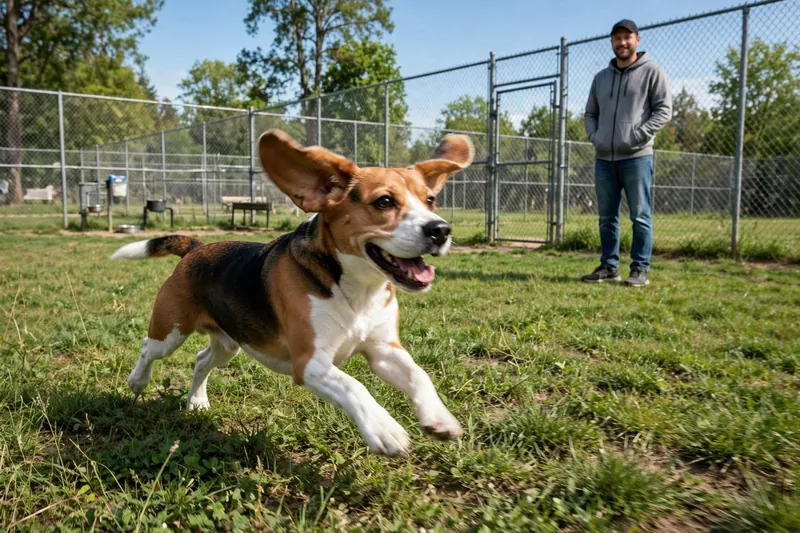
The honest rule is simple: only trust off-leash time in a secure, legal, enclosed place. That rule is not failure. It is responsible hound ownership.
GPS and Tracking: Backup, Not a Replacement for Training
A GPS tracker can show your dog’s location through a phone app, which can turn a panicked search into a focused one. Keep it charged, and check that it fits well.
A tracker cannot stop a beagle running away off leash, and it cannot teach recall. It also needs signal and battery, so it may not work in every place.
Use tracking as one layer, beside a long line, a secure fence, recall training, ID, and a microchip. No single tool should carry the whole safety plan alone.
What NOT to Do
- Do not chase a loose Beagle, shout angrily, or grab roughly when you catch up.
- Do not scold a dog that finally comes back. That lesson can make the next return slower.
- Do not use shock collars or prong collars. This guide uses positive reinforcement only.
- Do not repeat the recall word over and over. Say it once, then go and collect your dog calmly.
- Do not trust an invisible boundary alone, and do not rely on recall near traffic.
If a return ends the fun every time, recall weakens, as the Golden Retriever ignoring recall guide explains. Call, reward, and release back to play often, so coming back stays a good deal.
When to Get Professional Help
See your vet first if a reliable recall suddenly falls apart, or if your dog shows pain, limping, hearing loss, or a sudden change in behavior. Medical causes need care before training.
Talk to a qualified, reward-based trainer or behavior professional if recall fails near traffic, livestock, or wildlife, or if fear or aggression is part of the picture. Do not try to train through pain, sudden change, or aggression alone.
Frequently Asked Questions
Can my Beagle ever be trusted off leash?
Some Beagles can enjoy off-leash time in secure, enclosed places after careful long-line proofing. Many cannot be fully trusted in open, unfenced areas, and that is okay.
What should I do if a beagle running away off leash will not come back?
Do not chase. Crouch, use a happy voice, offer a high-value treat, and stay near the last seen place if it is safe. Alert neighbors, shelters, and vets if your dog stays missing.
Should I use an e-collar to stop my Beagle running off?
No. Use positive reinforcement, long lines, secure fences, and staged recall training instead. Pain-based tools can harm trust and do not reliably override scent drive.
What length of long line is best?
Fifteen to thirty feet of biothane or rope line suits most Beagles. Always attach it to a well-fitted harness, never to a collar alone.
My Beagle ignores treats outside. What do I do?
Use higher-value rewards, train when your dog is calm enough to think, and lower the distraction level until your dog can succeed. A dog that cannot take treats needs an easier setup.
What if my Beagle runs toward a road?
Prevention is everything. Use a long line near roads, keep fencing secure, and keep a microchip and ID tag current. Never rely on recall alone near traffic.
Keep the long line close, reward every return, and if night noise is also a problem, read the Beagle baying at night guide.
Reference
American Kennel Club, How to Train Your Dog to Come When Called: Step-by-Step Recall: https://www.akc.org/expert-advice/training/reliable-recalls-how-to-train-your-dog-to-come-when-called/
Still stuck? Get a plan built for your dog.
Answer a few quick questions and get a personalized, force-free training plan in minutes.
Try the Free Dog Tools