How to Stop a Labrador Pulling on Leash
Being towed down the street by an enthusiastic Labrador is tiring, and it can make walks feel like a chore.
If labrador pulling on leash has turned every walk into a tow, you are not alone. Pulling is a learned habit, not a fixed trait.
This guide uses positive reinforcement only. You will not find dominance, alpha, or punishment methods here, and you will not need a shock or prong collar.
Direct Answer: labrador pulling on leash
To fix labrador pulling on leash, make pulling stop the walk and make walking beside you pay.
When the leash goes tight, stop and stand still. When it goes slack, praise your dog and move forward again.
Start in quiet places, keep sessions short, and use the same rule on every walk. That consistency is what turns pulling into loose-leash walking over time.
Key Takeaways
- Pulling works, so change the payoff. A tight leash should buy no forward movement.
- Reward the spot beside you, not only the stop. Your dog needs a clear alternative to pulling.
- Stop when the leash tightens, and turn when a surge builds. Both methods teach your dog to watch you.
- A well-fitted front-clip harness can help while you train. It does not replace training.
- Skip punishment collars. Use rewards, patience, and short sessions instead.
- Sudden pulling, pain signs, or aggression need a vet or behavior professional first.
Why Labradors Pull So Hard
Labradors were bred to retrieve, work with people, and cover ground with energy. That history leaves many Labs eager, strong, and ready to move.
Food drive adds fuel. A Labrador who loves treats and smells will often surge toward anything interesting, because the reward feels close.
Friendliness adds another pull. Many Labs want to greet every person and dog they see, and they pull hardest when a greeting feels near.
Strength then makes the problem hard to hold. That mix is why labrador pulling on leash feels so strong, even when your dog is friendly.
Pulling is also simple learning. Your dog surges forward, you follow, and the walk continues. After many walks, pulling feels like the normal way to get somewhere.
Pulling back usually makes things worse. Many dogs push harder against pressure, so a tug-of-war only teaches them to lean in more.
Equipment That Helps and What to Skip
Gear will not train your dog, but the wrong gear makes training harder. Choose tools that keep your dog safe and give you clear feedback.
| Equipment | Verdict | Why |
|---|---|---|
| Front-clip harness | Helps | The chest attachment turns a surge back toward you. |
| Fixed lead, four to six feet | Helps | It gives steady feedback about leash tension. |
| Small, soft treats and a treat pouch | Helps | They let you reward fast, at your leg. |
| Back-clip harness | Mixed | It is comfortable, but it can give strong pullers more leverage. |
| Flat collar | Use for ID only on training walks | Repeated throat pressure can cause discomfort for a hard puller. |
| Retractable lead | Skip for training | It teaches constant tension and rewards pulling for more range. |
| Prong, choke, or shock collars | Skip | They use pain or fear, and they teach no alternative behavior. |
Use a front-clip harness. Look for a D-ring on the chest, plus a second attachment on the back if you want a backup clip.
Check the fit before each walk in the early weeks. Straps should sit flat, clear of the throat, and allow two fingers underneath.
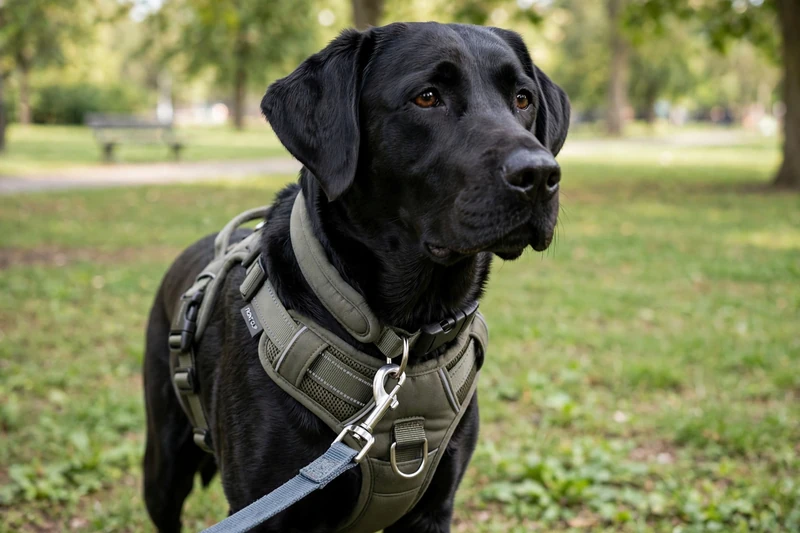
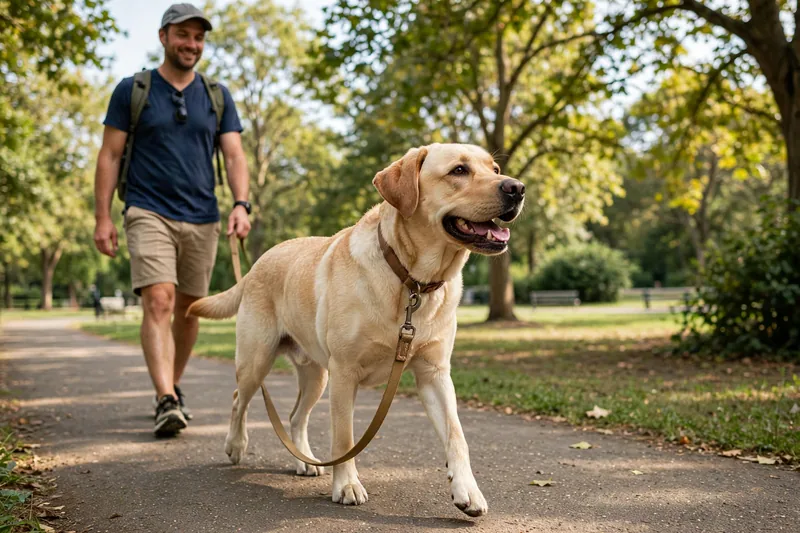
Use a fixed-length lead. A lead of four to six feet keeps the lesson clear and stops your dog from learning that range grows with pulling.
Skip punishment collars entirely. They can injure the neck and spine, and they can increase fear and anxiety on walks.
Heel Foundations: Reward the Position Before You Ask for the Walk
Dogs repeat what pays, so teach the paying spot before you test it outside. Start in a hallway or garden with few distractions.
- Take a few steps, and the moment your dog is beside you on a loose leash, say yes.
- Feed the treat right at your leg, where you want your dog to be.
- Build slowly. Reward every two or three steps first, then five steps, then ten.
- Once your dog eagerly finds the spot, say let’s go before you move off.
Reward check-ins too. When your dog looks up at you on a walk, mark it with yes and treat at your leg.
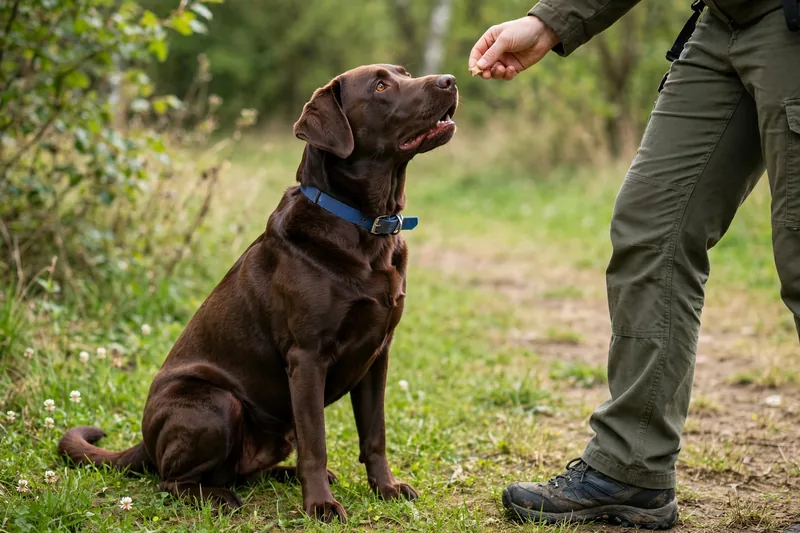
Keep early sessions to about five minutes, two or three times a day. End while your dog still wants more, not after frustration sets in.
Stop-and-Go: The Core Method for Real Walks
This simple rule is the core of fixing labrador pulling on leash, because it changes what pulling buys. A tight leash buys no forward movement.
- Walk normally with treats ready.
- The instant the leash goes tight, stop and stand still. Do not yank the leash back.
- The moment the leash goes slack, or your dog glances back, say yes and reward at your side.
- If your dog is stuck, say his name, encourage him back, and reward the return.
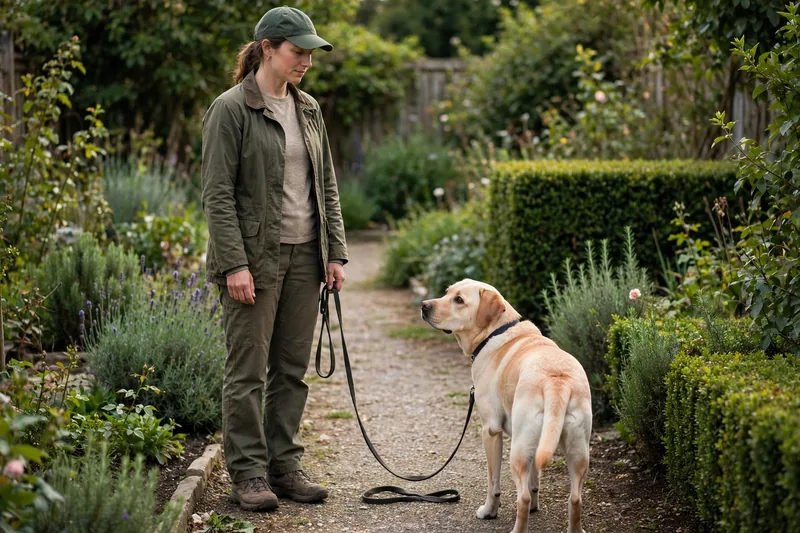
This can feel slow at first, and that is normal. Covering a short distance well matters more than covering a long route badly.
Use sniffing as a life reward. After a stretch of loose walking, say go sniff and let your dog sniff on a loose leash for a short time.
Sniff breaks are part of the plan, not a reward for bad behavior. They meet a real need, and a dog whose sniffing needs are met often pulls less.
Change Direction When the Leash Tightens
Direction changes teach your dog to watch you, which can stop a pull before it starts. They work well for Labs who surge forward in bursts.
When the leash starts to tighten, turn cheerfully and walk the other way, saying this way. When your dog catches up, reward at your leg.
Mix the methods by feel. Use a stop for a full pull, and a quick turn when you see a surge building.
Be unpredictable in a kind way. Left turns, right turns, and U-turns all teach your dog that you might change course at any moment.
Distraction Proofing Around Dogs and People
Most cases of labrador pulling on leash get worse around dogs, people, bikes, and new smells. Do not debut your training on the most exciting route.
Work at a distance where your dog can still think and take treats. If your dog cannot take a treat or look at you, you are too close.
| Level | Where to practice | Move on when |
|---|---|---|
| 1 | Indoors and garden | Your dog finds the position easily. |
| 2 | Quiet street at a quiet time | The leash stays loose for short stretches. |
| 3 | Normal street route | Check-ins happen without prompting. |
| 4 | Busier street, with distance from triggers | Your dog can still take treats and look at you. |
| 5 | Park edge at a quiet time | Pulling stays mild and recovers fast. |
For pulling toward dogs, add distance first and reward calm looking. Let your dog notice the other dog, then look back at you for a treat.
For pulling toward people, use the same distance rule. Ask friends to ignore your dog until the leash is loose, then allow a calm greeting if it is safe.
The same distance and reward ideas help strong, watchful dogs too. See our German Shepherd pulling guide for a plan built around that drive.
If pulling spikes at a new level, drop back one step. Regression is information, not failure, and it tells you where to practice next.
Before the walk, lower arousal with a calm departure. Ask for a sit before the leash goes on, and reward calm standing while you clip it.
Your Two-Week Loose-Leash Plan
A short, realistic plan beats a perfect plan you cannot follow. Keep training walks separate from exercise walks when you need to.
| Days | Focus | Goal |
|---|---|---|
| 1 to 3 | Indoors | Reward position, five minutes, two or three times a day. |
| 4 to 7 | Garden or a very quiet street | Stop-and-go in short sessions, with generous check-in rewards. |
| 8 to 10 | Normal street route | Add direction changes and ask for a few more steps between treats. |
| 11 to 14 | Mild distractions, at a distance | Keep the leash loose, and fade treats slowly, never to zero. |
On non-training walks, manage instead of rehearsing the problem. Drive to a field, use a long line in a safe space, or keep the walk short and calm.
For puppies, keep sessions short and positive. Start now, because every walk without training is another walk that teaches pulling.
Common Mistakes That Keep Pulling Alive
- Inconsistent rules. If pulling sometimes works, your dog will keep trying it.
- Starting too hard. A busy park is a poor first classroom. Build the skill in easy places first.
- Skipping treats too early. Fading rewards is a week-two job, not a day-two job.
- Long, frustrating sessions. A tired, frustrated dog cannot learn. Five good minutes beat thirty cranky ones.
- Only training the stop. Stopping teaches what not to do. Rewarding the position teaches what to do instead.
- Letting one walker bend the rules. Everyone who walks your dog must follow the same rule.
- Walking too slowly. Labs want to move, so walk at a good, brisk pace during training.
When to Get Professional Help
This plan handles ordinary, habit-based pulling. Get help promptly if any of the following apply to your dog.
- Your dog lunges, barks, or growls at people or dogs on walks.
- The pulling started suddenly, or it comes with pain, stiffness, limping, or reluctance to move. See your vet first.
- Your dog panics, shuts down, or cannot take treats on walks.
- You feel unsafe or outmatched physically. There is no shame in that with a large, strong dog.
- Your dog has bitten, or you worry he might. Get professional help before the next walk, not after.
Look for a trainer or behavior professional who uses reward-based methods and avoids aversive tools. Ask how they handle setbacks, and how they keep sessions kind and clear.
See your vet promptly for pain, sudden changes, aggression, or any medical cause you suspect. Training cannot fix a problem that starts in the body.
Frequently Asked Questions
How long does it take to stop labrador pulling on leash?
With consistent daily practice, many owners see clear improvement within a couple of weeks. Full reliability takes longer, especially for adult dogs with a long pulling history.
Will a front-clip harness stop my Labrador pulling on its own?
No. A front-clip harness is a management tool. It makes pulling less effective while you train, but the training is what changes the habit.
Should I use a prong collar if my Lab is very strong?
No. Prong collars, choke chains, and shock collars cause pain and can damage the neck and spine. They can also increase fear and anxiety on walks.
My Lab only pulls toward other dogs. Is that a different problem?
Pulling toward dogs out of excitement uses the same methods, but you need extra distance and better rewards. If barking and lunging are involved, get professional help sooner.
Can I train a Labrador puppy not to pull, or should I wait until he is older?
Start now. Puppies learn fast, and early reward-position games are short, fun, and low pressure. Waiting only gives pulling more practice.
What if I am not strong enough to hold my Lab during training?
That is exactly what the front-clip harness is for. It gives safer control on walks you have to take while training is still in progress.
With steady practice, labrador pulling on leash usually turns into calmer, looser walks. For the same method in other breeds, see our Golden Retriever pulling guide and Dachshund pulling guide, and if mouthing is also a problem, see our Labrador mouthing guide.
Reference
Reference: American Kennel Club, “How to Teach a Puppy to Walk on a Leash”: https://www.akc.org/expert-advice/training/teach-puppy-walk-leash/
Still stuck? Get a plan built for your dog.
Answer a few quick questions and get a personalized, force-free training plan in minutes.
Try the Free Dog Tools