
How to Stop Your German Shepherd Barking at Night
# How to Stop Your German Shepherd Barking at Night
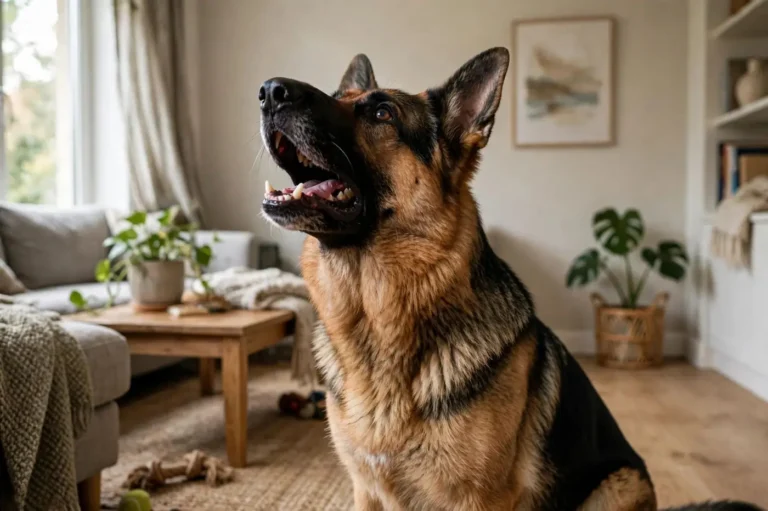
It’s 2:47 a.m. Your German Shepherd is at the window delivering a full-volume address to absolutely nothing you can see. The neighbors are awake. You’re awake. The dog is extremely pleased with themselves. If you want to know how to stop your German Shepherd barking at night, you need to understand one thing first: your dog is doing exactly what they were bred to do — they just need to learn when the shift ends.
German Shepherds were developed as guarding dogs with acute hearing and a deep sense of duty about their territory. Night barking is usually alert barking: the dog hears something, announces it, and keeps announcing it because nobody has taught them the “message received, stand down” part. The goal isn’t a dog who never barks — it’s a dog who alerts once, then settles when you tell them all is well.

Key Takeaways
- Night barking is usually alert barking at sounds, a need for the toilet, or unspent daytime energy — not defiance.
- German Shepherds were bred to guard, so some alert barking is instinct. Aim for “alert once, then settle,” not total silence.
- Management (sound masking, blocking triggers) works faster than training alone — use both together.
- Never yell at a barking dog. To them, you’re just barking along.
Why German Shepherds Bark at Night
The guarding instinct. This is the breed’s factory setting. A Shepherd’s brain is wired to monitor territory and announce anomalies. At night, when the house is quiet, every distant sound stands out — foxes, cats, late-night delivery drivers, the neighbor’s car door. Your dog isn’t being dramatic; they’re on duty.
They hear everything. A dog’s hearing is far more sensitive than yours, especially at night when ambient noise drops. Sounds you’d sleep through are crystal clear to your Shepherd.
Toilet needs. Puppies, seniors, and dogs with upset stomachs may bark because they genuinely need to go out. Always rule this out before assuming it’s behavioral — especially with young puppies.
Unspent energy. A Shepherd who spent the day under-stimulated often becomes restless at night. The witching-hour zoomies and 11 p.m. barking sessions frequently trace back to a boring day.
Anxiety or discomfort. Less common, but dogs in pain, dogs adjusting to a new home, or dogs with separation distress can vocalize at night. If night barking started suddenly in an adult dog, read the vet section below before training.
Rule Out the Simple Stuff First
Before any training plan, check the basics:
- Last toilet break. Take your dog out right before bed — boring, on-leash, no play. Give them every chance to empty out.
- Comfort. Is the sleeping spot warm, draft-free, and comfortable? A dog that’s cold or uncomfortable won’t settle.
- Evening exercise. A good walk or play session in the evening (not right before bed — allow wind-down time) takes the edge off.
- Health. Sudden onset of night barking, restlessness, pacing, or house-soiling in a previously quiet adult or senior dog warrants a vet check. Pain and age-related changes can show up as nighttime vocalizing.
Management: Make Nights Quieter
Management reduces the barking while training takes effect — and for many dogs, good management solves most of it.
1. Mask the sounds. A fan, white noise machine, or quiet radio near your dog’s sleeping area blurs the distant noises that trigger alert barking. This single change helps more dogs than any other.
2. Block visual triggers. Close curtains or blinds on street-facing windows. Many night-barking episodes start with something seen (a cat, headlights) and escalate from there.
3. Choose the sleeping spot strategically. A bedroom or interior room away from the street is quieter than the front living room with the big window. If your dog currently sleeps where every passerby is visible, moving their bed can cut barking dramatically.
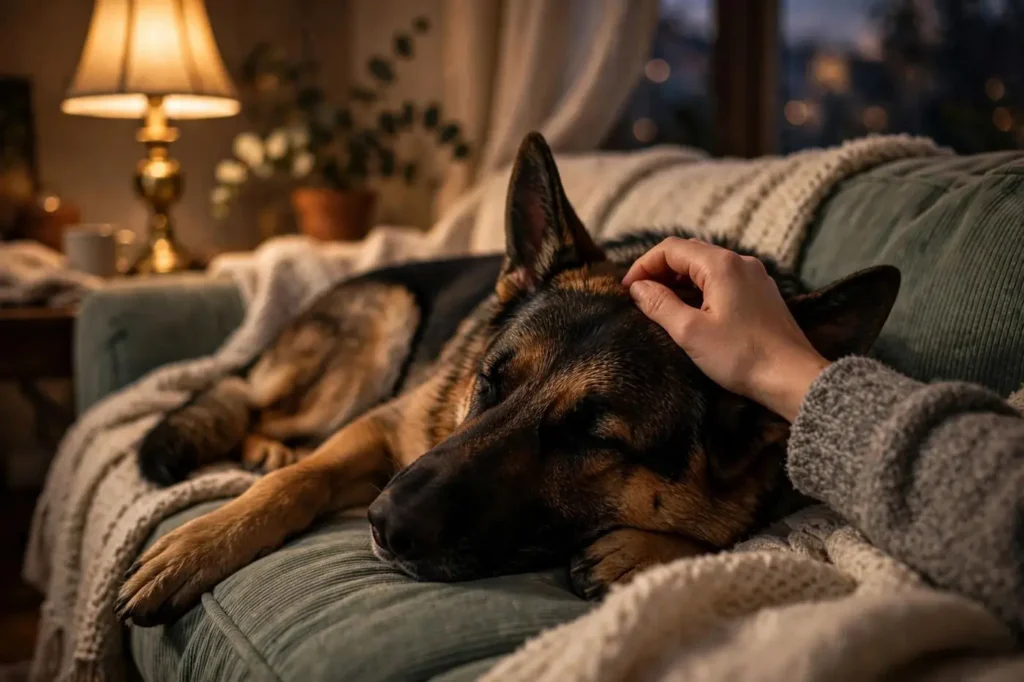
4. Create a wind-down routine. Dogs thrive on predictable sequences. An hour before bed: calm walk or gentle play, then quiet time, last toilet break, bed. The routine itself becomes a cue that the day — and the guard shift — is over.
The Training Plan: Teach “Quiet”
Train this during the day first, when you’re patient and the dog isn’t wired. Then apply it at night.
Step 1: Capture and reward silence. Throughout the day, quietly treat your dog whenever they’re being calm and quiet — lying down, resting, watching the world without comment. You’re building value for silence itself. This is the foundation everything else rests on.
Step 2: Teach the “quiet” cue. When your dog barks at something (a knock, a sound), let them bark two or three times — that’s the alert, and it’s fine. Then calmly say “quiet” (or “enough”), wait for even a brief pause, mark it (“yes!”), and deliver a high-value treat. Gradually ask for longer pauses before the reward. Keep sessions short and positive.
Step 3: Desensitize trigger sounds. If specific sounds set your dog off (doorbells on TV, sirens, the neighbor’s gate), play recordings at very low volume while feeding treats. Over sessions, slowly raise the volume. You’re changing the emotional response: sound predicts treats, not alarm.
Step 4: Practice the nighttime sequence. When the dog alerts at night: acknowledge calmly (“thank you, I see it”), cue “quiet,” reward the settle. Go back to bed. Boring, consistent, every time. The dog learns: alert once → human confirms → we all go back to sleep.
What about the toilet-bark? If your dog barks and genuinely needs to go out, take them out — on leash, boring, no play, straight back to bed. You must honor legitimate needs or the dog learns that barking is the only thing that works… which, to be fair, it is.
Common Mistakes
- Yelling “QUIET!” at the dog. From your Shepherd’s perspective, you’re barking too — which confirms that this is indeed a bark-worthy emergency. Stay calm and low-voiced.
- Letting it rehearse for weeks. Every night of unchecked barking strengthens the habit. Start management (white noise, curtains) on night one, even before training is polished.
- Inconsistent responses. If barking sometimes gets attention and sometimes doesn’t, you’ve built a slot machine — the most addictive reward schedule there is. Pick your protocol and stick to it.
- Punishment collars. Shock, citronella, and ultrasonic collars suppress barking through fear or discomfort without addressing the cause, and they can increase anxiety — which often makes vocalizing worse. They’re also a miserable way to treat a dog who’s trying to do their job.
- Punishing the alert itself. You don’t want a Shepherd who never alerts — that’s the breed’s gift. You want one who alerts and then stands down on cue.
When Night Barking Needs a Vet
Training assumes a healthy dog. See your vet if:
- The barking started suddenly in an adult or senior dog who was previously quiet at night
- It’s accompanied by restlessness, pacing, panting, or house-soiling
- Your senior dog seems confused or disoriented at night
- There’s any sign of pain (reluctance to lie down, whimpering, stiffness)
Medical causes need medical answers — no training plan fixes pain.

Frequently Asked Questions
Should my German Shepherd sleep in my bedroom?
There’s no rule — it’s personal preference. Many owners find their Shepherd settles better in the bedroom, especially anxious dogs. Others prefer the dog in a crate or bed elsewhere in the house. What matters is consistency: pick a spot and stick with it while you train.
Is it okay to just let them “bark it out”?
No. Barking is self-rewarding — every bark feels productive to the dog — so “barking it out” usually means barking for a very long time and building a stronger habit. It also doesn’t teach the dog what to do instead.
How long does it take to fix night barking?
Management changes (white noise, curtains, sleeping spot) can help within days. The “quiet” cue and desensitization typically take a few weeks of consistent practice. Long-standing habits take longer than new ones — but they still change.
My puppy barks at night — is that different?
Puppies bark at night mostly because they’re lonely, need the toilet, or aren’t tired. Young puppies genuinely can’t hold it all night, so build in a planned toilet break rather than expecting silence. Comfort, proximity (a crate near your bed helps many puppies), and a good evening routine matter most at this age.
Will a bark collar stop it?
Aversive collars may suppress the barking temporarily, but they work through discomfort or fear, don’t teach the dog anything, and risk increasing anxiety and fallout behaviors. For a breed already prone to reactivity, that’s a bad trade. Management plus training is slower but actually solves the problem.
Night barking is one of the most fixable German Shepherd problems because the cause is usually simple and the management is straightforward. For related barking challenges, see our guides to barking at strangers on walks and barking when left alone. For the full breed picture, read the complete German Shepherd behavior guide, and browse the barking archive for more. You can also explore all German Shepherd guides and every barking guide.