How to Calm Down a German Shepherd
If your German Shepherd has two settings, asleep and fully wired, you are not alone. Many owners love the energy and still want a dog who can switch off at home.
Learning how to calm down a german shepherd is easier when you teach calm as a skill. This guide uses rewards only, and it builds calm step by step through the day.
Key Takeaways
- Calm is a skill you teach. Reward quiet, settled behavior the moment you see it.
- Balance body and brain work. Walks, play, sniffing, training, and puzzles all count.
- Mat training gives your dog a clear job: go to your spot and relax.
- Keep greetings, departures, and evenings low key, and repeat the same routine daily.
- If restlessness starts suddenly, or comes with pain, fear, or aggression, talk to your vet.
How to Calm Down a German Shepherd: The Direct Answer
To learn how to calm down a german shepherd, meet body and brain needs first, then teach a clear settle. Reward quiet behavior, keep greetings low key, and repeat the same calm routine each day.
When excitement rises, lower stimulation before you ask for more. Move to a quieter spot, offer a chew or lick mat, and wait for a calmer moment to reward.
Why German Shepherds Struggle to Settle
German Shepherds were bred to work closely with people, to herd, guard, and think all day. That history leaves a modern pet dog with drive, focus, and energy to spare.
Without a job, that drive can show up as pacing, barking, jumping, or constant following. For the wider breed picture, read our German Shepherd behavior problems guide.
Guarding instinct also adds alertness. A Shepherd may watch windows, doors, and sounds, and that watchfulness can tip into barking when the house is busy.
Age also matters. Puppies and adolescents often have less impulse control, while adults and seniors may need gentler days and more rest. Calm training should fit the dog in front of you.
Calm in the Moment
When your dog is already overexcited, this is not the time for a new lesson. Your job is to lower the heat, not to win an argument with excitement.
- Stop the game. Put toys away and pause play before excitement climbs higher.
- Lower noise and movement. Speak softly, move slowly, and step away from the trigger.
- Offer a calm job. A chew, a lick mat, or scatter feeding gives the mouth a quiet task.
- Wait and reward the settle. Mark the first quiet breath, loose body, or lie down.
Do not chase a zooming dog, because chasing often turns into a game. Stand still, stay quiet, and let the wave pass before you redirect to a calmer activity.
Get the Exercise and Mental Work Balance Right
A balanced day is the heart of how to calm down a german shepherd without wearing the dog out. Pair walks and play with sniffing, training, and food puzzles each day.
Watch for the trap of adding more and more fast exercise. A dog who only learns to run harder may come home more wired, not more settled, after each outing.
| Activity | What it gives | Keep it calm by |
|---|---|---|
| Walk with sniff time | Movement and scent work | Let your dog sniff, then walk on |
| Short training | Focus and thinking | End while your dog still wants more |
| Food puzzle or scatter feed | Brain work at mealtime | Use part of the usual meal |
| Play with pauses | Energy release | Pause often and reward a settle |
Keep training walks and exercise walks separate when you need to. A dog who has sniffed and played first can often learn better on a short training walk.
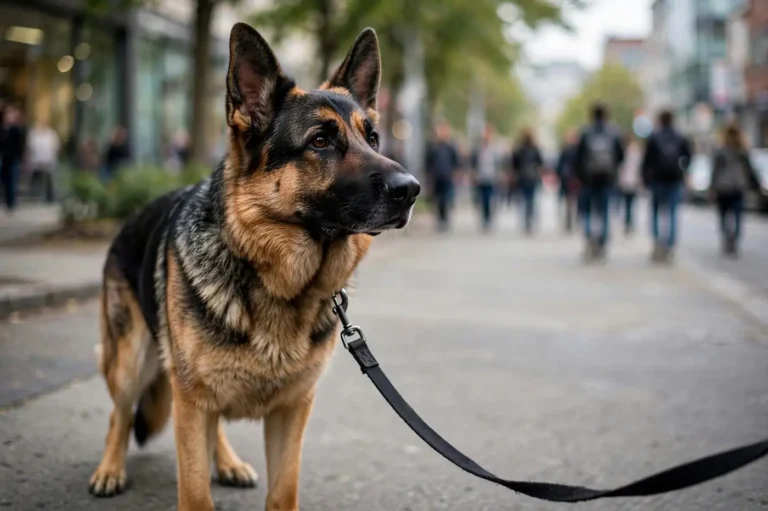
If walks turn into constant pulling, fix the walk itself before you add distance. Our German Shepherd pulling on the leash guide shows a calm stop and reward method.
Teach Settling With Mat Training
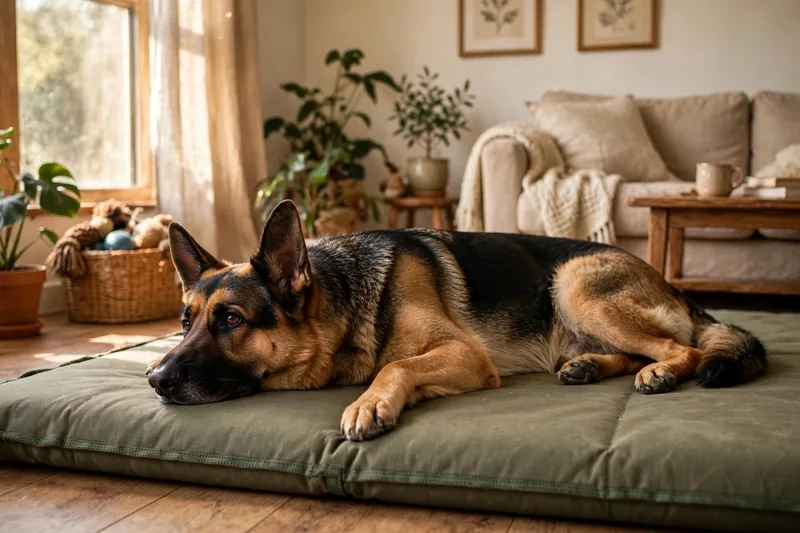
Mat training gives your dog a clear job: go to your spot and relax until released. It works at home, at the vet waiting room, and when guests arrive.
- Step 1: Introduce the mat. Place it in a quiet corner and reward any step onto it.
- Step 2: Shape lying down. Reward the instant your dog lies down, with calm praise.
- Step 3: Build duration. Space treats out slowly and step away briefly, then return.
- Step 4: Add mild distractions. Practice with the television on, then while you move around.
- Step 5: Use it in real life. Send your dog to the mat during meals and doorbell rings.
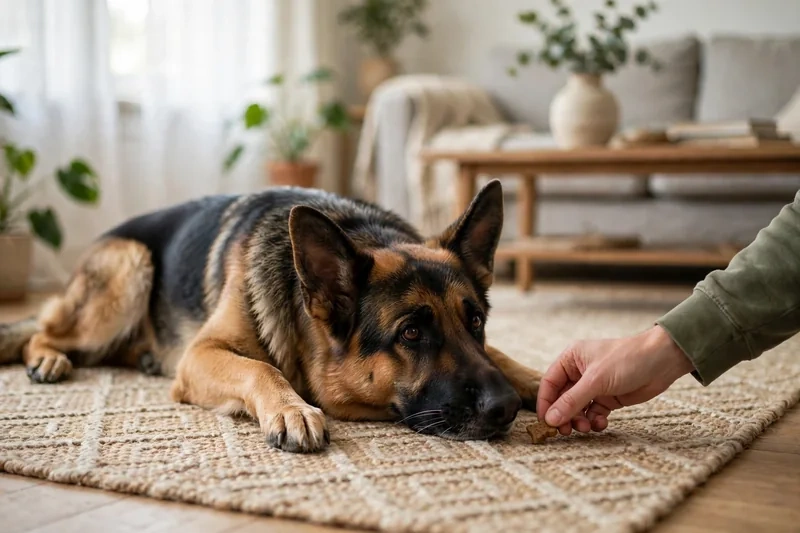
Practice in quiet moments first, then add mild distractions one at a time. A short daily practice, kept happy and calm, builds a settle you can use anywhere.
Send your dog to the mat during meals, doorbell rings, and guest arrivals. Reward staying there, and release with a calm word when the moment has passed.
Feed the Brain: Enrichment That Builds Calm
A German Shepherd mind needs a daily job. Mental work can tire a dog in a kind way, and it often settles a dog faster than another fast run.
- Ditch the bowl sometimes. Feed part of a meal from a food puzzle or scattered in the garden.
- Lick mats and chews. A lick mat with soft food gives a soothing, repetitive activity.
- Nose work. Hide treats around a room and let your dog find them, with harder spots over time.
- Short training sessions. Teach a new trick or polish an old cue, ending while your dog is keen.
Use food puzzles and scatter feeding for part of the daily food. That turns mealtime into brain work, without adding a new habit to manage.
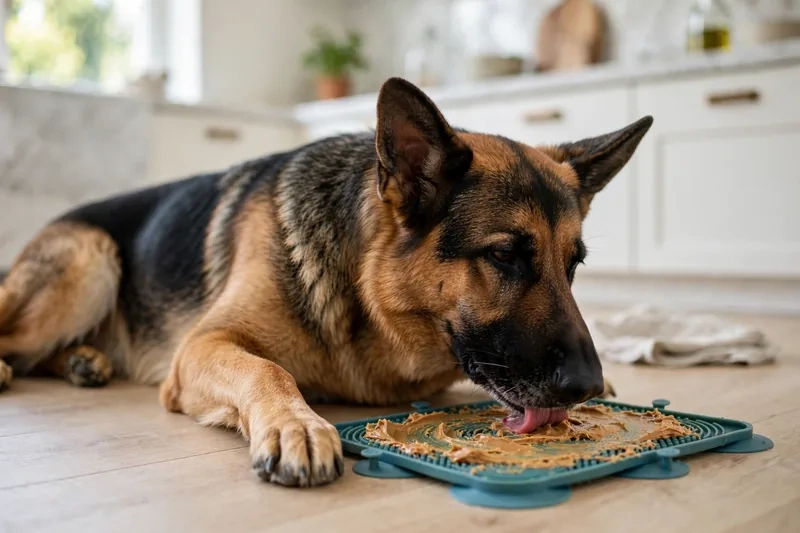
Rotate puzzles and toys so they stay fresh. A bored Shepherd will often invent a job, and that job is rarely the quiet one you wanted.
Build Calm Routines Into the Day
This steady shape is how to calm down a german shepherd on ordinary days, not just on training days. Dogs settle faster when they can predict what comes next.
| Time of day | Calm habit |
|---|---|
| Morning | Walk, sniff time, breakfast, then a settle on the mat |
| Midday | Short training, a puzzle, and a quiet rest period |
| Evening | Walk, dinner, quiet family time, and a bedtime settle |
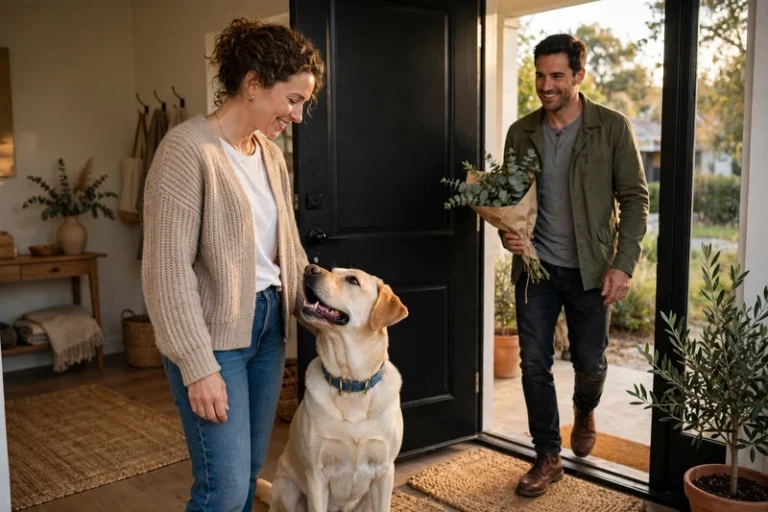
Keep greetings low key. Ask guests to wait for four paws on the floor, then reward calm greetings. Our German Shepherd jumping on guests guide gives the full door routine.
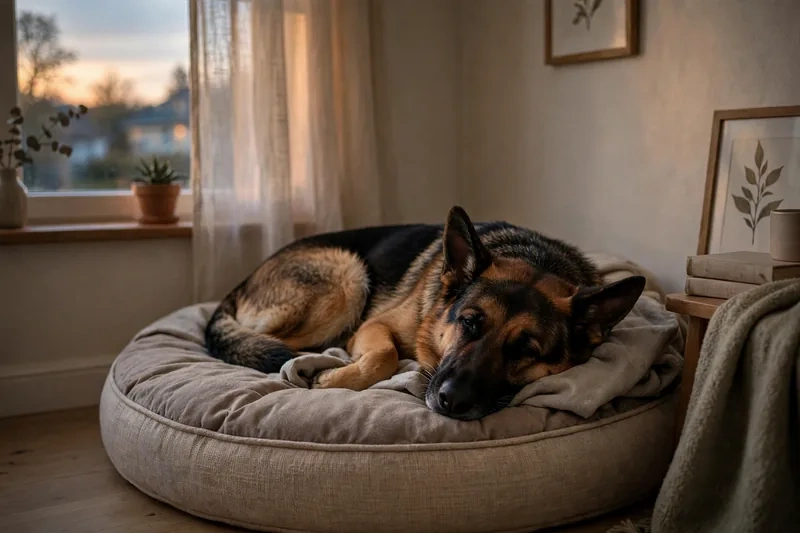
Keep departures low key too. Pick up keys and shoes at random times, without leaving, so those cues stop predicting a big event.
Over-Arousal Triggers: Spot the Pattern
Excitement often stacks through the day. One exciting event may be fine, but several in a row can push a dog past the point where learning still works.
| Trigger | What you may see | Calm response |
|---|---|---|
| Doorbell and guests | Jumping, barking, rushing | Mat, gate, or leash until calm |
| Other dogs on walks | Pulling, lunging, barking | Distance, turn away, reward a check-in |
| Play that gets wild | Mouthing, zoomies, jumping | Pause play and offer a chew |
| Tiredness in the evening | Restlessness, nipping | Earlier wind-down and a quiet rest spot |
If recall is weak outdoors, excitement is harder to manage at a distance. Build it step by step with our German Shepherd recall training guide.
Make the Crate a Calm Space, Not a Punishment
A crate can help only when it already feels safe and comfortable. It should be a rest space with a bed, water nearby, and the door open during training.
Never use the crate as a time-out after excitement, and never shut a panicking dog inside it. If your dog panics in a crate, stop and use a dog-proof room or gated area instead.
Build crate calm in small steps. Reward quiet crate time, keep sessions short at first, and open the door while your dog is still settled.
If distress happens mainly when you leave, that needs its own gradual plan. Our German Shepherd separation anxiety guide covers camera checks and slow absences.
What Not to Do
- Shouting or adding your own excitement. It raises arousal and teaches nothing calm.
- Chasing, rough play, or endless fetch when already wired. It rewards the high state.
- Repeating cues louder and louder. It teaches your dog to wait for shouting.
- Using pain-based tools or harsh handling. It can add fear and damage trust, with no calm skill taught.
- Skipping rest. An overtired dog often looks hyper, not tired.
This guide uses rewards only. Reward the behavior you want, remove attention from the behavior you do not want, and keep every session kind and short.
When Restlessness Signals Pain or a Medical Issue
Most restlessness comes from unmet needs or weak settle training. But a sudden change in a previously settled adult dog deserves a vet check first.
- Sudden restlessness or a sudden change in behavior.
- Limping, stiffness, or reluctance to move.
- Panting, pacing, or restlessness at night that is new.
- Loss of appetite, toileting changes, or withdrawal.
- Growling, snapping, or biting, or fear that is getting worse.
Talk to your vet about pain, illness, or medical causes, and ask a qualified reward-based behavior professional for aggression, fear, or sudden change. Do not try to diagnose the cause at home.
Frequently Asked Questions
At what age do German Shepherds calm down?
Many dogs become steadier as adults, but age alone does not teach calm. A settled adult usually has a balanced day, clear training, and a taught settle.
How much exercise does a German Shepherd need to stay calm?
There is no single amount that fits every dog. Combine daily walks, play, sniffing, and brain work, then adjust by watching whether your dog can settle after activity.
Can a crate help my dog calm down?
Yes, only as a calm rest space your dog already likes. A crate does not teach calm on its own, and it should never be used to confine a panicking dog.
Why does my German Shepherd get wild in the evening?
Evenings often stack the whole day’s excitement on top of tiredness. Add an earlier wind-down, a sniff walk, and a quiet settle before bedtime.
My German Shepherd will not settle at night. What should I do?
Check the evening routine first. A final sniff walk, dinner from a puzzle, and a calm bedtime settle often help, and a vet check is wise if nights change suddenly.
Will neutering calm my German Shepherd down?
Neutering alone is not a calm training plan. Focus on exercise balance, enrichment, mat training, and routines, and talk to your vet about health decisions.
For a calmer home, keep teaching how to calm down a german shepherd with rewards, a balanced day, and a clear settle, as shown in our German Shepherd behavior problems guide and our guide to calming a Dachshund.
Reference
ASPCA, Separation Anxiety.
Still stuck? Get a plan built for your dog.
Answer a few quick questions and get a personalized, force-free training plan in minutes.
Try the Free Dog Tools