Dachshund German Shepherd Mix Puppy: Size, Temperament and Care
A dachshund german shepherd mix puppy looks like a dog that should not exist, and that is exactly why people search for it.
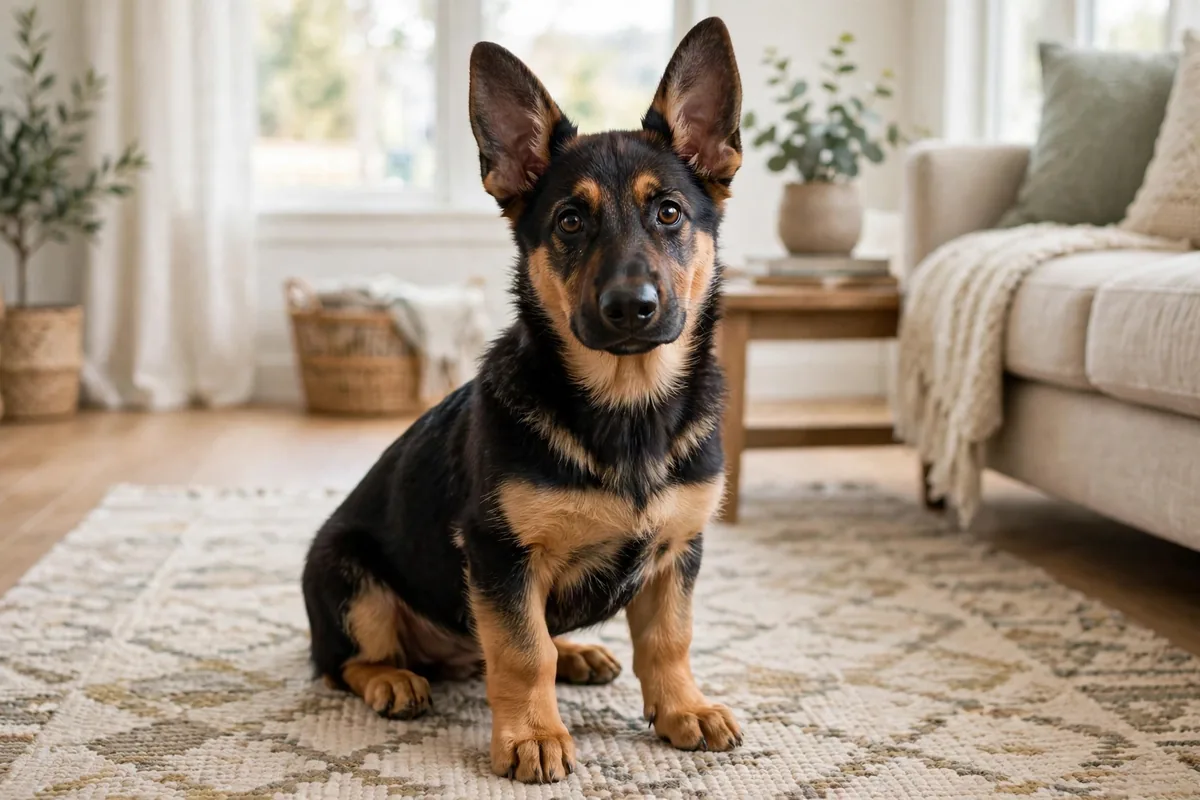
You get the alert face and black-and-tan coat of a German Shepherd. Underneath, you often get the longer body and shorter legs of a Dachshund.
This mix can be loyal, funny, and deeply attached to its family. It can also bark a lot, guard hard, and test every rule you set.
This guide covers the realistic full-grown size, the temperament, the back-care rules, and how to find one responsibly. It states no price figure, because no honest fixed price exists for this cross.
Direct Answer: What Is a Dachshund German Shepherd Mix Puppy?
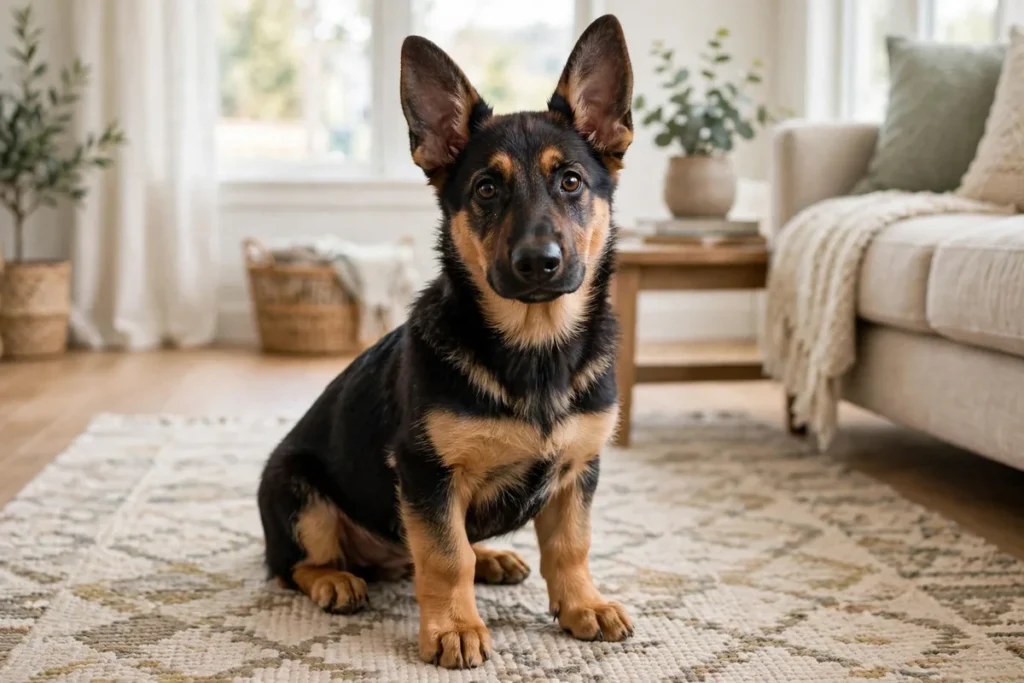
A dachshund german shepherd mix puppy is the puppy of one German Shepherd parent and one Dachshund parent. It is often called a Dachshund Shepherd, a Shepherd Doxie, or a Doxie Shepherd.
No breed standard exists for this cross, so no seller can promise an exact adult size, coat, or temperament. Puppies in the same litter can look and act quite differently from each other.
Most litters are first crosses, with one purebred parent of each breed. That split is exactly why everything about this mix varies so much.
At a Glance
| Other names | Dachshund Shepherd, Shepherd Doxie, Doxie Shepherd, German Dachshund |
| Parent breeds | German Shepherd and Dachshund, both originally from Germany |
| Full-grown height | Most often 10 to 20 inches at the shoulder |
| Full-grown weight | Most often 20 to 60 pounds |
| Lifespan | Commonly reported at about 10 to 14 years |
| Coat | Usually medium and dense, often black and tan |
| Shedding | Moderate to heavy, heavier with a Shepherd-type coat |
| Energy | Moderate to high, with a real need for daily mental work |
| Exercise | About 45 to 60 minutes a day for an adult, split into sessions |
| Barking | High tendency, since both parents are alert barkers |
| Good for beginners? | Better for experienced, patient owners |
| Recognized as a breed? | No, this is a hybrid, not a purebred breed |
Those ranges are wide for a reason. Treat them as typical reports, not as a promise about your puppy.
What This Mix Is, and One Safety Point First
The parents differ hugely in size, so the pairing order matters for safety. In a responsibly planned litter, the mother is the German Shepherd and the father is the Dachshund.
A Dachshund mother carrying much larger mixed puppies faces serious whelping risks. Any seller who cannot tell you which parent is which should be treated as a red flag.
Many dogs listed for sale did not come from specialist breeders at all. Listings often trace back to accidental litters, private rehoming, and rescue, which also affects what you will pay.
The Two Parent Breeds Side by Side
| Height | 22 to 26 inches | 8 to 9 inches standard, 5 to 6 inches miniature |
| Weight | 50 to 90 pounds | 16 to 32 pounds standard, 11 pounds and under miniature |
| Lifespan | About 7 to 10 years on current AKC figures | 12 to 16 years |
| Original job | Herding and all-purpose working dog | Hunting badgers and burrowing animals |
| Temperament core | Confident, loyal, courageous, steady | Friendly, curious, spunky, bold |
| Key health risks | Hip and elbow dysplasia, degenerative myelopathy, bloat | Intervertebral disc disease (IVDD), obesity |
Your puppy inherits a random mix of both columns. Planning for the harder parts of each breed is the safest way to own this mix.
If you are new to either parent, start with our German Shepherd behavior problems guide and our Dachshund behavior problems guide.
Size and Appearance When Full Grown
A full grown German Shepherd Dachshund mix most often stands 10 to 20 inches tall. Most adults weigh between 20 and 60 pounds, depending on which parent they favor.
Dogs at the small end usually have a miniature Dachshund parent. Dogs at the large end usually take strongly after the Shepherd parent.
Some listings claim far wider ranges, up to full Shepherd size. Treat those numbers with caution, because they describe extremes, not typical adults.
What Your Puppy Will Probably Look Like
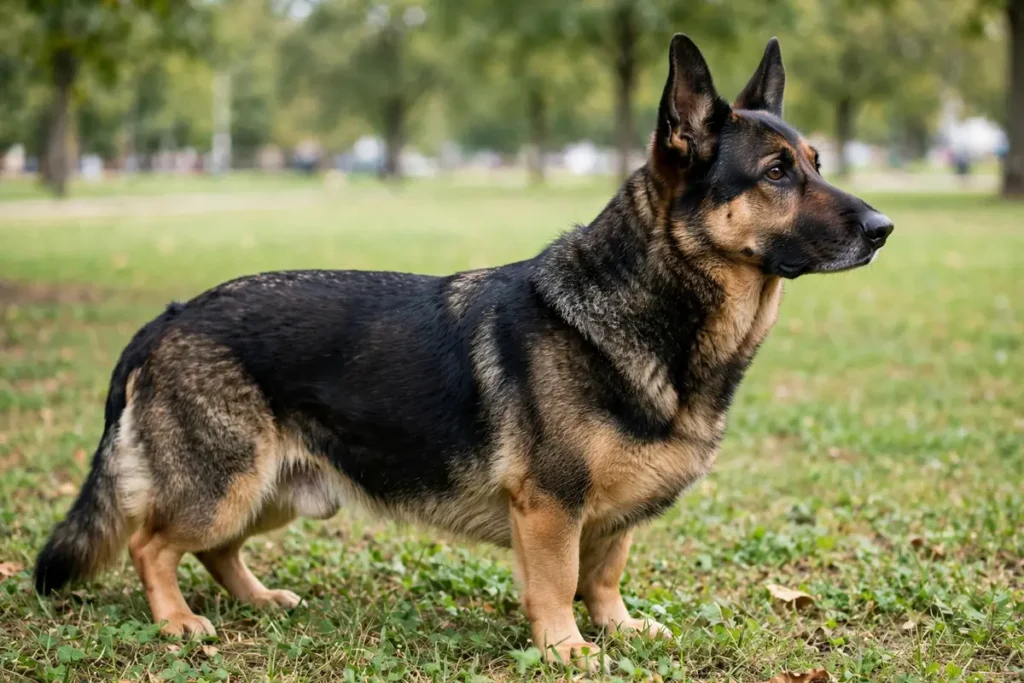
Expect a longer-than-average body on shorter, sturdy legs. The chest is usually deep, and the back is longer than a typical medium dog’s back.
The head usually leans Shepherd, with a longer muzzle and alert eyes. Ears can stand up, flop down, or do one of each while the puppy is young.
Coat color most often follows the Shepherd parent. Black and tan is the classic look, followed by sable, red, cream, and solid black.
Dachshund patterns can also appear, including dapple and brindle. Never pay extra for a rare color, and never buy a puppy from two dapple parents.
Breeding two dapple, also called merle, parents together raises the risk of deafness and eye problems. A responsible breeder will not do it.
Puppy Growth Timeline
| 8 weeks | Coming-home age, and far too young to predict adult size |
| 3 to 4 months | Legs and back length become clearer, ears may start lifting |
| 6 months | Often near half of adult weight, but this varies widely |
| 9 to 12 months | Height is often close to set, while the body keeps filling out |
| 12 to 18 months | Most are full grown, with muscle still maturing |
Treat this table as a rough guide only. Growth varies more in this cross than in almost any purebred breed.
Ask to see both parents, or clear photos and weights if you cannot visit. The parents tell you more about adult size than any chart can.
Protect growing joints while your puppy develops. Avoid repetitive stair climbing, high jumps, and long forced runs until your vet says your dog is ready.
Temperament: Loyal, Bold, Vocal, and Stubborn
This mix usually bonds hard to its people. Expect a dog who follows you from room to room and notices every visitor.
The Shepherd side brings loyalty, courage, and a guarding instinct. The Dachshund side brings boldness, curiosity, and a hunter’s independence.
Together, that often means a dog who is affectionate at home and suspicious at the door. Early socialization shapes which side you see most in public.
Is This Mix Good With Children?
It can be, especially with older children who handle dogs calmly and respectfully. Many guides suggest this mix fits best in homes with children aged six and up.
The long back is the main concern with small children. A toddler falling on the dog, or picking it up wrong, can injure its spine.
Teach children to let the dog come to them on the floor. Never let a child carry this mix, drag it, or hug it around the middle.
Always supervise interactions, whatever your dog’s age or history. If your dog growls, moves away, or freezes, give it space and get professional help if it repeats.
Does It Get Along With Other Pets?
With early, positive introductions, many live well with other dogs. Same-sex tension and guarding can appear in some dogs, so manage first meetings on neutral ground.
The chase drive needs respect around small pets. The Dachshund was bred to chase and go to ground after animals, and the Shepherd to herd and pursue moving things.
Introduce cats and small animals slowly, with barriers and rewards for calm behavior. Never leave a new mix alone with small pets until trust is proven over time.
Male Versus Female: Does It Matter?
Less than most buyers expect. Males often grow a little larger and heavier, and females often mature a bit sooner, but individual variation swamps both patterns.
Temperament differences between the sexes are small in this mix. The individual puppy’s confidence, and how you raise it, will matter far more than its sex.
Choose the puppy whose energy fits your home, not the sex you pictured. A calm male beats a frantic female for a quiet household, and the reverse is also true.
Behavior Problems This Mix Is Known For
Owners rarely struggle with how this mix looks. The struggles are almost always behavior, and the good news is that the common problems are predictable.
Predictable problems can be trained early, before they become habits. Start in the first weeks, and keep sessions short, fun, and reward-based.
1. Barking at Strangers, Guests, and Noises
Both parents are alert barkers, so this mix usually is too. Expect barking at the door, at passersby, and at sounds you cannot hear.
Do not shout over the barking, because that sounds like joining in. Teach a quiet cue by rewarding the pause, and reward calm watching instead.
Our guides on Dachshund barking at strangers and German Shepherd barking at strangers on walks cover the step-by-step plans.
2. Stubborn, Selective Listening
This mix is intelligent, but intelligence is not the same as eagerness to obey. The Dachshund side often asks, in effect, what is in it for me.
Short, fun sessions with high-value treats work far better than drilling. End sessions while your dog is still enjoying them, and practice in easy places first.
If your dog ignores you outside, the distraction level is too high. Drop back to an easier step and build up gradually, rather than repeating the cue louder.
3. Separation Anxiety and Destructive Chewing
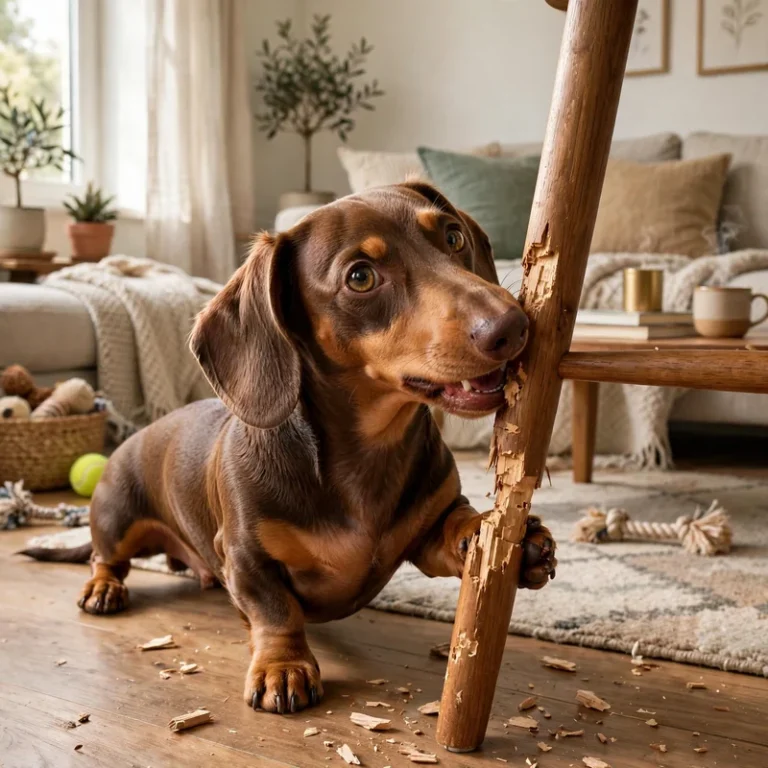
This mix attaches strongly and often hates being left alone. Chewing, digging, barking, and house-soiling when alone are classic signs, not spite.
Build alone time in tiny steps, starting with seconds behind a door. Pair departures with a safe chew or puzzle, and keep arrivals calm and boring.
See our guides on German Shepherd destructive behavior when left alone and Dachshund separation anxiety for full plans.
4. Guarding Food, Toys, and People
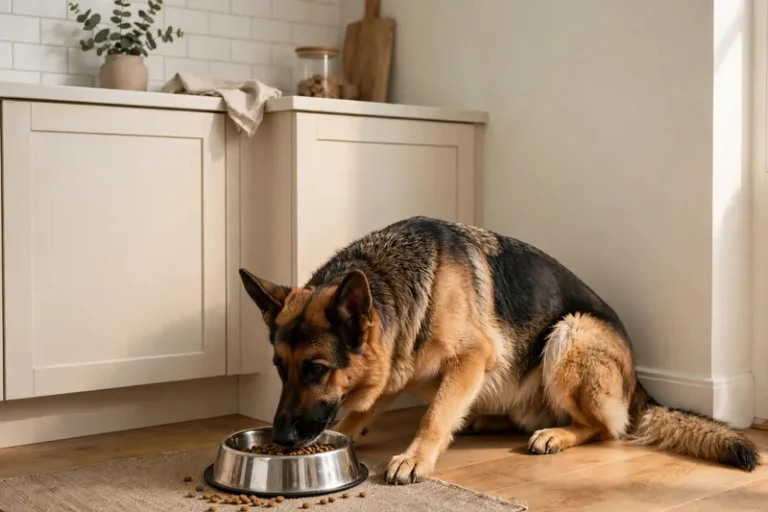
Shepherd guarding plus Dachshund possessiveness can produce resource guarding. Watch for stiffening, hard staring, or growling over food, chews, beds, or a favorite person.
Never punish a growl, because a growl is a warning you need to hear. Trade up with something better, give your dog space, and avoid taking things away for no reason.
If guarding involves snapping or biting, stop and work with a certified behavior professional. Your vet is the right first call for sudden behavior changes or aggression.
5. Chasing, Digging, and Escaping
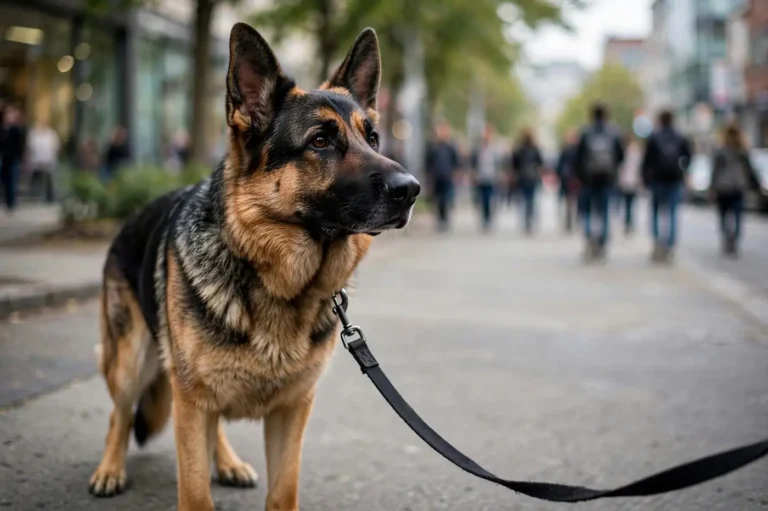
Expect digging in the yard and a strong urge to chase squirrels, cats, and bikes. A secure fence and a long leash line are management basics for this mix.
Give digging a legal outlet, like a sand pit with buried toys. Reward your dog heavily for digging there, and supervise garden time until the habit sticks.
Training
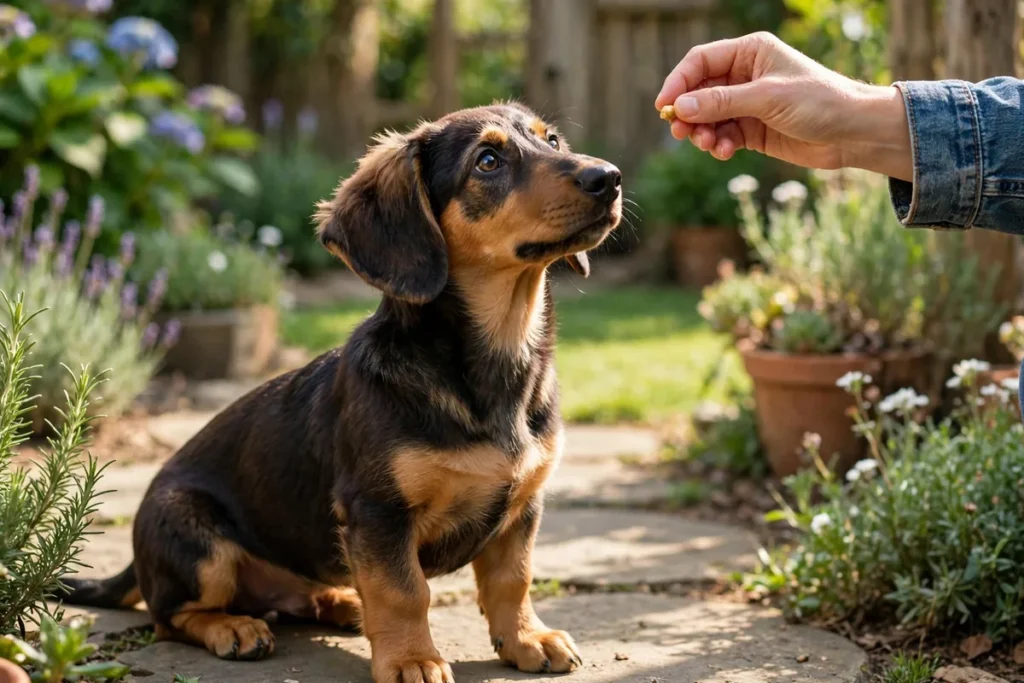
Start training the day your puppy comes home. A dachshund german shepherd mix puppy learns fast, including the habits you did not mean to teach.
Use positive reinforcement only: treats, praise, play, and access to good things. Harsh tools and punishment increase fear and guarding in both parent breeds.
Never use shock collars or prong collars on this mix. They risk fear, pain, and worse guarding, and they teach nothing your dog can trust.
Your First Two Weeks
Focus on routine before commands. Set regular times for food, sleep, potty trips, short play, and calm rest.
Teach your puppy’s name, a recall game, and a hand-touch game first. These three skills make every later lesson easier and safer.
For potty training, take your puppy out after waking, eating, and playing, and every one to two hours while awake. Reward outside toileting immediately, on the spot.
Our Dachshund puppy potty training guide works well for this mix, because the Dachshund side can be slow to house-train.
Crate Training and Back-Safe Handling
A crate should be a safe den, never a punishment. Feed meals near it, play crate games, and build alone time in seconds, not hours.
Our Dachshund crate training guide shows the gradual steps. A crying puppy needs a smaller step, not longer crying.
Handle your puppy the back-safe way from day one. Support the chest and the rear at the same time, and keep the body horizontal when lifting.
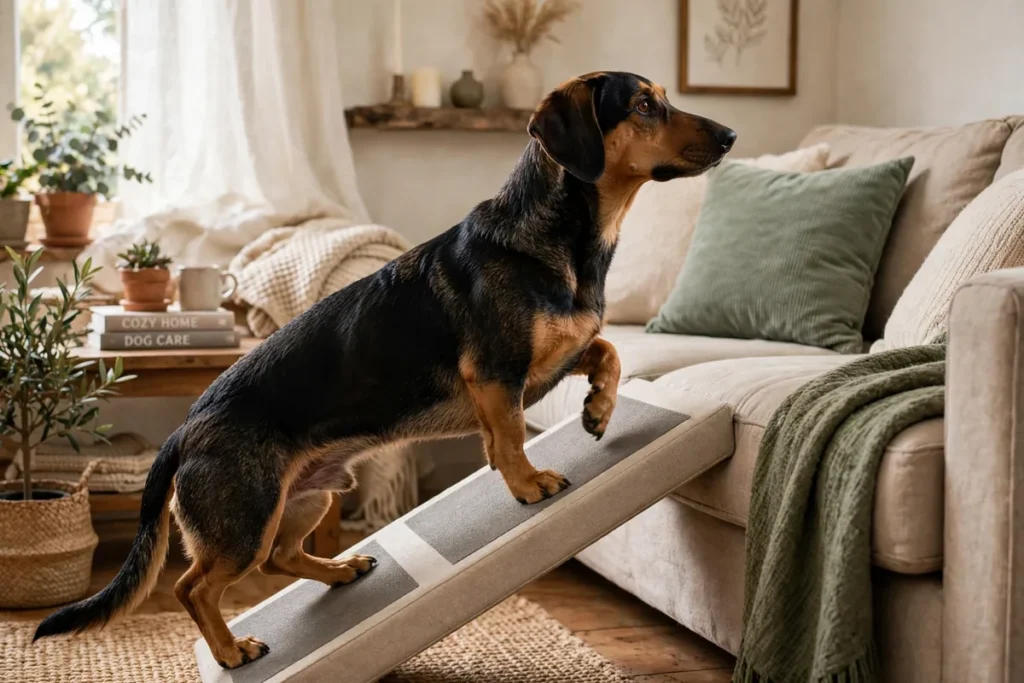
Discourage jumping off sofas and beds, because repeated impact loads the long spine. Ramps and steps are a smart early purchase for this mix.
Our guide on stopping a Dachshund jumping off the couch explains how to teach ramp use with treats.
Socialization: The Window You Cannot Get Back
Puppies have a critical socialization window that runs roughly from 3 to 14 weeks of age. Positive experiences in that window shape adult behavior more than almost anything else.
Your puppy comes home at about 8 weeks, so the breeder owns the first half of that window. Ask any seller what their puppies have seen, heard, and been handled by before sale.
Your half of the window is short, so plan it. Let your puppy watch the world, eat treats, and choose to approach new things rather than being passed around.
Aim for calm exposure to different people, hats, umbrellas, traffic sounds, and friendly vaccinated dogs. Add handling of ears, paws, and mouth, paired with food every time.
Stay safe before vaccinations are complete. Carry your puppy in public places, avoid dog parks and unknown dogs, and ask your vet about well-run puppy classes that require vaccines.
Keep sessions short and end before your puppy looks worried. Fear in puppyhood is a common root of adult reactivity and guarding in this mix.
Exercise, Play, and Mental Work
Plan on about 45 to 60 minutes of activity a day for an adult. Split it into two or three sessions to reduce strain on the back and joints.
Puppies are different: think short and often, not long and tiring. Several brief play and training bouts through the day, plus a lot of sleep, suit a growing puppy best.
Do not jog, cycle, or do forced distance exercise with a puppy. Wait until your vet confirms growth is finished, which can take well over a year in a larger mix.
Walks alone rarely tire this mix out. Add sniff walks, scatter feeding in grass, puzzle feeders, and short training games through the day.
Scent games suit both parents perfectly. Hide treats in boxes, roll them in a towel, and let your dog solve the problem with its nose.
Avoid high-impact habits that load the spine. Repeated ball launching off decks, jumping from heights, and rough wrestling on slippery floors are poor choices.
Health Problems to Know Before You Buy or Adopt
A mixed breed is not automatically a healthy breed. This mix can inherit health risks from both parents, so ask questions before you commit.
See a vet within the first week of bringing any puppy or rescue dog home. Sudden behavior change, pain, limping, or loss of appetite always needs a vet visit first.
Intervertebral Disc Disease (IVDD) and Back Care
IVDD is the biggest health risk from the Dachshund side. Dachshunds are known for a high risk of disc problems, and a long-backed mix can inherit that vulnerability.
This article does not diagnose your dog. Only your vet can tell whether back pain, stiffness, or wobbliness is IVDD or something else entirely.
The short legs come from a genetic trait that also makes the discs age and harden early. No DNA test can breed this risk away in a Dachshund cross.
Discs can bulge or rupture, sometimes suddenly. Signs range from back pain and reluctance to jump, to wobbly walking or paralysis in severe cases.
Keeping this mix lean is the single most useful daily protection. Extra weight loads the long spine with every step your dog takes.
Use a harness instead of a neck collar for walks. Support the whole body when lifting, use ramps, and call your vet immediately for back pain or wobbliness.
Vet Red Flags: Call Promptly
Call your vet promptly for back pain, yelping when touched, wobbly walking, sudden weakness in the legs, or reluctance to move. These signs need professional assessment, not home treatment.
Also call promptly for persistent limping, bunny-hopping, reluctance to rise, vomiting, or a swollen belly. Bloat is an emergency where minutes matter, so go straight to a vet.
Sudden aggression, sudden fear, or any sharp behavior change also deserves a vet check first. Pain and illness often show up as behavior before anything else does.
Hip and Elbow Dysplasia
From the Shepherd side, hip and elbow dysplasia are the main joint risks. These conditions involve poorly fitting joints and can lead to pain and arthritis.
Ask breeders for hip and elbow scores for both parents. Keep your puppy lean and avoid over-exercise while growing.
Report persistent limping, bunny-hopping, or reluctance to rise to your vet promptly. Early assessment gives you more options than waiting does.
Bloat (Gastric Dilatation-Volvulus)
German Shepherds are a deep-chested breed with a known risk of bloat, where the stomach fills with gas and can twist. A deep-chested mix can inherit some of that risk.
Know the signs: restlessness, drooling, trying to vomit with nothing coming up, and a tight or swollen belly. This is an emergency, so go straight to a vet.
Risk depends heavily on your dog’s individual build, and a smaller, less deep-chested mix is at lower risk. Ask your vet about meal size, feeding pace, and whether your dog’s shape puts it at risk.
Other Conditions Seen in the Parent Breeds
Degenerative myelopathy is a spinal cord disease seen in German Shepherds. A DNA test exists for a risk variant, but carrying it means risk, not certainty.
Progressive retinal atrophy can affect both parent lines and can lead to blindness. Eye screening and DNA tests are available for several forms.
Obesity, dental disease, skin allergies, and ear infections also appear in this mix. Routine vet checks catch most of these early, when they are cheapest and easiest to manage.
Health Tests to Ask Any Breeder For
| German Shepherd parent | Hip and elbow evaluation, degenerative myelopathy DNA result, eye check |
| Dachshund parent | Eye screening, patella check, honest family IVDD history, disc calcification screening where used |
| Both parents | Vet records, vaccination history, temperament notes, proof results are for these dogs |
No test can guarantee a puppy will stay healthy. A breeder who tests, shows you results, and talks honestly about risk is still your safest choice.
First Vet Visits, Vaccines, and Spay or Neuter Timing
Book a vet check within the first week, even if your puppy looks perfect. Bring any vaccination and deworming records the seller or rescue gave you.
Puppy vaccination courses usually run in several visits a few weeks apart, finishing at around four months old. Your vet will set the exact schedule for your area and your puppy.
Ask at that first visit about microchipping, parasite control, and insurance. Also ask when to book booster and weight checks while your puppy grows.
Spay and neuter timing deserves a real conversation, not a default date. Larger, active dogs are often neutered later so growth plates can finish.
Your vet knows your dog’s build, sex, and growth rate. Decide the timing with them, and be wary of anyone who insists one age fits every dog.
Feeding and Weight Control
Feed a complete food matched to your dog’s life stage, size, and activity level. Young puppies usually need three to four smaller meals a day.
Most puppies move to two meals a day somewhere around 6 to 12 months. Make the switch gradually, and let your vet confirm the timing at a weight check.
Portions depend on your dog’s actual weight and body condition, not the bag alone. You should be able to feel ribs under a thin layer of fat, without seeing them sharply.
Your vet can set a target weight and adjust portions at each check. Recheck weight monthly while your puppy is growing, because this mix gains quietly under a thick coat.
Keep treats within roughly 10 percent of daily calories. Training treats count, so use tiny, soft pieces during sessions.
Grooming and Daily Care
The Dachshund parent can be one of three coat types: smooth, longhaired, or wirehaired. Which one your puppy inherits changes its grooming more than almost anything else.
A smooth, Dachshund-leaning coat needs brushing once or twice a week. A longhaired influence adds feathering on the ears, legs, and tail, and needs more frequent brushing to stop tangles.
A wirehaired influence can produce a wiry coat with eyebrows and a beard. Those coats may need hand-stripping or regular clipping, so ask a groomer what your puppy’s coat needs.
A Shepherd-leaning double coat sheds heavily, especially in spring and fall. Brush three to four times a week in shedding season to keep loose hair under control.
Bathe every four to six weeks, or when your dog is genuinely dirty. Over-bathing can dry the skin, so use a dog shampoo and rinse well.
Trim nails every three to four weeks, because long nails change posture and add joint strain. Check ears weekly, especially if your dog has folded ears, and clean only as your vet advises.
Brush teeth several times a week with dog toothpaste. Dachshunds are prone to dental disease, and this mix can inherit that risk, so start tooth handling early.
Cost: What to Budget When No Fixed Price Exists
There is no official price for this mix, because it is not a recognized breed. Prices vary widely by source, region, health testing, and whether the dog comes from a breeder or a rescue.
No figure is stated here on purpose. Any seller quoting a price should be able to explain exactly what it covers, in writing, before you pay anything.
Ask what is included: health test records, first vet care, vaccinations, early socialization, and a take-back promise. A very cheap puppy is not a bargain if health testing was skipped.
Budget for the first year beyond the purchase or adoption fee. Food, vet care, vaccinations, training, a ramp, a harness, and insurance or an emergency fund add up quickly.
To compare fairly, check reputable breeders and rescues in your own area for current figures. Do not rely on a price quoted on an old article, including this one.
Finding One Responsibly
Searching for this mix for sale brings up very few true specialists. This is a rare cross, and patience protects you here.
Start by contacting German Shepherd and Dachshund breeders and asking about planned mixes or accidental litters. Expect waiting lists, travel, or a long wait for the right litter.
Watch Out for Scams
Rare mixes attract fake listings, because buyers cannot comparison-shop easily. Photos get stolen from other ads, and deposits disappear into untraceable payment apps.
Protect yourself with three habits. Reverse-image-search the listing photos, insist on a live video call showing the puppy with its mother, and never wire a deposit for a puppy you have not seen live.
If a seller refuses video, rushes you, or keeps changing the story, walk away. A real litter will still exist next week, but a scam only exists until you pay.
Questions to Ask Before You Pay Anything
Ask which parent is the mother, and expect the answer to be the German Shepherd. Ask for both parents’ health test results, and verify them where you can.
Ask to meet the mother and see where puppies are raised. Ask what socialization the puppies get, what food they eat, and what happens if you cannot keep the dog.
A responsible seller asks you just as many questions. They care where their puppies land, and they will take a dog back at any age.
Red Flags That Mean Walk Away
Walk away from sellers with multiple litters always available. Walk away from sellers who will not show parents, records, or the home.
Avoid pet-store puppies and sites that ship any puppy to anyone with a card. Avoid rare color price premiums and any litter from two dapple parents.
Revisit the pairing rule from earlier in this guide. Never buy a puppy whose mother is the Dachshund, whatever the seller claims about that pairing being safe.
Rescue: The Smarter Route for Many Owners
A dachshund german shepherd mix puppy rescue search takes patience, because this exact mix is uncommon in shelters. Puppies go especially fast when they do appear.
Widen your search terms to get results. Try German Shepherd mix, Dachshund mix, Shepherd Doxie, and Dachshund Shepherd on adoption platforms.
General shelters and mixed-breed rescues near you are the best first stop. Then contact Dachshund rescues and German Shepherd rescues, because many accept mixes of their breed.
Ask your vet and local trainers if they know of rehoming cases. Owners who cannot manage this mix’s energy or barking sometimes rehome privately through trusted networks.
Consider an adult dog if puppy listings keep falling through. With an adult, the size, coat, and temperament are already visible, which removes this mix’s biggest unknowns.
Expect an application, a conversation or home check, and a meeting with the dog. Fees often include vaccinations, spay or neuter surgery, and a microchip.
Ask the rescue what they know about the dog’s history, health, and behavior. Ask how the dog handles strangers, other dogs, being left alone, and car rides.
Give any rescue dog at least a few weeks to settle before judging behavior. Stress hides a dog’s real personality, and routine plus sleep usually reveal a calmer dog.
Is This Mix Right for You?
This mix suits owners who want an involved, characterful dog. It does not suit owners who want an easy, quiet, low-effort pet.
Good fit if you:
- have owned a strong-willed dog before
- are home a lot or can arrange company
- enjoy daily training and brain games
- will protect a long back with ramps and weight control
Think twice if you:
- are a first-time owner wanting an easy start
- work long hours away from home
- want a dog who entertains itself
- need a near-silent apartment dog
Apartment living can work if exercise, training, and barking are managed. A house with stairs can also work, if you use gates and ramps and teach calm stair habits.
The honest test is time, not space. If you can give this mix company, structure, and daily mental work, it usually pays you back with fierce loyalty.
Name Ideas
A name for this mix usually works best when it suits both sides. Owners often pick German-inspired names, bold names, or playful names for the long body.
Male names: Kaiser, Bruno, Fritz, Otto, Hans, Baron, Rex, Ranger, Scout, Milo.
Female names: Heidi, Greta, Liesel, Freya, Elsa, Ada, Pepper, Willow, Ruby, Hazel.
Playful names: Pickle, Pretzel, Sausage, Noodle, Tank, Waffles, Biscuit, Moose.
Test a name out loud at the park before you commit. Two syllables, a clear sound, and a name you enjoy calling all help training. Avoid names that sound like common cues, such as Kit for sit.
A Different Mix: Australian Shepherd Dachshund Mix
An Australian Shepherd Dachshund mix is a different dog entirely. It is often called an Aussie Doxie or Aussiedox, and it has no German Shepherd in it.
That mix usually stands about 10 to 15 inches tall. Reported adult weights vary widely, depending on the parents, and its coat often shows Australian Shepherd colors and merle patterning.
Temperament leans energetic, herding-driven, and equally stubborn, with similar back-care needs. If a listing says Shepherd Dachshund mix, always ask which Shepherd.
German Shepherd and Australian Shepherd mixes differ in size, drive, grooming, and health risks. Do not buy one expecting the other.
Bite First Aid: What to Do if Someone Is Bitten
If this mix, or any dog, bites a person, stay calm and move the dog away safely. Do not punish the dog in the moment, because that raises the risk of a second bite.
Wash the wound right away with soap and running water for several minutes. Cover it with a clean dressing, and seek medical care the same day, even for a small puncture.
Seek urgent care for deep wounds, heavy bleeding, bites to the face or hands, or any bite on a child. Tell the clinician it was a dog bite, and share the dog’s vaccination history if you know it.
Afterward, contact your vet and a certified behavior professional. A bite is a serious warning sign, and it needs professional assessment, not home punishment.
Frequently Asked Questions
How big does a Dachshund German Shepherd mix get when full grown?
Most full grown mixes stand 10 to 20 inches tall. Most weigh 20 to 60 pounds, depending on which parent they favor.
How much does this mix cost?
No fixed price exists, because this is not a recognized breed. Prices vary by source, region, and health testing, so check reputable breeders and rescues in your area for current figures.
Is this mix a good family dog?
It can be a loyal, playful family dog with early socialization and training. It usually fits best with older children who can respect its long back.
Does this mix shed a lot?
Most shed moderately to heavily. Dogs with a Shepherd-style double coat shed the most, especially during spring and fall coat changes.
Is this mix easy to train?
It is smart and learns quickly, but it can be stubborn and selective. Short, reward-based sessions started early give the best results.
How long does this mix live?
The commonly reported lifespan is about 10 to 14 years. Keeping your dog lean, fit, and vet-checked gives it the best chance at the top of that range.
Can this mix live in an apartment?
Yes, if its exercise, mental work, and barking are managed daily. Without an outlet, barking and destructive chewing are the usual apartment complaints.
What health problem matters most for this mix?
IVDD, the spinal disc disease from the Dachshund side, matters most day to day. Weight control, ramps, harnesses, and fast vet care for back pain are essential.
Is this mix recognized as a breed?
No. It is a hybrid of two recognized breeds, so kennel clubs like the AKC do not recognize it as a breed of its own.
Final Verdict
A dachshund german shepherd mix puppy is not a novelty pet. It is a smart, vocal, loyal dog with a fragile back and a strong will.
Choose it for the temperament, not just the unusual looks. Train early with rewards, protect the spine, keep it lean, and give it a job every day.
Do that, and this mix repays you fully. Few mixes match its blend of courage, comedy, and devotion to its people.
Reference
American Kennel Club, Dachshund breed page: https://www.akc.org/dog-breeds/dachshund/
Still stuck? Get a plan built for your dog.
Answer a few quick questions and get a personalized, force-free training plan in minutes.
Try the Free Dog Tools