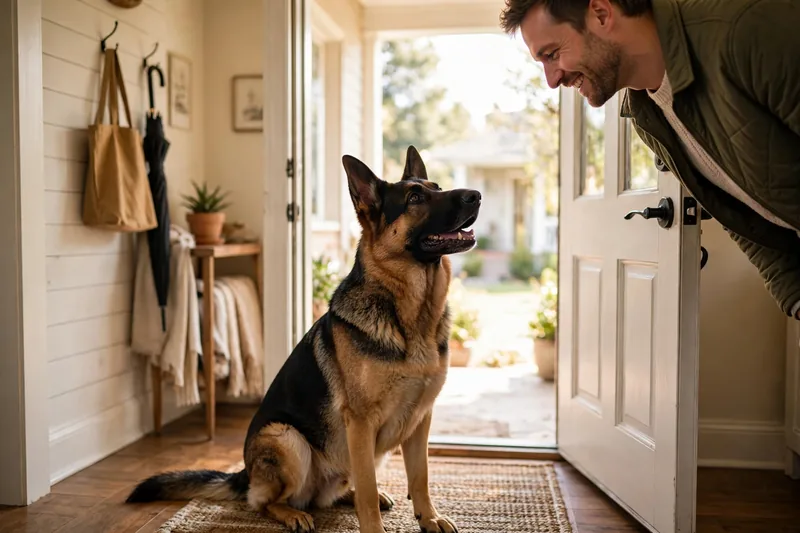
How to Stop a German Shepherd Jumping on Guests
A German Shepherd launching at guests can feel embarrassing, and it can worry visitors too. One big, excited leap can knock a small child off balance or startle an older guest.
Learning to stop german shepherd jumping on guests starts with one simple change. Make calm greetings pay, and make jumping pay nothing.
Direct Answer: german shepherd jumping on guests
To stop german shepherd jumping on guests, teach your dog that calm greetings earn attention and treats. Ask for a sit, or four paws on the floor, before any guest says hello.
If your dog jumps, the guest turns away quietly and you reset calmly. If all four paws stay down, the guest greets your dog briefly and you reward that calm choice.
Manage arrivals with a leash, a gate, or a place command while you train. Brief every guest with the same short script, and keep every greeting short at first.
Key Takeaways
- Jumping is a greeting habit that works: attention, laughter, and even pushing your dog away can reward it.
- Pick one greeting rule, sit or four paws on the floor, and use it every time.
- Reward calm behavior at once, and calmly remove attention the moment jumping starts.
- Train in stages: family first, then helper guests, then real visitors at the door.
- Manage arrivals with a leash, a gate, or a place command while the new habit is forming.
Why your German Shepherd jumps on guests
Dogs greet face to face. Moving up toward another dog’s face is friendly in dog body language, so a puppy jumping at your knees is not being rude. He is saying hello the only way he knows.
German Shepherds add size, strength, and speed to that greeting. A small puppy greeting becomes a large dog greeting, and the same habit suddenly matters much more.
That reward history is why german shepherd jumping on guests can feel so hard to break. Puppies often earn laughter, petting, and excited voices for jumping, so the habit gets practised again and again.
Adults can keep the habit alive without meaning to. Scolding is attention, and pushing a dog down is touch. Both can feel like a payoff to a dog who jumped to get noticed.
Pick one greeting rule and stick to it
Choose your greeting rule before training starts, and teach it to everyone in your home. A clear rule helps your dog know exactly what earns a greeting.
Sit for greetings. A sitting dog cannot jump, which makes this the clearest rule for families. It also gives guests a simple picture of what to expect.
Four on the floor. Any greeting earns rewards as long as all four paws stay down. This suits dogs who find sitting hard when they are excited.
Pick one rule and keep it. Tell every family member the payoff: calm behavior earns attention, and jumping earns nothing at all.
The four-paws-on-the-floor protocol
Four paws on the floor is the heart of stopping german shepherd jumping on guests. It is simple to explain, easy to see, and easy for guests to follow.
Step 1: Stand with your dog on a leash in a calm room. Have a family member walk toward you slowly, while you keep treats ready at your side.
Step 2: The moment all four paws stay down, say yes and reward your dog. Keep your voice calm, and feed the treat low so your dog stays grounded.
Step 3: If your dog jumps, the helper turns away at once and goes quiet. Wait for four paws on the floor, then try again with a shorter approach.
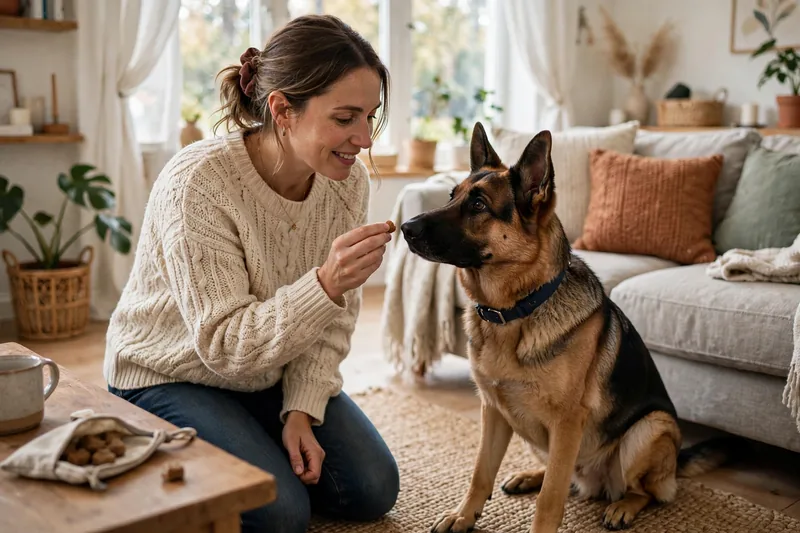
Step 4: Build up slowly. Extend the greeting a few seconds at a time, and reward calm behavior often. End each short session while your dog is still winning.
The door routine, step by step
A clear door routine makes german shepherd jumping on guests less likely, because your dog knows what happens next. Practice it before real visitors arrive.
- Put your dog on a leash before you open the door, and keep treats by the door.
- Ask for a sit, or send your dog to a place, while the guest is still outside.
- Open the door slowly, and pause if your dog breaks position.
- Let the guest step in, then greet your dog only while all four paws stay down.
- Keep the greeting short, reward calm behavior, and end it before excitement builds.
Desensitize the doorbell on its own too. Play a doorbell sound at low volume, reward calm behavior, and raise the volume only in tiny steps.
Give your dog a short walk or play session before expected visitors when you can. A dog with less pent-up energy can think more clearly at the door.
Train in stages: family, helpers, then real guests
Start with the people your dog is calmest around, away from the front door. Take turns walking toward your dog, and reward four paws on the floor or a sit every time.
Next, rehearse with helper guests at the front door. Brief each helper first, use the door routine above, and use two or three different helpers so the rule applies to everyone.
Then move to real guests, starting with calm visitors and saving the most exciting people for last. Keep your dog leashed for the first few minutes of each visit.
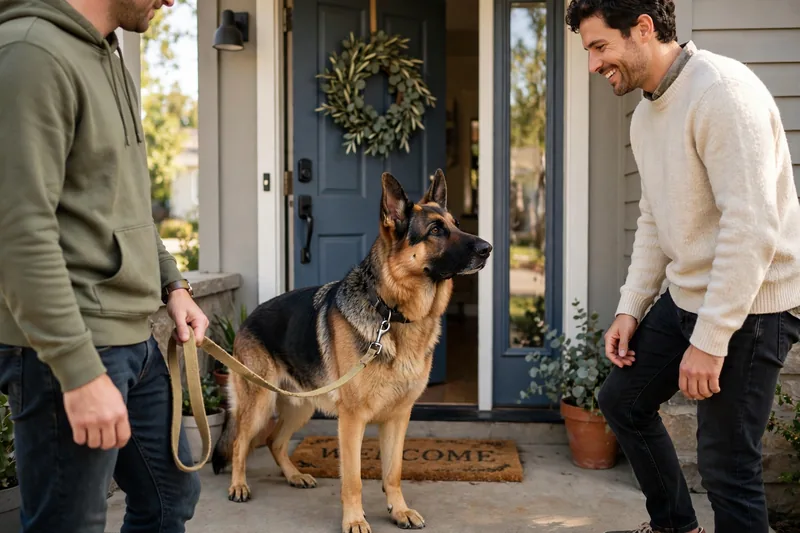
If a stage feels hard, go back one step. Short, successful greetings build a stronger habit than long, chaotic ones.
Management while you train
While you train, management keeps german shepherd jumping on guests from being practised at every visit. Every jump your dog rehearses can slow your progress.
| Tool | How to use it | When it helps most |
|---|---|---|
| Leash | Clip it on before the door opens, and keep it short and loose. | When guests are expected and greetings are still new. |
| Baby gate | Keep your dog behind the gate until the first excitement passes. | When visitors arrive in a rush, or your dog is very excited. |
| Place command | Send your dog to a bed, and reward staying there. | When you want a clear job for your dog during arrivals. |
| Separate room | Let your dog settle there with a chew, then bring him out later. | When a visitor is nervous, frail, or very young. |
A crate can serve the same calm-waiting purpose, but only if it already feels safe and comfortable. Never use it as a punishment for jumping.
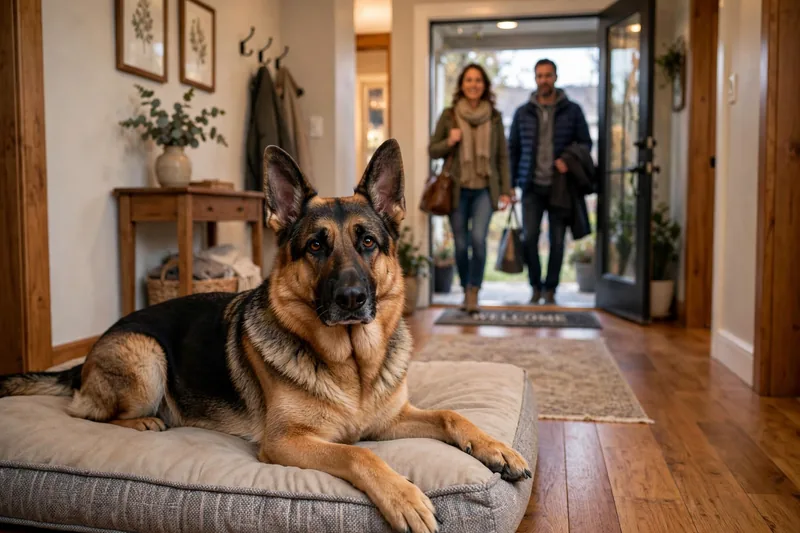
Guest safety: children, older visitors, and nervous guests
Children need extra care, because a large, friendly dog can still knock a small child over. Do not expect a child to run the training plan for you.
For children, manage first and train second. Keep your dog leashed or behind a gate until the child is seated, then allow a brief, supervised greeting.
For older visitors, keep your dog leashed or behind a barrier until the first excitement has passed. A calm, seated greeting is safer than a greeting at the door.
For nervous guests, keep their job simple: stay calm, wait for four paws on the floor, and greet quietly. If they flinch, your dog may jump more, so management matters here.
Consistency across the whole household
Jumping lasts longest when rules change from person to person. If one person allows jumping, your dog will keep trying it with everyone else too.
Agree on the same words, the same rule, and the same payoff in your household. Write the rule on the fridge if that helps everyone remember it.
Send guests a short script before they arrive. Try this: please ignore our dog until all four paws are on the floor, then greet him quietly.
If a guest breaks the rule, stay polite and reset calmly. Put your dog behind a gate, or on a leash, and try a shorter greeting once everyone is settled.
Greetings outside the home
Home training does not transfer outdoors on its own. Start with a calm friend on a quiet path, with your dog on a leash, and ask for a sit first.
Keep early outdoor greetings short and boring, then build up to busier places in small steps. If your dog cannot take treats or look at you, you are too close to the excitement.
The same calm greeting idea works for other breeds. Compare the Golden Retriever jumping guide and the Dachshund jumping guide for breed differences.
Mistakes that keep the jumping alive
| Mistake | Why it backfires | Do this instead |
|---|---|---|
| Pushing your dog down | Touch feels like attention, which is what jumping was for. | Turn away, go quiet, and reward four paws on the floor. |
| Shouting no or down | Loud attention can add excitement and still reward jumping. | Stay calm, reset, and ask for the trained greeting. |
| Letting guests make exceptions | One rewarded jump can undo many calm greetings. | Use a leash or gate, and keep the rule the same for everyone. |
| Training only at real arrivals | Real doorbells spike excitement past the learning point. | Rehearse with helpers in calm setups first. |
| Using shock or prong collars | They can add fear and stress, and teach no calm alternative. | Reward the greeting you want, and remove attention from jumping. |
Progress can stall, and jumping can briefly get worse before it gets better. Stay calm, go back to management, use easier helpers, and reward every calm choice.
When to get help from a vet or behavior professional
See your vet first if jumping started suddenly in a previously polite adult dog. Pain and medical causes can change behavior, and training alone will not fix those.
Ask a qualified, reward-based behavior professional for help if jumping comes with growling, snapping, stiff body language, or intense fear of visitors.
Get help sooner if your dog has bitten, guards the doorway, or cannot settle even with management. If steady work brings no improvement, individual guidance can help.
Frequently Asked Questions
How long does calm greeting training take?
It varies from dog to dog. Family greetings often improve first, while exciting real guests take longer. Steady practice and the same rule from everyone matter most.
What if my guests will not follow the plan?
You cannot control visitors, so control the situation. Use a leash, a place command, or a baby gate for the first few minutes, and greet guests with your dog behind a gate if needed.
Is it okay to push my dog down when he jumps?
No, it usually backfires. Pushing is physical contact, and contact can reward a dog who jumped for attention. Turn away, fold your arms, and reward the instant all four paws land.
Why does my dog jump on some guests and not others?
He jumps most on the people who excite him most, or who used to reward jumping. A rule learned in the kitchen may not transfer to the front door, so practise with different people.
Can an older German Shepherd still learn calm greetings?
Yes. Older dogs learn with the same method, and may need more repetitions to overwrite a longer habit. Keep sessions short, use high-value rewards, and ask for help if aggression appears.
Should I teach off instead of a sit?
Teach the sit, or four paws on the floor, instead. Off says what to stop, not what to do. A sit gives your dog a clear way to earn the greeting he wants.
Closing
A German Shepherd who greets guests with four paws on the floor is not a less friendly dog. He has simply learned a better way to say hello, and that makes visits easier for everyone.
For the wider picture, read the German Shepherd behavior problems guide, build a reliable call with the German Shepherd recall training guide, and fix walk control with the German Shepherd pulling on the leash guide.
Reference
American Kennel Club, “How to Stop a Dog From Jumping on People During Greetings”: https://www.akc.org/expert-advice/training/stop-dog-jumping/
Still stuck? Get a plan built for your dog.
Answer a few quick questions and get a personalized, force-free training plan in minutes.
Try the Free Dog Tools