10 Signs of Joint Pain in Senior Small Breed Dogs
Most dogs hide pain well, and small senior dogs are among the best at it. A change may be small at first. A slower first step, a pause before a jump, or a shorter walk can be the first clue.
This guide covers 10 signs to watch for, what each one can look like day to day, and what to do next. It gives general information only. It cannot diagnose your dog. Your vet can assess pain, sudden changes, and any medical cause.
Signs Joint Pain Senior Small Dogs: The Direct Answer
In short, signs joint pain senior small dogs show are often quiet changes, not loud cries. Watch for stiffness after rest, hesitation before jumping, shorter walks, limping, and mood changes. If a sign is sudden or severe, contact your vet.
Key Takeaways
- Dogs rarely cry out from joint pain. Subtle behavior changes are the real clues.
- Stiffness that is worst after rest and eases with gentle movement is a common pattern.
- A skipping gait on a hind leg can point to a slipping kneecap, a common small breed knee problem.
- Keep notes on when a sign started, what triggers it, and whether rest or movement helps.
- See your vet promptly for sudden inability to bear weight, severe pain, or a hot, swollen joint.
Why small senior dogs deserve a closer look
Joint trouble is often seen as a big dog issue, but small breeds have their own risks. A slipping kneecap is a common knee problem in toy and small breeds. Long backed breeds can have back problems that look like joint pain.
Small dogs are also easy to carry, lift, and help over obstacles. That help can hide a decline. Watch what your dog does on her own, without lifting or coaxing, to see the true pattern.
That is why signs joint pain senior small dogs show deserve a closer look, even when the change looks small. A small change in a small dog can still matter a lot.
The 10 signs joint pain senior small dogs may show
Use this list as a watch list, not a diagnosis. One sign alone may have many causes. A pattern, or several signs together, is a stronger reason to book a vet check.
| Sign | What you may notice |
|---|---|
| 1. Morning stiffness | Slow, short steps after rest, then loosening with movement |
| 2. Reluctance to jump | Pausing, whining, or asking to be lifted before a jump |
| 3. Shorter walks | Trailing behind, sitting down, or turning for home early |
| 4. Skipping gait | Hopping on one hind leg for a few steps, then walking normally |
| 5. Limping | A head bob, a careful paw placement, or favoring one leg |
| 6. Licking a joint | Repeated licking or chewing at one wrist, knee, or elbow |
| 7. Groaning | Groans or grunts when lying down or pushing up to stand |
| 8. Snapping or withdrawing | Flinching or moving away when hips, shoulders, or back are touched |
| 9. Muscle loss | Thinning over the thighs or hips compared with the other leg |
| 10. Stairs or squatting trouble | Hesitation on stairs, or straining and leaning to squat |
1. Morning stiffness and the warm-up shuffle
After a nap or a night of sleep, your dog may move slowly for the first few steps. Her legs may look stiff, and her steps may be short and careful. The gait often loosens as she moves.
Cold or damp weather may make the stiffness more obvious. Note whether it eases with gentle movement and returns after rest. Share that pattern with your vet.
2. Reluctance to jump onto furniture or into the car
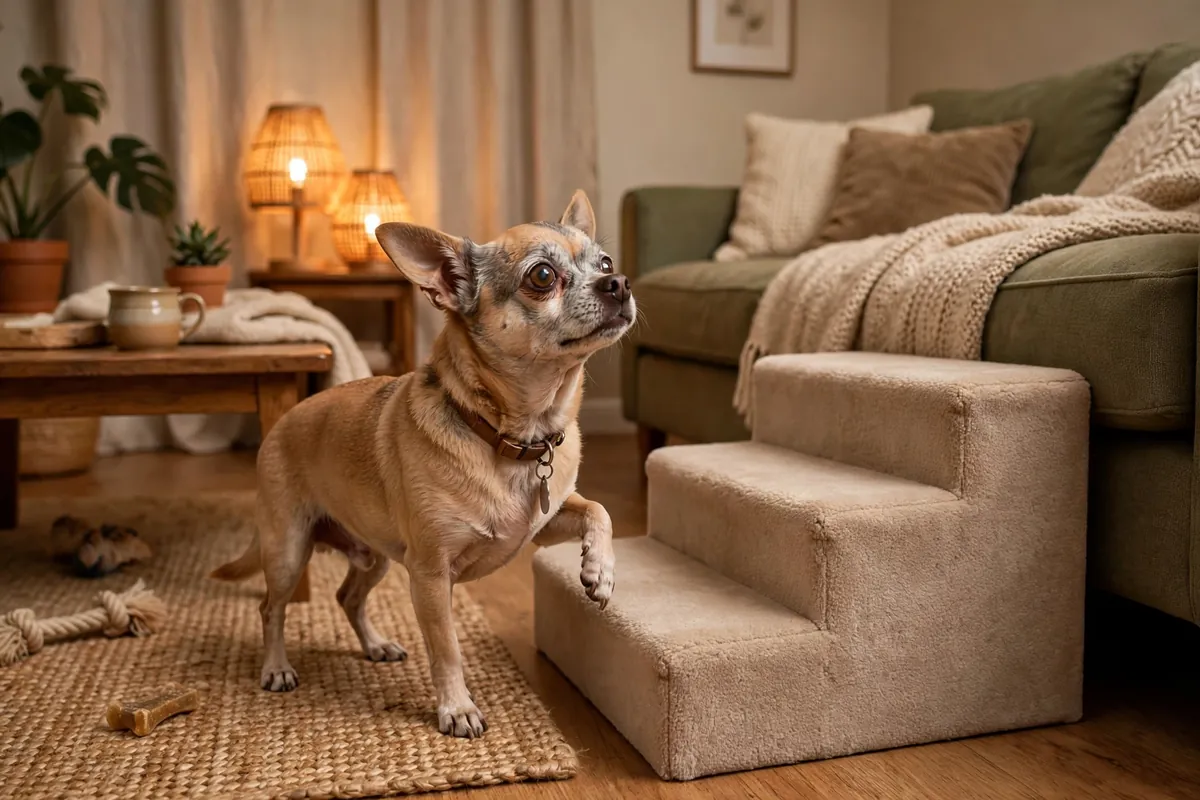
A senior who once jumped onto the sofa may now pause, look at you, or whine first. She may try once, fail, and stop trying. Jumping loads the hips, knees, and shoulders.
Use a ramp or steps instead of repeated jumping. Praise calm attempts, and do not force a jump. A new hesitation is information, not stubbornness.
3. Lagging behind or cutting walks short
Dogs who love walks do not shorten them for fun. If your senior trails behind, sits down halfway, or turns for home early, joint discomfort may be part of the picture.
Shorten walks to what she can do comfortably, and keep a calm pace. Note how far she goes before she slows, and tell your vet if the distance keeps shrinking.
4. The skipping gait: the luxating-patella clue
A dog with a slipping kneecap may suddenly hop or skip on one hind leg for a few steps, then return to normal. Some dogs kick the leg back, as if to settle it.
The skip often resolves quickly, so it is easy to dismiss. Repeated skipping still deserves a vet exam. Only a vet can tell what is causing the gait change.
5. Limping or favoring one leg
A small dog limp can be subtle. Look for a slight head bob, one paw placed more carefully, or a preference for turning one way. It may appear only after a longer walk.
Do not assume a limp is just arthritis. Paw injuries, nail problems, and ligament injuries can look similar. A dog who suddenly will not bear weight needs urgent vet care.
6. Licking or chewing at a joint
Dogs tend to their own sore spots. Persistent licking or chewing at one wrist, knee, or elbow may point to soreness underneath. It can leave a bald or reddened patch.
Point out the exact spot to your vet, sooner if the skin is broken. If itching is the main pattern, our guide to dog itchy skin home remedies may help you describe it, but it cannot diagnose the cause.
7. Groaning when lying down or getting up
A soft sigh when settling is normal. A groan, grunt, or sharp exhale as weight settles on the joints, or as your dog pushes up to stand, is different. Rising loads many joints at once.
A supportive bed in a warm, draft free spot can help comfort. Place it where your dog already likes to rest. Tell your vet if groaning becomes regular.
8. Snapping or withdrawing when touched
Joint pain can change mood. A dog who loved being lifted may snap, flinch, or move away when you touch her hips, shoulders, or back. This is communication, not misbehavior.
Use praise and calm handling only. Never punish a snap or withdrawal, and never use shock or prong collars. For pain or aggression, ask your vet or a qualified behavior professional.
9. Visible muscle loss in the hind legs
When a joint hurts, a dog may use that leg less, and muscle can waste with less use. Compare the hind legs with each other. Thinning over the thighs or hips is a visible clue.
Weak muscles support joints less, so pain and wasting can feed each other. Ask your vet about safe, controlled movement. Do not try to walk the weakness off on your own.
10. Trouble with stairs or squatting to toilet
Stairs ask a lot of small joints. Climbing loads hips and knees, and going down loads shoulders and elbows. Watch for hesitation at the top, or landing both paws together on each step.
Squatting can also be telling. A dog who strains, leans on a wall, or has accidents may be avoiding the crouch. Accidents linked to pain are not a house training failure.
Small-breed lookalikes: not everything is arthritis
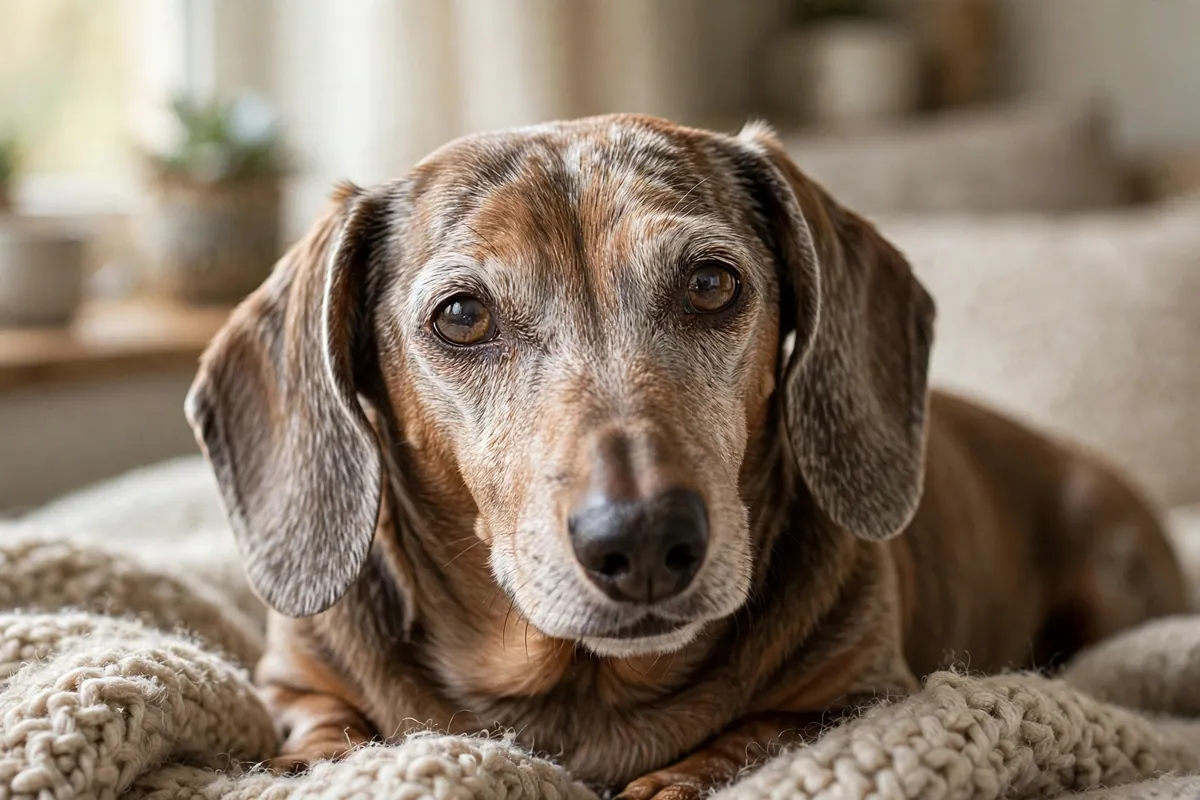
In long backed breeds like Dachshunds and Corgis, back problems can produce stiffness, reluctance to move, and even limping that looks like arthritis. The care can be very different.
A slipping kneecap also needs its own assessment, since it is managed differently from general joint soreness. A signs list tells you when to call the vet. It never gives a diagnosis.
If noisy breathing or coughing comes with these signs, note it separately. Our guide to French Bulldog breathing explains normal versus abnormal sounds, and our guide to dog coughing and gagging covers general signs to note.
When to see the vet about signs joint pain senior small dogs
Some signs can wait for a routine appointment. Others cannot. Use the lists below to judge urgency, and when in doubt, choose the prompt call.
Seek urgent vet care for
- Sudden inability to bear weight on a leg
- Sudden inability to walk
- Crying in pain, or severe pain when touched or moved
- A joint that feels hot or looks swollen
- Lameness that worsens rapidly over hours or a day
- Rapid decline, or a hunched back, wobbly hind legs, or dragging paws
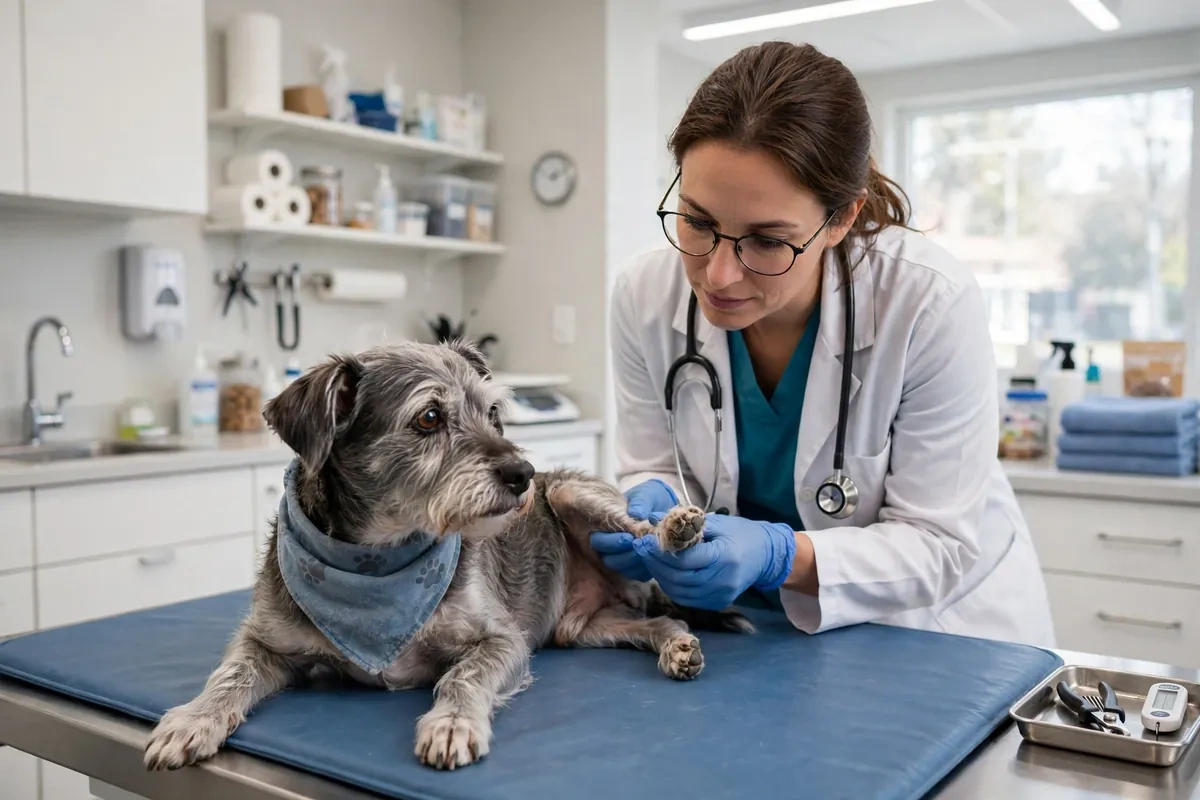
For gradual signs, such as morning stiffness, slower walks, or reluctance to jump, book a regular checkup. Bring notes on when each sign started, what triggers it, and whether rest or movement helps.
A short phone video of the skipping gait or morning shuffle can help your vet. Film safely, without forcing your dog to repeat a painful movement.
What you can do at home, in general terms
Home care is comfort care, not treatment. Keep your dog at a healthy weight for her frame, if your vet advises it. Extra weight adds load to sore joints.
- Use ramps or steps for furniture and cars, and non slip rugs on hard floors.
- Keep walks short, calm, and gentle, with rest breaks when she slows.
- Offer a supportive bed in a warm spot, and keep food, water, and toilet access easy.
- Keep a simple daily note of signs, walks, and rest.
Praise calm behavior, and keep sessions short and kind. Gentle movement, as your vet advises, can help many dogs stay mobile. Stop if she shows pain, and ask your vet.
What NOT to do
- Do not give human painkillers. Human medicines can be toxic to dogs, even in small amounts.
- Do not force exercise, jumping, or stairs when your dog is in pain.
- Do not borrow a dose from another dog’s prescription.
- Do not punish limping, groaning, snapping, or accidents. Use praise and calm redirection.
If you are unsure about a product, supplement, or new routine, ask your vet first. Only your vet can confirm the cause and what is safe for your dog.
Frequently Asked Questions
Can a dog live a happy life with joint pain?
Many can, especially when the problem is caught early. Weight care, gentle movement, vet guidance, and home comforts like ramps and supportive beds often restore a good quality of life.
Is the skipping gait always patellar luxation?
No. Skipping on a hind leg is a classic small breed sign of a slipping kneecap, but similar patterns can come from other knee or hip problems. A vet exam can confirm the cause.
My small dog only limps after long walks. Is that normal aging?
It is information, not just age. Limping that appears after exercise and fades with rest suggests something is bothering the joint. Shorten walks, and book a vet check.
How is patellar luxation graded?
Your vet can grade a slipping kneecap during an exam. The grade, with your dog’s pain and mobility, helps guide the next steps. Do not try to grade it at home.
Why does my senior dog groan when lying down?
Groaning on lying down or rising often reflects the effort of folding or loading sore joints. Occasional soft sighs are normal. Regular groaning with other signs is worth mentioning to your vet.
Are joint supplements enough without a vet visit?
No. A supplement never substitutes for diagnosis. Some dogs benefit from vet recommended support as part of a plan, but only your vet can confirm the cause and safety.
How should I track signs before a vet visit?
Note the date, the sign, the trigger, and whether rest or movement helped. Note appetite, sleep, and walk length too. A short video, filmed safely, can help your vet see the pattern.
The Bottom Line
Watch for signs joint pain senior small dogs show, note the pattern, and ask your vet about the next step. Small, steady comfort changes, gentle walks, and prompt vet care can help a senior small dog stay comfortable.
For related patterns, see our guides to dog coughing and gagging and dog itchy skin home remedies, and ask your vet about any change that worries you.
This article is for general information only and is not a substitute for professional veterinary advice, diagnosis, or treatment. Always ask your veterinarian about any questions concerning your dog’s health.
Reference
American Kennel Club, Osteoarthritis in Dogs: Signs, Symptoms, Treatments.
Still stuck? Get a plan built for your dog.
Answer a few quick questions and get a personalized, force-free training plan in minutes.
Try the Free Dog Tools