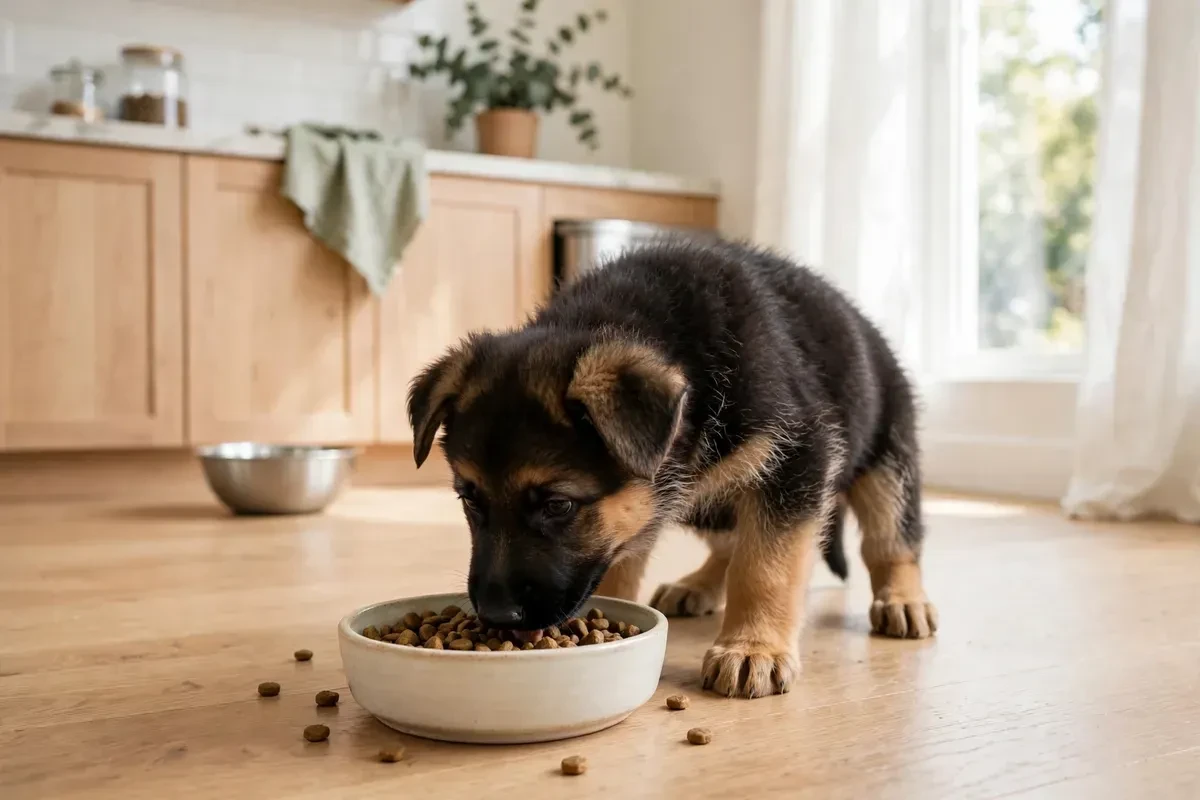
How Much to Feed a 3-Month-Old German Shepherd Puppy
A new German Shepherd puppy brings big questions at mealtimes, and portion size is usually first. Small stomachs, fast growth, and different kibble brands make one fixed number unhelpful. This guide gives a clear starting point, plus simple checks you can use every week.
When you are feeding 3-month-old German Shepherd puppies, aim for steady, small meals rather than one large bowl. Use the food label as your main guide, watch body shape, and ask your vet if anything worries you.
Key Takeaways
- Feeding 3-month-old German Shepherd puppies usually means three meals a day, spaced through the day.
- Start with a general daily range, then adjust it using your food label and your puppy’s body shape.
- Choose a large-breed puppy formula, not adult food, unless your vet advises a change.
- Keep treats small, so training food does not quietly replace balanced meals.
- Watch for lean body shape, steady growth, and normal stools, and call your vet about sudden changes.
- Never add calcium or other supplements unless your vet directs it.
Feeding 3-Month-Old German Shepherd: The Direct Answer
Feeding 3-month-old German Shepherd puppies is best kept simple: three meals a day, a large-breed puppy food, and an amount set by your food label. Many published guides describe a daily range, but your kibble’s calories decide what that range looks like in your bowl.
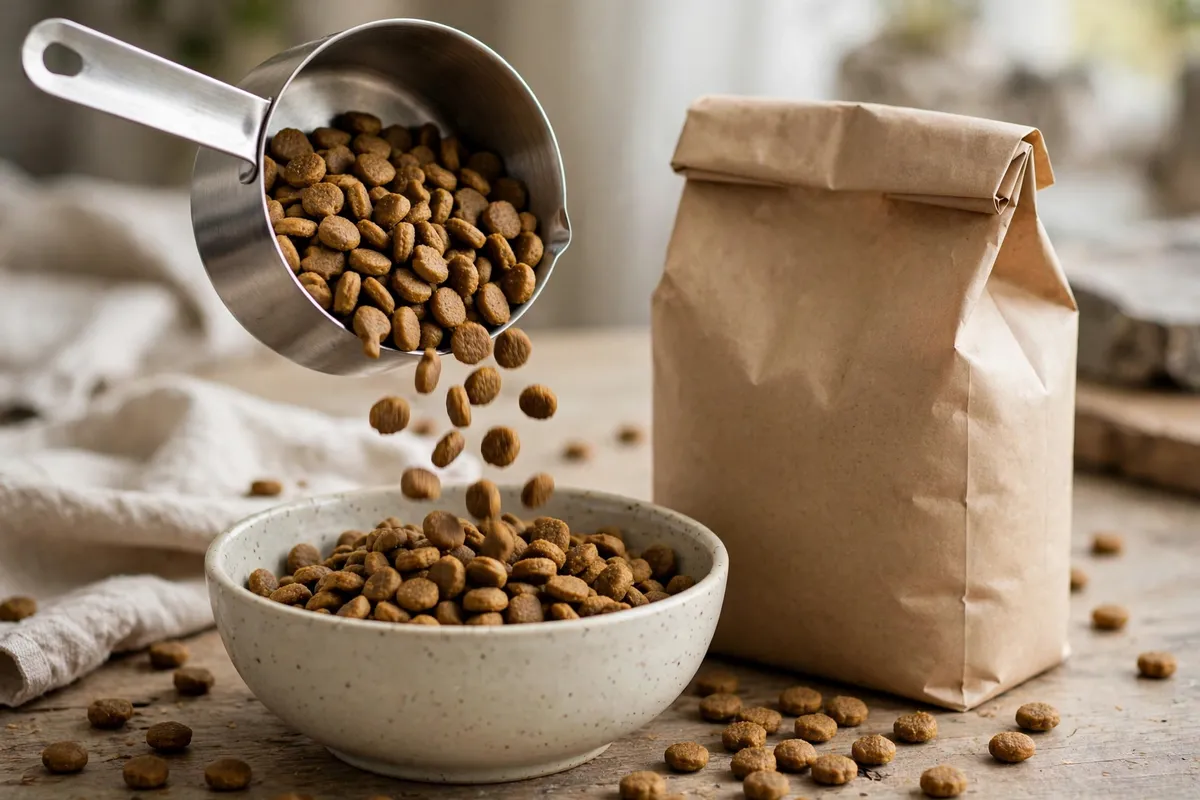
As a starting range, many published guides describe about 2 to 4 cups of large-breed puppy kibble per day, split across three meals. Treat this only as a ballpark, because kibble calories vary widely, and your vet and food label should shape the final amount.
That range is a starting point, not a diagnosis or a prescription for your puppy. If your puppy is losing weight, gaining fast, vomiting, or refusing food, contact your vet promptly for individual advice.
| At a glance | What to do |
|---|---|
| Meals per day | Three meals, spaced through the day |
| Food type | Large-breed puppy formula |
| Main portion guide | The chart on your food packaging |
| Key check | Body shape, stools, and vet visits |
Why 3-Month-Old Puppies Need Frequent Meals
At three months, puppies grow quickly but have small stomachs. Large, infrequent meals can leave a puppy uncomfortable, hungry between meals, or sick after eating too fast. Smaller meals spread energy more evenly through the day.
Frequent meals also support steadier digestion and a calmer routine. Regular times help you spot changes in appetite, stools, and energy sooner, because you know what normal looks like for your puppy.
How Often to Feed: The 3-Meal Schedule
For feeding 3-month-old German Shepherd puppies, three meals a day is a practical pattern at this age. Some puppies move from four meals to three during this period, so keep changes gradual and watch how your puppy responds.
| Meal | Example pattern |
|---|---|
| Morning | After the first potty break |
| Midday | Around midday, at a similar time each day |
| Evening | Several hours before bedtime, so a potty break can follow |
Keep times fairly steady, but do not worry if one meal shifts a little on a busy day. Consistency helps house training and digestion, yet a calm, flexible routine matters more than a perfect clock.
How to Use the Food Label for Portion Guidance
For feeding 3-month-old German Shepherd puppies, start with the chart on your food packaging, not with another brand’s chart. Find the row closest to your puppy’s current weight, then follow the daily amount for a large-breed puppy.
Divide that daily amount across three meals, and measure with the same cup or kitchen scale each time. Weighing food is often more accurate than scooping, because kibble size and density differ between brands.
- Weigh your puppy regularly and note the result for vet visits.
- Adjust only in small steps, and give a change several days before judging it.
- If the label range and your puppy’s body shape disagree, ask your vet which to follow.
Remember, a label gives a general guide for many puppies, not a tailored plan for yours. Activity, growth spurts, health, and the exact food all affect need, so vet checks remain the best way to fine-tune portions.
Food-Type Basics in General Terms
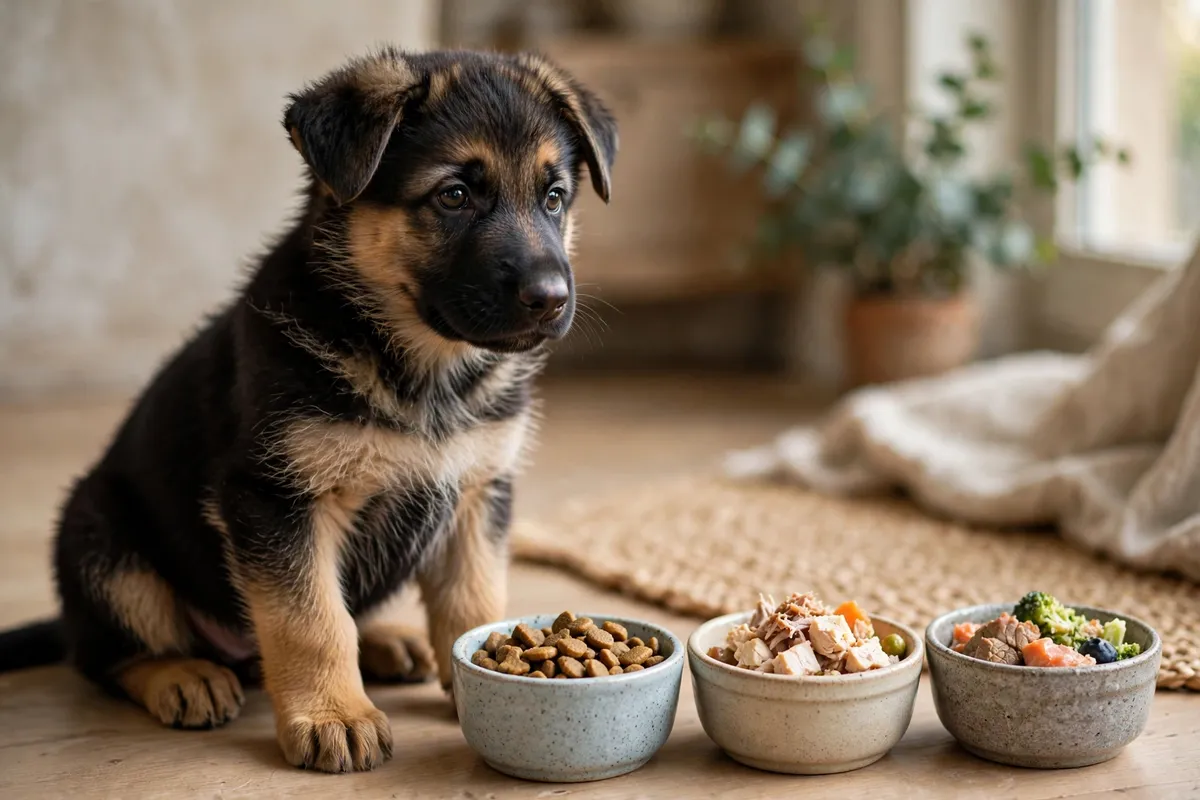
A large-breed puppy formula is the usual base at three months, because it is made for growth and for larger frames. Adult food is not a staple at this age without vet advice, since puppy needs differ from adult needs.
Dry kibble is a common choice, and wet food can also suit some puppies when it is a complete puppy food. If you mix types, keep the total daily amount in mind, and change foods gradually to avoid stomach upset.
- Choose a complete food labeled for puppies, ideally for large breeds.
- Avoid raw or homemade diets as a staple without vet guidance, since balance is hard to judge at home.
- Keep fresh water available at all times, and wash bowls daily.
Treats, table scraps, and chews are extras, not meal replacements. Keep the main diet balanced, and ask your vet before adding supplements, oils, or new foods on a regular basis.
Growth and Body-Condition Watching
German Shepherd puppies grow in bursts, so weight alone can mislead you on a single day. Look at shape, feel, energy, and stools together, and track changes over weeks rather than reacting to one weigh-in.
A lean puppy should have ribs that are easy to feel under a thin layer of fat, with a visible waist from above. If ribs are hard to feel, or if hip bones stand out sharply, ask your vet to check body condition.
| Check | What it may suggest | Next step |
|---|---|---|
| Ribs easy to feel, waist visible | Lean shape | Keep the current plan, and review it at vet visits |
| Ribs hidden under thick fat | Possibly too much food | Ask your vet before cutting meals sharply |
| Bones sharp, weight falling | Possibly too little food or illness | Contact your vet promptly |
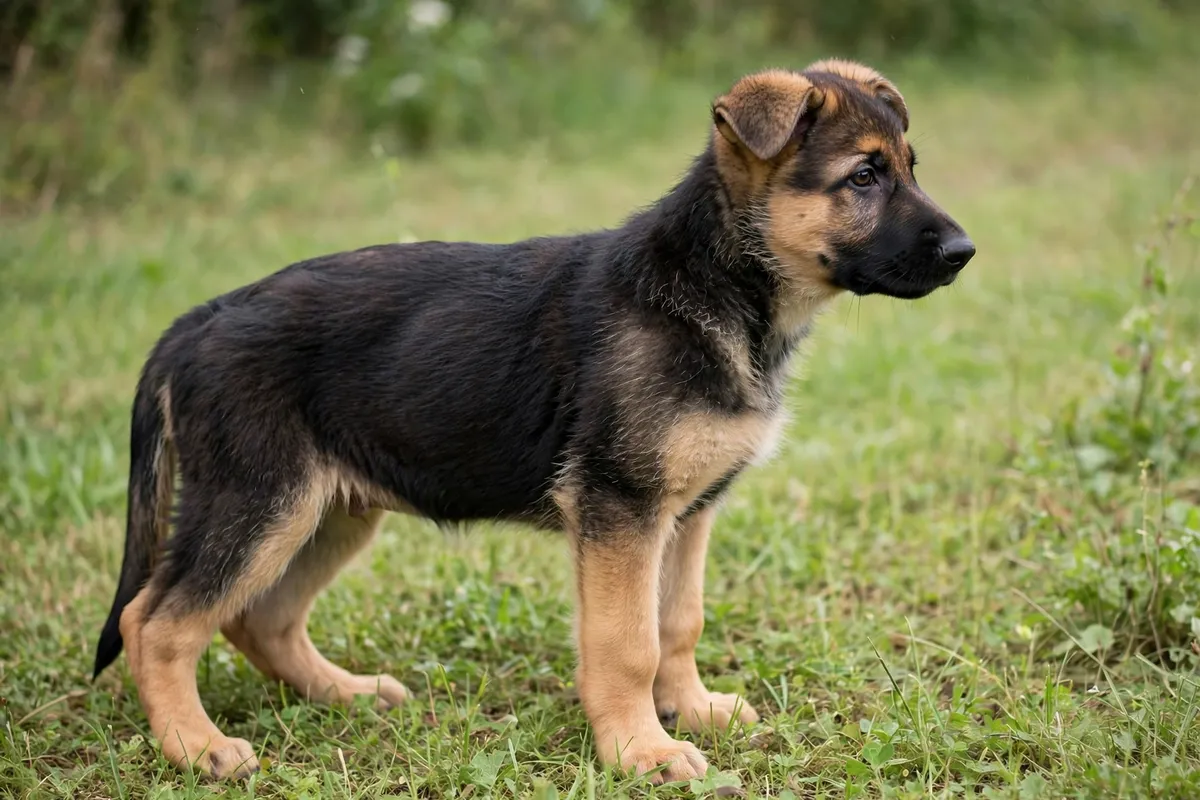
Keeping a puppy lean also helps growing joints. If joint signs ever worry you later, our guide to signs of joint pain in senior small dogs describes patterns to note, but it does not replace a vet exam.
Treats and Training-Food Balance
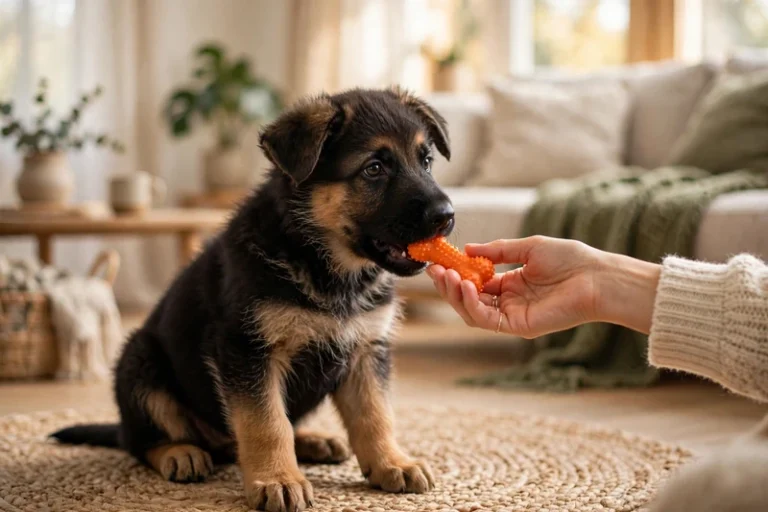
Training at this age often uses food rewards, and those calories count. Use tiny, soft treats, break larger treats into small pieces, and praise calm behavior with kind words and gentle play as well.
If you use many treats in a training session, reduce the next meal slightly, rather than skipping it entirely. Keep a simple note of treats on heavy training days, so you can spot why appetite or stools changed.
- Use treats as a small part of the day, not a second meal.
- Avoid giving food for begging, and keep human food out of the routine.
- Use praise and calm redirection for unwanted behavior, never punishment.
What NOT to Do
- Do not use adult food as a staple without vet advice.
- Do not overfeed to try to grow a puppy bigger faster.
- Do not add calcium or supplements unless your vet directs it.
- Do not leave food down all day, and do not force a puppy to finish a bowl.
- Do not use dominance or alpha framing, and never use shock or prong collars.
- Do not change foods suddenly, and do not guess at a medical cause for appetite changes.
If a feeding rule sounds like a shortcut to faster growth, treat it with caution. Steady growth, lean body shape, and vet guidance matter more than size at any single age.
When Feeding Concerns Need Vet Attention
Contact your vet promptly if your puppy vomits repeatedly, has diarrhea, refuses food, loses weight, or seems weak or in pain. Sudden appetite changes can have many causes, and only an exam can sort them out.
Also seek vet help for coughing or gagging while eating, noisy or hard breathing, or a swollen belly. Our guide to dog coughing and gagging explains signs to note, and our guide to French Bulldog breathing explains normal versus abnormal sounds in that breed.
- Vomiting or diarrhea that repeats, or blood in vomit or stools.
- Refusal to eat for a full day, or drinking far less than usual.
- Sudden weight loss, bloating, pain, or trouble breathing.
- Pain, a sudden behavior change, or aggression when handled. Ask your vet or a qualified behavior professional.
Frequently Asked Questions
Can I feed my 3-month-old German Shepherd puppy adult dog food?
No, not as a staple without vet advice. A large-breed puppy formula is made for growth, while adult food may not match a growing puppy’s needs. If cost or supply is a problem, ask your vet for a suitable puppy option.
My puppy always seems hungry. Should I feed more?
Not automatically. Puppies often act hungry, and breed, growth, and routine all affect appetite. Check body shape and the food label first, then ask your vet before raising the daily amount.
Should I add calcium or other supplements?
No, unless your vet directs it. A complete large-breed puppy food already balances minerals for growth, and extra calcium can harm growing bones. Bring any supplement question to a vet visit.
The food label does not match the general range. Which should I follow?
Follow the label for your exact food, then check body shape. Kibble calories differ by brand, so a general range cannot replace the chart made for your food. Ask your vet if the two disagree sharply.
How do I know if my puppy is at a healthy weight?
Use look and feel together. Ribs should be easy to feel, a waist should show from above, and growth should be steady over weeks. Your vet can confirm body condition at routine checkups.
How many treats can I give between meals?
Keep treats small and occasional, and count them as part of the day’s food. Tiny training pieces work well, and a short calm session with praise often teaches as much as a large reward.
The Bottom Line
Feeding 3-month-old German Shepherd puppies well does not need a perfect number. It needs three steady meals, a large-breed puppy food, label guidance, and regular body-shape checks.
Start with the label, keep treats small, praise calm behavior, and ask your vet about any change that worries you. That steady approach gives a growing puppy the best chance to grow lean and strong.
Reference
American Kennel Club, Puppy Feeding Fundamentals.
Still stuck? Get a plan built for your dog.
Answer a few quick questions and get a personalized, force-free training plan in minutes.
Try the Free Dog Tools