German Shepherd Crying in the Crate: How to Help
It is 2 a.m., the whimpering starts again from the crate, and you are wide awake wondering what you are doing wrong. You are not alone, and your dog is not being difficult on purpose.
A German Shepherd crying in the crate is usually communicating a need, a feeling, or a lack of training so far. Once you learn to read that message, you can respond in a way that helps your dog settle.
Key Takeaways
- Crying in the crate means something: a physical need, loneliness, fear of the crate, boredom, or a habit that worked before.
- Rule out physical needs first, every time. Never leave a dog to cry for the toilet.
- Build positive crate associations during the day with meals, treats, and calm praise, with the door open at first.
- Keep nights low-key and boring, with the crate near your bed for the first few nights.
- Reward quiet moments. Wait for a brief pause before opening the door.
- Never punish crying and never use a bark collar. A panicking dog should not be crated; talk to your vet or a qualified behavior professional.
German Shepherd Crying in the Crate: The Direct Answer
A German Shepherd crying in the crate at night is usually asking for help, not testing you. Check for a toilet need, discomfort, loneliness, or fear first, then work on calm daytime crate training.
Start tonight with a calm routine, a crate near your bed, and a boring toilet break if one is needed. During the day, build positive crate time in short, rewarded steps so bedtime feels familiar.
Do not punish the crying, and do not use a shock, spray, or vibration collar. Those tools suppress sound without solving distress, and they can make fear worse.
Why It Happens
They need something physical. This is the most common reason. Young puppies have small bladders and may need to go out at night.
Hunger, thirst, heat, cold, or an uncomfortable crate can also cause crying. Check the basics before you assume it is a training problem.
Loneliness. German Shepherds bond intensely with their people. A closed crate in a dark, distant room can feel like isolation to a social dog.
This is common in the first days in a new home. Your dog has lost familiar people, smells, and routines, and the crate can feel like another loss.
The crate feels scary. A dog shut inside on day one, with no warm-up, can learn to fear the box itself. Look for hesitation at the door, freezing, or trying to back out.
Fear can also follow a bad experience, such as being left too long or being crated only when the family leaves. The crate then predicts loneliness.
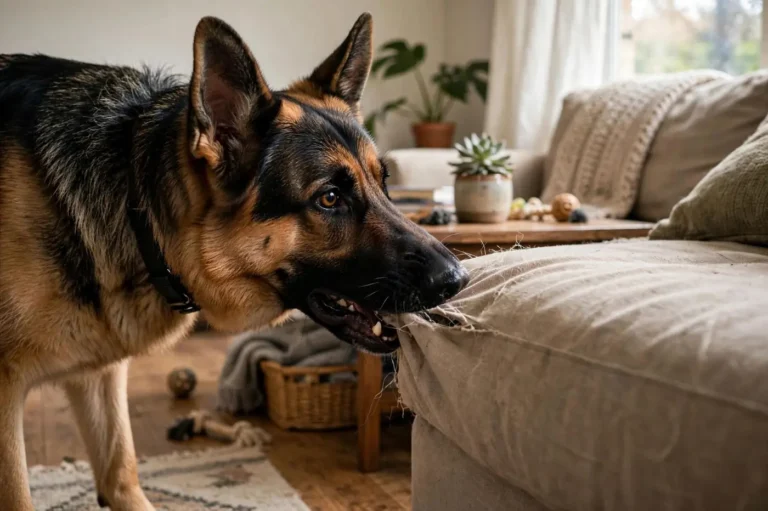
Boredom. German Shepherds are working dogs with busy brains. Crying during the day, with restlessness, often points to too little exercise, play, or mental work.
A tired body helps, but a tired brain matters just as much. Short training games, sniffing walks, and food puzzles can change daytime behavior.
It worked before. Dogs repeat what gets results. If crying previously brought someone running, your dog learned that crying works, even if that was not your intention.
This does not make your dog manipulative. It means the behavior was rewarded, so you need to reward a different behavior instead: calm and quiet.
Pain or illness. A dog that crated happily and suddenly starts crying needs a vet visit, not a training plan. Pain, urinary problems, stomach upset, and anxiety can all show up at night.
Sudden changes in an adult or senior dog always deserve a medical check first. Training cannot fix a sore joint or a bladder problem.
Is Some Crying Normal?
A little protest whining in the first few days is normal, especially in puppies adjusting to a new home. The key is the pattern, not one single sound.
- Soft whimpering that fades within 10 to 20 minutes is usually adjustment. Stay calm and let your dog figure it out.
- Crying after a stretch of quiet sleep often means a toilet need. Take it seriously, especially with a puppy.
- Crying that escalates, with heavy panting, drooling, or throwing themselves at the crate, is panic, not adjustment. Open the door and rethink the plan.
A panicking dog is learning to fear the crate. Forcing them to stay in it will not teach calm, and it can lead to injury.
Read the Cry Before You Respond
Use this table for a few nights before you change anything else. A pattern usually points to the cause faster than guessing.
| What you notice | What it may mean | What to do first |
|---|---|---|
| Soft whining right after bedtime, then settling | Adjustment or mild protest | Stay calm, keep the room dark and quiet |
| Crying after quiet sleep, circling or restlessness | Toilet need | Take them out on a leash, keep it boring |
| Escalating panic, panting, drooling, scratching at the door | Fear or panic | Open the door, stop closed-crate use, get help |
| Crying only during the day, with restlessness | Boredom or too-long crate time | More exercise, enrichment, and shorter crate periods |
| Sudden crying in a dog that was settled | Pain, illness, or a big change | Book a vet check before training |
Keep a short note each night: the time, what happened before, and what helped. After three nights, the pattern is usually clear.
What to Do Tonight
Move the crate next to your bed. For the first few nights, your dog should hear and smell you nearby. This single change cuts nighttime crying for many dogs.
Run a calm bedtime routine. Final toilet break, then dim lights, gentle petting, and a safe chew in the crate for the last part of the evening.
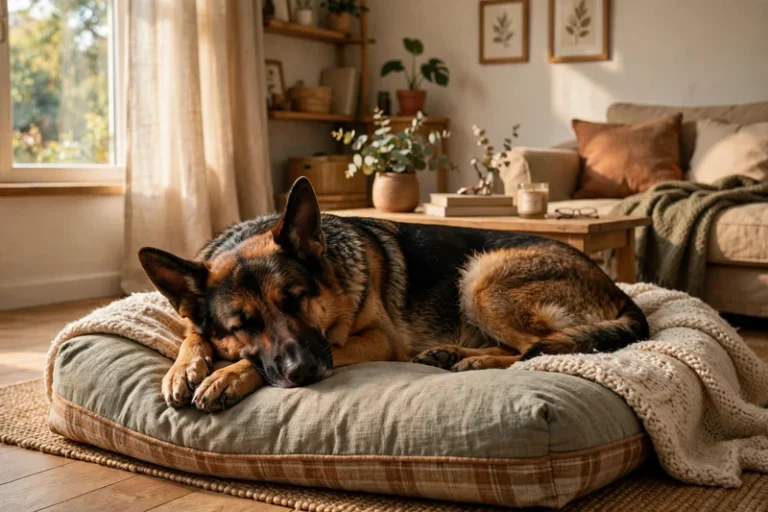
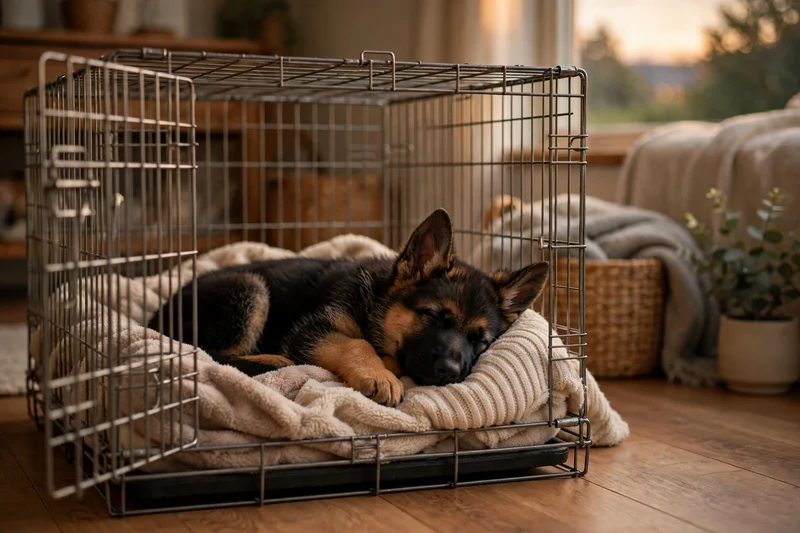
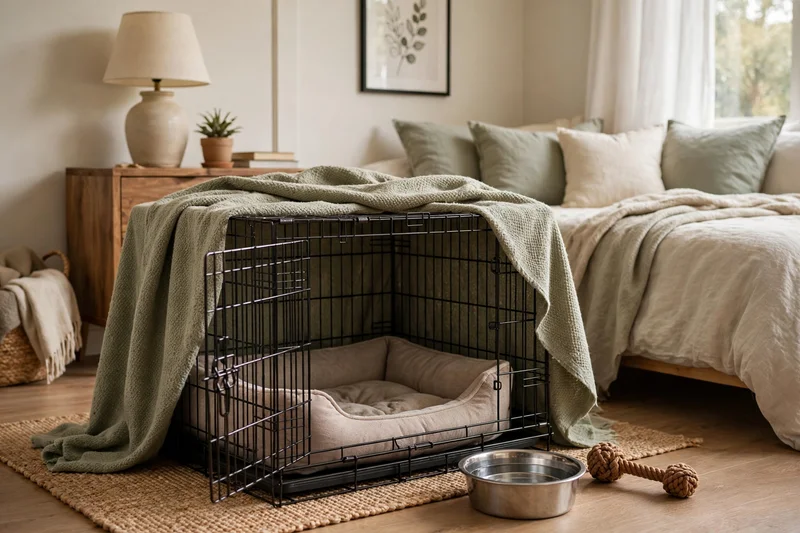
Make it den-like. Soft bedding, a blanket draped over the top and sides with the front open for airflow, and something that smells like you can help.
Respond to needs, not noise. If your dog cries, consider the toilet first, especially with a puppy. Leash up, go outside, keep it boring, and return straight to bed.
Keep your own energy low. Be quiet and matter-of-fact at 3 a.m. Long soothing sessions teach your dog that nighttime is social time.
Wait for a pause. If you need to open the door and no toilet need is involved, wait for the briefest pause, even two seconds. Then open calmly and reward the quiet moment.
German Shepherd Crying in the Crate: The 7-Day Calm Plan
The lasting fix is built during the day. Work through this plan alongside the nighttime steps, and move at your dog’s pace.
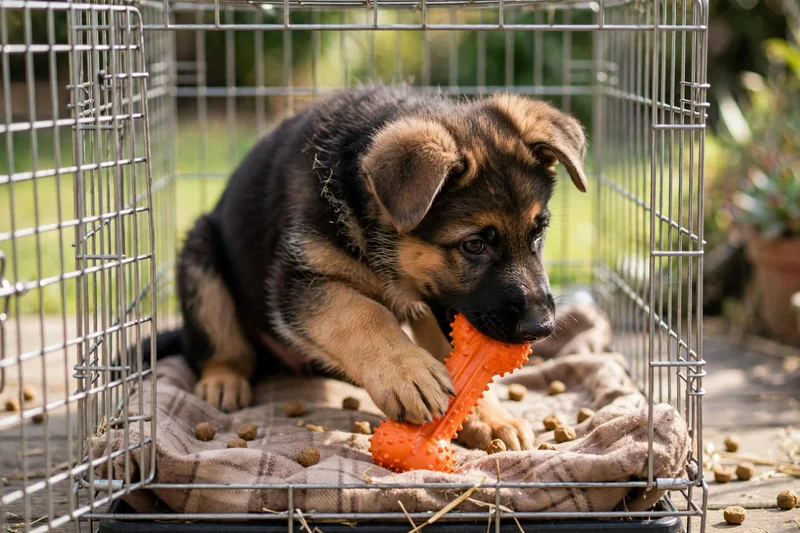
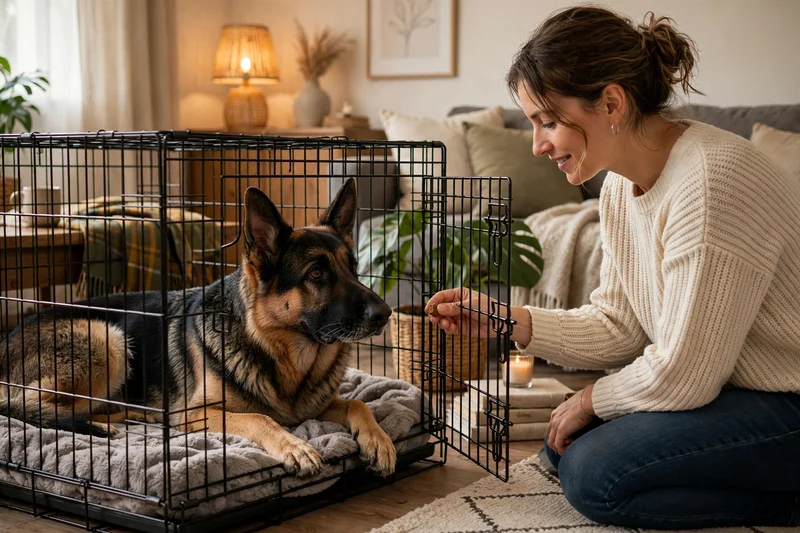
Days 1 to 2: make the crate the treat spot. Keep the door open all day. Scatter treats inside and feed meals in the crate. Do not close the door yet.
Let your dog walk in and out freely. Every visit should end with something good, so the crate starts to mean good things.
Days 3 to 4: short closed-door sessions. While your dog eats a meal or a stuffed toy inside, close the door for a few minutes with you sitting nearby.
Open the door before your dog starts to cry, and praise calm behavior. Short and successful beats long and stressful every time.
Days 5 to 6: practice leaving the room. Close the door, step out of sight for a few seconds, and return before crying starts. Build up to several minutes.
Vary the time you are gone. Sometimes return after ten seconds, sometimes after a minute, so your dog cannot predict a long absence.
Day 7 onward: link it to the night. By now the crate carries enough positive history that bedtime feels familiar. Keep feeding in the crate and keep nights calm.
If progress stalls, go back a step. A dog that can handle two minutes calmly is learning, even if they cannot yet handle twenty.
Getting the Crate Setup Right
- Size. An adult German Shepherd needs a crate around 42 to 48 inches long, with room to stand, turn around, and lie stretched out.
- Location. Start in or near your bedroom so the dog is not isolated. Move it gradually once they settle.
- Cover. A blanket over the top and sides creates a den-like feel and cuts visual stimulation. Keep airflow good and the front open.
- Bedding. A washable bed or thick blanket beats a hard tray, especially for a dog that needs to settle and sleep.
- Daytime limits. Puppies should not be crated more than an hour or two at a stretch, and no dog should spend most of the day in a crate.
Night Potty Breaks: When to Get Up
Very young puppies often need one or two toilet breaks at night. Most manage longer stretches as they grow, but every puppy is different.
First, go by timing, not just by sound. For the first week or two, set an alarm and take your puppy out before they wake up crying.
Then gradually stretch the gap. This teaches your puppy that toilet breaks happen on a schedule, not only after crying.
Second, learn the two cries. Potty crying usually starts after quiet sleep and sounds urgent. Protest crying usually starts the moment the door closes.
If you open the door mid-cry, wait for the briefest pause first, even two seconds. Then leash up, stay boring, and go straight back to bed.
Puppies, Adults, and Rescue Dogs
Puppies need patience, frequent toilet breaks, and short crate sessions. Their bladders and brains are still developing, so progress will not be a straight line.
Adults with a sudden change need a vet check first. A settled adult that starts crying is telling you something changed, and pain is a common cause.
Rescue dogs may need extra time. A new home, new people, and new routines are a lot at once, so keep the first weeks calm and predictable.
Senior dogs may struggle with stiffness, weaker bladders, or confusion at night. Adjust expectations, add a late toilet break, and talk to your vet.
What Not to Do
- Do not punish the crying. Scolding or banging on the crate increases fear, which is usually the root of the problem.
- Do not use a bark collar or any shock, spray, or vibration collar. Suppressing the sound does nothing about the distress behind it.
- Do not rely on “cry it out” alone. Waiting out mild fussing is fine; leaving a distressed dog to scream teaches them the crate is frightening.
- Do not open the door at peak crying. That teaches persistence pays. Wait for a pause, however brief.
- Do not skip the daytime work. The crate will never feel good at night if the dog’s only experience of it is being shut in and left alone.
- Do not make departures dramatic. Keep comings and goings boring, so leaving does not become a big event.
When to Get Professional Help
Most crate crying improves with the plan above. Talk to your veterinarian or a qualified, force-free behavior professional if crying is severe, escalating, or not improving.
If a German Shepherd crying in the crate panics, injures themselves, or cannot settle at any duration, stop using the closed crate while you work on the problem. A puppy-proofed room or exercise pen is a safer option for now.
If distress happens whenever you leave, not just in the crate, read our German Shepherd separation anxiety when left alone guide for a gradual alone-time plan.
Also seek help promptly for sudden changes, signs of pain, aggression, or any behavior that worries you. Early help is easier than fixing a deep fear later.
Frequently Asked Questions
Should I let my German Shepherd cry it out in the crate?
Brief, mild fussing when all needs are met is usually fine to wait out. Most puppies settle within a short time once they feel safe.
Do not let a panicking dog cry it out. Heavy panting, drooling, or throwing themselves at the crate means you should open the door and change the plan.
How long until a puppy stops crying in the crate?
With consistent daytime training and a good nighttime routine, most puppies improve noticeably within one to two weeks. Some take longer, and that is normal.
Judge progress by the trend, not one night. Shorter crying, faster settling, and calmer days all count as progress.
Should the crate be in my bedroom?
For at least the first few nights, yes. Hearing and smelling you nearby is the fastest way to cut nighttime loneliness for most dogs.
Once your dog settles well, you can move the crate gradually, a short distance at a time, if you want it elsewhere.
Why does my German Shepherd only cry in the crate during the day?
Usually boredom, under-exercise, or too-long crate stretches. German Shepherds need daily exercise, mental work, and company to settle well.
Shorten crate periods, add enrichment before crating, and build up alone time in small, rewarded steps during the day.
What size crate does a German Shepherd need?
Around 42 to 48 inches long for an adult, with room to stand, turn around, and lie stretched out. For a growing puppy, use a divider to keep the space snug.
Too much space can encourage toileting in one corner, while too little space is uncomfortable and can increase restlessness.
The Quiet Crate Is Built, Not Bought
A German Shepherd crying in the crate is not giving you a hard time; they are having a hard time. Meet the need first, train calmly during the day, and keep nights boring.
For the wider picture, read our complete German Shepherd behavior guide, and if noise continues after bedtime, see our guide to stopping barking at night.
Reference
Reference: American Kennel Club, “Everything You Need to Know About Crate Training Your Dog”: https://www.akc.org/expert-advice/training/how-to-crate-train-dog/
Still stuck? Get a plan built for your dog.
Answer a few quick questions and get a personalized, force-free training plan in minutes.