German Shepherd Separation Anxiety When Left Alone
You leave for twenty minutes and come home to scratched paint around the door frame. Your German Shepherd looks like they have been through a storm.
German shepherd separation anxiety when left alone is panic, not disobedience. Your dog is not punishing you for leaving. They are frightened, and fear needs a different response than correction.
The good news is that this problem is treatable. It takes a gradual plan, not a quick fix, and some dogs genuinely need a vet or a specialist involved.
Key Takeaways
- Separation anxiety is panic, not spite or bad manners. Punishing it always makes things worse.
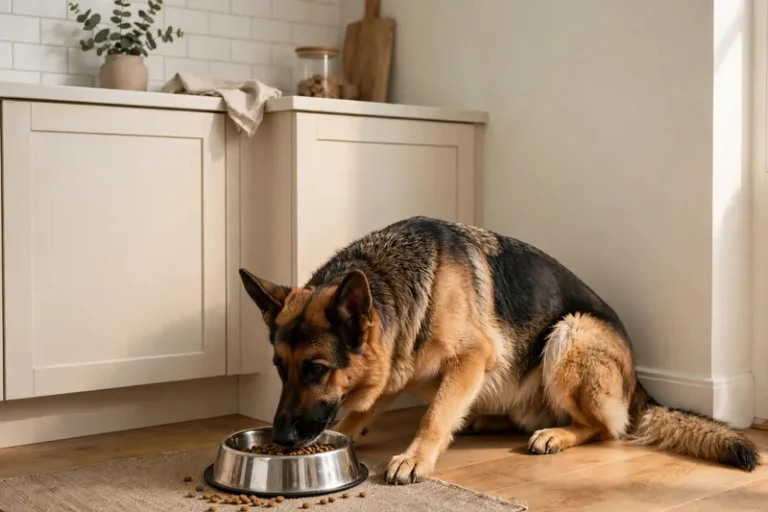
- True separation anxiety differs from boredom: distress starts within minutes, damage centers on exit points, and the dog often will not eat while you are gone.
- The treatment is gradual desensitization with counter-conditioning, keeping every departure under your dog’s panic threshold.
- Set up a camera so you know what is actually happening when you leave. Guessing wastes weeks.
- If your dog injures themselves, panics at any duration, or makes no progress after weeks of consistent work, involve your vet and a Certified Separation Anxiety Trainer (CSAT).
German Shepherd Separation Anxiety When Left Alone: The Direct Answer
German shepherd separation anxiety when left alone means your dog panics when separated from you. Signs include howling, pacing, drooling, escape attempts, and toileting indoors despite being house-trained.
The fix is gradual training, not punishment. You teach your dog, in tiny steps, that departures are safe and that you always come back.
Start with a camera, rule out medical causes with your vet, then work through short, calm absences. Most dogs improve over weeks to months, and severe cases need professional help.
Is It Anxiety, Boredom, or Something Else?
The fix for a bored German Shepherd is completely different from the fix for a panicking one. Boredom builds over hours. True separation anxiety starts within minutes of your departure.
| Clue | True separation anxiety | Plain boredom |
|---|---|---|
| When it starts | Within minutes of leaving | After hours with nothing to do |
| Destruction | Focused on exit points: doors, windows, crate | Random: remote, trash, whatever looks interesting |
| Vocalizing | Howling, whining, high-pitched distress barking, often nonstop | Intermittent barking at sounds or passersby |
| Toileting | House-trained dog has accidents, often right after a walk | Usually holds it; accidents point to a schedule issue |
| Food and toys | Often ignored or untouched while you are gone | Devoured happily |
| When you are home | Velcro behavior, follows you room to room | Relaxes normally when you are around |
Other problems can look like separation anxiety, so check these before you assume it. Incomplete house-training causes accidents at any time, not only when you are out.
Urine marking, excitement urination, and medical toileting problems also cause indoor accidents. A young dog chewing is often normal teething or exploration, not panic.
Barking at sights and sounds outside the window is a different problem too. If the behavior also happens while you are home, separation anxiety is less likely.
Drooling, panting when it is not hot, pacing, or trembling are all stress signals. The most reliable way to know which problem you have is video, not guesswork.
Set Up a Camera Before You Change Anything
Watch the first thirty minutes after you leave on a cheap camera or an old phone. An anxious dog shows distress almost immediately. A bored dog usually naps first and gets creative later.
Record the time of the first stress signal, what it was, and how long it lasted. Note whether your dog eats, drinks, rests, or stays in distress the whole time.
This log does three jobs for you. It tells you whether you are treating anxiety or boredom. It shows whether your training is working. It also gives your vet or trainer real evidence instead of a description.
If barking is your main symptom, read our German Shepherd barking when left alone guide. If destruction is the main problem, read our German Shepherd destructive when left alone guide.
Why German Shepherds Take Being Left Alone So Hard
German Shepherds were bred to work in close partnership with a handler, staying tuned in for hours. That intensity makes them brilliant working dogs, and it is exactly what makes solitude hard for them.
Many live up to the “velcro dog” reputation, shadowing you from room to room. That closeness is a breed trait, not a training failure on your part.
Certain dogs are more vulnerable. Rehomed and rescue dogs are especially prone, since abrupt changes shake their sense of security.
Dogs between about eighteen months and three years who go through a sudden schedule change are also at higher risk. A new job, a move, or a family member leaving can all trigger it.
Separation anxiety is not caused by spoiling your dog. It is shaped by genetics, early environment, and life changes, and none of those mean you caused it.
For the bigger picture across the breed, see our complete German Shepherd behavior problems guide. It puts alone-time panic in context with the breed’s other common problems.
The Training Plan for German Shepherd Separation Anxiety When Left Alone
This protocol uses desensitization and counter-conditioning, the approach veterinary behaviorists recommend. You teach your dog that departures predict good things, in steps too small to trigger panic.
Work the phases in order, and do not skip ahead. A dog that can handle phase 2 is not ready for a full workday. Patience here saves months later.
Phase 1: Build calm independence at home (weeks 1 to 2)
Before practicing leaving the house, teach your dog that distance from you is boring, not scary. Quietly praise or treat your dog for lying calmly on their bed while you move around the house.
Teach a “place” cue: go to a mat or bed and relax there, starting with you nearby and gradually adding distance. Practice indoor separations: step into another room for ten seconds, return calmly, repeat.
Add enrichment: a frozen stuffed Kong, a snuffle mat, or a long-lasting chew. Do not worry if an anxious dog ignores food toys at first. Appetite usually returns as anxiety eases.
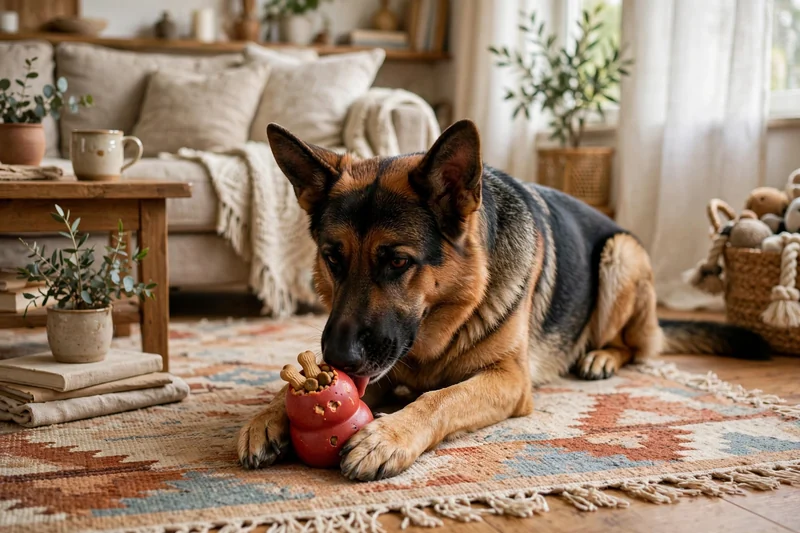
Exercise before training sessions, since a tired German Shepherd learns far better than a wired one. A walk plus a short scent game works better than exhausting your dog.
Phase 2: Desensitize your departure cues (weeks 2 to 3)
Your dog has learned that keys, shoes, a coat, or a bag mean you are about to vanish. Undo that association. Note which actions make them tense, then practice those cues without leaving.
Pick up your keys, then make dinner. Put on your coat, then sit on the couch. Do five to ten reps, several times a day, until the cues stop predicting anything.
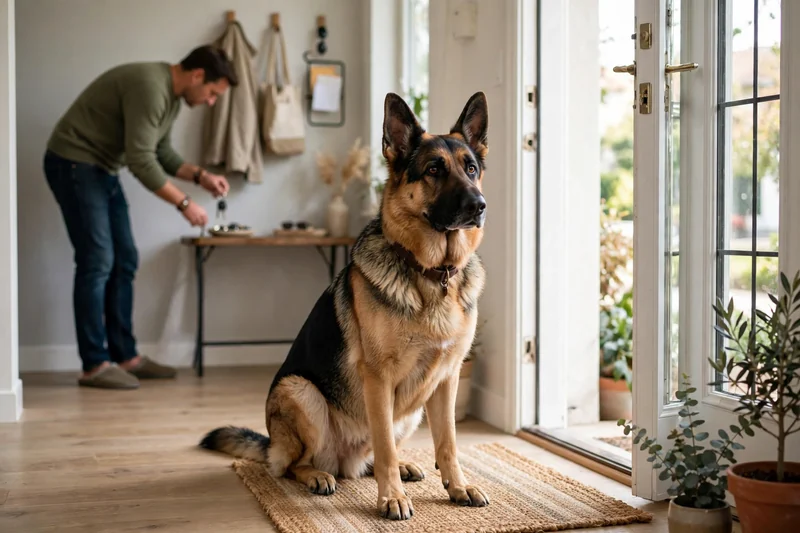
Keep a special high-value treat that appears only around departures. This helps your dog start looking forward to the signs you are leaving. Keep comings and goings boring.
Avoid big goodbye rituals and dramatic homecomings. Calm exits teach your dog that departures are no big deal, while fuss teaches the opposite.
Phase 3: Graduated absences (weeks 3 to 6)
Now practice actual leaving, starting at a duration your dog can already handle calmly. For many dogs, that is thirty seconds to a few minutes. Leave, then return before panic starts.
Repeat three to five short sessions a day on days you are home. Vary the durations: thirty seconds, two minutes, one minute, five minutes. Unpredictability keeps your dog from bracing for the long one.
Video every session and watch for stress signals: panting when it is not hot, drooling, whining, pacing. If you see them, you went too far. Drop back to the last duration your dog handled well and rebuild.
Never push past the point where your dog stays calm. Progress is not linear, and off days happen. A setback is information, not failure, so adjust and keep going.
Phase 4: Real-life departures (ongoing)
Once your dog is calm through thirty to sixty minutes in training, use the same formula for real departures. Exercise beforehand, a calm routine, the same cues, an enrichment toy, and a quiet exit.
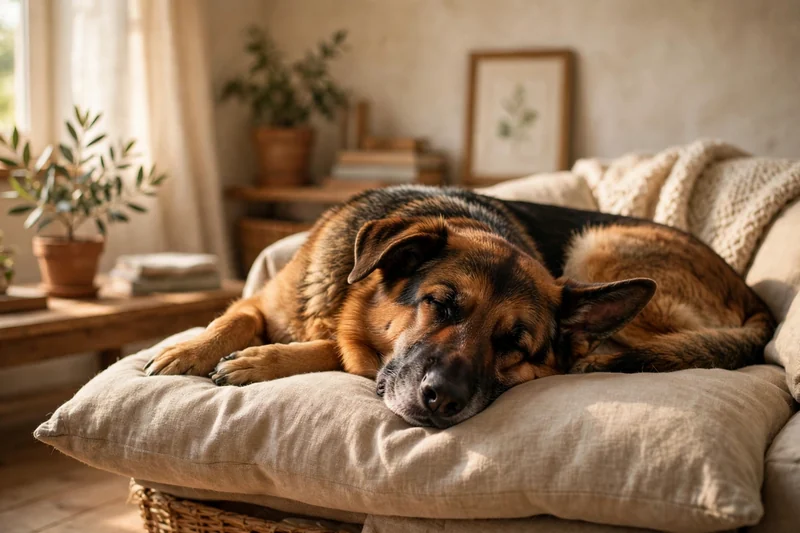
During training, every real absence should stay under your dog’s panic threshold. Arrange company on workdays, such as a sitter, daycare, or staggered schedules with family.
One eight-hour day can undo a week of careful five-minute reps. Extend proven durations gradually, and only when the camera shows your dog truly settled.
A Calm Daily Routine While You Train
A predictable day lowers anxiety because your dog knows what comes next. Use this shape on training days, and keep weekends close to the same pattern.
| Time of day | What to do |
|---|---|
| Morning | Walk and a short scent game, then breakfast and a calm settle on the mat |
| Before practice | A brief play or training session, then a quiet wind-down, not wild play |
| Practice sessions | Three to five short absences, filmed, always under the panic threshold |
| Midday | Enrichment toy or chew, a rest period, and company if you must be out long |
| Evening | A second walk, dinner, relaxed family time, and a calm bedtime routine |
Keep departure cues low-key all day, not only in sessions. Pick up your keys at random times without leaving, so keys stop meaning panic.
Does Crating Help?
Sometimes, and sometimes it makes things worse. Some dogs settle in a crate and treat it as a safe den. Others panic and injure themselves trying to escape.
Never crate a panicking dog all day as a containment solution. Confinement can escalate panic into injury: broken teeth, torn nails, and bloodied paws are all real risks.
Test the crate with a camera first. Leave the door open at first, reward calm crate time, and only close it for seconds at a time if your dog stays relaxed.
If your dog panics in the crate, stop crating and use a dog-proofed room instead. A baby gate and a safe space protect your dog far better than a crate they fear.
Puppies, Adults, Seniors, and Rescue Dogs
Puppies cry when left alone, and some of that is normal adjustment. Still, start gradual alone-time training early, in seconds and minutes, so alone time never becomes a crisis.
Do not leave a young puppy alone for a full workday and expect them to cope. Their bladders, brains, and confidence are all still developing, so they need short absences and company.
Adult dogs with a sudden onset need a medical check first. Pain, urinary problems, and cognitive changes can all look like anxiety, and training cannot fix a medical cause.
Senior dogs may struggle after a lifetime of coping well. Vision or hearing loss, joint pain, and confusion can all make alone time harder, so ask your vet before changing training.
Rescue dogs need extra patience in the first weeks. A new home, new people, and new routines are a lot at once, so build trust and routine before pushing alone-time duration.
Mistakes That Make Separation Anxiety Worse
- Punishing the mess. Your dog is not being spiteful. That “guilty look” is appeasement behavior, an attempt to avoid conflict, not a confession.
- “Crying it out.” Letting a dog panic for hours in the hope they get used to it does not work. Flooding a fearful dog with the thing they fear typically makes the fear worse.
- Forcing the crate on a dog that panics in it. Test the crate with a camera first, and never crate a panicking dog all day.
- Emotional goodbyes and dramatic homecomings. Big rituals teach your dog that departures are a big deal.
- Reaching for aversive tools. Shock, prong, and choke collars have no place in treating anxiety. Adding pain to a dog already in panic risks serious harm and never addresses the underlying fear.
- Getting a second dog as the fix. Separation anxiety is just as common in multidog households, because the anxiety is about separation from you.
- Giving calming products or human medicine without vet advice. Some products interact with prescribed medicine or mask symptoms, so ask your vet first.
When It Is a Vet or Specialist Case
Training at home handles mild to moderate cases well. But true separation anxiety is a clinical issue, and trying to power through a severe case alone can cost you months.
Talk to your veterinarian promptly if your dog injures themselves trying to escape. The same applies if they panic at even a thirty-second absence, or cannot eat, drink, or rest.
Also call your vet if your dog seems constantly on edge, or shows no progress after several weeks of consistent work. These are signs the case needs more than training alone.
If the behavior started suddenly in an adult dog, get a medical check first. Pain, urinary issues, and cognitive changes can all look like anxiety, and ruling them out comes first.
Your vet will rule out medical causes first, then may discuss anti-anxiety medication. One medicine vets may discuss is fluoxetine, sold as Reconcile, which is approved by the FDA for canine separation anxiety alongside behavior modification.
These medicines take several weeks to reach full effect. They work best paired with training, not instead of it, because medication lowers anxiety enough for learning to happen.
Medication is a legitimate treatment for a genuine condition, not a failure on your part. Many dogs need it for a period, and some need it longer, under vet supervision.
For the training side, look for a Certified Separation Anxiety Trainer (CSAT). These specialists complete an intensive program in separation anxiety treatment, and they typically work remotely by video.
For complex cases, a board-certified veterinary behaviorist (DACVB) can coordinate medication and behavior work together. Ask your vet for a referral if progress stalls or the case is severe.
Frequently Asked Questions
Will my German Shepherd grow out of separation anxiety?
No. Untreated separation anxiety typically persists and often gets worse, because every panicked absence reinforces the panic. The earlier you start, the faster it tends to resolve.
Does crating help separation anxiety?
Sometimes, and sometimes it makes things worse. Some dogs settle in a crate, while others panic and injure themselves trying to escape. Test it with a camera first, and never use it as all-day containment for a panicking dog.
How long does training take?
Weeks to months, not days. Mild cases may improve in a few weeks of careful practice, while severe cases can take months plus professional support. Anyone promising a fix in a weekend is selling something.
Can medication alone fix separation anxiety?
No. Medication lowers anxiety enough for learning, but lasting improvement needs behavior modification alongside it. Your vet should guide any medicine choice, dose, and timing.
How long can a German Shepherd be left alone?
It depends on the dog, not the breed label. A dog that is calm on camera for an hour can handle an hour.
A panicking dog cannot handle ten minutes yet. Build up from what your dog proves they can handle, and arrange company beyond that point.
Should I get a second dog to keep mine company?
Not as a treatment. German shepherd separation anxiety when left alone is about separation from you, not from other dogs. A second dog adds cost and work, and the anxiety often remains unchanged.
What should I do the moment I come home to damage?
Stay calm and clean up without scolding. Your dog cannot connect your anger now with panic they felt hours ago, and punishment only adds fear. Review the camera footage instead, and shorten the next absence.
Separation anxiety is one of the hardest behavior problems to live with, because it demands patience, consistency, and weeks of tiny, boring repetitions.
But it is also one of the most rewarding to resolve. The first time you watch on camera and see your German Shepherd sigh and settle into genuine sleep, you will know every patient rep was worth it.
Start with the camera and work the plan in order. Bring in your vet or a CSAT when you feel out of your depth, and keep every absence under your dog’s panic threshold while you train.
Your dog is not giving you a hard time. They are having a hard time, and you can help them through it.
Reference
Still stuck? Get a plan built for your dog.
Answer a few quick questions and get a personalized, force-free training plan in minutes.