Dachshund Puppy Chewing Everything
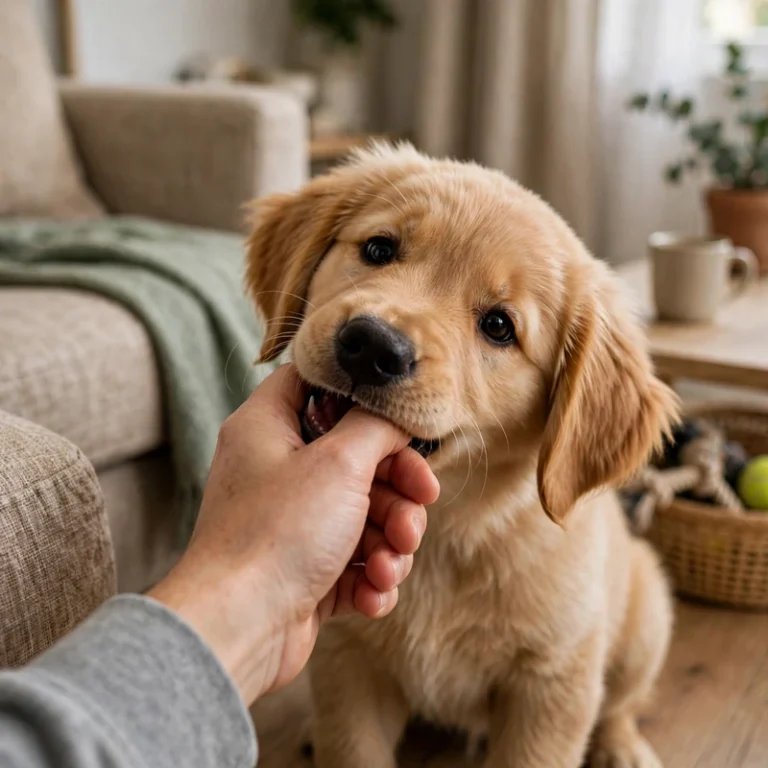
Shoes. Table legs. The rug fringe. Your fingers. The wall, somehow. A Dachshund puppy chewing everything is a daily reality in many homes — and here’s the reassurance first: this is normal. Puppies explore the world with their mouths the way toddlers do with their hands, and on top of that, teething hurts.
Your puppy isn’t naughty — they’re a baby with sore gums and no concept of property rights. Your job isn’t to stop the chewing. It’s to aim it.
Key Takeaways
- Puppy chewing is normal development — teething pain plus mouth-based exploration — not misbehavior.
- You can’t train away the need to chew; you can only manage the environment and redirect to legal targets.
- Puppy-proofing plus a crate or playpen prevents most problems before training even starts.
- An overtired puppy chews more — sleep is a training tool.

Dachshund Puppy Chewing Everything: What’s Behind It
Teething. Puppy teeth fall out and adult teeth come in over several months, and the whole process aches. Chewing massages sore gums — it’s genuine relief, not entertainment. Frozen chews and cold carrots exist for exactly this reason.
Exploration. For the first months of life, the mouth is a puppy’s primary information-gathering tool. “What is this? What does it feel like? Can I eat it?” Everything goes in the mouth because that’s how puppies learn. This fades with age — but only if the puppy gets to practice on the right things.
The breed factor. Dachshunds are an oral breed — jaws bred to grip and hold. Your puppy’s urge to use their mouth is stronger than average by design. That doesn’t mean tolerating destroyed furniture; it means taking the chew drive seriously and giving it proper outlets from day one.
Boredom and overtiredness. A puppy left to entertain themselves will invent games, and puppies are terrible game designers. And here’s the one most owners miss: an overtired puppy doesn’t get sleepy — they get wild. The evening chew-fest often follows a day with no real nap.
Puppy-Proof Like You Mean It
Training is slow. Management is instant. Do this before anything else:
1. Get on the floor. Literally — lie down at puppy height and look around. Cables, shoes, remote controls, low shelves, rug corners, houseplants (check which are toxic to dogs and move them). If it’s chewable and reachable, it’s already a target.
2. Limit freedom. A young puppy should not have free roam of the house. Use baby gates, closed doors, and a playpen to create a safe puppy zone. Freedom is earned gradually as the puppy proves reliable — think months, not days.
3. Secure the dangers. Electrical cables, cleaning products, medications, small objects that could be swallowed — puppy-proofing is a safety issue, not just a furniture issue. Chewing is normal; swallowing a sock is an emergency vet visit.
4. Shoes live in closets now. Every family member needs the memo: if you leave it on the floor, it’s the puppy’s. Consistency from all humans is what makes this work.
5. Tether when you can’t crate. If the crate feels like too much for a quiet afternoon, loop the puppy’s leash around your belt or a heavy chair leg — the “umbilical cord” method. The puppy stays within a few feet of you, so you can catch and redirect every wrong chew in real time. Supervision is a training tool.
The Right Chews for a Dachshund Puppy
Your puppy needs legal chew options everywhere they spend time — not one sad toy in the corner.
Frozen relief. Wet a rope toy or washcloth, twist it, freeze it. Stuff a small Kong with wet food and freeze. Cold soothes teething gums better than anything. Keep a rotation in the freezer.
Appropriate chew toys. Soft rubber puppy toys, puppy-sized Kongs, plush toys for gentle dissecting (always supervised — remove if the puppy starts eating the stuffing). Avoid anything hard enough to damage puppy teeth; if you can’t dent it with your thumbnail, it’s too hard for a puppy.
Edible chews with supervision. Puppy-appropriate bully sticks (with a holder so they can’t swallow the end), yak chews in puppy sizes. Always supervised, always sized so pieces can’t be gulped.
Rotate. Three or four toys out, the rest put away, swapped every few days. Novelty is what keeps a chew interesting — the same toy on the floor for a week is furniture.

Crate and Playpen: Management That Teaches
The crate isn’t punishment — it’s the puppy’s bedroom, and it’s how you guarantee the puppy only ever practices good habits.
Make it wonderful. Feed meals in the crate. Hide treats in it. Keep the door open at first and let the puppy choose it. A crate-trained puppy has a safe place to chew legally whenever you can’t supervise.
Use it proactively. Cooking dinner? Puppy goes in the pen with a frozen Kong. On a work call? Crate with a chew. You’re not “locking them up” — you’re setting them up to succeed while building the habit of settling independently.
The overtired reset. When the puppy turns into a bitey, zooming gremlin in the evening, that’s usually exhaustion, not evil. Into the crate or pen with a chew, in a calm spot. Most puppies conk out within minutes — and wake up civilized.
Dachshund Puppy Chewing Everything: The Redirection Plan
Step 1: Catch it early. Watch for the pre-chew signals — sniffing the table leg intently, mouth opening near the shoe. Interrupt before the chomp with a happy sound (kissy noise, their name).
Step 2: Swap, don’t scold. Offer the legal chew with enthusiasm. Wiggle it, make it fun. When the puppy takes it, praise warmly. The puppy should feel the trade was an upgrade.
Step 3: Make the right thing rewarding. When the puppy chooses a toy unprompted, notice it. Quiet praise, a treat dropped nearby. Puppies repeat what pays.
Step 4: Be boring about the wrong thing. If the puppy gets to something off-limits, calmly remove it or remove the puppy — no drama, no chase (chase is the best game ever, don’t play it). Then manage better next time. And keep your reaction small on purpose: some puppies learn that grabbing the TV remote summons the entire family at a sprint. Don’t let chewing become the dinner bell — a calm trade keeps it boring.
Step 5: Teach “leave it” and “drop it” as games. Trade games — offer a treat for dropping an object, then give the object back sometimes — teach the puppy that surrendering things leads to good outcomes, not loss. This pays off for life.
Sleep, Routine, and the Overtired Chewer
Young puppies need an enormous amount of sleep — far more than most owners expect — and they won’t choose it themselves. The pattern that fixes half of all puppy problems:
- Enforced naps. After every hour or so of awake time, crate or pen for a nap. A puppy who “won’t settle” in the evening is almost always a puppy who hasn’t napped enough.
- Predictable days. Meals, walks, play, naps at roughly the same times. Routine lowers arousal and makes the puppy’s needs legible to you.
- Calm evenings. Wind down before bed — no wild play right before sleep. The evening routine teaches the puppy that nights are for rest.
If you remember one thing: the bitey, destructive evening puppy is usually just a tired baby. Sleep first, training second.
When Puppy Chewing Isn’t Normal
Most puppy chewing is developmental. But talk to your vet if:
- The chewing is frantic and paired with distress when left alone (possible separation anxiety, even in puppies)
- The puppy is chewing and eating non-food objects obsessively (swallowing objects is dangerous)
- There’s a sudden behavior change — a previously gentle puppy turning snappy (pain or illness)
- The puppy seems unable to settle at all, even with proper sleep and exercise
And if the puppy is swallowing objects, that’s urgent — don’t wait to see if it passes.

Frequently Asked Questions
How long does the puppy chewing phase last?
Intense chewing usually peaks during teething and tapers as adult teeth settle in and the puppy matures — but the habit of what to chew is what you’re really building, and that lasts a lifetime. Most puppies finish teething at around six months, though every puppy differs — and chewing rehearsed during teething can stick around long after the gums stop hurting if it was never redirected. Puppies who learn “chews are great, furniture is boring” become adults who don’t destroy things.
Should I punish my puppy for chewing furniture?
No. Punishment after the fact doesn’t connect to the chew in the puppy’s mind, and punishment in the moment usually just teaches the puppy to chew when you’re not looking. Redirect, manage, and reward the right choices — it’s faster and it actually works.
My puppy bites me more than objects — is that different?
Mouthing people is normal puppy behavior too — it’s how they learn bite inhibition. Yelp or go still when teeth hit skin, redirect to a toy, and end play briefly for hard bites. It improves with consistency. (True fear-biting in puppies is rare; if you’re worried, our step-by-step biting plan covers the distinction.)
Are antlers or bones safe for puppies?
Hard chews like antlers can crack puppy teeth — skip them until adulthood, and even then with caution. Stick to freezable rubber toys, puppy-appropriate edible chews, and soft toys for now.
Why does my puppy ignore the chew toys and go straight for the furniture?
Usually texture and novelty. A wooden chair leg has interesting grain and gives under the teeth; a dry rubber toy that’s sat on the floor for a week is old news. Make the legal chews win: smear a thin layer of xylitol-free peanut butter inside a Kong, keep a frozen stuffed toy in rotation, and swap the selection every few days. Your puppy’s toys should be the most interesting chewable objects in the room — because the puppy will chew something.
Can I leave my puppy alone with chews?
Only with safe, size-appropriate toys — never with edible chews unsupervised, and never with anything the puppy could tear apart and swallow. When in doubt, the crate with a frozen Kong is the safe default.
—
Puppy chewing feels endless in the moment and is mercifully temporary with the right approach. For the adult version of this problem, see our complete guide to stopping Dachshund chewing, the full breed behavior guide, and all Dachshund guides.