Dog Growls When Moved Off the Couch: What to Do
You’re sitting there, remote in hand, and your dog is settled on the couch cushion next to you, half asleep. You ask them to move over. They go still, lock eyes, and growl — the classic moment a dog growls when moved off couch.
Or you reach to shift them, and the growl turns into a snap at your hand. Your stomach drops.
If your dog growls when moved off the couch, you’re not alone, and you don’t have an evil dog. You have a dog who is telling you that being moved off their spot feels threatening. What you do with that growl decides whether the problem gets better or worse.
This guide covers why a dog growls when moved off couch, what to do tonight, and a positive plan to fix it for good.
Key Takeaways
- Most cases where a dog growls when moved off couch come from guarding a valued resting spot, pain when shifted, or being startled awake.
- A growl is a warning, not defiance. Punishing it creates a dog who bites without warning.
- Never physically drag a dog off the couch. Toss high-value treats away from the spot, teach “off,” and give the dog a better bed.
- A sudden new growl or growling when touched in specific spots means a vet visit first; spreading or escalating guarding means calling a qualified behavior professional.
Why Your Dog Growls When Moved Off Couch
Dogs don’t growl for no reason. Here are the three usual drivers, and figuring out which one you have matters, because the fix differs.
Guarding a valued resting spot. Dogs can guard anything they value: toys, favorite people, and spaces, including beds and couches.
A warm spot that smells like the family is a high-value resource. When you reach for a dog guarding their spot, they read your approach as “I’m about to lose this.”
Guarding is normal, if rude, canine behavior and it has nothing to do with dominance. At its core it’s fear of losing something good.
Pain or discomfort when touched or shifted. This is the one people miss. A dog with sore hips, a stiff back, or ear pain can find being physically moved genuinely painful.
A Texas A&M veterinary specialist notes that medical problems like osteoarthritis or an ear infection can trigger aggression when a painful area is touched, and recommends ruling out medical causes before assuming the problem is behavioral.
If the growling started suddenly, or the dog snaps specifically when touched along the back, hips, or ears, book a vet visit before doing any training.
Startle. Dogs woken on the sofa can growl before they are fully awake. A dog in deep sleep who feels a hand on their body or the cushion shift can react on pure reflex.
If your dog only growls when disturbed while sleeping, you may be dealing mostly with startle, not guarding, and the fix is management: don’t disturb a sleeping dog.
Pay attention to the pattern. Guarding usually shows early signs first: the dog goes still, stares, or stiffens when you approach.
Pain often comes with flinching, yelping, or reluctance to jump. Startle happens only from sleep.
The Growl Is Information, Not Defiance
A growl is your dog talking. It means “I’m uncomfortable, please back off.”
Punishing it through shouting, smacking, or dragging the dog off doesn’t remove the feeling behind it. It removes the warning.
The dog learns that growling gets them into a fight, and next time they skip straight to a snap or a bite.
A dog who growls is a dog who is still giving you a chance to handle things better. If your dog growls when moved off couch, thank the growl instead of punishing it. Our guide to how to stop Dachshund biting explains the same principle: a warning you can hear is safer than one you can’t.
In the Moment: What to Do Tonight
If your dog growls when moved off couch, you need a safe way to handle the next standoff, because it will happen before the training is finished.
Stop moving the dog physically. Pushing, pulling, or dragging a dog off the couch provokes the guarding response and puts your hands near teeth. Don’t do it.
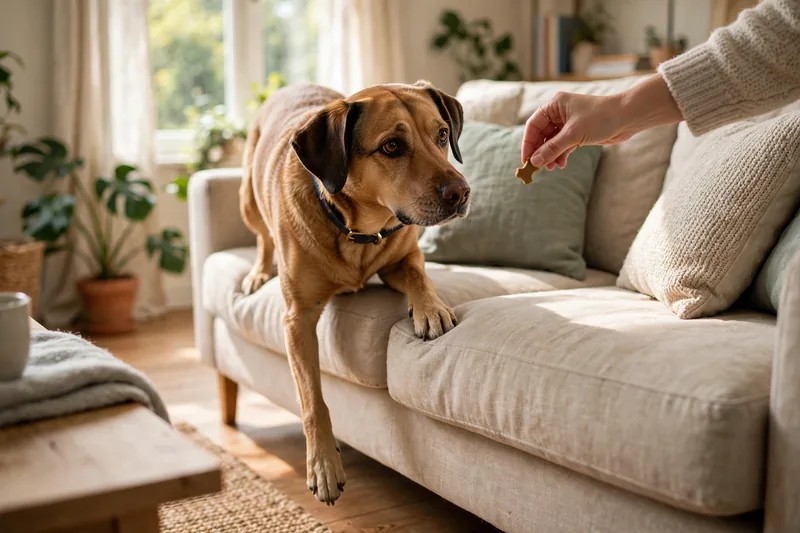
Toss, don’t reach. If the dog needs to get off the couch right now, toss several high-value treats onto the floor away from the couch, well out of arm’s reach.
Let the dog walk off to get them on their own. Then, only when the dog is away and not looking, reclaim the cushion.
Lure, don’t shove. For a dog who is merely settled and not actively guarding, hold a treat at the dog’s nose and move it slowly toward the floor, rewarding the moment all four paws land. Keep your body sideways, not looming over the dog.
If the dog is actively growling or stiffening, back off calmly, give the dog space, and come back later.
Do not try to win the standoff. Nobody wins a standoff with a growling dog.
The Step-by-Step Plan (Dog Growls When Moved Off Couch, Fixed for Good)
This plan fixes the root cause instead of fighting the symptom. Work through the steps in order, giving each a week or two before expecting reliability.
Step 1: Manage first.
While you’re retraining, prevent the standoffs. Set a clear rule: the couch is invite-only, or temporarily off-limits. Block access with a baby gate or a folded blanket when you can’t supervise.
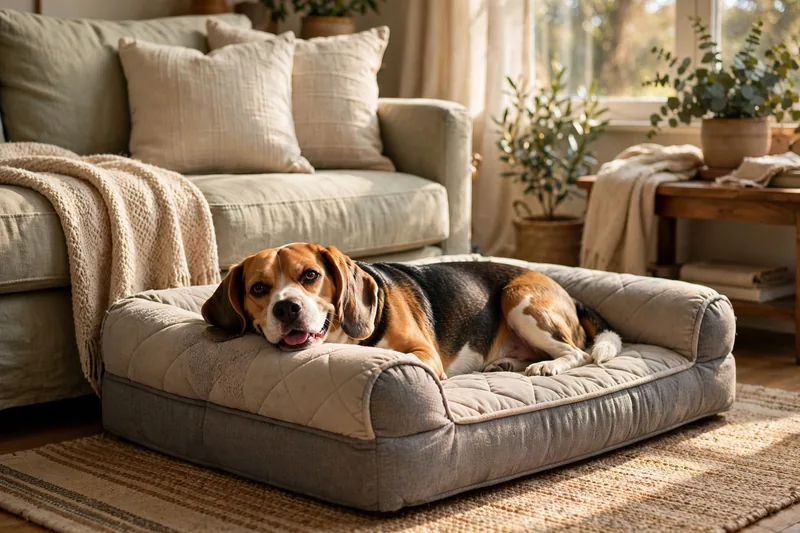
Make the alternative irresistible. Dogs choose comfort. A thick, plush bed near the couch is the best investment in this whole plan.
Every time the dog chooses the bed on their own, quietly drop a treat on it. Many guarding cases improve dramatically on this step alone.
Step 2: Teach “off” positively with high-value trades.
Never train “off” on the guarded couch first. Start on a chair or bench the dog doesn’t care about. Say “off” once, then toss a treat onto the floor a few feet away.
When the dog steps off, mark it (“yes!”) and give a second treat from your hand. A few short sessions a day, and most dogs hop off eagerly, because “off” has always meant treats.
Only when the cue is reliable on boring surfaces should you try it on the couch, and then pay with something exceptional. Say the cue, wait, and reward the choice after they make it. Never dangle the treat as a bribe first.
Step 3: Train “go to your spot.”

“Off” moves the dog away from something; “go to your spot” gives them somewhere to go to.
A dog can’t guard the couch while lying happily on their bed. Lure the dog onto the bed, mark and reward, add the cue once the dog runs to the bed eagerly, then build duration gradually.
Step 4: Rebuild the dog’s feelings about being approached.
Walk past at whatever distance keeps the dog relaxed, tossing a treat onto the cushion. Over sessions, gradually decrease the distance, then walk up, treat, and walk away without asking for anything.
The dog learns your approach predicts wonderful things, not eviction. If the dog stiffens or stares at any point, you’ve moved too fast: go back to the last easy distance.
Step 5: Get the whole household consistent.
This plan fails if one person follows it and another keeps grabbing the dog off the couch. Brief everyone once: no physical moving, no punishing growls, same cues, same rules.
What NOT to Do: Mistakes That Make Couch Guarding Worse
If your dog growls when moved off couch, avoid these common mistakes — they all backfire.
No alpha rolls, no “dominance downs,” no pinning. These are confrontational, frightening, and dangerous with a dog who is already guarding. They confirm the dog’s fear that people near their spot mean trouble, and they put your face near teeth.
No yanking or dragging the dog off. Grabbing collars or hauling a dog off the furniture is how bites happen, and it teaches the dog the couch is a place where they get ambushed, which makes guarding stronger.
No punishment for growling. Shouting, spraying, shaking cans, shock or prong collars, smacking. All of these suppress the warning without changing the feeling. A suppressed growler is a dog who bites “out of nowhere.”
No “showing them who’s boss” by taking the spot. Sitting in the dog’s spot, staring them down, or cornering them on the couch raises pressure at the exact moment you need it lowered.
No ignoring it and hoping it fades. Behavior that works gets repeated. Every successful growl that moves you away teaches the dog that growling works, so you need the plan above, not avoidance alone.
Kids, Guests, and Couch Safety Rules
Children, who don’t read the signals, are where couch guarding gets genuinely dangerous.
The rules, non-negotiable for now: Kids never disturb a resting dog on the couch, and never try to move the dog off the furniture themselves.
If the dog is on the couch, kids give the dog space or call an adult. An adult is present for all kid-and-dog couch time, no exceptions.
Teach children the freeze rule: if the dog growls when moved off couch, freeze, don’t scream or run, and call an adult calmly. A growl isn’t “the dog being naughty.” It’s the dog saying “I need space.”
Guests get one sentence: “She’s learning new couch rules, so please don’t move her, just call me.” Keep a house leash handy so you can guide the dog to their spot without grabbing.
When to Call a Professional
Some cases where a dog growls when moved off couch need more than an article. Get in-person help from a qualified behavior professional, ideally a certified consultant or veterinary behaviorist, if any of these are true:
- The growling is escalating: louder, longer, or over smaller triggers than before.
- The dog has snapped, lunged, or bitten. Any bite, even a “nip,” is past the DIY line.
- The guarding is spreading: from the couch to the bed, to chairs, to doorways, to food, to you.
- The dog guards from children or has growled at a child.
- You’ve followed a plan consistently for a few weeks and nothing is changing.
Sudden onset, growling when touched in specific places, stiffness, or yelping is a vet visit first, always. Medical causes come before training projects. Your vet can also refer you to a veterinary behaviorist, the gold standard for cases that combine pain, fear, and aggression.
Find a professional through directories like the IAABC, APDT, or CCPDT, and ask directly what methods they use. Work with someone who talks about desensitization and counterconditioning, and walk away from anyone who reaches for punishment-based tools.
The couch is supposed to be the comfortable spot in the house, for all of you. A dog who growls when moved off couch isn’t broken or dominant.
They’re worried. Meet that worry with management, treats, and a plan. The growl got you here. Listen to it, and you’ll both end up back on the couch, on purpose this time.