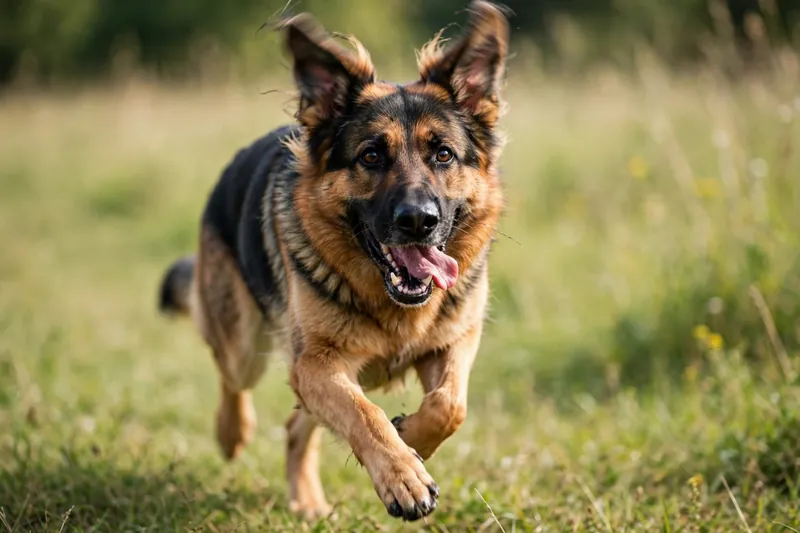
German Shepherd Won’t Come When Called: Recall Training That Works
Standing in the park and calling your German Shepherd, only to be ignored, is frustrating and worrying. If your German Shepherd won’t come when called, you are not alone, and the problem is usually fixable.
Recall is a trained skill, not a sign of loyalty or love. This guide builds it step by step, with rewards only, from a quiet room to a busy outdoor space.
Key Takeaways
- Your dog is not ignoring you to be difficult. He is choosing whatever pays best in that moment.
- Never scold a dog for coming back, even if he took a long time.
- Say the recall word once. Repeating it teaches your dog that early calls do not count.
- Train in stages: indoors first, then the yard, then busier places on a long line.
- Stay on the long line until recall holds well at each level of distraction.
- If “come” has lost its meaning, start fresh with a new word and rebuild it.
- Get vet or behavior help early for sudden changes, pain, fear, or aggression.
German Shepherd Won’t Come When Called: The Direct Answer
A German Shepherd won’t come when called when coming back pays less than staying put. Your job is to change that balance, one easy win at a time.
Start indoors with a word your dog loves, a top reward, and short sessions. Add distance, then new rooms, then the yard, then busier places on a long line. Keep every arrival rewarding, and never use the recall word to end fun or start something unpleasant.
Why Your German Shepherd Ignores the Call
When a German Shepherd won’t come when called, the cause is often simple. The table below lists the most common reasons and the first fix for each one.
| Common cause | What you see | First fix |
|---|---|---|
| Weak reward | He looks, then goes back to sniffing | Use a better reward, saved for recall |
| Worn-out word | He does not react at all | Pick a fresh word and charge it indoors |
| Too big a jump | He comes inside, not outside | Drop back to an easier place |
| Recall ends fun | He runs off when called at the park | Call, reward, then release him to play |
The reward is not good enough. Coming to you must beat a squirrel, a friendly dog, or a fascinating smell. Plain kibble rarely wins outdoors, so save the best treats, or a favorite game, for recall.
The word has lost its meaning. If “come” has been shouted all day, with no clear result, it becomes background noise. A fresh word can restore a clear signal, because it carries no old history.
You jumped ahead too fast. Many owners practice in the living room, then expect the same result at the dog park. A new place makes every skill harder, so each new place needs its own easy start.
Coming back means fun ends. If the only time you call is to leave the park, clip on the leash, or start a bath, your dog learns the pattern. Mix in many calls that end with a reward and more play.
Prey Drive and Distraction: The German Shepherd Challenge
German Shepherds are alert, fast, and tuned in to movement and scent. A running animal, a child on a bike, or a strong smell can pull attention away in a second. That is instinct, not disobedience.
This is why a German Shepherd won’t come when called near squirrels, cats, or other dogs. The distraction is not just tempting. It is self-rewarding, because chasing and sniffing feel good even without a catch.
Do not start training next to the hardest distraction. Start where your dog can still think, then move closer in small steps. If he stops taking treats, stares hard, or cannot turn away, you are too close. Increase distance and try again.
Give the chase instinct a legal outlet too. Fetch with clear rules, a flirt pole with pauses, and scent games let your dog run and search without rehearsing a real chase. For a related plan, see our guide on stopping a dog chasing cats, which uses the same distance and reward ideas.
- Movement: running animals, bikes, and children at play.
- Scent: food, other dogs, and wildlife trails.
- Sound: barking dogs, traffic, and sudden noises.
- Social pull: friendly people and dogs who want to play.
Ground Rules Before You Start
These rules protect the recall word. Break one, and progress slows. Keep them, and training stays clear for your dog.
- Always reward the arrival, even if it was slow or messy.
- Say the recall word once, in a happy voice, then wait briefly.
- Never use the recall word to scold, bathe, or end play.
- If you must collect your dog, walk to him calmly instead of calling.
- Use the same word in the whole household, every time.
- End sessions while your dog still wants more, not when he is tired.
Stick to rewards only in this plan. Shock and prong collars are not part of it, and they can damage trust and make recall worse. Value, patience, and clear stages build a faster, happier return.
Indoor to Outdoor Progression
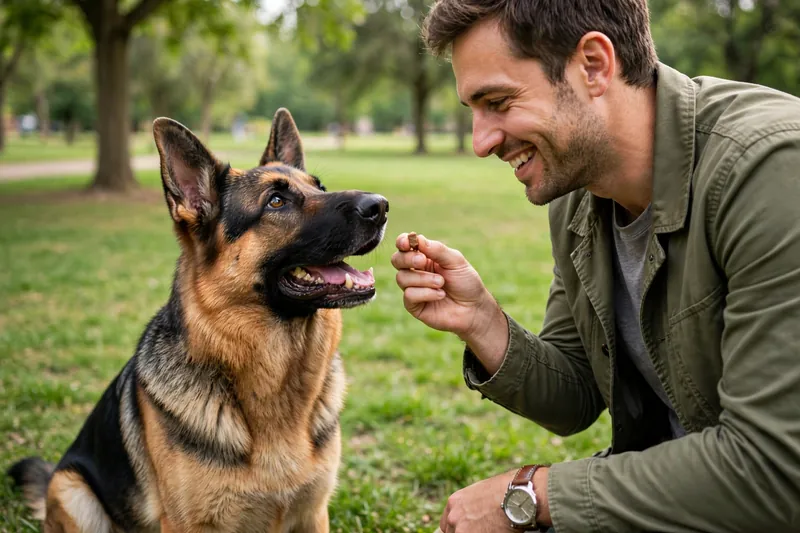
Recall must be rebuilt in every new place. A skill that works in the kitchen does not transfer by itself to the yard, the street, or the park. Move up only when the current stage feels easy.
| Stage | Where to practice | Move on when |
|---|---|---|
| 1. Charge the word | Quiet room, no distance | He turns happily at the word alone |
| 2. Short distance | Across the room, then other rooms | He comes quickly across the house |
| 3. The yard | Quiet yard, short distance first | He comes well in the yard, on a line |
| 4. Busier places | Quiet park, then busier places | He comes well around mild distractions |
| 5. Proofing | Real-life places, still on a line | He comes during play, not just when bored |
Stage 1: Charge the word indoors
Stand a few steps away in a boring room. Say your recall word once, then reward right away. Repeat a few times, and stop before your dog loses interest.
Do this for several short sessions before you add distance. The word must mean good things first, before it means travel. A charged word creates a head turn and a happy look.
Stage 2: Distance and finding you
Call from across the room, then from another room, so your dog must find you. Reward the moment he starts moving, and again when he arrives. Touch his collar gently before the treat, so arrival includes being held calmly.
Keep sessions short and playful. If he struggles, shorten the distance and make the reward bigger. Easy wins build speed better than hard tests.
Stage 3: Restart in the yard
Move to the yard and expect recall to get worse at first. That is normal, not failure. Shorten the distance, raise the reward, and repeat the indoor steps outside.
Use the long line here, even in a fenced yard, while you test new distractions. It keeps your dog safe and stops him rehearsing the choice to ignore you.
Long Line Work: Your Safety Net Outdoors
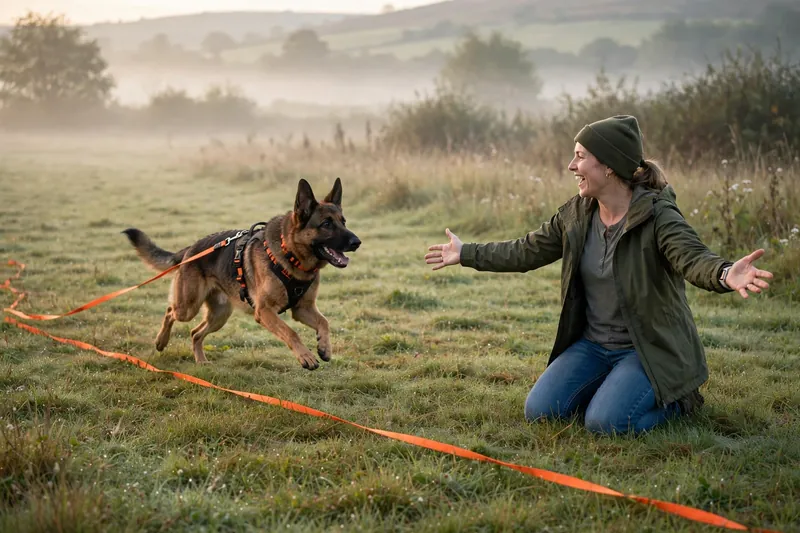
A long line is a long training leash clipped to a harness, not a collar. It lets your dog explore at real distance while you keep a safe backup. It is not for reeling him in like a fish.
Let your dog wander and sniff. When he pauses, call once. If he does not respond, walk calmly down the line toward him, then guide him back and reward as if he came on his own.
Raise difficulty one step at a time. Add distance first, then mild distractions, then busier places. If a step fails twice, drop back to the last step that worked and rebuild there.
- Clip the line to a harness, so a sudden bolt does not jerk the neck.
- Keep the line loose and clear of legs, fences, and roads.
- Never wrap the line around your hand or wrist.
- Practice in safe, legal places, and respect local leash rules.
Make Recall a Game
Games build speed and joy, because coming to you feels like play. Keep each game short, and rotate them so sessions stay fresh. Reward every arrival, even in a game.
- Catch Me. Get attention, turn, run a few steps, and call as your dog moves with you. Stop and reward.
- Find Me. Hide in another room and call once. Celebrate when your dog finds you.
- Hot Potato. Family members stand apart and take turns calling the dog between them. Reward each arrival.
- Recall ping-pong. On the long line, call, reward, release to sniff, then call again later. This stops recall from meaning the walk is over.
Emergency Recall: A Separate Lifeline
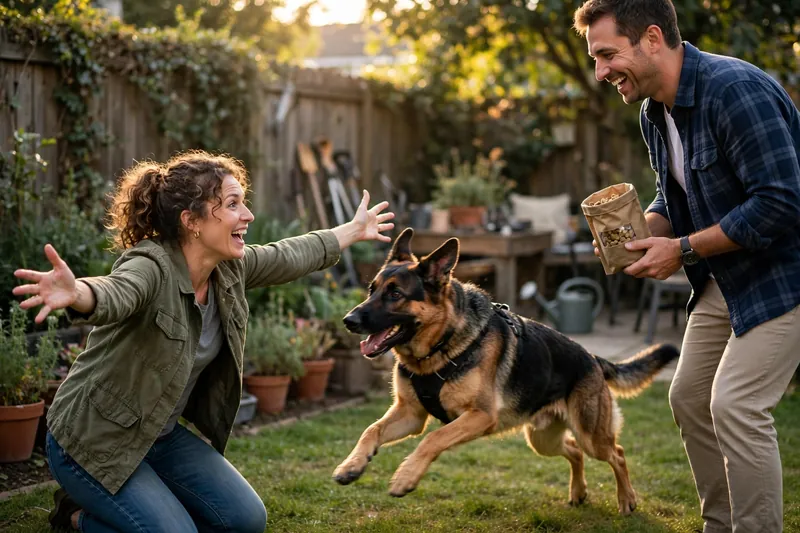
An emergency recall is a special word or whistle kept only for danger, such as a dog near a road. It is not your everyday recall word, and it must never become ordinary.
Charge it in easy places first. Say it, then give a jackpot of treats, several in a row. Practice it only a few times a week, always with the best reward you have.
Never use it for baths, leaving the park, or routine calls. If it is used for dull tasks, it loses its power. Save it, protect it, and refresh it with easy wins.
When “Come” Is Already Broken: Start Over With a New Word
If “come” has been repeated endlessly, used to end play, or shouted in frustration, retire it. Pick a fresh word, such as “here” or “close”, or use a whistle. A whistle carries well and has no frustrated history.
Charge the new word first, with no distance and no distractions. Say it, then reward, many times over several sessions. Only then add distance, new rooms, and the yard, just as in the stages above.
Do not test the new word in a hard place too soon. A fresh word is fragile at first. Protect it with easy wins, and it will grow stronger than the old word ever was.
Mistakes That Keep Recall Failing
Most failed recalls come from habits, not from a stubborn dog. Fix the habit, and recall often improves quickly. Repeating the call is a common reason a German Shepherd won’t come when called, because the dog learns to wait for the later calls.
- Calling to scold, or calling and then scolding, teaches your dog that returning is risky.
- Calling only to end fun teaches your dog to avoid you at the park.
- Calling when you know he will not come weakens the word each time.
- Training only at home leaves outdoor recall untested and unproven.
- Letting family members use different words confuses the cue.
- Skipping the long line outdoors lets your dog practice ignoring you.
When a call fails, do not chase your dog and do not shout louder. Walk to him calmly, collect him, and make the next setup easier. A skipped call protects the word better than a failed call.
When to Get Professional Help
Most recall problems are training problems, and steady work fixes them. Get help early, though, when safety or health may be involved. Do not wait for a dangerous incident to ask.
See your vet if a reliable recall suddenly falls apart. Pain, hearing loss, ear problems, illness, or a sudden behavior change can all stop a dog responding. A vet check comes before more training in those cases.
Talk to a qualified, reward-based trainer or behavior professional if recall fails around traffic, livestock, or wildlife, or if fear or aggression is part of the picture. Ask how they train, and choose someone who uses rewards and easier setups, not fear or force.
If recall problems happen alongside distress when left alone, read our German Shepherd separation anxiety guide. That problem needs its own gradual plan, not just more recall practice.
Frequently Asked Questions
How long does it take to build a reliable recall?
Weeks to months, not days. Short daily sessions, stacked over time, build reliability. Progress depends on the dog, the distractions, and how steadily you follow the stages.
Can you teach recall to an adult German Shepherd?
Yes. Puppies may learn faster at first, but adult German Shepherds are strong learners. The stages are the same, though you may need better rewards and more patience to undo old habits.
Why does he come inside but ignore me outside?
Because outside is a different skill in his mind. New smells, space, animals, and sounds raise difficulty fast. Treat outdoors as a new stage, with shorter distance, a long line, and bigger rewards.
What if he comes to me and then runs off again?
He has learned that arriving is only half the game. Hold his collar gently, reward, reward again for staying, then release him. Practice recalls that end in more play, so staying near you stays rewarding.
When is it safe to trust him off leash?
Only in safe, legal, enclosed places, after consistent success on the long line around serious distractions. No recall is perfect, so keep safety first and do not rush this step.
Should I change the recall word?
Yes, if “come” has a long history of being ignored or misused. A fresh word, charged indoors first, often works faster than trying to repair a worn-out cue.
The Bottom Line
Your German Shepherd won’t come when called today, but that can change with clearer rewards, smaller steps, and patient practice. Protect the word, pay well, train on a long line, and make returning to you the best part of his day.
For the wider breed picture, read our German Shepherd behavior problems guide, compare Golden Retriever ignoring recall, and see Shiba Inu recall training for another breed approach.
Reference
American Kennel Club, “How to Train Your Dog to Come When Called: Step-by-Step Recall”: https://www.akc.org/expert-advice/training/reliable-recalls-how-to-train-your-dog-to-come-when-called/
Still stuck? Get a plan built for your dog.
Answer a few quick questions and get a personalized, force-free training plan in minutes.