
How to Stop a German Shepherd From Chewing Furniture
# How to Stop a German Shepherd From Chewing Furniture
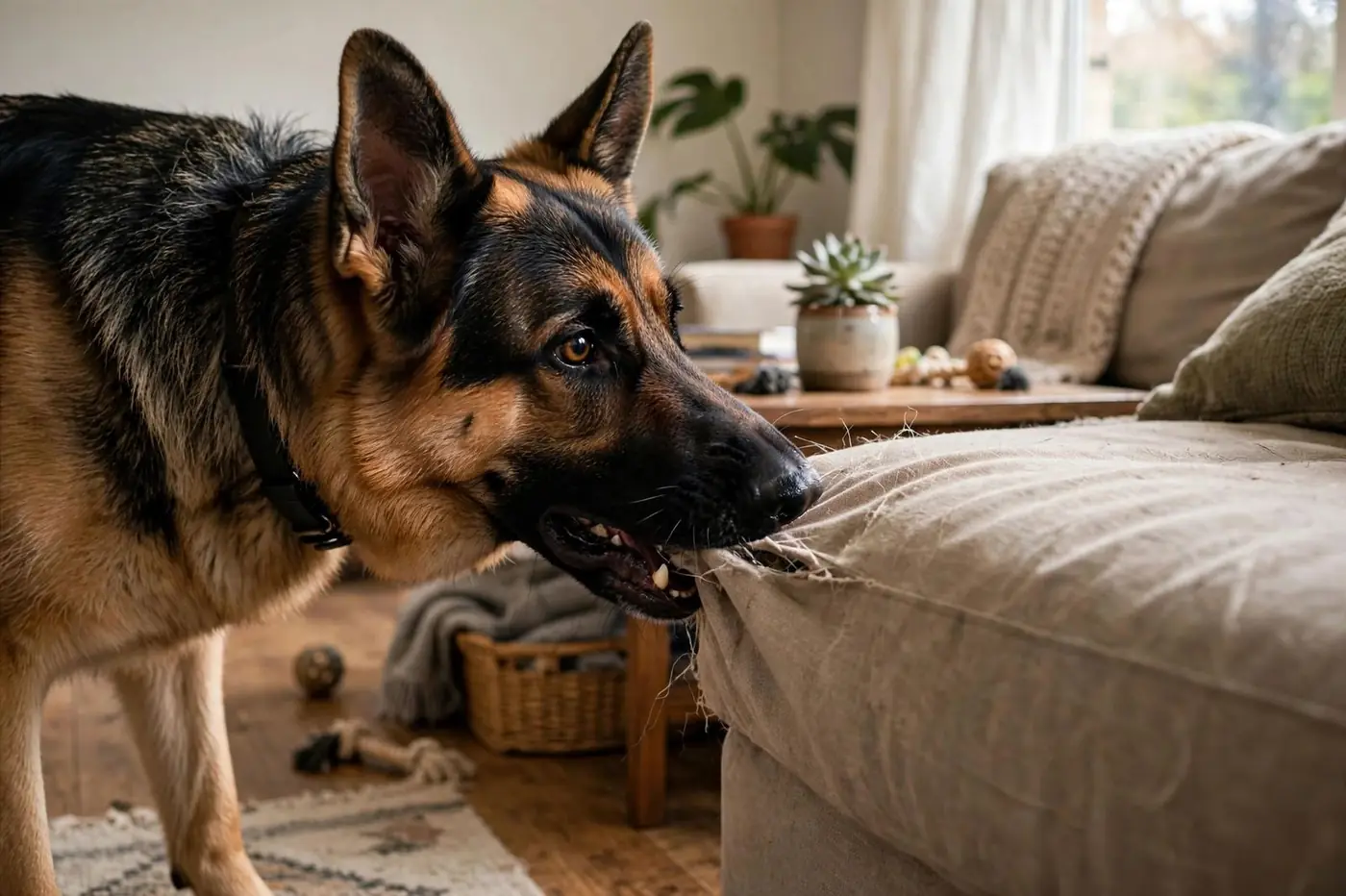
You left the room for ten minutes. You came back to a sofa arm that looks like it’s been through a woodchipper. If you want to know how to stop a German Shepherd from chewing furniture, start here: your dog isn’t being spiteful, and you’re not failing as an owner. You’re dealing with a powerful, oral breed whose needs aren’t being met — and that’s fixable.
German Shepherds are champion chewers by design. They have strong jaws, they explore the world with their mouths, and they’re smart enough to get bored quickly. Puppies chew because they’re teething. Adolescents chew because they’re restless. Adults chew because something in their day isn’t working. The fix is the same in every case: manage the environment so furniture isn’t an option, give your dog something better to chew, and address the underlying need driving the behavior.

Key Takeaways
- Furniture chewing is usually boredom, teething, or under-exercise — not spite or dominance. Punishing it doesn’t teach anything.
- Management comes first: make furniture inaccessible or unappealing while you train a better habit.
- Redirect to appropriate, durable chews and reward your dog for choosing them — Shepherds learn fast what pays off.
- Chewing that happens only when you’re gone may signal separation distress, which needs a different plan (see below).
Why Your German Shepherd Chews Furniture
Understanding the “why” tells you which fix matters most:
Teething (puppies under ~7 months). Puppy teeth hurt coming in and out, and chewing relieves the ache. This is developmental, not disobedience — but it still needs managing, because every chewed table leg is practice.
Boredom and under-stimulation. This is the big one for adolescent and adult Shepherds. A dog with an idle brain and a strong jaw will find its own entertainment. The sofa is just… there. Convenient. Satisfyingly destructible.
Under-exercise. A Shepherd who hasn’t had a real physical and mental workout carries restless energy into the evening — prime furniture-chewing hours.
Anxiety. Some dogs chew to self-soothe when stressed. If the chewing happens mostly when you’re away, read German Shepherd Destructive When Left Alone — the approach is different.
It worked before. Chewing feels good. If it’s been rehearsed for weeks, it’s now a habit, and habits need replacing, not just scolding.
Step 1: Manage the Environment (Immediate Relief)
Training takes weeks; management works today. Your first job is to make furniture chewing impossible or unrewarding while the new habits form.
- Block access. Baby gates, closed doors, or an exercise pen keep your dog away from the good sofa when you can’t supervise. This isn’t forever — it’s scaffolding.
- Remove temptation. Cushions go up when you leave the room. Remote controls, shoes, and laundry go behind closed doors.
- Supervise actively. When your dog is loose in the living room, you’re watching. If you can’t watch, the dog is in their managed space with a chew toy. “Supervision” means eyes on, not just being in the building.
- Consider taste deterrents. Bitter-flavored sprays made for pets can make a table leg less appealing. They work for some dogs and not at all for others — test on a hidden patch of fabric first, and treat them as a helper, not the solution.
- Puppies: use a playpen or crate positively. A crate is a bedroom, not a prison — it should be introduced gradually with treats and meals, never used as punishment.
Step 2: Give Legal Chewing Outlets
You can’t eliminate a dog’s need to chew — you can only redirect it. A German Shepherd needs durable, satisfying options:
- Heavy-duty rubber toys (the hollow stuffable kind) — smear with peanut butter (xylitol-free) and freeze for a longer-lasting project.
- Long-lasting chews sized for power chewers. Skip anything that splinters; cooked bones are never safe.
- Rotate the selection. A chew toy that’s available 24/7 becomes furniture. Keep a stash and rotate every few days to keep novelty high.
- Feed creatively. Scatter kibble in the garden for a sniff-and-find breakfast, or use puzzle feeders. A dog that worked for its food has less leftover drive to work on your armchair.
- Supervise new chews until you know your dog can’t break off chunks.

Step 3: Train the Alternative
Here’s the actual training plan. Short sessions, high-value treats, and patience.
1. Catch and redirect — calmly. When you see your dog mouthing furniture, don’t yell or chase (chasing turns it into a thrilling game). Calmly interrupt with a kissy sound or their name, offer the approved chew right at their nose, and the moment they take it, praise warmly. You’re teaching: “that thing = boring, this thing = party.”
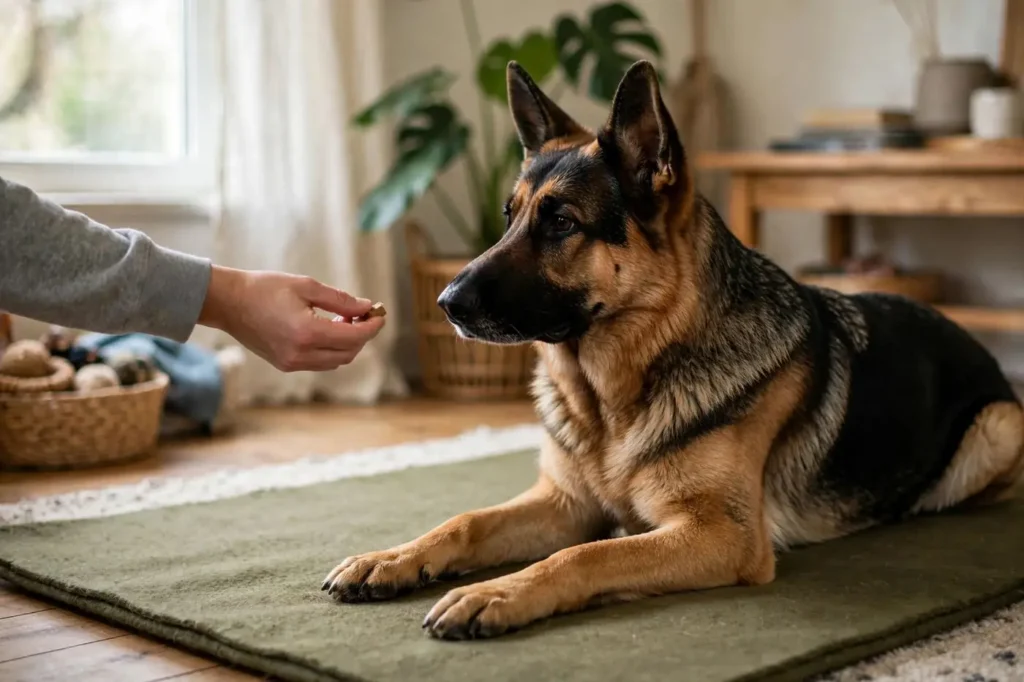
2. Teach “leave it.” Hold a treat in your closed fist. When your dog sniffs and backs off, mark (“yes!”) and reward from your other hand. Build up to dropped items on the floor, then to furniture. Practice in short sessions until it’s reliable.
3. Teach “drop it” as a trade game. Offer a boring toy, then present an amazing treat. When your dog drops the toy, mark and reward — then give the toy back. Repeat until “drop it” predicts good things. Never chase a dog to pry something from their mouth; that teaches them to run and guard.
4. Reward calm behavior near furniture. This is the secret weapon most owners skip. When your Shepherd chooses to lie on their bed in the living room instead of eating it, quietly place a treat between their paws. You’re “capturing calmness” — building a dog who defaults to settling rather than demolishing.
Step 4: Fix the Root Cause
Management and redirection handle the symptom. This step handles the cause:
- Real daily exercise. An adult German Shepherd needs substantial activity — not just a stroll around the block. Brisk walks, fetch, swimming, hiking. A physically satisfied dog is dramatically less interested in interior design.
- Daily brain work. Training practice, nose games, puzzle feeders. Fifteen focused minutes of learning tires a Shepherd out in a way an extra hour of fetch doesn’t.
- A predictable routine. Dogs relax when the day is predictable. Regular walk, feed, play, and rest times reduce the restless anxiety that fuels chewing.
If you do steps 1–3 but skip this one, the chewing will find a new target. The dogs who stop chewing furniture permanently are the ones whose days got better.
Common Mistakes
- Punishing after the fact. Rubbing a dog’s nose in the damage or scolding them when you get home teaches nothing — dogs don’t connect delayed punishment to the act. They learn that your arrival is scary, which can create new problems.
- Chasing the dog for the stolen item. To your Shepherd, this is the best game ever. Trade, don’t chase.
- Yelling “no!” with no alternative. “No” tells the dog what not to do but leaves a vacuum. Always follow with what to do instead.
- Giving old shoes or socks as toys. Then acting surprised when the dog can’t tell your good shoes from the “toy” shoes. Keep the categories crystal clear.
- Expecting a bored dog to make good choices. Management isn’t cheating — it’s setting your dog up to succeed.
When Chewing Means Something More
Two situations need a different approach than this guide:
Chewing only happens when you’re gone. That’s often separation distress rather than general boredom — the dog isn’t having fun, they’re panicking. Our guide to German Shepherds that get destructive when left alone covers the desensitization plan, and the separation anxiety archive has more.
Sudden chewing in an adult dog who never did it before. A new behavior in a previously reliable dog is worth a vet check first — pain, dental issues, or other medical causes can show up as behavior changes.
Frequently Asked Questions
Will my German Shepherd puppy grow out of chewing furniture?
Teething-related chewing fades as adult teeth settle in (around 6–7 months), but chewing as a habit doesn’t fade on its own — it fades when the dog has better outlets and has been rewarded for using them. Puppies who rehearse furniture chewing for months become adults who do it too.
Are bitter deterrent sprays safe?
Pet-formulated taste deterrents are generally safe when used as directed, but they’re a support act, not the main event. Some dogs are completely unbothered by the taste. Always test on an inconspicuous spot first to check for staining.
Should I crate my dog to stop the chewing?
A crate can be a useful management tool if — and only if — your dog is properly crate-trained and comfortable in it. A crate should never be used as punishment, and a dog with separation anxiety may panic worse in confinement. Build positive crate associations gradually.
What are the best chew toys for a German Shepherd?
Look for toys marketed for power chewers: thick rubber stuffables, solid rubber bones, and durable nylon chews in the right size. Avoid anything your dog can chew chunks off and swallow, and supervise with any new chew until you’re confident it’s safe for your individual dog.
Will getting a second dog stop the chewing?
Almost certainly not — and you may end up with two dogs chewing the furniture. Companionship doesn’t replace exercise, training, and enrichment. Fix the root cause first.
For the bigger picture on how breed traits drive behaviors like this — and the five foundations that prevent most of them — read our complete guide to German Shepherd behavior problems. More chewing-specific help lives in the chewing archive. You can also browse all German Shepherd guides and every chewing guide.